Reflections on a Collaborative Animation Project Run by Mental Fight Club, London
Volume 11, Issue 1, Pages 120-133
Abstract
In response to the COVID-19 pandemic, the UK government between March 2020 and December 2021 imposed restrictions on freedoms of movement and meeting with others outside existing households. We herein describe the actions taken by Mental Fight Club (MFC), a London mental health charity, in response to COVID-19 lockdowns. From March 2020 onward, MFC created a program of online activities based on their previous in-person program. One of these online activities was a project funded by the Wellcome Trust to co-produce an animated film, Our Journey, drawing on creative arts and musical activities to help meet the challenges of living in lockdown. Findings from an online survey of participants during the process of creating the animation, and telephone interviews following completion of the film provide clear demonstration of benefits for mental well-being, creative expression, and social connection experienced from this project.
摘要
为了应对 COVID-19 大流行,英国政府在 2020 年 3 月至 2021 年 12 月期间对行动自由和与现有家庭以外的其他人会面的自由实施了限制。我们描述了伦敦心理健康慈 善机构 心理对抗俱乐部 (MFC) 为应对 COVID-19 封锁而采取的行动。从2020年3月起,MFC在之前的现场活动的基础上创建了在线活动计划。其中一项在线活动是由 Wellcome Trust 资助的一个项目,旨在联合制作一部动画电影《我们的旅程》,利用 创意艺术和音乐活动来帮助应对封锁生活的挑战。动画制作过程中对参与者的在线调查以及电影完成后的电话采访的结果清楚地表明了该项目对心理健康、创意表达和社会联系的益处。
Keywords
creativity, visual art, music, animated film, mental health.
关键词
创造力, 视觉艺术, 音乐, 动画片, 精神健康.
History
Received 01 March 2025
Accepted 01 May 2025
Open Access
This is an open access article.
Introduction
Mental Fight Club
Mental Fight Club (MFC) is a London charity founded to promote “social inclusion amongst people who are excluded from society as a result of mental ill-health, through the provision of creative events which foster social connection and allow for the exploration of mental illness, recovery and well-being for all.”1 MFC’s flagship project is the Dragon Café, the first mental health café in the UK, providing space for social connection and creativity.2
MFC originated as a user-led community mental health service arising from the experience of severe mental illness and recovery of Sarah Wheeler (2005), a mental health rights activist who lived in the South London borough of Southwark. In naming her project “Mental Fight Club,” Wheeler was inspired by the redemptive poetic vision of William Blake (1757-1827), Southwark-dwelling writer of “Jerusalem,” and Booker Prize-winning Ben Okri, author of Mental Fight (1999), an epic poem touching on issues of racism, intolerance, and environmental destruction.
The Dragon Café officially opened in October 2012 in the crypt of St George the Martyr Church in Borough, Southwark in South London. The café provided fresh hot and cold food prepared on-site, a range of arts activities, talks, films, open-mic events, art exhibitions, and many other activities. It was open every Monday up to March 2020, when it was forced to close due to the COVID-19 pandemic. From March 2020 to September 2021, the café continued online via Zoom and now runs a combination of online and in-person activities in a range of venues in Southwark and the City of London.
Development of the Animation Project
In 2019, the Dragon Café Singing Group received funding from the Wellcome Trust for a creative project. The original idea was to create an opera based on songs written by the group, to be developed in 2019 and delivered in 2020.
After March 2020, however, the singing group was no longer able to meet in person, and the idea of co-creating an animation emerged. In April 2020, Vivien Ellis, the singing group leader, saw an online BBC news item “Coronavirus: How Artists are Depicting the Lockdown,” about how British sculptor Antony Gormley documented life during the coronavirus pandemic (Wills, 2020). The item showed Gormley’s clay figure titled “Hold,” described as “[a] solitary figure resting its head between tightly wound arms, clasping bent knees and shoulders. Toes curled inwards.”
Vivien Ellis thought that the singing group could make a collective artwork in response to the pandemic, asking the questions posed by Gormley. Vivien Ellis then thought that the group could make an animation, with a figure representing everyone, walking, seeing, and experiencing many things: Our Journey.3 The experiences of the figure could be made up of all the images and words shared by participants in the project. The singing group, who were by then meeting weekly online, embraced the idea. A Dragon Café Singers WhatsApp group became an important way for the group to support each other, and many photos, images, and stories were being shared daily. Visuals and stories became as important as music for the group and provided the raw material of the animated film.
Vivien Ellis approached M.E., [Mark Elliot] a BAFTA-nominated Manchester-based filmmaker and editor, to recommend animators. M.E. offered to work on the project himself, bringing experience of working with non-professionals, art school training in animation and photography, and experience as a VJ at the Hacienda Club in Manchester. Toward the end of the project, S.C. [Stephen Clift] was invited by MFC to support the project artists and participants, in a process of collaborative evaluation. S.C. had been an MFC patron for several years and was an active participant in online singing and discussions.
The Guiding Structure and Process of the Project
Figure 1 provides a summary of the shared understandings underpinning the animation project. These were the following:
a “hive mind” in which everyone works together, shares ideas, and counts equally;
a “golden moment”—that in the final film everyone involved would identify images, words, or sounds that they had contributed;
a progression from day-to-night and night-to-day in the animation, as a symbol of surviving the pandemic lockdowns;
the idea of “being together” in the project and working side-by-side, even though the lockdowns meant that participants were isolated in their own homes.
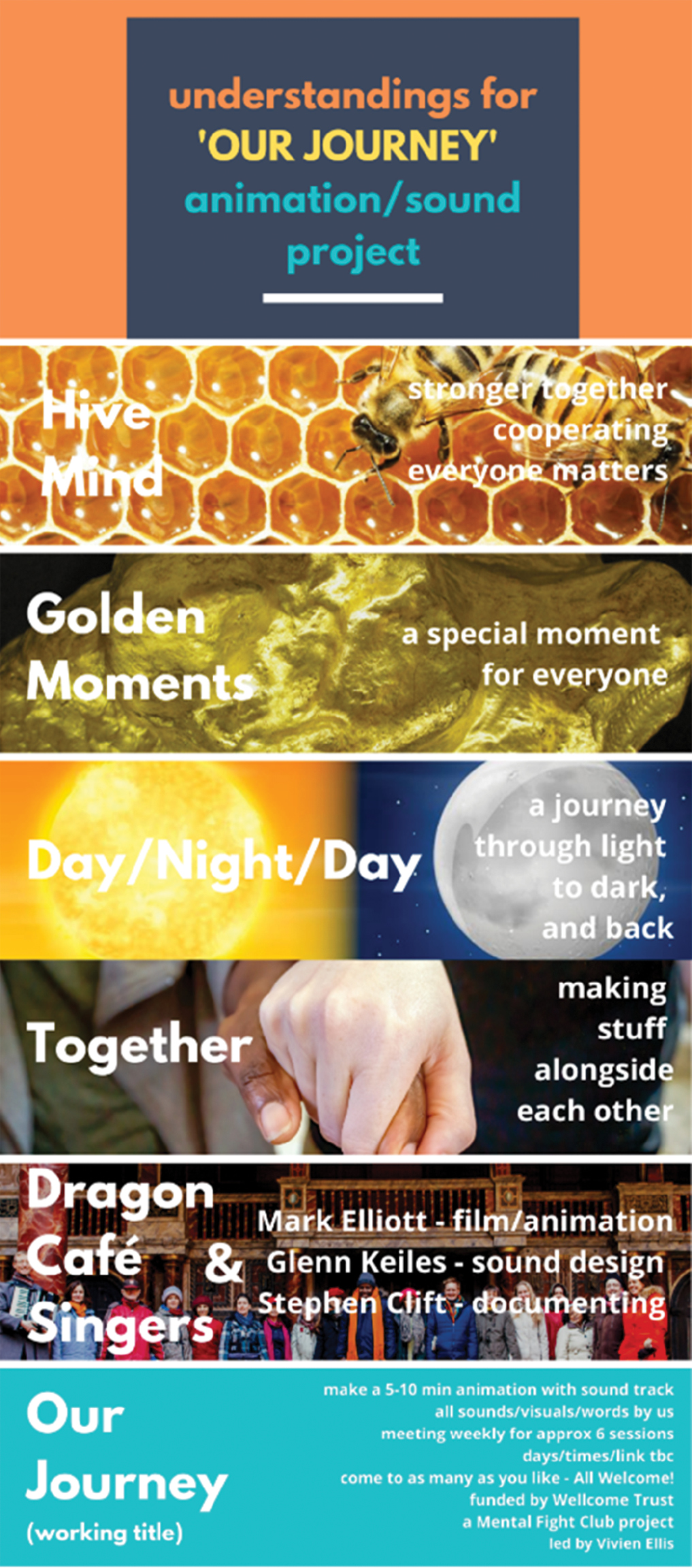
Figure 1 - Guiding structure of the animation project.
Figure 1 was repeatedly shared with all participants during the Zoom sessions to clarify and reinforce the key elements of the co-production process that would lead to the animated film.
Evaluation of the Animation Project
The animation project was developed and conducted by the project lead (Vivien Ellis) under the auspices of MFC, and all aspects of the project were conducted according to the ethical framework of MFC. The project was not funded by the Wellcome Trust as a research project, and the evaluation was not part of the original project plan but was developed collaboratively in the later stages of the project. As a result, the evaluation process was not subject to external review by an institutional ethics committee. Informed consent was gained from all participants providing feedback, with the understanding that all materials arising from the project would be subject to their explicit approval before being made public on the MFC website or used in future publications. The evaluation objectives were to gather feedback on participants”
Engagement with Dragon Café before lockdown (the mental health challenges they encountered, and the benefits experienced from in-person activities offered by Dragon Café)
Experiences of collaborating online and the value of being involved with the process
Opinions of the animated film once it was completed and perspectives on the value of engagement with the project
Methods
S.C. worked with the project participants to develop two approaches to gather information on their engagement with Dragon Café, their experiences during the project, and of the animation film. First, an anonymous online survey of patrons took place in the later stages of the project (after artwork had been produced by participants for the animation and while the film was being created). The online survey consisted of both closed and open questions, allowing participants to provide narratives in their own words. The survey was sent to 32 participants in the project, and 25 completed the questionnaire: 19 women, 5 men, and one describing themselves as “non-binary.” The number of participants in the three age groups were as following: 20–39 years, 3 participants; 40–59 years, 11 participants; 60–79 years, 11 participants, Responses were anonymous; hence, the quoted comments given below are not attributed. Most participants had been members of the Café for at least two years and had joined before the lockdown. Five joined during the lockdown period and only had experience with online meetings and activities.
Second, 13 participants volunteered for a semi-structured telephone interview with S.C. following an online screening of the first full version of the animation online, and an in-person screening at the Streatham Space Project, an arts center in Streatham Hill (April 2022). The telephone conversations were not recorded, but notes were taken and immediately typed up and sent to each participant to check for accuracy. This process worked very satisfactorily, and all participants agreed to the written account as accurately capturing their experiences and feelings, with only factual corrections being made.
Data Analysis
The data gathered from the online survey took the form of structured replies to closed questions and written replies to open questions. The structured replies were analysed as simple frequencies, percentages being inappropriate given the number of participants. The written replies were analysed thematically, based on a close reading of the texts. The telephone interviews took the form of a semi-structured conversation and the notes agreed with each participant were again analysed in terms of the dominant themes expressed. A lengthy process of generating themes and sub-themes, searching for themes and naming them, together with independent analysis by separate coders, was considered unnecessary given the limited sample and the transparency of the feedback provided by participants.
An advanced draft of the report was circulated to everyone involved in the project for their comments on the account given. The report was accepted without amendments as providing an accurate account of the project and participant responses to it.
In the extracts from the interview notes reported below, participants names are replaced by pseudonyms.
Results
Online Survey During the Project: Mental Health and Engagement
Participants’ Experiences of Mental Health Challenges
Over three-quarters of patrons described mental health issues (e.g., depression, bipolar disorder, schizophrenia, PTSD, self-harming behavior, hoarding, bereavement), and just under a third referred to physical health problems (e.g., heart problems, cancer, Parkinson disease, diabetes, breathing difficulties) and life challenges (e.g., unable to work, lack of income, domestic abuse, loneliness, being housebound).
References to mental health issues were sometimes qualified as severe or enduring, and some participants described multiple challenges. The following anonymous quotations provide an illustration of the range of health and social issues experienced:
Bereavement from my dad and nan, and my cat had died, so was down, depressed, sad and emotionally delicate at times. Anxiety, overwhelmed to do with certain things. Relapses from bipolar at some points now and then. Took a long time to recover from. Migraines a lot, and tiredness from medication.
A lifetime of anxiety and depression, ever since a little lad, when I was punched, tormented, and mocked by my elder brother in front of the gang. A terrifying feeling of powerlessness, humiliation, and self-disgust.
I was and still am experiencing chronic illness, disability, and complex serious mental health challenges. I have not been able to work or study for a decade and [have been] housebound with little to do except try and manage my health issues.
Activities During the Online Animation Project
Participants were asked about their level of attendance in animation project Zoom sessions and the character of their creative activities and creative that they contributed to the film. A quarter of participants attended every session or “very regularly,” a fifth “fairly regularly,” and just over half “occasionally.” The creative work produced by participations spanned a wide range of art forms (especially visual art, writing, and sound recordings, but also photography), with over half of the participants recording a song for the soundtrack of the animation.
Online Survey During the Project: Reflections on the Value of Engagement
Respondents to the survey also gave feedback on their feelings about involvement in the animation project and whether they felt it had helped their mental health and well-being. Twenty-one participants gave anonymous feedback on these issues, with appreciative and positive comments made in all cases. Five themes were identified by S.C. from the testimonials: appreciation, social connection, structure, creativity, and well-being. Quotations are given below to illustrate these themes and are not attributed as the survey was anonymous.
Participants Appreciated the Project
Given the history of participants’ involvement in the Dragon Café prior to lockdown, the continued support provided during lockdown, and participants’ active commitment to the animation project, it is no surprise to find that everyone responding to the survey expressed their appreciation. The following quotations are typical:
I feel and have found it a fascinating and incredible project to be a part of. That has developed from small things from each of us that have made a beautiful final result in the making, and love that each of us has had a small part to play, knitted together to create this amazing animation film just marvellous honestly.
It’s been so great to take part in a project that takes account of participants’ mental health, where you’re not under pressure, it is ok to do as much or as little as you want, you’re not made to feel bad if you have to leave early or your attendance is all over the place, or you just want to sit with the group and not have to participate, like if you’re finding it hard to talk….
Project Supported Social Connection
Two of the serious challenges of lockdowns were the restriction of leaving home and being unable to meet with family and friends. The continuation of Dragon Café online was therefore a considerable support for participants in maintaining social connections:
Because of lockdown and not being able to get out and see people and family, it was great to have these times of being together online really regularly being with friends I have got to know through the course of this project and Vivien Ellis’s singing group just to keep me from going stir crazy.
A sense of belonging. Having friends, not being lonely. It’s so lonely being on your own. Even on Zoom, you could see someone’s face—you’re in your little cell at home, just seeing someone. It has been even harder, (in Covid time) with mental illness. This has helped me feel less alone.
Participants Valued a Structured Approach
Considerable care was taken by the project lead Vivien Ellis and other members of the artist team to provide a clear and regular framework for online meetings and activities during the week for participants to pursue in order to create material (paintings, photographs, writing, sound recordings, etc.) for the animated film. This philosophy also continued after the lockdown period when it was possible for members of the project to meet in person to record music and then to view a draft of the film. Participation was always voluntary, and there was no obligation to take part in any activities arranged. Many participants commented on the value of this structured but flexible approach:
Vivien Ellis has guided us through, step by step, which has really helped. And recording in the church was just a beautiful and very special experience, and something I will never forget.
The opportunity to take part in the recording gave me a reason and encouragement to make a sizeable journey using public transport for the first time in several years. It was very daunting, and I was not pushed or cajoled into coming. There was always a dialogue.
Project Enhanced Participants’ Creativity
At the heart of the animation project was collaborative co-creation through every member of the project producing material for the animation. The stimulus to creative engagement and production was commented on by most participants:
Since lockdown, online services meant I had regular, easy access to such activities and being a part of a longer project with a collaborative outcome has helped me have something to look forward to, be interested in, motivate myself to take part in, explore and expand my creativity, share with others and see how interesting and creative others can be in sharing their stories.
The release of my creative energy in the boundless, spiritual world of the Imagination, which became both a life enhancer and a life saver to me in the enforced Covid confinement of my small flat….
Project Enhanced Participants’ Well-being
The Dragon Café aims to provide creative opportunities for patrons to support their mental health and well-being, and this principle was at the heart of the animation project. All participants commented on the value of their engagement for their well-being:
Being part of this project, and others like it, has been a really crucial part of my mental health recovery journey. Encouraged me to open up, feel part of something bigger than myself and feel part of a community.
Depression stops you from being aware. What I’ve gained is self-esteem, confidence, feeling like part of a group—that’s a big thing for me, feeling part of.
I’ve really found it so therapeutic, the bringing together. For me, this is sanity—keeps my head above water, it’s that flicker of light to hold onto.
Telephone Interviews Following Completion of the Animation
Participants’ Reactions to the Film and their Golden Moments
The final film3 is approximately eight minutes long and consists of animated sequences created by M.E. based on images and recordings created by participants in the project. These included paintings, drawings, photographs, and passages of creative writing. The film reflects the themes illustrated in Figure 1, and the images are accompanied by a soundtrack of a song titled “Morning, Noon and Night,” with lyrics and music composed and performed by participants (Figure 2).
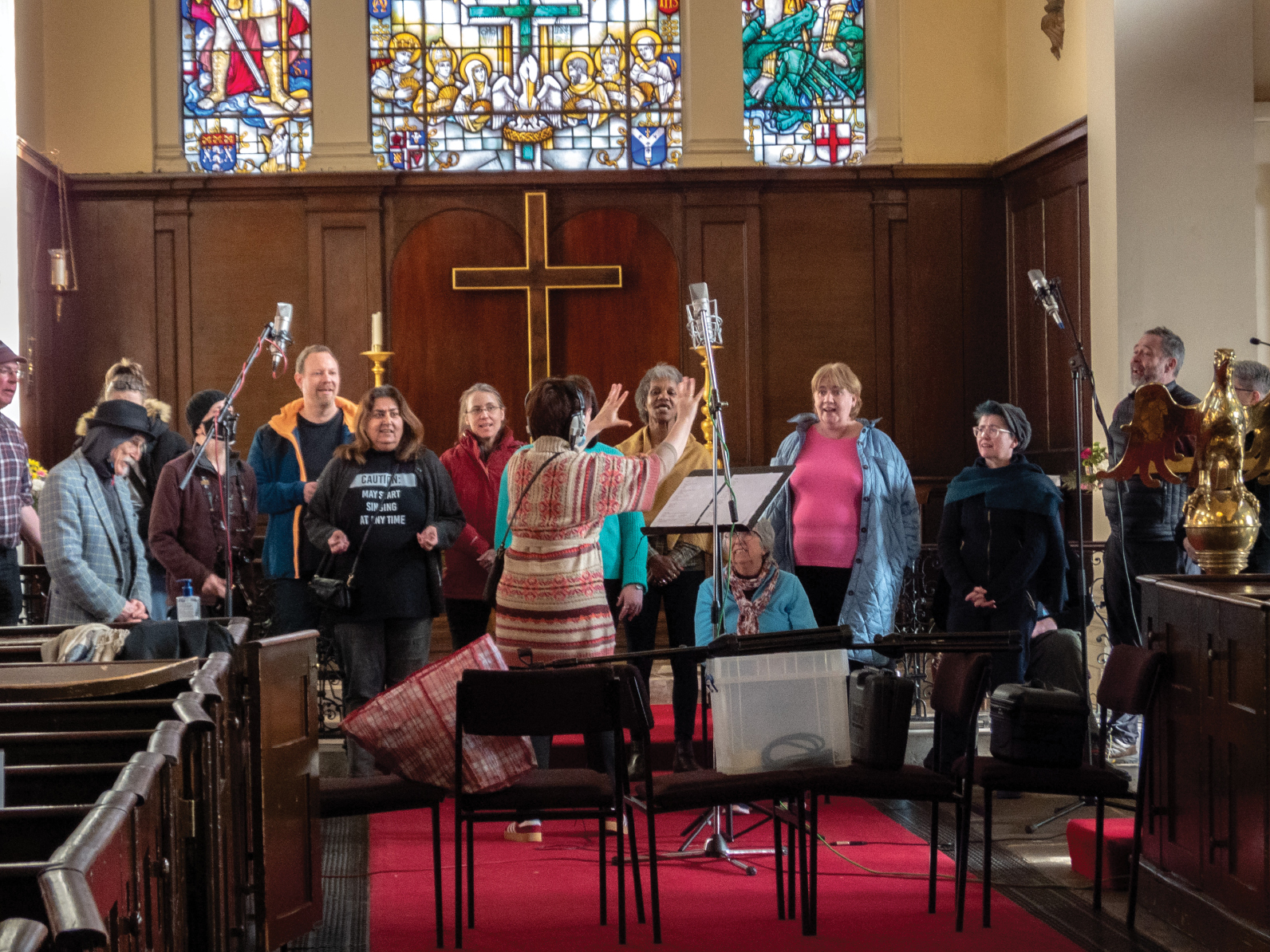
Figure 2 - Photograph of participants recording a song for the animation soundtrack, St George the Martyr Church, Southwark. London.
All interviewees were positive about the film, with some describing intense emotions at seeing the film for the first time at the Streatham screening. Throughout the following illustrative quotations from the written accounts of the interviews, there are references to the same themes as identified above from the online survey: appreciation, social connection, structure, creativity, and well-being. The quotations also illustrate the fact that all participants could see their own “golden moments” in the film where creative ideas they offered were animated. All names below are pseudonyms.
Amara was very enthusiastic about seeing the film:
Amazing! I never thought in this world…when I left the theatre, I was pinching myself and crying…before she had been so unsettled and anxious about seeing it, thinking to herself…did I do anything good for it…But when Amara saw the opening, she was “lost for words, and then when I saw my portraits…I just loved it! (Figure 3).
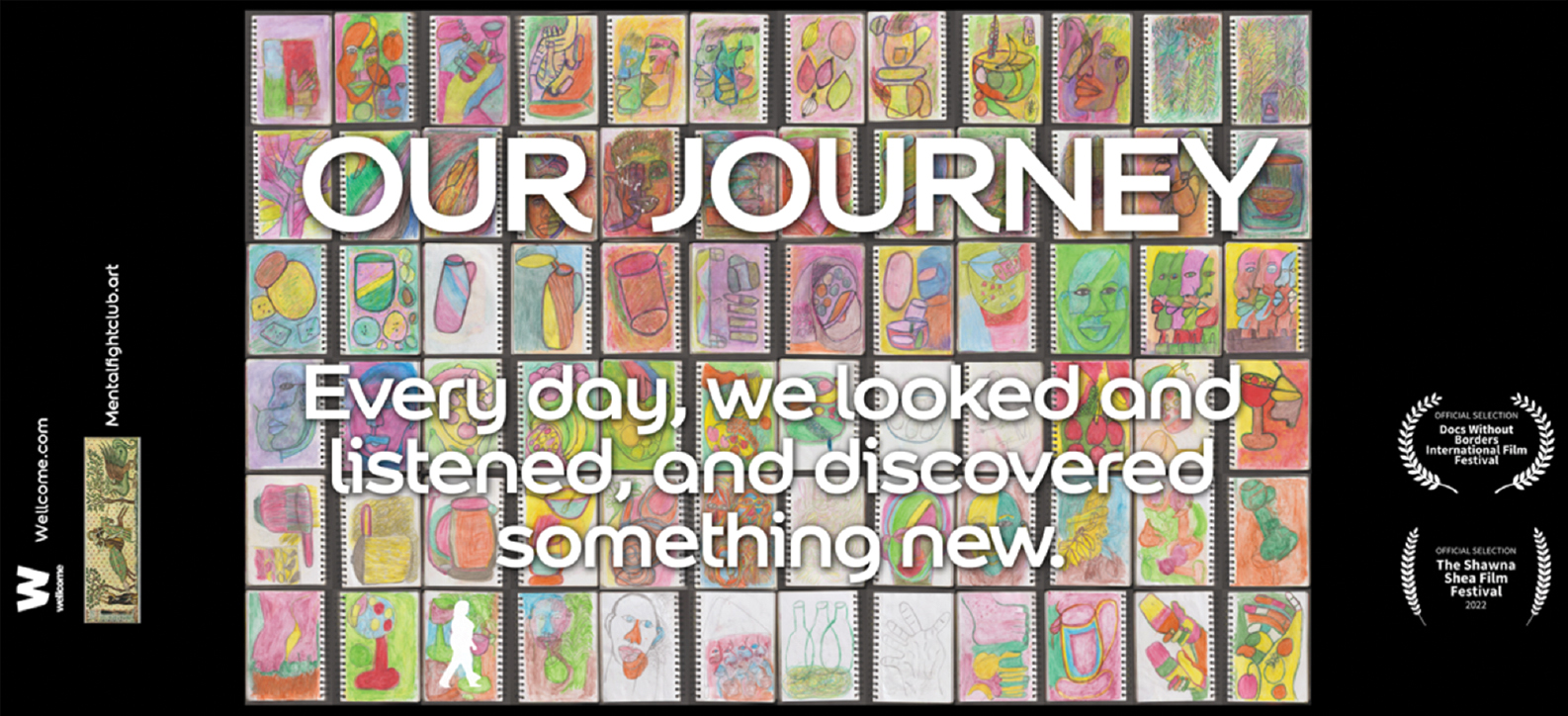
Figure 3 - A publicity poster for the animation, including multiple portraits created by a participant during the project that were incorporated into the film.
Halena also exclaimed enthusiastically in the interview that she “loved it!” and referred to both her own “golden moment” contributions and those of others in the group, referring specifically to Amara’s portraits:
Halena felt the film was beautifully done, moving and gentle but also invigorating. She could see two examples of contributions she has made—“Oh that’s mine!”
Brianna found the film engaging from the very start and was able to see her “golden moment” very clearly—images which were “a validation” of her political commitments:
Brianna “really enjoyed it—it was excellent—from the opening scene I was gripped…so much was happening…the thing that really lingers is the bird flying across the sky.” Her own “golden moment” was very clear as the images of the books she was reading are part of the sequence.
Ariel said he found the film “very relaxing and soothing to watch…,” and he was “intrigued to see what M.E. did in the end,” having seen short examples of animated sequences during the process of the project. With respect to his “golden moments”:
Ariel could see the visuals he contributed very clearly, both at the beginning and at the end of the film. He recorded himself saying the key words—morning, noon, and night—and had then copied the visual trace of the sound frequencies…these images appear in the film….
Coryn was an active participant in the online sessions and contributed photographs of coffee mug stains and a doormat in her block of flats that would be moved each day as people used it, and she would put it back in place. Coryn felt that the project was “great because it was so flexible.” Her “golden moment” was very apparent, with the animation of the door mat moving back and forth and also some images of her feet on the mat. She thought the film as a whole was “brilliant” and “more and more” can be seen “each time you view it.”
Katriel was also very moved when he first watched the animation. His “golden moment” was clearly recognizable, but for him, the film was more important as a celebration of working in collaboration with everyone involved:
Viewing the film for the first time was “overwhelming, such a pleasure, like nothing I’ve ever experienced before, a record of our journey together.” Katriel said he was not a graduate, but he said that seeing the film with others involved in the project was “like a graduation ceremony”. He could see the visual material he had contributed, but to him, that was less important than the sense of collaborating with everyone else.
Kenzie actively contributed to the film through being part of the recording for the soundtrack, and through providing drawings of stars that appear at the end of animation. On first viewing the film, Kenzie “didn’t take to it straightaway,” but the “more I watched it the more I enjoyed it.” She said she “didn’t quite understand” what was happening at first, but on repeated watching, it became clearer.
Kiyan expressed appreciation for how M.E. brought everyone’s work together while honouring their unique contributions:
Kiyan “loved” the film as a whole—it filled him with “amazement, pure pleasure and joy.” [the artists] handled the great quantity of material “so sensitively” and he “recognised the uniqueness of each contribution…the personality and the feel of the person were there…and gave an overall feeling of the richness of the group…we all have this wonderful uniqueness inside….”
For Vanika, the film embodied a sense of connection with others: Vanika said the film was “very nice, unique,” and she “thoroughly enjoyed it…a very nice experience.” For Vanika, the film gave her a sense of “connection with friends and memories.”
For Alden too, the connections with others through the project helped to keep him going through lockdown: Alden appreciated being “part of something bigger than my artistic ego…it was a good collective and individual experience, with regular sessions to help keep me going through the lockdown.”
Comments from two more participants highlight the success of the film to represent and celebrate the diversity of identity and religious belief within the group.
I asked Ren whether she had seen her “golden moment” and she said she didn’t tend to think in those terms about it—but reflecting, she said that she had seen the “colour fields” she had contributed, and she felt that her ideas were taken into account. Ren had produced an ensō symbol for the film, and this was used. She felt it was nice that her “Buddhist tradition” was reflected in the film.”
Leesha thought the film was “cool, interesting, really liked the soundtrack…could hear myself singing.” I asked about the idea of a “golden moment” and in addition to the solo singing, one image was used.—the outline figure appearing at approximately one minute with the words “I have no gender” with the colours of the nonbinary flag.
Further Reflections on What Participants Gained from Participation in the Project
All interviewees gained considerably from participation in the project, with some giving moving and highly personal testimonies of what involvement meant to them. Bina’s account provided especially strong evidence of the power of the project in supporting her mental health and sense of social connection with others:
Bina said: “Oh my God, it has just been really great to have that project in my life…I struggle mentally and don’t have much in my life and find it hard to interact with others, so it has been so important to have a project shared with others in a group.”
Kiyan provided a vivid account of how the project supported his mental health and helped to deconstruct his sense of having a “false self.” He also acknowledges the importance of “trust between the members” and the crucial role of the lead artists:
Kiyan said: “I have found myself…I have come alive really…my real self…I had a false self, put around me by my family.” The success of the animation project was possible Kiyan felt because of the background provided by Mental Fight Club, and the people involved.”
Recurrent themes were the sense of pride, achievement, appreciation of the contributions made by all participants collaboratively, and the key creative role of the animator to bring the images to life:
Vanika said she was “very proud of being part of” the animation project—it was “very different and unique,” and she appreciated how the pictures produced by members of the project, that their creativity did not “stay on the paper” but became “lively” through the animation.
Amara spoke about how the Dragon Café and the animation project provided her with an impetus “to do something for me and to get better”:
Amara said that through Dragon Café she has been “determined to do something for myself and to get better…to meet other people and do something to help myself…my illnesses won’t go away, but through creative activities with others, I have been able to help myself.”
The last word should be given to Katriel, with his final comment echoing the thoughts of Antony Gormley that first inspired the project:
Katriel said that he felt he was “a wiser person, a more patient person” and that he “valued works of art more so.” He will always “treasure the time we shared, the bonds we created, and what the future might hold” for the animation film. The project provided “a rich tapestry that we were lucky to experience…the pandemic was negative, but this was something positive, a gift we were given.”
Discussion
Most Dragon Café patrons who participated in the animation project had attended in-person sessions in the Crypt of St George the Martyr Church before lockdown. They reported histories of challenges to their mental health and well-being, and clearly appreciated and benefited from the opportunities for social and creative engagement that the Dragon Café provided. Their continued engagement with online activities during COVID-19 lockdowns attests to their commitment to the Dragon Café. It is, therefore, no surprise that patrons valued the opportunity to continue meeting with group facilitators, other patrons and friends during Zoom sessions, and the creative challenges presented by the animation project. The five principal themes identified from participant accounts of their experiences and attitudes during the project demonstrate the multi-dimensional nature of the benefits experienced, and feedback during interviews on completion of the animated film underscore more strongly the sense of pride and gratitude patrons experienced.
Creative arts for health projects, and especially those involving the performing arts, can sometimes be ephemeral. Participants gain benefits from taking part, and the benefits may outlast engagement to some extent, but may not result in a lasting creative product. The Dragon Café Animation Project, however, was entirely focused on the co-production of an artful animation. The film co-created by participants constitutes a tangible testament to their efforts, and a symbol of hope in the face of individual challenges to mental health and wellbeing, and the shared trauma of the pandemic. It is with considerable pride that we end this paper by reporting that Our Journey received an award of Merit from Docs without Borders International Film Festival 2023 and was selected by the Shawna Shea Film Festival USA 2022 (Figure 3). It was also screened at the 2023 “Be Epic!’ London International Film Festival, with patrons from the Dragon Café in attendance to sing and speak about their involvement.
Information on the Mental Fight Club on the Charity Commission website: https://register-of-charities.charitycommission.gov.uk/charity-search/-/charity-details/5052431
2More information on The Dragon Café program can be found on the Mental Fight Club website: https://www.mentalfightclub.art/
3The animated film Our Journey can be viewed at: https://www.mentalfightclub.art/our-creative-programme/our-journey
†All authors contributed equally to this work.
Acknowledgements
We acknowledge the Wellcome Trust for funding that made the project possible. Thank you to all patrons of the Mental Fight Club who contributed to this project. We thank Dr. Mette Kaasgaard for invaluable comments on an earlier draft of the paper.
About the Authors
Vivien Ellis is the project lead, musician, and facilitator of Mental Fight Club, London. https://www.vivienellis.co.uk/
Daniel O’Byrne is a songwriter, facilitator, and patron of Mental Fight Club, London.
Mark Elliot is a filmmaker http://www.markelliottfilms.co.uk/about.html
Glenn Keiles is a co-composer, music producer, and sound engineer. https://glennkeiles.com/
Stephen Clift is a professor emeritus of Sidney De Haan Research Centre for Arts and Health, Canterbury Christ Church University, UK. https://orcid.org/0000-0001-5442-267X
Author to whom correspondence should be addressed; E-Mail: stephen.clift@canterbury.ac.uk
Conflicts of Interest
The authors declare no conflict of interest.
References
Okri, B. (1999). Mental fight: An anti-spell for the 21st century. London: Pheonix. | |
Wheeler, S. (2005). Fighting the good mental fight. Journal of Public Mental Health, 4(2), 7–8. DOI: 10.1108/17465729200500012. | |
Wills, E. (2020). Coronavirus: How artists are depicting the lockdown. BBC, 24 April 2020. https://www.bbc.co.uk/news/uk-52296886. |