Art Therapy and Special Education: A Bibliometric Analysis of Arabic Publications
Volume 12, Issue 1, Pages 106-118
ABSTRACT
This bibliometric analysis aimed to identify trends in art therapy publications in special education. The analysis included 183 publications indexed in Arabic databases between 2010 and 2025. The results indicated that 14.75% of the publications were published in 2025, 84.15% of the publications were peer-reviewed articles, and that Arabic dominated 92.35% of these publications. The results also showed that 69.40% of the publications were indexed in the Almandumah database, and that Egypt accounted for 56.83% of the publications. Of the publications, 64.48% targeted autism spectrum disorder (ASD) category, and 50.82% focused on visual and fine arts. The study recommended that Arab researchers conduct studies on the effectiveness of digital arts in special education, as well as other studies addressing special education categories such as sensory impairment (SI), learning disabilities (LDs), and communication disorders (CDs).
摘要
本文献计量学分析旨在识别特殊教育领域中艺术治疗相关出版物的趋势。该分析涵盖了2010年至2025年间收录于阿拉伯语数据库中的183篇出版物。结果显示,2025年发表的出版物占14.75%,同行评审期刊论文占84.15%,阿拉伯语占全部出版物的92.35%。研究还发现,69.40%的出版物被收录于Almandumah数据库,埃及贡献了全部出版物的56.83%。在这些出版物中,64.48%以自闭症谱系障碍(ASD)为目标群体,50.82%聚焦于视觉与造型艺术。本研究建议阿拉伯学者开展数字艺术在特殊教育中有效性的研究,并开展涵盖感官损伤(SI)、学习障碍(LDs)和沟通障碍(CDs)等其他特殊教育群体的相关研究。
KEYWORDS
Arabic databases, Arabic publications, Art therapy, Bibliometric analysis, Special education.
关键词
阿拉伯语数据库, 阿拉伯语出版物, 艺术治疗, 文献计量学分析, 特殊教育.
History
Received July 2026
Accepted July 2026
Open Access
This is an open access article distributed under the CC BY 4.0 license (https://creativecommons.org/licenses/by/4.0/).
1. INTRODUCTION
Art is no longer merely a means of expression but is also recognized globally as a therapeutic approach. Thus, art provides a creative means of understanding thoughts and communicating effectively. According to contemporary scientific advancements, the uses and understanding of art have become specialized professional and academic therapeutic disciplines. In other words, art involves adapting artistic activities in a structured manner to achieve diagnostic and psychological therapeutic goals that align with the abilities of persons with special needs (PSNs) through various art forms such as painting, sculpture, ceramics, crafts, music, dance, singing, and others. Art therapy is not a recent invention; it has been used since ancient times. There is evidence of early applications of the expressive arts. Egyptian physicians encouraged persons with mental illness to engage in artistic activities, and the Greeks used drama and music for their compensatory properties (Elendu, 2024). Meanwhile, the Renaissance emphasized the role of artistic imagination in health and well-being (Carvalho, 2018).
Art therapy developed in the 20th century and was recognized as a profession, aiming to achieve social goals with various groups, including PSNs (Shafir et al., 2020). The PSNs often experience deficits in their verbal language skills, fine motor skills, emotional control, and social interaction. Therefore, they need educational methods that go beyond the purely academic, supporting their linguistic, motor, and social development, and art therapy is one of these methods (Rusli et al., 2025). In other words, art therapy is an effective method for treating disorders and problems experienced by PSNs (Al-Yahyai et al., 2021). Art therapy uses artistic media, artistic creativity, and the client’s response to innovative artworks, to reflect personal interests in addition to providing opportunities for expression and nonverbal communication (George et al., 2021). It is also a therapeutic method and a form of nonverbal expression, projection, and catharsis, where an appropriate treatment plan is developed for each mental illness.
Art therapy involves a blend of visual arts and psychology (Al-Yahyai, 2017). Art therapists have drawn on psychotherapeutic theories to develop a range of client-centered techniques, including educational psychotherapy, mindfulness-based therapy, empathy-based therapy, cognitive-analytic therapy, and social practice (Yermakova & Podolski, 2019). Art therapy can be used effectively in an educational context to address the social and emotional needs of PSNs. Several studies have indicated the effectiveness of art therapy in improving the motor, social, emotional, and academic skills, as well as mental health of PSNs (Haley, 2018; O’Dea et al., 2020; Sabet & Abadi, 2021; Bernier et al., 2022; Harpazi et al., 2025a). Art therapy can also teach entrepreneurship to PSNs by providing them with methods for marketing artistic products, thus increasing their sense of independence and helping them face life’s challenges (Whirley et al., 2020). Therefore, art therapy can be used with various special education categories, such as intellectual disabilities (IDs), sensory impairment (SI), autism spectrum disorder (ASD), attention deficit hyperactivity disorder (ADHD), behavioural and emotional disorders (BEDs), learning disabilities (LDs), and giftedness and talent (GT). The following is a presentation of art therapy research with some special education categories.
Autism Spectrum Disorder
Arab studies have indicated the effectiveness of art therapy on social skills and aesthetic sense of students with ASD (Mustafa, 2015; Al-Sharkawy, 2022; Hadi & Al-Qiq, 2024). Other studies have confirmed the effectiveness of art therapy on sensory skills, visual perception, and the formation of writing symbols (Kilani & Manfi, 2019; Elnahas, 2020; El-Bahnasawy et al., 2021). Alayidh et al. (2025) emphasized the effectiveness of music therapy in improving social interaction and communication skills in individuals with ASD.
Sensory Impairment
Arab and foreign studies have highlighted the role of art therapy and theatre in reducing aggressive behaviour among students with SI (Pordanjani, 2021; Pordanjani et al., 2021). Other studies have confirmed the effectiveness of art therapy in reducing maladaptive behaviour, behavioural problems, feelings of loneliness (Ghadampour et al., 2019; Dahan & Regev, 2025; Ahmadnezhad et al., 2025), and improving the social and personal skills of SI students (Masson et al., 2025).
Intellectual Disabilities
Studies have indicated the positive impact of art therapy on motor skills, maladaptive behaviour, and psychological adjustment in students with IDs (Zadjali et al., 2021; Al-Amaari & Bashatouh, 2024). A review of the literature concluded that music, play, and cognitive behavioural therapy have positive effects on emotional expression and social engagement in IDs (Verdellen-Krauwel et al., 2025). Harpazi et al. (2025b) confirmed that the positive and interactive spirit of art therapists contributed to improved emotional expression and nonverbal communication among students with IDs.
Learning Disabilities
Studies have demonstrated the effectiveness of art therapy in improving the academic and social skills of students with LDs (Beghida & Ahmad, 2021; Al-Sharari, 2023). Meanwhile, other studies have demonstrated the positive impact of art therapy on self-concept and behavioural and emotional skills (Milligan et al., 2015; Al-Qahtani & Mutawalli, 2018; Martínez-Vérez et al., 2024). Art group interventions also have a positive impact on social interaction, well-being, and self-expression of students with LDs (Conolly et al., 2025).
1.1. Bibliometric Analysis
Bibliometric analysis is a quantitative research methodology used to analyse scientific output in a specific field. This analysis aims to examine bibliographic data on scientific publications, including the number of publications, citations, authors, keywords, journals, and research collaborations between institutions and researchers (Passas, 2024). In other words, this type of analysis aims to identify research trends and the most influential topics (Öztürk et al., 2024).
The bibliometric approach aims to analyze quantitative indicators of scientific output using bibliographic data extracted from scientific databases such as Scopus, Web of Science, and others (Donthu et al., 2021). Therefore, bibliometric analysis does not seek to integrate the statistical results of empirical studies, as is the case in meta-analysis, but rather focuses on analyzing patterns of scientific publication, the evolution of research topics, and collaborative and citation networks within a specific field of human knowledge (Niu et al., 2024). The steps involved in bibliometric analysis typically include defining the study topic and formulating keywords, selecting appropriate databases, extracting and cleaning the data, and analyzing it using specialized software such as VOSviewer and CiteSpace. These programs help construct scientific maps and analyse relationships among keywords, authors, or research institutions (Chen et al., 2023). They are also used to analyze citation networks and co-authorship within different scientific disciplines (Passas, 2024). Bibliometric analyzes have witnessed widespread adoption in recent years due to their ability to handle large volumes of scientific data and their role in supporting decision-makers and researchers in evaluating research activity and identifying the fastest growing and most influential scientific fields (Sakib et al., 2024). Bibliometric analysis is also increasingly used in the scientific and humanities disciplines, particularly with the development of digital databases (Lindawati & Meiryani, 2024).
In the Arab world, there is a scarcity of bibliometric research related to art therapy for PSNs. In this regard, Hebi et al. (2022) noted the lack of bibliometric analysis of art therapy research in the Arab world. Therefore, bibliometric analysis can address this problem by providing a comprehensive quantitative overview and presenting a broad panorama and analysis of the current state of art therapy for PSNs in the Arab world. Accordingly, the current study aims to conduct a bibliometric analysis of scientific publications indexed in Arabic databases from 2010 to 2025.
2. METHODS
2.1. Methodology
The current study employed a bibliometric analysis method. This method is a quantitative research approach that involves analyzing scientific publications based on a set of bibliographic data (Noor et al., 2022).
2.2. Data Sources
Scientific publications on art therapy in special education were retrieved from four Arabic databases: Almandumah, Egyptian Journals, Shamaa, and E-Marefa. Therefore, the authors of this study conducted an in-depth search of publications addressing art therapy in these four databases. A total of 1,829 publications on art therapy were published in the four Arabic databases between January 2010 and December 2025. The search results showed that 183 out of 1,829 publications used art therapy with several special education categories. On the other hand, the limitation of publications to the period 2010–2025 can be justified by the fact that these four Arabic databases are recent and do not provide comprehensive, systematic coverage of art therapy publications in the field of special education prior to 2010. Therefore, the study is based on four Arabic databases. These Arabic databases do not offer standardized quality indicators, such as impact factors. Consequently, the selection of art therapy publications in special education was based on their indexing in these four databases, rather than on classification systems. Furthermore, data collection was conducted manually through systematic searching and sorting within these databases, rather than using automated bibliometric analysis tools, such as VOSviewer, which are typically employed in studies using Scopus or Web of Science.
3. RESULTS
Results of question one: “What is the annual distribution of publications on art therapy in special education?”
Figure 1 shows that the total number of publications on art therapy in special education reached 183 during 2010–2025. The number decreased to 5 (2.73%) in 2013 and then gradually increased, reaching 27 (14.75%) in 2025, the highest annual value.
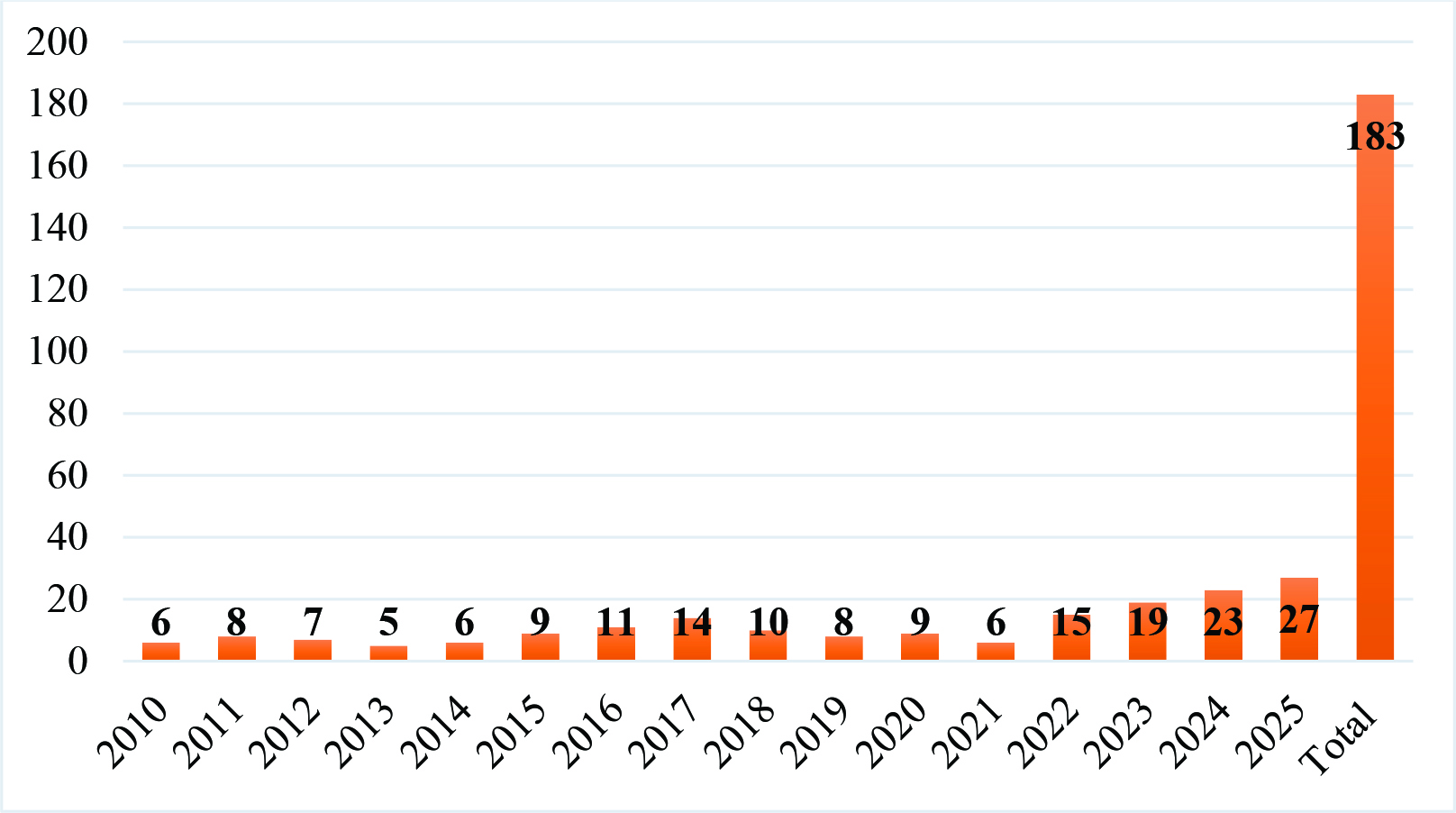
Figure 1. - Annual distribution of publications (2010–2025).
Results of question two: “What are the data sources of art therapy publications in special education?”
Figure 2 illustrates the data sources for art therapy publications, including articles, master’s and doctoral theses, and conference proceedings indexed in Arabic databases. The number of peer-reviewed articles published in Arabic databases reached 154 (84.15%). The number of master’s and doctoral theses reached 18 (9.84%), while the number of conference proceedings reached 11 (6.01%).
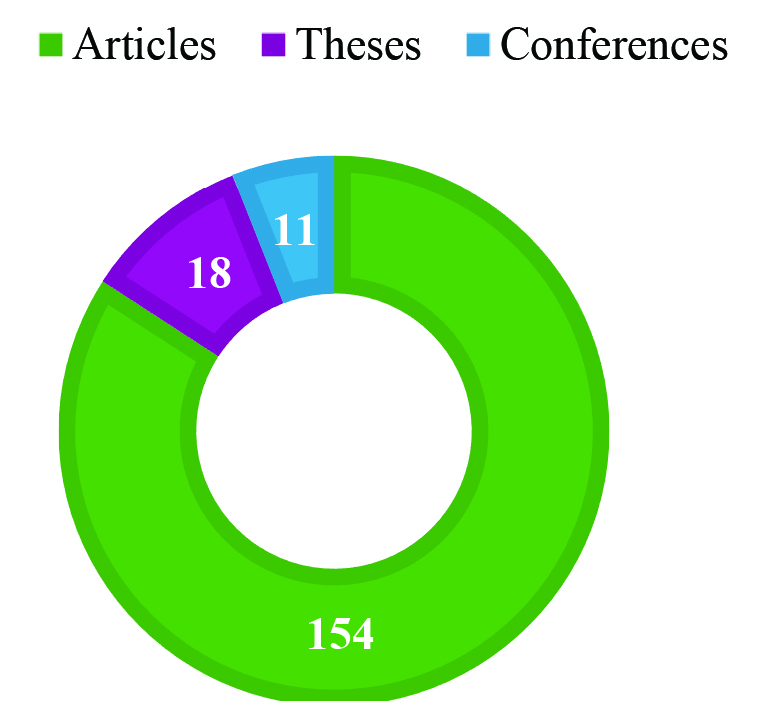
Figure 2. - Data sources of art therapy publications.
Results of question three: “What is the language of art therapy publications in special education?”
Figure 3 shows that 169 (92.35%) of art therapy publications were written in Arabic and 14 (7.65%) in English.
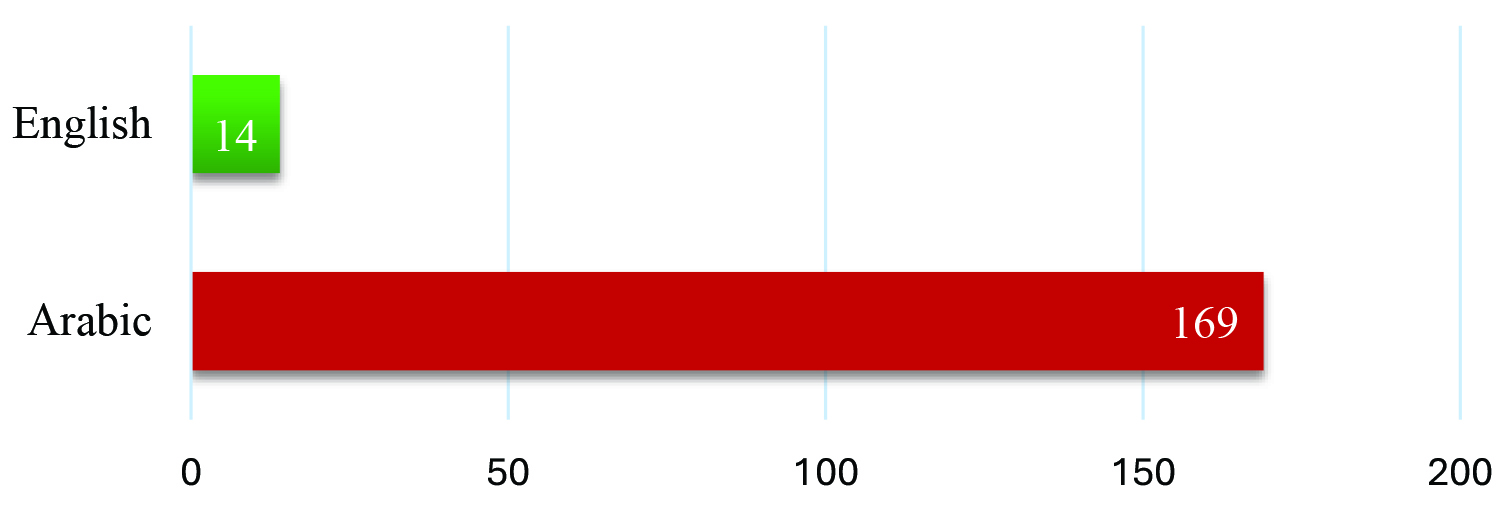
Figure 3. - Language of publications.
Results of question four: “How are art therapy publications in special education distributed in Arabic databases?”
Figure 4 illustrates the distribution of publications on art therapy in the field of special education among Arabic databases (Almandumah, Egyptian Journals, Shamaa, and E-Marefa). These databases constitute the primary sources of information in the Arab world. Consequently, the Almandumah database accounted for the largest number of publications, with 127 (69.40%) of the total. Egyptian Journals came in second with 36 (19.67%) publications, followed by Shamaa with 14 (7.65%), and finally E-Marefa with 6 (3.28%).
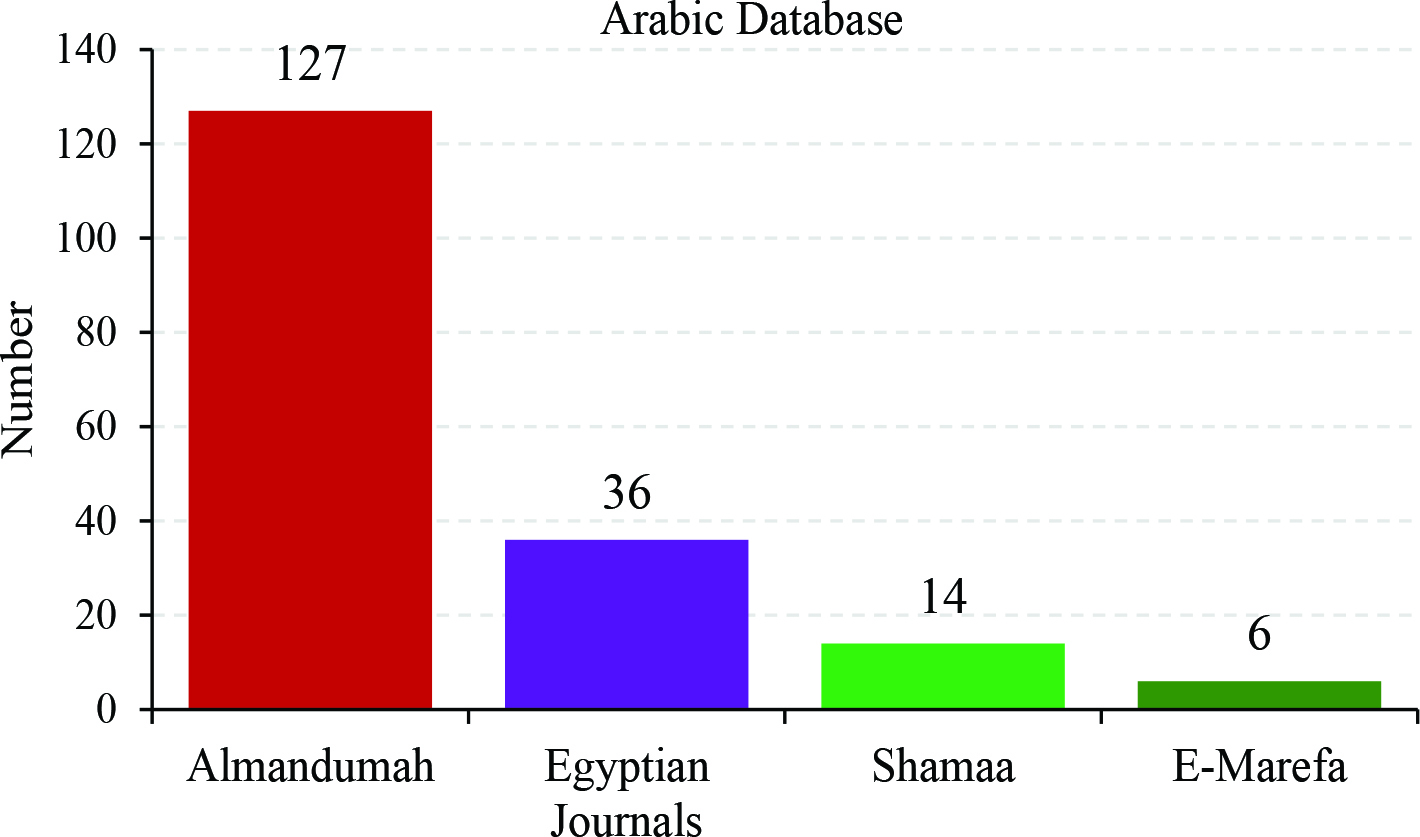
Figure 4. - Distribution of publications in Arabic databases.
Results of question five: “Which Arab countries contribute publications on art therapy in special education?”
Figure 5 shows that 104 publications (56.83%) came from Egypt. This makes Egypt the leading country in art therapy publications in special education at the Arab world. In contrast, Palestine ranked last with 3 publications (1.64%).
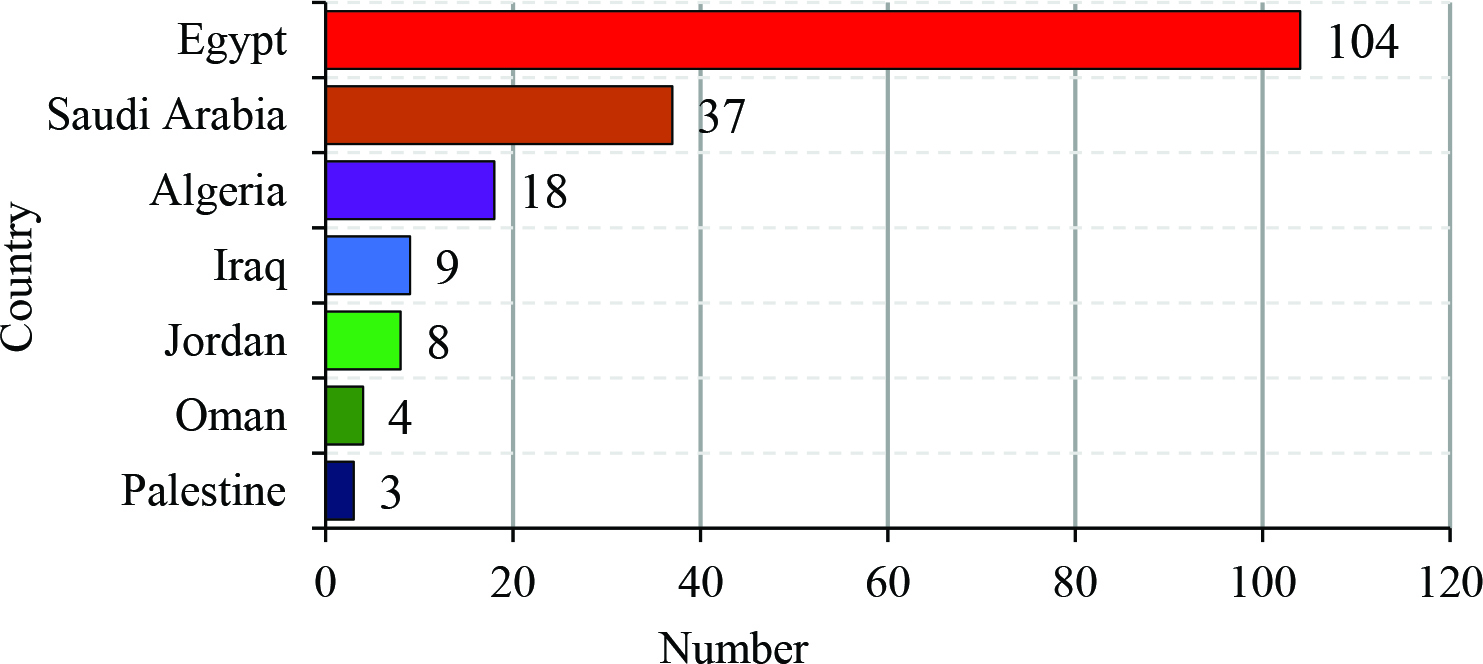
Figure 5. - Distribution of publications in Arab countries.
Results of question six: “What are the special education categories targeted by art therapy publications?”
Figure 6 indicates that seven categories within special education were targeted by art therapy publications in Arabic databases. ASD accounted for 118 out of 183 publications (64.48%), while communication disorders (CDs) came in last with only 3 publications (1.64%).
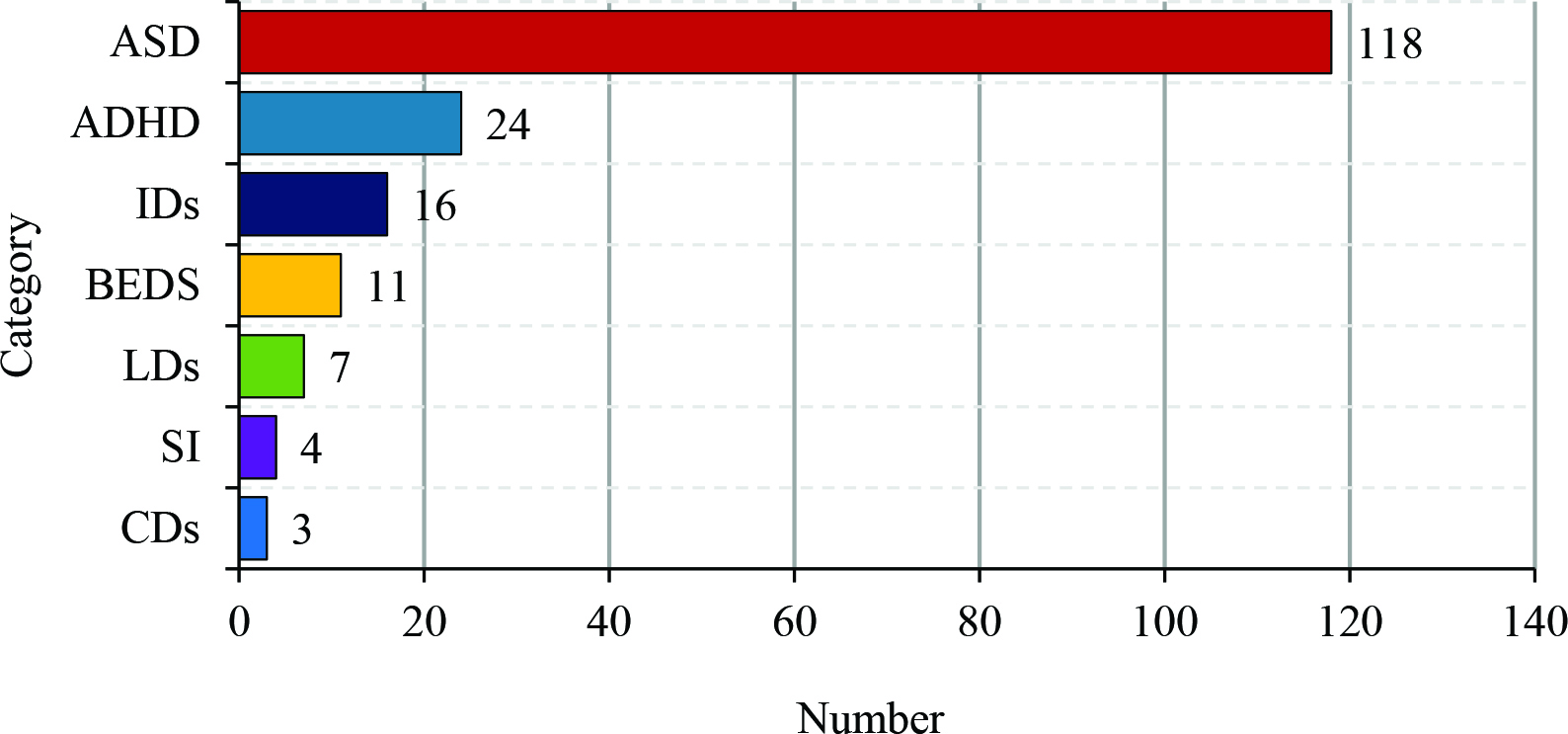
Figure 6. - Special education categories.
Results of question seven: “What types of art therapy are targeted by special education publications?”
Figure 7 shows that visual and fine arts are the most common, with 93 publications (50.82%), while digital arts ranked last, with 16 publications (8.74%).
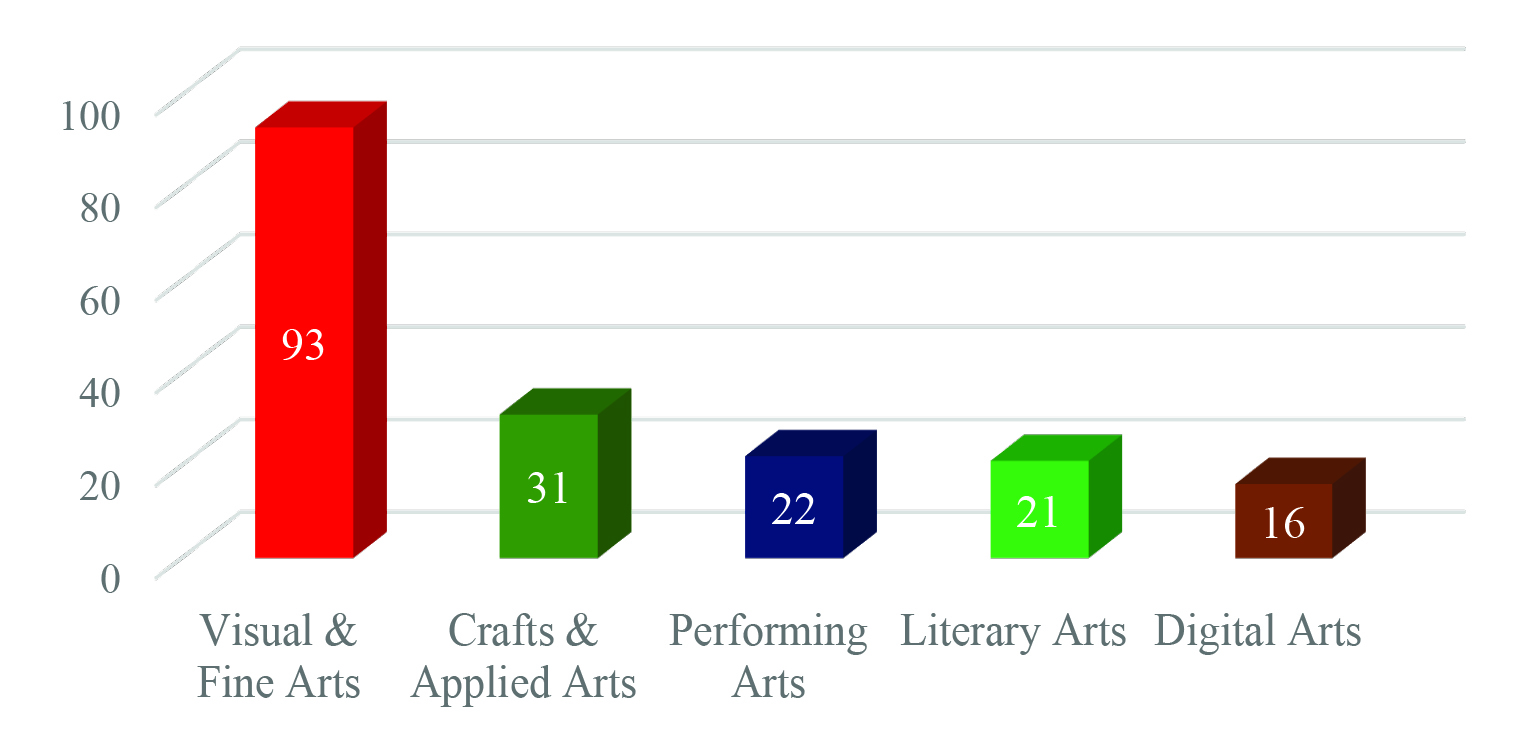
Figure 7. - Types of art therapy.
4. DISCUSSION
4.1. Annual Distribution of Publications from 2010 to 2025
The results showed that 2013 had the fewest publications, with 5, while 2025 had the most, with 27. This variation in the annual distribution of publications on art therapy in special education can be explained by the fact that in 2013, the application of art therapy techniques in special education was relatively new in the Arab world and did not receive sufficient academic or institutional attention. Furthermore, awareness of the role of art therapy in supporting PSNs was limited due to the scarcity of university academic programs, training programs, and research interests among Arab researchers. However, starting in 2015, signs of a positive shift in academic and research interest in using art therapy in special education began to emerge. In this regard, Maalouf et al. (2019) confirmed that Arab universities and research centers began to support interdisciplinary research that combines special education, the arts, and psychotherapy. This trend opened the door to new research topics and ideas. Al Duqail (2020) also highlighted that art therapy in the Arab world remains in its early stages, with ongoing field trials and research. Therefore, there is a growing number of annual publications that utilize art therapy techniques in the field of special education. This increase, reaching 27 publications in 2025, may reflect the growing interest of fine arts colleges, art education departments in Arab universities, and researchers in art therapy.
4.2. Data Sources of Art Therapy Publications
The results showed that the data sources for art therapy publications in special education varied across articles, theses, and conference proceedings. This indicates the multiplicity of scientific publishing channels in Arabic databases. Peer-reviewed articles ranked first with 154 articles out of the total publications, followed by theses with 18, and then conferences with 11. This can be justified by the fact that articles and research on the use of art therapy in special education are well received in Arabic journals and reflect researchers’ interest in publishing in these journals. Therefore, the dominance of articles in Arabic research output aligns with international trends, which consider articles the most frequently published data source in foreign literature (Wu & Chung, 2023). Arab researchers in areas of art therapy and special education are focusing on publishing peer-reviewed research in these areas, contributing to the growing recognition of art therapy and special education as emerging scientific fields within academia.
The low number of conference papers may reflect the scarcity of scientific conferences addressing the use of art therapy in special education in the Arab world. This low number of publications in conference proceedings may also be related to the delayed organization of art therapy conferences. For example, the first Arab conference on art therapy was held in Egypt in 2019 (Hebi et al., 2022). On the other hand, many Arab researchers prefer publishing in peer-reviewed journals rather than presenting at conferences, as journal publication is considered more significant for academic promotions and contract renewals. Schimanski and Alperin (2018) confirmed the positive impact of research publication on academic promotions. The results also indicated that 18 of the publications were master’s and doctoral theses. The limited number of publications in this field can be attributed to the fact that art therapy in special education is still a relatively new research area in the Arab world and is interdisciplinary, overlapping with several other academic disciplines. On the other hand, Almandumah’s database is the only Arabic database that contains full texts of master’s and doctoral theses (Abdulrahman, 2021). The lack of master’s and doctoral programs in art therapy at Arab universities may be reflected in the limited number of theses.
4.3. Language of Art Therapy Publications
The results indicated that 169 publications were written in Arabic and 14 in English. The increasing number of Arabic research studies in this field demonstrates a growing societal and research awareness within the Arab world regarding art therapy, particularly following the COVID-19 pandemic. Carlier et al. (2020) noted that the pandemic led to increased awareness of the cultural competence of art therapists and the development of online art therapy services in the Gulf Cooperation Council (GCC) countries. Therefore, the rise in Arabic-language research can be attributed to the nature of the research community and target audience. Most researchers in special education and art therapy in the Arab world direct their research toward local practitioners, teachers, and specialists who use Arabic in their daily work.
Therefore, researchers choose to publish in Arabic to facilitate the use of the findings in educational and applied settings of these studies, as the Arabic language enables the sharing of cultures, values, and traditions and influences how individuals manage their public and community lives (Okasha et al., 2012).
4.4. Distribution of Art Therapy Publications Across Arabic Databases
The results indicated that publications on art therapy in the field of special education were distributed across Arabic databases as follows: 127 in Almandumah, 36 in Egyptian journals, 14 in Shamaa, and 6 in E-Marefa. Thus, the Almandumah database included the largest number of art therapy publications. This significant variation in the number of publications across Arabic databases may indicate substantial differences in coverage and indexing criteria. The Almandumah database is more comprehensive, covering a larger number of Arabic scientific journals from various disciplines, including educational and psychological sciences. This database focuses on indexing research output in the Arab region and is widely used in universities, research centers, and libraries, playing a pivotal role in research and knowledge dissemination in the Arab world. Consequently, this role of Almandumah database increases the chances of finding publications in the field of art therapy and special education. While the E-Marefa database may be more limited in scope, focusing on specific types of knowledge or specific fields, or having fewer indexed journals, this does not necessarily mean that Almandumah is superior. Rather, it suggests that it is better suited for compiling and organizing publications in the field of art therapy and special education in the Arab world, according to the current research scope. In this regard, Abdulrahman (2021) noted that Arabic databases have a limited impact on the visibility of Arabic-language scientific output. Hebi et al. (2022) pointed out that Arab art therapists, who have been working in their communities for many years, do not publish enough research in academic journals because art therapy is relatively new in the Arab region. Therefore, many researchers have emphasized raising awareness of art therapy by publishing research and studies, bridging the gap between theory and practice, and recognizing art therapy as a scientifically and professionally grounded field (Carlier et al., 2020; Robb, 2022).
4.5. Distribution of Art Therapy Publications in Arab Countries
The results indicated that Egypt ranked first in the number of publications. This makes Egypt the leading country in publishing art therapy in special education, and it plays an active role in developing the arts and art therapy in the Arab world. This can also be attributed to Egypt’s long history in education and research in the humanities and social sciences, and the availability of a large number of universities and research institutions related to special education, art education, and fine arts. These human and material resources have created a stimulating environment for research and publication in the field of art therapy and special education, including researchers, academics, and practitioners, compared to other Arab countries. Al Duqail (2020) indicated that art therapy began in Egypt in the mid-20th century, focusing on psychological diagnostic issues through drawing. Elnemais (2017) attributed Egypt’s prominence in art therapy publications to its status as the most populous country in the Arab world.
The results showed that Palestine ranked last among Arab countries with only three publications on art therapy in special education. This may be attributed to the Israeli occupation, which negatively impacts all aspects of life, including education and research. In this regard, Leeds (2015) confirmed the absence of a professional association or art therapy training program in Palestine. Despite these challenges, the existence of even a small number of publications indicates ongoing efforts and growing interest in art therapy in Palestine. Overall, Al Duqail (2020) indicated that the research in art therapy remains limited in the Arab world.
4.6. Special Education Categories Targeted in Art Therapy Publications
The results indicated that ASD is the most targeted category of special education by Arab researchers, with 118 publications. This may be due to a significant increase in the prevalence of ASD worldwide, making it a research priority for art therapists and practitioners in the field of special education. On the other hand, the funding allocated to research on ASD, compared with other special education categories, may contribute to the higher number of publications in the ASD category. Furthermore, increased public awareness of ASD in the Arab world encourages researchers to conduct studies on ASD. There is institutional interest in art therapy research for individuals with ASD. Al Duqail (2025) indicated that this interest has encouraged researchers to explore applicable therapeutic interventions in the educational field, such as art therapy, which is considered a non-pharmacological therapeutic intervention that can be adapted to the needs of children with ASD.
The abundance of publications on art therapy within the ASD category can be justified by the positive impact of art therapy on children with ASD. This is further supported by previous research, which indicated the positive impact of art therapy on the cognitive, social, and communication skills of children with ASD (Jia, 2023; Zhou et al., 2024; Al Duqail, 2025; Wei et al., 2025; Zhang et al., 2025).
The results indicated that CDs ranked last among the special education categories with only three publications. This may be due to a traditional focus on other treatment methods for CDs, such as speech and language therapy, while neglecting the role of art therapy as an effective tool (Martínez-Vérez et al., 2024). Also, some believe that art therapy contradicts the religious ideology that considers the visual representation of humans or animals to be idolatry (Dawisha, 2016). Therefore, the category of CDs has not received sufficient attention from Arab researchers due to its overlap with other special education categories, the limited diagnostic methods, and the scarcity of remedial education programs offered to children with these disorders in schools and kindergartens. This has resulted in a lack of publications on art therapy within the CDs category. Perhaps these reasons have led Arab researchers to focus on ASD, ADHD, and IDs, given the availability of educational programs attached to schools. This makes it easier for researchers to identify target groups in their studies, as these are clearly defined and identifiable categories. On the other hand, the low number of Arabic publications in the CDs category does not necessarily indicate limited effectiveness of art therapy for this group; rather, it may reflect the scarcity of Arabic publications. Internationally, research has confirmed the effectiveness of art therapy in improving communication skills and oral expression and in identifying verbal problems among students (Grajo et al., 2020; Or et al., 2022). In the Omani context, Al Salmi et al. (2025) confirmed the effectiveness of visual art therapy-based interventions on the language expression skills of students with oral language disorders and dyslexia.
4.7. Types of Art Therapy Targeted by Special Education Publications
The results showed that visual and fine arts are the most frequently studied types of art therapy. This result reflects a trend towards using visual arts in expression and communication. On the other hand, digital arts ranked last in terms of the number of studies. This may indicate that the use of digital technologies in art therapy remains limited in Arab countries. These findings can be explained by the fact that visual arts such as painting, sculpture, ceramics, photography, collage, mosaics, and printmaking have a long history in Arab and Islamic culture. These arts have been part of cultural expression and heritage for centuries, resulting in a broad knowledge base and technical expertise in visual and plastic arts (Al-Kandari & Al-Azmi, 2020), as well as easy access to materials for these art forms. Furthermore, their widespread availability and affordability facilitate their use by researchers and practitioners in art therapy.
In this regard, Kaiser and Kay (2015) stated that art forms are fundamental to art therapy interventions. Most intervention studies have used some form of visual art therapy as a means of communication or conflict expression. This finding aligns with Wu & Chung (2023), who demonstrated that visual arts are the most frequently used genre in art therapy.
The low ranking of digital arts (graphic design, animation, interactive art, digital photography, and multimedia) can be explained by their relatively recent emergence and the specialized technical skills and expensive equipment and software they require, which may limit their accessibility and implementation in art therapy. This finding aligns with Carlton (2014), who noted that digital arts are a relatively new field and that the perception of technology in art therapy is characterized by ambivalence and a tendency toward acceptance and rejection. In contrast, Al-Yahyai et al. (2019) emphasized the strong relationship between arts and technology. This relationship has contributed to activating the role of the arts for PSNs and effectively promoting their integration into society.
5. CONCLUSION
This bibliometric analysis is the first study to examine art therapy research in special education in the Arab world. It analyzed publications indexed in Arabic databases between 2010 and 2025 to identify publication trends, research patterns, and gaps in the field. The findings contribute to mapping the research landscape of art therapy in special education. The study recommends further research on the effectiveness of digital arts and on underrepresented special education categories, including SI, LDs, and CDs. It also encourages Arab researchers to publish more research in English-language journals and promote its indexing in Arabic databases.
ACKNOWLEDGEMENTS
The authors extend their sincere thanks to the Deanship of Research at Sultan Qaboos University for funding this study (RF/EDU/ARTS/25/01). We also thank the Talent and Giftedness Research Group at Sultan Qaboos University for selecting the research topic.
AUTHOR BIOGRAPHIES
Najlaa Salim Al Saadi obtained her PhD in art education, specializing in hand printing. Her research interests include printing, graphic engraving, contemporary art techniques, children’s art, Islamic art, art and heritage, and Arab and Islamic identity in the arts. She is currently working as an Associate Professor at Sultan Qaboos University.
Suhail Al-Zoubi obtained his PhD in Special Education from the University of Science Malaysia (USM). His main research interests are in LD, ADHD, giftedness, inclusive education, and co-teaching. He is currently working as an Associate Professor at Sultan Qaboos University.
Fakhriya Al-Yahyai obtained her PhD in fine arts (Drawing and Painting) from De Montfort University. Her main research interests are post modernism; art and heritage, Arab and Islamic identity in the arts, creative practices in arts, and visual arts. She is currently working as a Professor at Sultan Qaboos University.
Yusra Al-Mughairi obtained her PhD in Educational Administration from Sultan Qaboos University. She currently works at the Omani Ministry of Education.
CONFLICT OF INTEREST
The authors declare that they have no conflicts of interest related to this research, authorship, or publication of this article.
REFERENCES
Abdulrahman, A. Availability of University Theses in Arabic Databases: Almandumah as a Model. Research in Library and Information Sciences 2021, 27 (27), 517–536. https://sjrc.journals.ekb.eg/article_190336.html
| |
Ahmadnezhad, K.; Shaker Dioulagh, A.; Khademi, A. Comparison of the Effectiveness of Child-Centered Mindfulness Training and Art (Drawing) Therapy on Behavioral Problems and Cognitive Assessment in Children with Hearing Loss in the City of Bukan. Psychological Research in Individuals with Exceptional Needs 2025, 3 (4), 56–66. https://doi.org/10.61838/kman.prien.4879.
| |
Al Duqail, A. The Importance of Therapy by Plastic Arts and Its Different Applied Applications. Journal of Arts and Applied Sciences 2020, 7 (4), 223–239. https://doi.org/10.21608/maut.2020.131348.
| |
Al Duqail, A. The Importance of Fine Art Therapy Intervention for Individuals with Autism Spectrum Disorder: A Literature Review. Jordan Journal of the Arts 2025, 18 (1), 59–73. https://jja.yu.edu.jo/index.php/jja/article/view/523
| |
Al Salmi, A. H. H.; Abu Bakar, A.; Mai, M.; Almaki, S. H. The Effect of Visual Art Therapy on Oral Expression Skills among Students with Oral Language Disorders and Dyslexia in the Sultanate of Oman. Ibn Khaldoun Journal for Studies and Researches 2025, 5 (5). https://doi.org/10.56989/benkj.v5i5.1461.
| |
Al-Amaari, R.; Bashatouh, M. The Degree of Using Art Therapy in the Development of Motor Skills for People with Intellectual Disabilities from the Point of View of Their Teachers. Special Education and Rehabilitation 2024, 17 (59), 283–326. https://doi.org/10.21608/sero.2024.340720.
| |
Alayidh, M.; Alawad, F.; Alanazy, W.; Al-Harbi, F.; Alotaibi, A. M.; Mohammed, Q. A.; Aljubran, A. S.; Al-Otaibi, R. T.; Al-Otaibi, R. F.; Rubaie, T. Music Therapy for People with Autism Spectrum Disorder: A Systematic Review of Randomized Clinical Trials. Cureus 2025, 17 (3), e81361. https://doi.org/10.7759/cureus.81361.
| |
Al-Kandari, A.; Al-Azmi, F. The Role of Visual Culture as an Introduction to the Creation of Artistic Works in Drawing and Painting among Students of the College of Basic Education in Kuwait. Egyptian Journal of Specialized Studies 2020, 8 (25), 55–84. https://doi.org/10.21608/ejos.2020.88857.
| |
Al-Qahtani, S.; Mutawalli, F. The Effectiveness of Art Therapy in Self-Improvement for Pupils with Learning Difficulties. Arab Journal of Disability and Giftedness Sciences 2018, No. 5, 47–90. https://doi.org/10.33850/1805-000-005-003.
| |
Al-Sharari, I. The Effectiveness of Art Therapy on Social Communication Skills among Students with Learning Disabilities. Journal of Specific Education Research 2023, No. 72, 461–492. https://doi.org/10.21608/mbse.2022.168383.1257.
| |
Al-Sharkawy, S. M. R. A. Art Therapy Strategy and Its Role in Developing Social Skills for Autistic Children. Arab Journal of Disability and Giftedness Sciences 2022, 20, 35–57. https://doi.org/10.21608/JASHT.2022.215964.
| |
Al-Yahyai, F.; Al-Amri, M.; Almamari, B. Art and Technology for Persons with Physical Disabilities. Arab Journal of Information 2019, No. 27, 7–18.
| |
Al-Yahyai, F. The Contribution of the Arts to Interdisciplinary Sciences: Art Therapy. Al-Academy 2017, No. 82, 135–146. https://doi.org/10.35560/jcofarts82/135-146.
| |
Al-Yahyai, F.; Al-Zoubi, S. M.; Bakkar, B.; Al-Hadabi, B.; Al-Gaseem, M.; Al-Qaryouti, I. Effects of a Special Art Education Course on Attitudes toward Omani Learners with Special Needs. International Journal of Higher Education 2021, 10 (1), 191. https://doi.org/10.5430/ijhe.v10n1p191.
| |
Beghida, I.; Ahmad, N. The Applied Effectiveness of Art Therapy in Education for Children with Learning Disabilities Who Have Experienced Aggression, Low Self-Esteem and School Readiness. Journal of Childhood and Education 2021, 13 (47), 450–479. http://search.mandumah.com/Record/1388471
| |
Bernier, A.; Ratcliff, K.; Hilton, C.; Fingerhut, P.; Li, C. Y. Art Interventions for Children with Autism Spectrum Disorder: A Scoping Review. American Journal of Occupational Therapy 2022, 76 (5), 800–809. https://doi.org/10.5014/ajot.2022.049320.
| |
Carlier, N. G.; Powell, S.; El-Halawani, M.; Dixon, M.; Weber, A. COVID-19 Transforms Art Therapy Services in the Arabian Gulf. International Journal of Art Therapy 2020, 25 (4), 202–210. https://doi.org/10.1080/17454832.2020.1845759.
| |
Carlton, N. R. Digital Culture and Art Therapy. The Arts in Psychotherapy 2014, 41 (1), 41–45. https://doi.org/10.1016/j.aip.2013.11.006.
| |
Carvalho, C. A. S. The Eminent Role of Imagination in Burton’s Treatment of Melancholy. Filosofia Revista Da Faculdade De Letras Da Universidade Do Porto 2018, 35, 107–135. https://doi.org/10.21747/21836892/fil35a5.
| |
Chen, H.; Tsang, Y. P.; Wu, C. H. When Text Mining Meets Science Mapping in the Bibliometric Analysis: A Review and Future Opportunities. International Journal of Engineering Business Management 2023, 15. https://doi.org/10.1177/18479790231222349.
| |
Conolly, N. B.; Hoosain, M.; Rautenbach, G.; Plastow, N. A. Art Group Interventions for Children with Learning Differences: A Systematic Review. Occupational Therapy Journal of Research 2025, 46 (3), 389–401. https://doi.org/10.1177/15394492251340378.
| |
Dahan, N.; Regev, D. Art Therapy for Deaf or Hard of Hearing Adolescents and Adults. Art Therapy 2025, 43 (1), 5–14. https://doi.org/10.1080/07421656.2025.2538920.
| |
Dawisha, A. Arab Nationalism in the Twentieth Century: From Triumph to Despair, New ed.; Princeton University Press, 2016. https://doi.org/10.23943/princeton/9780691169156.001.0001.
| |
Donthu, N.; Kumar, S.; Mukherjee, D.; Pandey, N.; Lim, W. M. How to Conduct a Bibliometric Analysis: An Overview and Guidelines. Journal of Business Research 2021, 133, 285–296. https://doi.org/10.1016/j.jbusres.2021.04.070.
| |
El-Bahnasawy, A.; Talawi, S.; Ibrahim, M. The Effectiveness of a Visual Art Program in Developing the Skill of Vowelization of Writing Symbols for a Child with Autism Spectrum Disorder. Journal of Psychological Counseling 2021, No. 67, 55–106. https://doi.org/10.21608/CPC.2021.193723.
| |
Elendu, C. The Evolution of Ancient Healing Practices: From Shamanism to Hippocratic Medicine: A Review [RETRACTED]. Medicine 2024, 103 (28), e39005. https://doi.org/10.1097/MD.0000000000039005.
| |
Elnahas, M. Visual Communication and Its Influence on Treatment of Autism Spectrum Disorder. Journal of Architecture, Arts and Humanistic Science 2020, No. 21, 379–404. https://doi.org/10.21608/mjaf.2019.16441.1305.
| |
Elnemais, F. M. Mental Health Care in Egypt: Review of Current State, Policy, and Needs. International Journal of Mental Health 2017, 46 (4), 339–345. https://doi.org/10.1080/00207411.2017.1367447.
| |
George, J.; Yancey, G. B.; Sharpe, D. A.; Moore, A. K. Taking a Pulse of the American Art Therapy Association’s Values: A Study of a Nonprofit Organization in Conflict. The Psychologist-Manager Journal 2021, 24 (1), 48–83. https://doi.org/10.1037/mgr0000109.
| |
Ghadampour, E.; Amirian, L.; Radpour, F. The Effect of Group Painting Therapy on Loneliness, Control of Anger, and Social Adjustment of Primary School Students. Journal of Child Mental Health 2019, 6 (2), 119–131. https://doi.org/10.29252/jcmh.6.2.11.
| |
Grajo, L. C.; Candler, C.; Sarafian, A. Interventions within the Scope of Occupational Therapy to Improve Children’s Academic Participation: A Systematic Review. American Journal of Occupational Therapy 2020, 74 (2), 283–315. https://doi.org/10.5014/ajot.2020.039016.
| |
Hadi, T. A.; Al-Qiq, N. The Effectiveness of a Training Program Based on Group Art Therapy in Developing Social Interaction Skills and Increasing the Aesthetic Sense of an Autistic Child. An-Najah University Journal for Research-B (Humanities) 2024, 38 (4), 633–670. https://doi.org/10.35552/0247.38.4.2180.
| |
Haley, B. Expressive Arts to Promote Regulation and Empathy in the Classroom: A Community Engagement Project, 2018. https://digitalcommons.lesley.edu/expressive_theses/86
| |
Harpazi, S.; Regev, D.; Snir, S. ‘Being Attentive’: Art Therapy for Adults with Intellectual Disabilities. International Journal of Art Therapy 2025, 30 (4), 170–179. https://doi.org/10.1080/17454832.2024.2347898.
| |
Harpazi, S.; Snir, S.; Regev, D.; Moisa, C. Art Therapists’ Experiences of Countertransference with Clients with Intellectual Disabilities. The Arts in Psychotherapy 2025, 93, 102294. https://doi.org/10.1016/j.aip.2025.102294.
| |
Hebi, M.; Czamanski-Cohen, J.; Azaiza, F. Art Therapy in the Arab World. The Arts in Psychotherapy 2022, 81, 101969. https://doi.org/10.1016/j.aip.2022.101969.
| |
Jia, X. The Effectiveness of Art Therapy on Social Development in Children with Autism Spectrum Disorders. Journal of Education, Humanities and Social Sciences 2023, 22, 512–517. https://doi.org/10.54097/ehss.v22i.12516.
| |
Kaiser, D. H.; Kay, L. Arts‐Based Research: The Basics for Art Therapists; Gussak, D. E., Rosal, M. L., Eds.; Wiley, 2015; pp 663–672. https://doi.org/10.1002/9781118306543.ch64.
| |
Kilani, S.; Manfi, R. The Role of Visual Arts in Treating Children with Autism. Al-Jameai Journal 2019, No. 29, 313–331. https://www.aljameai.org.ly/index.php/aljameai/article/view/247
| |
Leeds, C. Comparison of International Art Therapy Projects: Purpose, Training, and Practice of Art Therapy in Developing and Transitioning Countries, IUPUI ScholarWorks, 2015. https://hdl.handle.net/1805/6525
| |
Lindawati, A. S. L.; Meiryani, . A Bibliometric Analysis on the Research Trends of Global Climate Change and Future Directions. Cogent Business & Management 2024, 11 (1), 2325112. https://doi.org/10.1080/23311975.2024.2325112.
| |
Maalouf, F. T.; Alamiri, B.; Atweh, S.; Becker, A. E.; Cheour, M.; Darwish, H.; Ghandour, L. A.; Ghuloum, S.; Hamze, M.; Karam, E.; Khoury, B.; Khoury, S. J.; Mokdad, A.; Meho, L. I.; Okasha, T.; Reed, G. M.; Sbaity, E.; Zeinoun, P.; Akl, E. A. Mental Health Research in the Arab Region: Challenges and Call for Action. The Lancet Psychiatry 2019, 6 (11), 961–966. https://doi.org/10.1016/S2215-0366(19)30124-5.
| |
Martínez-Vérez, V.; Gil-Ruíz, P.; Domínguez-Lloria, S. Interventions through Art Therapy and Music Therapy in Autism Spectrum Disorder, ADHD, Language Disorders, and Learning Disabilities in Pediatric-Aged Children: A Systematic Review. Children 2024, 11 (6), 706. https://doi.org/10.3390/children11060706.
| |
Masson, J.; Martínez-Vérez, V.; Rodríguez, M. R.; Gil-Ruiz, P. Evaluation of the Effectiveness of an Art Therapy Program for Deafblind People. Creative Arts in Education and Therapy 2025, 11 (1), 151–167. https://doi.org/10.15212/CAET/2025/11/5.
| |
Milligan, K.; Badali, P.; Spiroiu, F. Using Integra Mindfulness Martial Arts to Address Self-Regulation Challenges in Youth with Learning Disabilities: A Qualitative Exploration. Journal of Child and Family Studies 2015, 24 (3), 562–575. https://doi.org/10.1007/s10826-013-9868-1.
| |
Mustafa, D. Art Therapy and Social Skills of Children with Autism Spectrum Disorder. International Interdisciplinary Journal of Education 2015, 4 (4), 107–127. https://search.mandumah.com/Record/843632
| |
Niu, C.; Gutierrez, G.; Cossette, L.; Sadeghi, S.; Portugal, M.; Zeng, S.; Zhang, P. Introducing Bibliometric Analysis: A Methodological Tutorial Using Adult Online Learning Motivation Literature (2000–2022). American Journal of Distance Education 2024, 39 (1), 44–75. https://doi.org/10.1080/08923647.2024.2303324.
| |
Noor, A. A. M.; Isa, M. F. M.; Manaf, A. R. A.; Murad, S. M. A. 30 Years (1991–2021) Publication Trends on Disability and Higher Education Learning: A Bibliometric Review. Malaysian Journal of Social Sciences and Humanities 2022, 7 (12), e001964. https://doi.org/10.47405/mjssh.v7i12.1964.
| |
O’Dea, Á.; Robinson, K.; Coote, S. Effectiveness of Interventions to Improve Participation Outcomes for Children with Developmental Coordination Disorder: A Systematic Review. British Journal of Occupational Therapy 2020, 83 (4), 256–273. https://doi.org/10.1177/0308022619866116.
| |
Okasha, A.; Karam, E.; Okasha, T. Mental Health Services in the Arab World. World Psychiatry 2012, 11 (1), 52–54. https://doi.org/10.1016/j.wpsyc.2012.01.008.
| |
Or, M. B.; Chen, M. B.; Shalev, O. Problem-Solving Expressions in Preschool Children’s “Person Picking an Apple from a Tree” Drawings and Verbal Narratives. The Arts in Psychotherapy 2022, 81 (9), 101964. https://doi.org/10.1016/j.aip.2022.101964.
| |
Öztürk, O.; Kocaman, R.; Kanbach, D. K. How to Design Bibliometric Research: An Overview and a Framework Proposal. Review of Managerial Science 2024, 18 (11), 3333–3361. https://doi.org/10.1007/s11846-024-00738-0.
| |
Passas, I. Bibliometric Analysis: The Main Steps. Encyclopedia 2024, 4 (2), 1014–1025. https://doi.org/10.3390/encyclopedia4020065.
| |
Pordanjani, S. R. Effectiveness of Drama Therapy on Social Skills of Autistic Children. Practice in Clinical Psychology 2021, 9 (1), 9–18. https://doi.org/10.32598/jpcp.9.1.344.2.
| |
Pordanjani, S.; Jalali, D.; Nejatifar, S.; Arabi, E. The Effect of Painting-Based Art Therapy on Aggressive Behavior of Female Students with Hearing Impairment. Journal of Assessment and Research in Applied Counseling 2021, 3 (3), 1–12. https://doi.org/10.61838/kman.jarac.3.3.1.
| |
Robb, M. A. Group Art Therapy: Practice and Research; Routledge, 2022.
| |
Rusli, H.; Miranda, N.; Safitri, N.; Yahya, M.; Zhafira, N.; Nayutisa, N. Art Therapy: Beading Fun and Accessible as Art Inclusive for Children with Special Needs [Art Therapy: Meronce Asik Dan Nyaman Sebagai Inklusi Seni Untuk Anak Berkebutuhan Khusus]. Buletin Pengabdian [Bulletin of Community Services] 2025, 5 (2), 99–105. https://doi.org/10.24815/bulpen.v5i2.44465.
| |
Sabet, S.; Abadi, Z. G. H. The Effect of Art Therapy on Motor Skills of Children with Autism. International Journal of Applied Behavioural Sciences 2021, 8 (4), 27–34. https://doi.org/10.22037/ijabs.v8i4.33684.
| |
Sakib, M. N.; Chowdhury, S. R.; Younus, M.; Sanju, N. L.; Satata, F. F.; Islam, M. How HR Analytics Evolved over Time: A Bibliometric Analysis on Scopus Database. Future Business Journal 2024, 10 (87). https://doi.org/10.1186/s43093-024-00375-9.
| |
Schimanski, L. A.; Alperin, J. P. The Evaluation of Scholarship in Academic Promotion and Tenure Processes: Past, Present, and Future [Version 1; Peer Review: 2 Approved]. F1000Research 2018, 7, 1605. https://doi.org/10.12688/f1000research.16493.1.
| |
Shafir, T.; Orkibi, H.; Baker, F. A.; Gussak, D.; Kaimal, G. Editorial: The State of the Art in Creative Arts Therapies. Frontiers in Psychology 2020, 11, 68. https://doi.org/10.3389/fpsyg.2020.00068.
| |
Verdellen-Krauwel, N. H. T.; Frielink, N.; Prick, A. J. C.; Willems, A. P. A. M.; Embregts, P. J. C. M. Creative Arts Therapies, Psychomotor Therapy, and Play Therapy for People with Severe Intellectual Disabilities and Challenging Behaviour: A Scoping Review of Interventions and Outcomes. Disabilities 2025, 5 (4), 84. https://doi.org/10.3390/disabilities5040084.
| |
Wei, S.; Lai, A.; Ho, H. W. H. The Effectiveness of Art Therapy on Children and Adolescents with ASD: A Systematic Review of RCTs. Healthcare 2025, 13 (22), 2960. https://doi.org/10.3390/healthcare13222960.
| |
Whirley, M. L.; Gilson, C. B.; Gushanas, C. M. Postsecondary Education Programs on College Campuses SuppOrting Adults with Intellectual and Developmental Disabilities in the Literature: A Scoping Review. Career Development and Transition for Exceptional Individuals 2020, 43 (4), 195–208. https://doi.org/10.1177/2165143420929655.
| |
Wu, J.; Chung, C. Art Therapy as an Intervention for Children: A Bibliometric Analysis of Publications from 1990 to 2020. SAGE Open 2023, 13 (4). https://doi.org/10.1177/21582440231219143.
| |
Yermakova, T. S.; Podolski, A. Pedagogical Approach to the Development of Art Therapy – a Review. Arch Budo 2019, 15, 171–179. https://www.ksada.org/wp-content/uploads/2025/03/yermakova1.pdf
| |
Zadjali, Z.; Al-Darmaki, S.; Al-Masrouri, M. Developing the Psychological Compatibility of People with Mental Disabilities through Art. Journal of AMESEA Society 2021, 7 (26), 1784–1816. https://doi.org/10.21608/AMESEA.2021.178638.
| |
Zhang, A.; Luo, X.; Ying, F.; Wang, J.; Huang, G. Collaborative Arts Therapies as a Supportive Intervention for Autism Spectrum Disorders: Bibliometric Analysis, Insights, and Directions. Heliyon 2025, 11 (1), 1–13. https://doi.org/10.1016/j.heliyon.2024.e41333.
| |
Zhou, L.; Iyamabo, O.; Bloom, Z. A Review of the Effectiveness of Art Therapy for Children with Autism Spectrum Disorder. Journal of Student Research 2024, 13 (3). https://doi.org/10.47611/jsrhs.v13i3.7448.
|