A Century in the Circle: Art, Relationship, and the Ongoing Work of Transformation
Volume 12, Issue 1, Pages 119-129
ABSTRACT
Drawing on nearly a century of combined experience in clinical practice, program development, scholarship, teaching, and international collaboration, this article traces the intellectual, ethical, and geographical arc of the authors’ work through what we describe as “a century in the circle.” This “century” represents not only the passage of time but a living continuum of relationships, influences, and shared creative inquiry shaped by colleagues, mentors, students, friends, and communities across the world. Framed through the lens of expressive arts, the article reflects on the evolution of arts-based approaches to healing, education, community engagement, and intercultural dialogue within rapidly changing global contexts. Portions of this article were originally presented as part of a keynote address at the International Symposium of Creative Arts Therapies presented by Inspirees Institute and Orpea, China, on May 29, 2026. Rooted in foundational theoretical and pedagogical lineages and extended across diverse global contexts, we view our work in the creative and expressive arts as not simply as methods or applications but as relational and civic practices essential in contexts of conflict, rupture, and transformation. Carried across generations and geographies, this work is continually reshaped through dialogue, exchange, and lived experience. The article explores key themes across our work: trauma as something to be witnessed rather than erased; resilience as creative transformation; the ethics of caregiving and containment; and community and ritual as sites of collective healing. It also reflects on the global circulation of arts-based knowledge and the role we have played in the evolving recognition of the arts in education, community health, and therapy. We conclude by considering the ongoing legacy of mentorship and field-building, one that remains, by design, open, relational, and always in motion.
摘要
本文凭借作者在临床实践、课程开发、学术研究、教学及国际合作方面近一个世纪的合力经验,通过其所描述的“圆圈中的世纪”,追溯了作者工作的智识、伦理与地理弧线。这一“世纪”不仅代表着时间的流逝,更代表了一个由全球同行、导师、学生、朋友和社群共同塑造的、关于关系、影响及共享创造性探究的活体连续体。本文在表达性艺术的视角下,反思了在快速变化的全球背景下,基于艺术的疗愈、教育、社区参与及跨文化对话方法的发展演变。本文的部分内容最初作为主旨演讲的一部分,发表于 2026 年 5 月 29 由亿派学院(Inspirees Institute)与欧葆庭(Orpea)联合举办的国际创造性艺术治疗研讨会上。植根于基础性的理论与教学血脉,并延伸至多样的全球情境中,我们将我们在创造性与表达性艺术中的工作,不仅视为方法或应用,而且视为在冲突、破裂和转化情境中必不可少的关系与公民实践。这一工作跨越世代与地域,通过对话、交流和亲身经历不断重塑。文章探讨了核心主题:创伤作为见证而非抹去之物;复原力作为创造性转化;照料与情绪容纳的伦理,以及作为集体疗愈场所的社区与仪式。本文还反思了基于艺术的知识的全球流动,以及作者在推动艺术在教育、社区健康和治疗中获得不断演进的认可方面所发挥的作用。最后,作者最后探讨了导师制和领域建设的持续传承,这一传承在设计上保持着开放、关系性且始终处于运动之中。
KEYWORDS
Expressive arts therapy, Creative arts therapies, Trauma, Resilience, Cross-cultural practice, Arts and social change, Arts and health, Mentorship, Relational practice.
关键词
表达性艺术治疗, 创造性艺术治疗, 创伤, 复原力, 跨文化实践, 艺术与社会变革, 艺术与健康, 导师制, 关系性实践.
History
Received July 2026
Accepted July 2026
Open Access
This is an open access article distributed under the CC BY 4.0 license (https://creativecommons.org/licenses/by/4.0/).
1. INTRODUCTION: ART AS RELATIONAL PRACTICE
What does it mean to spend a lifetime working at the intersection of art, healing, and social change? For Professor Vivien Speiser and Dr. Phillip Speiser, the answer has never been singular or settled. Across nearly five decades each, as practitioners, theorists, educators, and change agents, our work has been shaped by a conviction that defies containment: that art is not a product to be made or a technique to be applied, but a relational practice, forged in response to rupture, continuity, and change.
This article traces the arc of that conviction as it has unfolded across what we describe as a century in the circle. This shared lifespan of practice is at once personal and collective. The ‘circle’ has emerged not only through our own work, but through the profound influence of those who taught us, mentored us, and worked alongside us across continents. Our thinking and practice are indebted to an international lineage of teachers, colleagues and friends, whose ideas continue to resonate through our pedagogy and collaborations.
We draw on our published writings, our pedagogical, personal, and professional legacy, and the global networks of practice we have helped cultivate. Our contribution to the creative and expressive arts communities is both conceptual and lived. We have not only theorized the role of art in healing; we have enacted it across classrooms, communities, and contested spaces, in dialogue with diverse cultural traditions and ways of knowing. In this sense, our work is inseparable from the international exchanges that have shaped it and from our students and colleagues who have carried it forward in ways we could not have anticipated.
The framing of a “century in the circle” is not merely biographical; it is methodological. It functions as a relational and reflexive methodology grounded in dialogue, intersubjectivity, and transgenerational exchange. A circle, in our work, is not a closed form but a living structure, one that holds rather than resolves, gathers rather than excludes, and remains open to what has not yet been spoken. It is also a transgenerational space: one in which teachers, students, and communities meet across time and place. Figure 1 and this article, then, are an attempt to hold that circle, to trace its center, its shifting circumference, and the many influences that continue to move within and beyond it.
If art within the individual restores coherence and vitality, art within the collective sustains identity, continuity, and belonging. Across societies marked by conflict, displacement, and historical rupture, creativity becomes a mode of remembering and reimagining. It becomes a way of carrying culture forward. Through image, movement, story, and sound, communities “remember forward,” sustaining the threads that bind people to one another and to place. Just as the body holds memory and relearns movement, cultures recover their rhythm through art. Figure 1 illustrates some of our thinking on this matter.
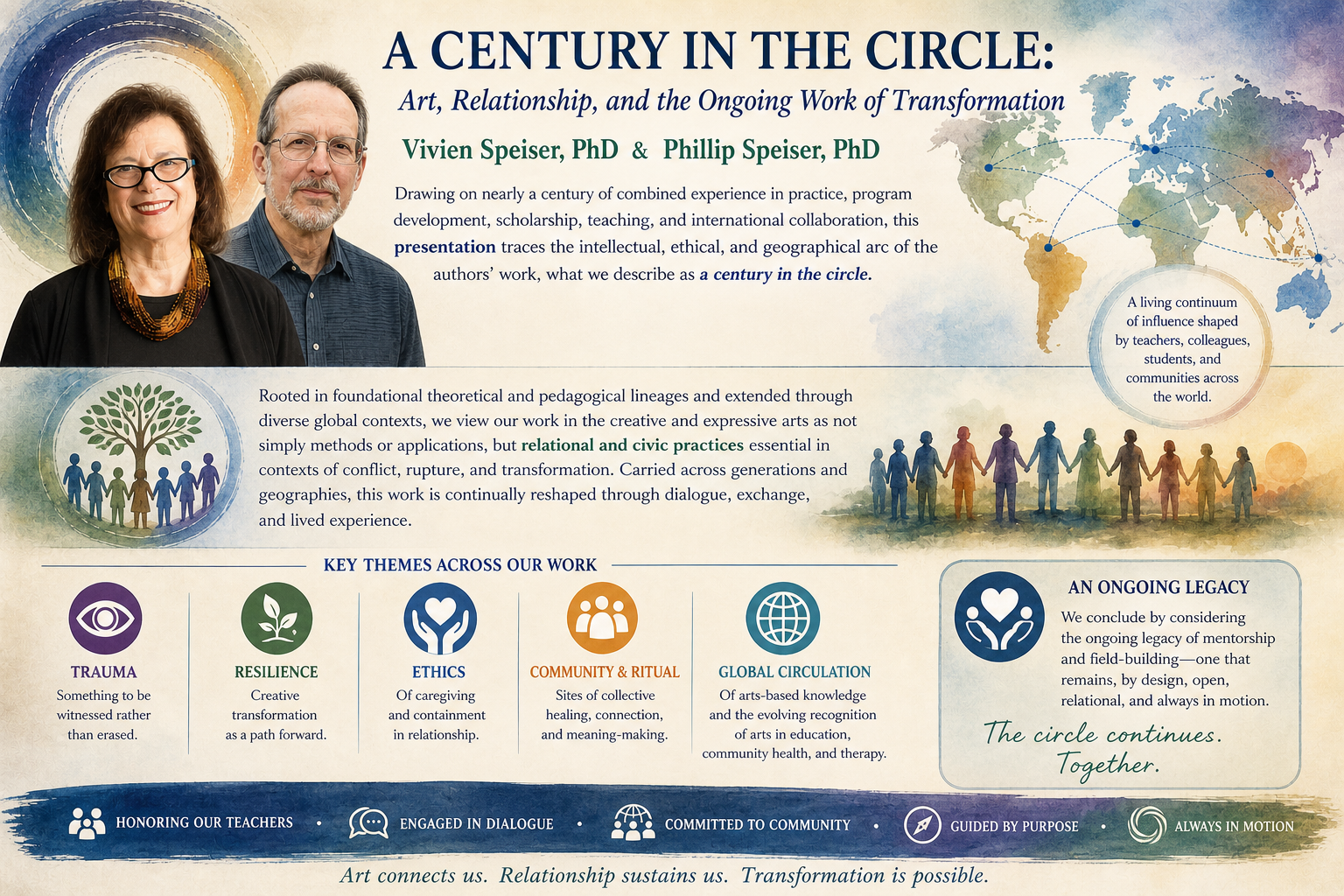
Figure 1. - Art, relationship, and the ongoing work of transformation.
2. HOLDING THE FRACTURE: TRAUMA, CONFLICT, AND THE ETHICS OF PRESENCE
Central to our theoretical framework is a refusal to treat emotional issues, including trauma and conflict, as problems to be solved. This orientation emerges not only from our own experience, but from the teachings of those whom we have leaned upon, learned from, and who have themselves shaped the expressive arts fields. We draw on our early experiences with foundational figures in these fields, such as Shaun McNiff, Paolo Knill, Joseph Powers, Norma Canner, Zerka and Jacob L. Moreno, Arthur Robbins, and Eugene Gendlin, and mention their names here with honor and reverence for their contributions. These are not merely commemorative gestures, but acts of intellectual and ethical positioning that insist the field’s present is intelligible only in relation to its past. This is a practice of gratitude, acknowledgment, and continuity that are professional necessities for the field’s ongoing sustenance. It is due to these figures’ experiences and their considerable influence, that we have developed our ways of understanding this work, in which the artistic process itself, that is the act of making, moving, sounding, or narrating, creates what we understand as a holding ‘container’- a structured, symbolic, and relational space in which what is broken can be acknowledged without being prematurely repaired (Knill et al., 1995; Marcow Speiser & Speiser, 2005; McNiff, 1992; Marcow Speiser & Speiser, 2023).
In this sense, our work is part of an ongoing lineage. We have inherited ways of seeing and practicing and have, in turn, adapted and extended them across varied cultural and geopolitical contexts. The “Speiser century in the circle” thus reflects not only our experience and authorship but also participation in a wider field of transmission, one that is continuously reshaped in relation to others, through international dialogue and lived experience.
This stance has resonance in contexts of ongoing conflict. Across our work in the USA, Scandinavia, the Middle East, Ukraine, Southern Africa, and post-COVID educational and mental health settings, we consistently resist the premature imposition of resolution. In regions where realities remain complex and unfinished, arts-based processes must be capable of holding ambiguity, contradiction, and difference without collapsing into ideology or false consolation (Marcow Speiser & Speiser, 2012; Speiser & Speiser, 2018; Speiser et al., 2024; Vosnesenska et al., 2025).
The practitioner, in this model, becomes a witness in the fullest sense; that is, not as a passive observer, but as an ethically present participant shaped by their own training, influences, and cultural location. This requires what we describe as a practice of presence, a sustained attentiveness to the complexity of the person or community before them, alongside an awareness of the lineages and assumptions they themselves bring into the space (Marcow Speiser & Speiser, 2018).
As we have written elsewhere, “engagement through artistic expression, as facilitated and witnessed with others, has profound and transformative healing potential” (Speiser & Speiser, 2023).
Our work is predicated on the assumption that healing is understood as shared witnessing, and thus the arts become a language for societies in transition; a method for individual and collective meaning-making; a discipline of presence in times of rupture; and a bridge between scholarship, activism, and care. We have always understood this, as what we call the movement of relationship (Marcow Speiser & Speiser, 1997).
3. FROM MARGINS TO FIELDS: LEGITIMIZING THE ARTS IN EDUCATION, COMMUNITY, HEALTH, AND THERAPY
Alongside our clinical, pedagogical, and theoretical work, we have also lived through and participated in the emergence of the creative and expressive arts as recognized fields within education, community, health care, and therapy. What began, in many contexts, as marginal, somewhat radical, and sometimes misunderstood art-based practices and forms has, over the past several decades, moved toward greater formalization of standards, the development of training and academic programs, professional recognition, and institutional legitimacy. Our own trajectory has been closely intertwined with this broader movement.
In the United States, this work took on a particularly concrete form in the mid-1990s. In 1995, Vivien served as Chair of the Massachusetts Coalition of Creative Arts Therapists, contributing to a sustained advocacy effort that culminated in the inclusion of creative arts therapists within licensure as mental health counselors in the state. This moment represented not only a policy shift but a wider cultural acknowledgment that arts-based therapy practices, long situated at the edges of clinical discourse, held both rigor and relevance within formal systems of care.
That same year marked another significant milestone in the international consolidation of the field. Both Vivien and Phillip Speiser were actively involved in the formation of the International Expressive Arts Therapy Association (IEATA), an organization that sought to create a global home for expressive arts practitioners across disciplines and contexts. Phillip Speiser served as a founding co-chair of the association, while Vivien Speiser co-chaired the credentialing committee responsible for the development of the REAT (Registered Expressive Arts Therapist) designation. This work reflected a shared commitment not only to practice but to the articulation of standards, ethics, and pathways for professional recognition, key elements in the maturation of any emerging field.
Beyond these foundational efforts, we have witnessed, sometimes precipitating, and often participating directly in the growth of arts-based programs and practices across diverse international contexts. In the USA, Scandinavia, Israel, China and Southern Africa, among other countries, the integration of the arts into education, community development, and health systems has taken distinct yet culturally resonant forms. These developments have often emerged through dialogue between local cultural practices and global frameworks, reinforcing our belief that the field must remain both rooted and responsive, attuned to context while engaged in international exchange.
Our involvement with the International Association for Creative Arts in Education and Therapy (IACAET) reflects an ongoing commitment to working within this global dimension (https://www.iacaet.org/about-us). Through this platform, we have supported the continued evolution of the field as it moves toward more formalized international credentialing processes. These include emerging frameworks for recognition in arts in health, arts in education, and creative arts therapy, each with its own epistemological foundations, yet interconnected through shared principles of relationality, creativity, and ethical practice. These evolving frameworks are creating contextually responsive avenues for professional recognition, particularly in regions where the expressive and creative arts are just entering formal systems in new ways. Of particular note is the rapid growth of these fields in China, where applications in arts in education, arts in health, and creative arts therapies are expanding across academic, clinical, and community settings. Here, the beginning of professional recognition and nascent credentialing processes not only support professionalization but also facilitate a dynamic exchange between longstanding cultural traditions and contemporary expressive arts practices, thus contributing to the field’s ongoing global transformation.
To speak of a “century in the circle” is, in this context, also to speak of witnessing the gradual formation of fields: from informal gatherings of practitioners to structured communities of practice; from intuitive methods to articulated methodologies; from marginal positions to increasing recognition within institutions. Our role within this process has been neither singular nor definitive, but participatory, one thread among many in a larger, collective weaving.
As these fields continue to evolve, we remain attentive to a central tension: that formal recognition and credentialing, while necessary, must not come at the expense of the openness, creativity, and relational depth that gave rise to the work in the first place. The challenge, and the ongoing task, is then to hold both, to support legitimacy without foreclosing possibility, and to ensure that the circle, even as it expands, remains permeable, responsive, and alive. What has emerged through this process is not simply the emergence of these professional fields, but a recognition that the arts are central to how individuals and communities make meaning, sustain connection, and navigate disruption.
4. RESILIENCE AS CREATIVE TRANSFORMATION
If the first principle of our framework is the willingness to hold fracture and disruption, the second is an equally radical reimagining of resilience. In much psychological and social science literature, resilience is understood as an ability to bounce back, a capacity to recover, that is, to return to a prior state of functioning after adversity. We challenge this framing directly.
For us, resilience is not thought of as recovery, but instead we conceptualize this as an ongoing process of change and transformation, as an organic, iterative, and responsive unfolding through which new forms of knowing and being arise (Marcow Speiser & Speiser, 2018). It is not a return to what was, but an emergence of what could not have existed before the rupture. This understanding draws on a broadly ecological and process-oriented philosophy, in which growth is not imposed from without but cultivated through attention, time, and sustained engagement with creative materials.
This has profound implications for how arts-based work is designed and evaluated. If the goal is not symptom reduction but creative transformation, then the relevant question is not “has the person returned to baseline?” but “what new forms of meaning, relation, and possibility have emerged through the artistic process?” Such questions resist the standardised metrics that often govern funding and institutional evaluation, and we have been consistent in advocating for evaluation frameworks that are qualitative, art-based, process-oriented, and culturally responsive.
The arts, in this light, become a bridge, not from pain to the absence of pain, but from suffering toward meaning, imagination, and new futures. Movement, image, sound, and story are not symbolic substitutes for healing but are themselves the medium through which transformation occurs. This is a position with significant implications for how training programs are designed, how practitioners are supervised, and how the field presents itself within broader health and social policy contexts. The arts play a central role in this process. We believe that they do not move us away from suffering, but through it, toward meaning, imagination, and new relational possibilities. In this sense, resilience is built not through resistance to vulnerability, but through movement within it.
Using the arts in situations of war, displacement, and disaster contexts provides an avenue for nonverbal, embodied, and symbolic trauma processing. This can help in restoring fractured narratives and moving towards building resilience as the capacity to turn trauma into creative energy. In this way, using the arts as a bridge from pain to possibility utilizes creative process as a safe container. The creative process thus becomes a structured, symbolic, and relational space for healing and transformation (Marcow Speiser, 2014; Marcow Speiser & Speiser, 2007).
5. SUPPORT FOR CAREGIVERS: THE ETHICS OF CONTAINMENT
A recurring and often underemphasized dimension of our work is our sustained attention to the well-being of practitioners themselves. In a field that asks educators, therapists, artists, and community facilitators to hold great complexity on behalf of others, the risk of vicarious trauma, traumatic invalidation, moral injury, burnout, and ethical erosion is significant. We have consistently insisted that support for caregivers is not peripheral to the work but central to its integrity. Just as individuals and communities require spaces of containment, so too do practitioners. The same relational and creative processes that support healing in others must be available to those who hold the work. This reflects our broader understanding that healing is never isolated, but always part of a shared relational field.
Our model of supervision and professional development draws on the same principles that govern our therapeutic and educational practice: containment, ethical presence, and the use of the creative arts as a vehicle for reflection and renewal. Practitioners are understood not as experts who dispense healing from a position of safety, but as participants in a relational field that affects them as much as those they serve (Marcow Speiser & Speiser, 2018).
This has led us to develop what might be described as a “sustaining ecology” of professional practice. We have set in place programs we have developed, with structures of support, including supervision, peer reflection, community building, and engagement in creative processes, that allow those who hold others to be held themselves. In the context of our work with war-affected communities, disaster response, and our long-term engagement with societies in transition, we believe that such structures are not a luxury but a professional and ethical necessity.
Our later writings have extended this concern to the specific pressures faced by practitioners during and after the COVID-19 pandemic, in which the boundaries between professional and personal space collapsed, and the demands on creative arts practitioners in health and educational settings intensified dramatically (Marcow Speiser & Speiser, 2022). The pandemic became, in our framing, both a crisis and an invitation to us to deepen the field’s commitment to practitioner wellbeing and led us and others to develop new forms of online and hybrid practices that could sustain relational work across distance, reaching across continents (Marcow Speiser & Speiser, 2021a).
6. COMMUNITY, RITUAL, AND COLLECTIVE HEALING
While much of the clinical and therapeutic literature in the expressive arts focuses on the individual and group, we have consistently insisted on the centrality of community and collective process. Our work understands healing not as a private achievement but as a shared, rhythmic, and often nonverbal process, one in which the group within the community becomes the therapeutic medium.
This orientation draws on anthropological and cross-cultural understandings of ritual as a form of collective meaning-making. Ritual, for us, is not a fixed or formal procedure but a living practice of a structured form through which communities can acknowledge what has happened, give it shape, and move forward without forgetting (Marcow Speiser, 1995; Marcow Speiser, 1998). This work with ritual has been integrated into a perspective that becomes an ongoing negotiation, between histories, knowledge systems, institutional structures, and social realities as the thoroughfare in which these fields continue to define and reimagine.
In our approach, whether working with Southern African communities navigating the aftermath of centuries of colonial rule; or engaging with Israeli and Palestinian therapists and educators working across divisions, or with communities affected by disaster and displacement, ritual processes have served as containers for grief, resistance, and for holding the hope that individual therapeutic modalities could not adequately hold (Marcow Speiser & Speiser, 2005 and 2012).
The circle is the spatial and symbolic form through which much of this collective work takes place. Circles of practice, whether in online or in-person classrooms, community centers, or outdoor spaces, create a form of democratic witnessing in which each participant is visible to all others, and in which the sharing of image, movement, sound or story becomes an act of mutual recognition. We have described this as a form of “community relational attention” which we conceptualize as a practice of being present to one another across difference within conflicted community, which is in and of itself a political act in divided societies.
Performance and conferences, too, are understood as healing spaces of practice. The conference, or professional meeting whether held in person or on-line is seen as a form in the gathering of artists and practitioners from across fields of practice to share, reflect, and create together. We see this as not merely a professional event but a ritual enactment of the field’s values. In this sense, this article accompanies itself as a form of collective practice as we offer you, the reader, an invitation to witness a century of accumulated knowledge and to participate in the ongoing circle of its transmission (Serlin & Marcow Speiser, 2007).
While much expressive arts literature focuses on the individual, our work insists on including the collective. Healing is viewed not only personal, but also as social, cultural, and rhythmic. Ritual and communal artistic processes can create spaces where shared experience can be expressed, witnessed, and transformed. In this context, the arts function as a form of relational activism. They are not decorative additions to therapy, but core processes through which communities resist fragmentation and re-establish connection. Through shared acts of making art, using movement, image, sound, and story, participants engage in practices of mutual recognition that are both aesthetic and political. The circle becomes the form through which this work is held: a space of democratic witnessing, where each voice is visible and each gesture contributes to the whole (Marcow Speiser & Hadari, 2016).
7. SOUTH AFRICA: A MORAL AND METHODOLOGICAL TOUCHSTONE
While our work and influence are essentially global, South Africa occupies a particular place as a moral and methodological touchstone and compass that orients and re-orients us. Vivien was born in South Africa and has her family’s ancestral bones buried in the ground there. In South Africa, the arts have never stood outside history. They were entangled in colonial projects of naming, ordering, and erasure, enlisted to legitimize power and determine whose stories, bodies, and aesthetics were deemed visible or valuable. Yet those same artistic forms, song, movement, sound, ritual, image, and story, also carried what colonialism could not fully silence. This is the memory that is held in the body and its expressive capacities, the knowledge that is transmitted through the generations by rhythm, and relationship that is sustained even across rupture.
Our engagement with South Africa has been characterized by a deep attentiveness to these processes held in the body. Our work there resists the temptation to position the arts as simply redemptive or as straightforward vehicles for reconciliation or post-conflict healing. Instead, we have consistently argued for arts-based processes that can hold the unfinished quality of South Africa’s historical reckoning by offering tools for resilience without erasing pain, and creativity without denying injustice (Marcow Speiser & Speiser, 2022).
Central to this work has been the philosophical tradition of Ubuntu as the concept often summarized as “I am because we are.” We have engaged this relational and embodied concept, not as a romantic ideal but as a living ethical framework for being in relationship with others. Ubuntu’s emphasis on communal identity, mutual obligation, and the inseparability of individual and collective wellbeing resonates deeply with our broader model of art as a relational, rather than an individual practice (Speiser, V. 2024).
Through our work with South African students, institutional partners, and within training programmes, these ideas now circulate widely across Southern Africa, shaping both university-based programs and community-based interventions. Our work has contributed to the development of indigenous and context-responsive training models that resist the straightforward importation of Western therapeutic frameworks, and that insist instead on the translation, adaptation, and sometimes transformation of those frameworks in response to local realities. (Speiser, V. 2023; Marcow Speiser & Speiser, 2024).
South Africa has been a central site in which these ideas have deepened, particularly through engagement with the philosophy of Ubuntu which reframes creativity as inherently relational. Artistic expression thus becomes a communal act, one that restores connection, affirms interdependence, and transforms pain into shared meaning. In this context, the arts do not function simply as tools of healing, but as practices of rebalancing, restoring the connective tissue of human community. Creativity is not owned by the individual, but exists within a shared field of vitality. Our work in South Africa has demonstrated how community-based arts practices can sustain cultural continuity while addressing historical trauma, thus affirming that healing is not solitary, but social. Our writing coming out of that context, articulates how art functions amid unfinished historical reckoning, offering tools for resilience without erasing pain, and creativity without denying injustice. In South Africa, the work resists fixed endpoints, instead cultivating forms that are culturally responsive, ethically grounded, and attentive to the tensions between tradition and innovation.
As the constitutional freedom fighter and former South African Minister of Arts and Culture Albie Sachs (1990) has argued, culture is not an ornament added after political change, but one of the primary ways societies learn how to live again. Working in South Africa embodies this conviction and in doing so, offers the broader field a model of practice that is at once ethically rigorous and culturally humble.
8. EAST–WEST DIALOGUES: THE DEVELOPMENT OF THESE FIELDS IN CHINA
In recent years, our work has extended into an increasingly important dialogue between Eastern and Western contexts, particularly in the rapidly developing field of creative and expressive arts therapy in China. Our work with the Inspirees Institute (https://www.inspirees.com), the International Association of Creative Arts in Education and Therapy (IACAET) (https://www.iacaet.org/about-us), and the Creative Arts in Education and Therapy (CAET) journal (https://www.iacaet.org/caet-journal/), reflects a parallel set of challenges we have encountered in this adaptation. We are deeply engaged in the applications of these fields which have been shaped primarily by Western theoretical frameworks, rooted in Euro-American understandings of the self, the body, and the therapeutic relationship and how to engage productively with traditions and philosophies that begin from fundamentally different premises.
Contemporary China is undergoing rapid and complex social transformations such as urbanization, generational displacement, the pressure of collective memory in relation to recent historical trauma, and the negotiation between traditional cultural forms and globalizing influences. In this context, the expressive arts offer significant potential, but only if they are understood as a form of cultural exchange and re-interpretation rather than cultural export (Marcow Speiser & Speiser, 2024).
We have been consistent in advocating for an integration of Eastern philosophical traditions, including Daoist understandings of flow and transformation, Confucian ethics of relational responsibility, and somatic traditions rooted in practices such as Qigong and Tai Chi, with Western expressive arts frameworks. This is not, a simple synthesis. It is an ongoing, relational negotiation, in which both traditions are transformed by their encounter (Speiser & Zhang, 2025; Speiser & Zhou, 2025).
The implications for training and pedagogy are significant. Programs developed for Chinese contexts must attend carefully to the cultural meanings of artistic expression, the social dynamics of group work, the role of the practitioner-student relationship, and the ways in which concepts such as trauma, healing, and resilience are understood and articulated within Chinese philosophical and cultural frameworks. Our collaborative work with the Inspirees Institute Chinese students, scholars and practitioners represents an important contribution to this ongoing process of cultural translation and methodological innovation. This dialogue further reinforces our understanding that artistic practice is not universal in form, but universal in capacity, always shaped by the cultural, philosophical, and relational contexts in which it emerges. This understanding now extends beyond national borders, finding resonance in the evolving dialogues between East and West. Here, the integration of Western expressive arts frameworks with Eastern philosophical traditions, embodied practices, and aesthetic sensibilities is not a simple synthesis, but an ongoing, relational negotiation.
9. THE GLOBAL CIRCULATION OF KNOWLEDGE: AGAINST HIERARCHY
Underlying our consistent and longstanding international engagement and influence is a distinctive epistemological position that knowledge does not travel intact. When ideas, methods, and frameworks move across cultural and geographical borders, they are not simply transferred but translated, challenged, and remade, inflected by the cultures, philosophies, and lived experiences they encounter.
This position has important consequences for how the global development of the creative and expressive arts is understood and narrated. The dominant story of globalization in many professional fields is one of expansion. This expansionistic framework follows a similar developmental trajectory around the world, which we have witnessed in our travels and in our teaching. The form we have witnessed is that usually an impetus develops which spurs the development of these fields within a country. This can sometimes take form through the efforts of powerful and influential individual/s, who might have developed their practices within a country or from studies abroad, often in North America or Europe. The impetus of this is sometimes supported from within by a center or institution within the country, or from abroad. This application in the local context develops from knowledge and practice that begins to radiate outward to peripheral contexts, which receive and apply it (Speiser, V. 2023a and 2023b). In our work we have both challenged and supported this narrative by explicitly, arguing instead for a model of circulation, one in which ideas move in many directions, returning to their sources altered, deepened, and more responsive to the worlds they have entered (Marcow Speiser & Speiser, 2018).
The model has significant implications for institutional power, in the design of training programs, for publishing and editorial practice, and for the ways in which the field’s canonical texts are read and taught. It demands a kind of epistemic humility that is not always comfortable for established centers of knowledge production. It requires a willingness to be taught by the contexts in which one teaches, to encounter challenges and discrepancies and to allow one’s frameworks to be genuinely transformed by their encounter with different realities (Speiser, V. 2023b).
We hope that we have modelled this humility throughout our careers. Our writings consistently acknowledge the limits of our own frameworks, as well as many of the contributions made by our colleagues and students. We have drawn upon what we have learned from others in diverse contexts, and the ways in which the thinking has been enlarged and our perspectives altered and influenced. We have learned hard lessons and have sometimes failed and sometimes succeeded and have hopefully integrated all of these experiences. We have been enriched, and sometimes complicated by engagement with traditions and experiences that are different from our own. This is not merely a rhetorical gesture but a methodological commitment to learn from what actually happens in the contributions and complexities that have helped towards shaping these fields together, that we have helped to build. Our work has increasingly emphasized that the movement of knowledge must be understood not as transmission, but as transformation. The arts, in this sense, function as decolonial practice, challenging dominant epistemologies and returning creativity to its roots in culture, community, and lived experience.
Criss-crossing the world from Scandinavia, Israel/Palestine, South Africa, Asia, Ukraine/Russia, Europe and North America, our work has consistently addressed societies living with ongoing conflict rather than post-conflict evo- and resolution, arguing for arts-based processes that can hold ambiguity, contradiction, and difference without collapsing into ideology. This perspective has been especially influential in regions where political realities resist simple narratives of healing.
What emerges across these contexts is a shared commitment to art as a sustaining force within societies shaped by rupture. Whether in post-apartheid South Africa or in the shifting cultural landscapes of contemporary China, creative practice becomes a site where difference is not erased but engaged, where knowledge travels but is also transformed. The dialogue between contexts does not resolve the legacies of colonialism or the pressures of globalization; rather, it deepens the responsibility to remain attentive to power, history, and voice. What endures, then, is not closure, but continuity: a responsibility to remain in relationship with the past while shaping forms capable of carrying the future. Art sustains this labor by keeping questions open, by insisting on listening, and by cultivating spaces where dignity can be rehearsed even when justice is incomplete. Across South Africa and China, across South and North, East and West, creative practice becomes a form of civic attention, an ongoing commitment to inhabit the in-between liminal space, where memory, accountability, and possibility continue to meet.
To have participated in and observed this unfolding is to recognize a field still becoming: one that resists fixed definition, and instead emerges through relationship, exchange and adaptation. We believe that knowledge does not travel intact; but that it is translated, challenged, and remade, inflected by culture, philosophy, and lived experience. In this way, the global development of these fields is less a story of expansion than of circulation, where ideas move in many directions, returning altered, deepened, and more responsive to the worlds they enter. The arts also thus become sites of truth-telling and remembrance. They do not simply represent the past but animate it, inviting others into a shared process of reflection and acknowledgment. We believe that the language of art is a universal language that transcends barriers, speaking directly to the heart and allowing a space to express the gamut of emotions in the face of unbearable suffering. We have worked together with others to share our passion, concerns and projects and to engage with furthering the understanding of the role the arts can play in expressing the inexpressible towards the building of resilience and hope in a troubled world. We believe that engagement through artistic expression, as facilitated and witnessed with others, has profound and transformative healing potential. We believe that the arts can contribute towards the rebuilding of trust in a world marred by global disparities, ecological challenges as well as the disasters, conflicts and disruptions of war.
10. MENTORSHIP AS LIVING LEGACY
Our contribution has been further shaped by the roles we have played as mentors, editors, and conveners. In a field that is still, in many respects, establishing its institutional foundations, the cultivation of the next generation of practitioners and scholars is as important as the development of theory or the accumulation of publications. Our model of mentorship is genealogical and it is concerned not merely with the transmission of skills or knowledge, but with the cultivation of a particular orientation toward the work. Our orientation is one that honors lineage while actively inviting innovation, that holds tradition without being imprisoned by it, and that understands the development of the field as a collective rather than individual project. Through editorial leadership, collaborative publications, and sustained investment in emerging scholars from multiple countries, we have helped create a global network of practitioners who understand themselves as part of a living tradition (Marcow Speiser, 2021a; Marcow Speiser & Speiser, 2022).
Our influence, we believe, lives not only in citations and syllabi, but in the practices carried forward by the students, colleagues, educators, therapists, and artists we have learned from, worked with and mentored across the world. These practitioners continue to work where art meets history, suffering, and the possibility of change- in conferences, classrooms, communities, mental health and health clinics, and contested spaces across every continent. This is the legacy that matters most to us, not a finished body of work, but a continuing circle of practice, relationship, and transformation. Mentorship, for us, is not simply the passing on of knowledge, but the sustaining of a relational field, one in which creativity, inquiry, and ethical responsibility continue to evolve across generations.
We view mentorship as living legacy, and take seriously our role as mentors, editors, and conveners. Through editorial leadership, collaborative authorship with emerging scholars from multiple countries, and sustained tributes to foundational figures in the field, we have modeled a genealogical approach to knowledge, one that honors lineage while actively inviting innovation. This has helped us to cultivate a global network of practitioners who understand themselves as part of an evolving, ethically grounded field, rather than isolated specialists. Our legacy lives within practices carried forward by our students, who as educators, therapists, community workers and artists continue to work where art meets history, suffering, and the possibility of transformative change.
11. CONCLUSION: THE ONGOING CIRCLE
What emerges from a century of combined work is not a conclusion but a continuing invitation. Our contribution to the creative and expressive arts is not best understood as a system or a school or as a fixed set of principles to be applied in defined contexts. It is better understood as an ecology. That is as a living, responsive, and internally and intentionally diverse field of practice, in which fracture is held at the center rather than managed at the margins, in which resilience is cultivated through creative process rather than prescribed by protocol, and in which the global circulation of knowledge is understood as a form of ongoing ethical relationship rather than a logistical challenge.
The circle we are holding is both a spatial and temporal one. Spatially, it names the democratic form of collective practice that has characterized our work across the world. This circle is one in which each participant is visible, each voice carries weight, and no single perspective commands the whole. Temporally, it names the structure of our journey. This journey is not a linear progression from lesser to greater understanding, but a spiraling movement in which earlier insights are returned to, learned from and deepened, and have set in a new relationship to emerging realities.
In a world marked by ongoing conflict in Europe and the Middle East, by the long aftermath of colonial violence in Africa and Asia, by the wars and divisions currently in play across the world and by the rapid dislocations of technological and social change, and the persistent inequalities that define access to health, education, and cultural life, the arts remain a vital and irreplaceable resource. Not because they offer answers (and we have always been suspicious of answers that come too quickly) but because they create spaces where truth can be spoken, difference can be held, and new ways of living together can begin to be imagined. And it is the arts that open us to our collective realms of imagination that allow us to universally re-imagine that which we all long for and desire- that is, to live in peace! To live a healthy and productive life, filled with love and care in relation to our family, friends and community.
What emerges from a century of combined work is not a conclusion but a continuing invitation. In a world marked by conflict, displacement, ecological crisis, and profound inequality, the arts remain a vital resource, not because they offer solutions, but because they sustain the conditions for human connection, imagination, and renewal. They allow individuals to restore coherence and vitality, and communities to sustain identity, memory, and belonging. They reweave the social fabric, not through resolution, but through ongoing acts of creation. Across global contexts, the arts resist not by negating destruction, but by affirming life. Through breath, movement, sound, image, and symbol, individuals and communities rediscover their capacity to imagine, to connect, and to rebuild. The circle we hold is one of relationship, continuity, and transformation. It has no fixed center and no final edge, only an ongoing rhythm.
These practices take on a cross-cultural and planetary dimension, whereas knowledge does not move linearly from one place to another, but circulates, adapts, and transforms. The geometry here is not hierarchical but circular: a continuous exchange between traditions, histories, and ways of knowing, each shaping and being shaped in return. In this weaving, there is no final resolution, only an ongoing commitment to the premise that the arts help societies live with what cannot be easily solved. What remains, then, is a practice of continuity: to stay in relationship with fracture, to cultivate resilient forms that can hold and transform it, and to participate, creatively and responsibly, in the shared work of imagining life otherwise.
This is the enduring gift of a century in the circle.
It is, by design, unfinished.
Lyrical Coda
Across broken landscapes something continues to move a gesture, a rhythm, a shared breath.
Not to mend what cannot yet be mended, but to hold it, together long enough for new forms of life to emerge.
ACKNOWLEDGEMENT
Declaration of Generative AI and AI-assisted Technologies in the Writing Process.
During the preparation of this work, the authors acknowledge the assistance of ChatGPT (OpenAI, 2025) in research synthesis, editing, and stylistic refinement under the authors’ direction. All interpretations, structure, and final content were curated by the authors.
After using this tool, the authors thoroughly reviewed and edited the content as necessary and accept full responsibility for the submitted content. All interpretations, structure, and final content were curated by the authors.
AUTHOR BIOGRAPHIES
Vivien Marcow Speiser, PhD, REAT, NCC LMHC, BC-DMT, is a Professor Emerita in dance and expressive therapy and co-director of the Institute of Arts and Health at Lesley University, Cambridge, MA, USA. She is a Distinguished Research Associate, University of the Witwatersrand, Johannesburg, South Africa.
Phillip Speiser, PhD, LMHC, RDT/BC, is an expressive arts educator/therapist, drama therapist, and psychodramatist. He is the current director of Parkside Arts and Health Associates, Haymarket, VA, USA. Research Associate, University of the Witwatersrand, Johannesburg, South Africa.
CONFLICT OF INTEREST
We hereby declare that the authors have no relevant financial or non-financial interests to disclose and also that the authors have no competing interests to declare that are relevant to the content of this article.
REFERENCES
International Association for Creative Arts in Education and Therapy. About us. International Association for Creative Arts in Education and Therapy. https://www.iacaet.org/about-us
| |
Inspirees. Inspirees. Inspirees. https://www.inspirees.com
| |
Inspirees. International Symposium of Creative Arts Therapies 2026. Inspirees. https://www.inspirees.com/event/international-symposium-of-creative-arts-therapies-2026/
| |
Knill, P. J.; Barba, H. N.; Fuchs, M. N. Minstrels of Soul: Intermodal Expressive Therapy; Palmerston Press, 1995.
| |
Marcow Speiser, V.; Speiser, P. Art Encircles Life: Journeying with, in, and through the Expressive Arts. Creative Arts in Education and Therapy 2024, 10 (1), 156–174. https://doi.org/10.15212/CAET/2024/10/8
| |
Marcow Speiser, V.; Speiser, P. Journeying with Shaun McNiff: Entering the Slipstream in the Right Moment in History, Trusting the Process and Letting Conflict Define. Journal of Applied Arts & Health 2023, 14 (3), 305–314. https://doi.org/10.1386/jaah_00143_1
| |
Marcow Speiser, V.; Speiser, P. There Are No Silos When We Are All Suffering: Interviews and Reflections on Ubuntu and the Arts in South Africa during COVID-19. Creative Arts in Education and Therapy 2022, 8 (1), 71–88. https://doi.org/10.15212/CAET/2022/8/2
| |
Marcow Speiser, V.; Speiser, P. The Heart of the Matter: Arts-Based Reflections, Writings and Responses during COVID-19. Journal of Applied Arts & Health 2021, 12 (3), 305–317. https://doi.org/10.1386/jaah_00064_1
| |
Marcow Speiser, V. Creative and Expressive Arts Therapies; Albright, A., Carytsas, F. P., Eds.; National Organization for Arts in Health, 2021; pp 72–112.
| |
Marcow Speiser, V.; Speiser, P. When the Time Comes: Interviewing Clinicians About Their Motivation and Inspiration for Working in International Disaster Relief Programs. Journal of Applied Arts and Health 2018, 9 (2), 263–274. https://doi.org/10.1386/jaah.9.2.263_1
| |
Marcow Speiser, V.; Hadari, A. Breathing in and Breathing Out: Expressive Arts in Psycho-Social Support Training in Korea. Journal of Applied Arts and Health 2016, 7 (2), 191–206. https://doi.org/10.1386/jaah.7.2.191_1
| |
Marcow Speiser, V. Working in a Troubled Land: Using the Applied Arts towards Conflict Transformation and Community Health in Israel. Journal of Applied Arts and Health 2014, 4 (3), 325–334. https://doi.org/10.1386/jaah.4.3.325_1
| |
Marcow Speiser, V.; Speiser, P.; Schwartz, S.; Kossak, M. The Arts and Social Change: The Lesley University Experience in Israel; Porat Books, 2012.
| |
Marcow Speiser, V.; Speiser, P. An Arts Approach to Working with Conflict. Journal of Humanistic Psychology 2007, 47 (3), 361–366. https://doi.org/10.1177/0022167807302185
| |
Marcow Speiser, V.; Speiser, P. A Theoretical Approach to Working with Conflict through the Arts; Marcow Speiser, V., Powell, C., Eds.; Peter Lang, 2005.
| |
Marcow Speiser, V. The Use of Ritual in Expressive Therapy; Robbins, A., Ed.; Jessica Kingsley Publishers, 1998.
| |
Marcow Speiser, V.; Speiser, P. The Movement of Relationship. Journal of the Creative and Expressive Therapies Exchange 1997, 6, 48–58.
| |
Marcow Speiser, V. The Dance of Ritual. Journal of the Creative and Expressive Arts Therapies Exchange 1995, 5, 37–42.
| |
McNiff, S. Art as Medicine: Creating a Therapy of the Imagination; Shambhala Publications, 1992.
| |
Sachs, A. Preparing Ourselves for Freedom; de Kok, I., Press, K., Eds.; Buchu Books, 1990.
| |
Serlin, I. A.; Marcow Speiser, V. Special Issue - Imagine: Expression in the Service of Humanity - Introduction. Journal of Humanistic Psychology 2007, 47 (3), 280–287. https://www.researchgate.net/publication/278013942_Special_Issue_-_Imagine_Expression_in_the_Service_of_Humanity_-_Introduction
| |
Speiser, V.; Zhang, D. A Conversation between East and West: Introducing Expressive Arts Therapy in China. Creative Arts in Education and Therapy 2025, 11 (1), 197–213. https://doi.org/10.15212/CAET/2025/11/7
| |
Speiser, V.; Zhou, T. Y. Webinar Reflections: Perspectives of Arts in Health as a Discipline – Dialogue with World Leaders: History, Frontier, and Future, IACAET Webinar, November 1, 2025. Creative Arts in Education and Therapy 2025, 11 (2), 347–357. https://doi.org/10.15212/CAET/2025/11/17
| |
Speiser, V.; Speiser, P. Using the Arts to Work with Refugees and Displaced Persons in Times of Crisis and War. South African Journal of Arts Therapies 2024, 2 (1), 82–95. https://doi.org/10.36615/j37y0w48
| |
Speiser, V. Artist Spotlight: A Tribute to the Work of Sylvia Magogo Glasser: Dancer, Dance Educator, Choreographer, Social Activist, and Visionary. Creative Arts in Education and Therapy 2023, 9 (1), 94–101. https://doi.org/10.15212/CAET/2023/9/2
| |
Speiser, V. Voices from the Field: Investigating the Emergent Form of an Indigenous Dance Movement Therapy Training Program in South Africa. Creative Arts in Education and Therapy 2023, 9 (2), 195–208. https://doi.org/10.15212/CAET/2023/9/11
| |
Vosnesenska, O.; Robelot-Timtchenko, N.; Marcow Speiser, V.; Speiser, P. Mitigating Collective War Trauma through Expressive Arts Therapy. Creative Arts in Education and Therapy 2025, 11 (1), 184–196. https://doi.org/10.15212/CAET/2025/11/11
|