Maternal Illustration as Art Therapy by an Indonesian Female Illustrator on Instagram
Volume 12, Issue 1, Pages 82-96
ABSTRACT
The idealized image of mothers in Indonesian culture often creates psychological pressure and affects maternal mental health. This research examines how maternal-themed illustrations on Instagram, particularly those created by Indonesian illustrator Puty Puar, serve as a form of art therapy. Unlike previous studies that focused on fine art, this study emphasizes emotional expression and therapeutic dimensions. Using a descriptive qualitative method, the research analyzes three illustrations uploaded between 2020 and 2025, selected through purposive sampling. These works depict a range of emotions, from nurturing to frustration and guilt, accompanied by captions that articulate the struggles and coping mechanisms of motherhood. Audience responses demonstrate empathy and validation, revealing a shared emotional resonance. The study finds that Instagram serves not only as a platform for personal catharsis and self-actualization for the illustrator but also as a space that fosters solidarity among mothers. This research contributes to interdisciplinary discourse connecting visual art, maternal mental health, and digital media in the Indonesian context.
摘要
印尼文化中对母亲的理想化形象常常给母亲带来心理压力,影响其心理健康。本研究探讨了Instagram上以母亲为主题的插画,特别是印尼插画家普蒂·普尔(Puty Puar)的作品,如何作为艺术疗法发挥作用。与以往专注于纯艺术的研究不同,本研究强调情感表达和治疗性方面。研究采用描述性定性方法,分析了2020年至2025年间通过目的性抽样选取的三幅插画。这些作品展现了从关爱到挫败感和内疚等多种情感,配以文字说明,阐述了母亲的困境与应对策略。观众的反馈显示出共情与认同,揭示了情感上的共鸣。研究发现,Instagram不仅为插画家提供了个人宣泄与自我实现的平台,还促进了母亲群体之间的团结。本研究为印尼语境下视觉艺术、母亲心理健康与数字媒体的跨学科对话做出了贡献。
KEYWORDS
Maternal, Illustrations, Instagram, Mental health, Art as therapy, Catharsis, Self-actualization.
关键词
母亲, 插画, Instagram, 心理健康, 艺术作为治疗, 宣泄, 自我实现.
History
Received July 2026
Accepted July 2026
Open Access
This is an open access article distributed under the CC BY 4.0 license (https://creativecommons.org/licenses/by/4.0/).
1. INTRODUCTION
The figure of the mother is generally culturally constructed as the ideal woman, with motherhood considered a central and fundamental aspect of a mature woman’s life (McQuillan et al., 2008). In traditional societies around the world, women are viewed as integral to a life cycle that encompasses giving birth, nurturing, and passing down values to future generations (Calica, 2023). Having children is often seen as bringing meaning to life, and mothers often envision a safe, peaceful, and prosperous world for their children, an ideal shaped by societal expectations (Arivia, 2006).
However, Rich (1976) critiques how motherhood is idealized through lofty moral language and representations, thereby obscuring the ambivalence, conflict, and suffering of real maternal experience. Meanwhile, Oakley (2018) shows that social discourse predominantly constructs motherhood as a satisfying and normative condition, with a tendency to exclude space for negative or non-ideal maternal experiences.
Similar patterns appear in Indonesian culture, which is still deeply rooted in traditional values and patriarchal structures. Mothers are often idealized as sacred figures, yet are burdened with high social expectations to sacrifice, remain patient, and suppress personal expression to appear as the “perfect” mother (Sophia, 2023). This aligns with the myth of motherhood, an ideology that promotes idealized maternal roles, reinforcing stereotypes that can cause stress, guilt, and emotional exhaustion, which are key contributors to maternal mental health issues (Constantinou et al., 2021; Henderson et al., 2016).
While motherhood can be a joyful experience, it is also complex. It requires navigating multiple roles, increasing the risk of role conflict due to multiple responsibilities (Nel et al., 2024). Social constructs that create myths and stereotypes of the ideal mother often trigger psychological vulnerability in women. Women’s mental health is deeply tied to the emotional challenges of the maternal role. Maternal mental health, especially among postpartum or nursing mothers, is a critical issue recognized by the World Health Organization (World Health Organization, 2022).
Alongside social support, art therapy has been shown to reduce anxiety and depression while enhancing quality of life, particularly for mothers (Sruthikeerthy et al., 2025). Art therapy is a creative process with therapeutic qualities that can be used to cope with daily stress and, at times, trauma (Rubin, 2009). Artistic activities serve not only as outlets for expression but also as tools for regulating, releasing, and healing emotions (Bellaiche et al., 2025).
Several works worldwide address the struggles and pressures of motherhood. Among them are the book Nonsolomamma and the comedy by Florence Foresti. These two depict how the pressure to appear happy makes it difficult for women to express their true feelings of exhaustion, boredom, guilt, and inadequacy (Ambrosini & Stanghellini, 2012). However, millennial mothers differ from previous generations. Beyond seeking information, they use social media to share stories, seek affirmation, engage in personal therapy (e.g., blogging or posting positive content), and fulfil their emotional, social, and mental health needs (Setyastuti et al., 2019).
Most Indonesian female illustrators are millennials, express their feelings as mothers through Instagram. Marchevska refers to this as “maternal art practice,” a form of artistic expression that explores, reflects, and critiques dominant cultural ideas about motherhood and the role of mothers in contemporary art (Marchevska & Walkerdine, 2019). With the development of social media, Instagram has become a crucial platform for sharing visuals (photos and videos) and disseminating creative work to a wide audience (Leaver et al., 2020).
On Instagram, illustrators gain support from the community and audience, who respond through comments and likes, a factor that is crucial for the illustrator’s visibility and mental well-being (Kutvonen, 2021). In this context, some Indonesian female illustrators who depict maternal themes in their illustrations are Ayang Cempaka (@ayangcempaka), Puty Puar (@byputy), Nadya Noor (@nadyanoor), Debby Rahmalia (@debbyrahmalia), Kathrin Honesta (@kathrinhonesta), Alnurul Gheulia (@alnurulg), Lia Najib (@lianajib), and Safiera Wulandari (@safierawulandari). They express a variety of emotions and visual styles in their maternal-themed illustrations. Their emotional expressions are spontaneous, transparent, controlled, and symbolic, all of which are thought to have therapeutic properties.
This study aims to examine how maternal-themed illustrations on Instagram function as an alternative space for female illustrators’ self-expression, contributing to their well-being and mental health. Of the many female illustrators mentioned above, this study focuses on Puty Puar as the case study. Her personal-themed illustrations on Instagram include themes such as feelings, gender, random thoughts, daily journals, food, films, and motherhood. She has been active on Instagram since 2016.
Among Indonesian female illustrators, Puty Puar’s maternal themes are the most expressive, easy to read, and show the most emotional fluctuations, depicting her experiences and feelings as a mother through visuals and text, thus serving as a therapeutic activity for motherhood. Creative activities such as drawing and sculpture can help release emotions or provide emotional catharsis, allowing feelings to become more relieved and relaxed, functioning as art therapy, which can improve mental health (Malchiodi, 2007). Thus, Puty Puar’s maternal-themed illustrations act as emotional outlets, transforming Instagram into a space for expression, interaction, self-actualization, and personal growth (Rachmayuningtyas, 2022).
2. PREVIOUS STUDIES
While maternal themes have been widely explored in art studies, most of these studies focus on fine art rather than illustration. Morrison examined how women artists in Ireland and Northern Ireland use their bodies as a medium to challenge cultural stereotypes about motherhood (Morisson, 2019). Batterton studied maternal art by older women artists, particularly Louise Bourgeois, who reinterprets motherhood in the context of aging (Batterton, 2009). De Jesús analyzed maternal themes in One Hundred Demons, a comic by Filipina-American artist Lynda Barry, focusing on her relationship with her mother and grandmother (de Jesús, 2010).
Research on maternal mental health is generally rooted in art therapy practices involving therapists and clinical frameworks. This study uses the term art as therapy, which refers to an emphasis on the healing power of the creative process itself, as distinguished by Rubin from professional art therapy (Rubin, 2009). Crane investigated how art-based interventions during pregnancy support emotional and social well-being (Crane et al., 2021). Similarly, Sruthikeerthy found that art interventions improve the psychological well-being of participants by reducing anxiety, regulating emotions, and enhancing the quality of life and recovery from chronic illness (Sruthikeerthy et al., 2025). In digital illustration research, Suárez-Carballo analyzed the works of Spanish women illustrators on Instagram during International Women’s Day (2019–2020), revealing the platform’s role in modern feminist activism (Suárez-Carballo et al., 2021). Willard explored how Emirati women illustrators merge Japanese anime styles with local culture to express themes of identity, freedom, and emancipation, using Instagram to reach broader audience (Willard & Tariq, 2021).
3. RESEARCH PROBLEM
Previous studies have primarily explored maternal themes as forms of personal expression within fine art, with limited research specifically examining maternal-themed illustrations by women illustrators on Instagram. While existing research on maternal mental health often focuses on art therapy, few studies have addressed illustration as a form of art as therapy within the context of Indonesian social culture. This study aims to fill that gap by bridging art practice, maternal mental health, and digital illustration on Instagram.
This research explores:
How does Puty Puar visualize maternal issues and the accompanying emotions through her Instagram posts?
How do maternal-themed illustrations on Instagram function as a medium of art as therapy for Puty Puar?
This study aims to contribute by offering a new perspective on illustration as a therapeutic medium for motherhood in the digital age through content creation on Instagram. Furthermore, this research has the potential to enrich interdisciplinary studies on visual arts, maternal mental health, and social media.
4. LITERATURE REVIEW
4.1. Maternal Art
Liss (2009) states that maternal art serves as a means of reflecting, criticizing, and affirming the existence of a mother in social and artistic systems, which often marginalize her voice. According to Liss, ambiguous feelings are normative for feminist mothers. Motherhood can be reduced to a biological or domestic task, but it is more accurately understood as an experience that is emotional, intellectual, and political. These dimensions form the basis of Puty Puar’s illustrations on Instagram, which represent maternal themes in Indonesian culture. The emotional dynamics of motherhood, intellectual capacity, critical aspects on dominant norms, and political dimensions are reflected in the illustrations which are shared on Instagram as a form of resistance, recognition, and self-actualization by the illustrator.
4.2. Mental Health of the Mother
According to Baraitser (2009), a mother’s experience is marked by a range of mixed emotions, ultimately culminating in exhaustion. Although some mothers enjoy the maternal role, others feel overwhelmed by the demands of work, household responsibilities, and long working hours. This is particularly true for mothers who have to balance multiple roles, creating a double burden in maintaining work-life balance. Psychological pressure on mothers is exacerbated by norms that idealize the image of a “perfect” mother. WHO reports that 1 in 5 mothers experience mental health problems during pregnancy and up to one year after childbirth, with conditions varying from anxiety and baby blues to depression post-childbirth, psychosis, substance-related disorders, and suicide (World Health Organization, 2022).
4.3. Art as Therapy
The creative process involved in making art carries inherent healing power and therapeutic elements, which is why it is often referred to as “art as therapy”. This process fosters healthy and productive psychological growth (Malchiodi, 2007). According to Malchiodi, artistic activity not only provides enjoyment but also helps individuals become more flexible, self-actualized, and capable of solving problems creatively. Self-actualization, identified by Maslow as the highest level in the hierarchy of human needs, emerges when basic needs are relatively fulfilled (Maslow, 1970). Achieving self-actualization significantly contributes to an individual’s mental well-being (Notosoedirdjo, 1999). In this context, Puty Puar’s digital illustrations can be understood as a form of art as therapy, functioning as a therapeutic tool that aids emotional regulation, encourages self-actualization, and helps address personal challenges.
4.4. The Feeling Wheel
The Feeling Wheel is a tool developed by Gloria Willcox to help individuals identify and express emotions more accurately. It is a circular chart featuring 72 emotions, with six core emotions at the center: sad, mad, scared, joyful, powerful, and peaceful. The second and third layers expand on these core feelings with more specific terms (Willcox, 1982). Ahonen used the Feeling Wheel in a study involving 11 participants in voice therapy sessions aimed at reducing stress and mild illness symptoms, asking them to identify their emotions both before and after the sessions (Ahonen, 2013). Similarly, Fahmy applied the tool to help students recognize and manage emotions stemming from collective trauma (Fahmy, 2023). In this study, the Feeling Wheel, as seen in Figure 1, is used to identify and categorize the emotions expressed in Puty Puar’s illustrations by, correlating them with the facial expressions and visual cues.
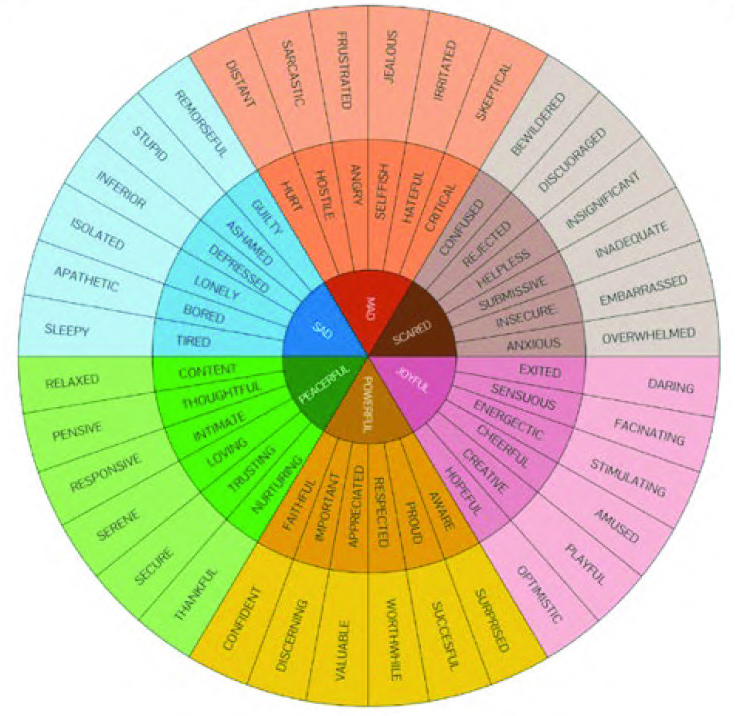
Figure 1. - Diagram of Gloria Willcox’s “The Feeling Wheel”.
4.5. Instagram
For artists, Instagram serves as both a platform for showcasing their work and a direct communication tool with their audiences, challenging traditional art institutions like galleries and museums (MacDowall, 2022). According to MacDowall, visual display and social interaction on Instagram combine to create new relationships between artists and viewers through comments, likes, and shares. Posts are enhanced by contextual elements, including captions, hashtags, profile information, comments, and annotations (Leaver et al., 2020). Social media, including Instagram, has evolved from a mere space for information exchange to a medium for expressing identity, social values, and emotions (Miller et al., 2016). For Puty Puar, Instagram serves as a key platform for sharing illustrations, expressing herself, and engaging with her audience.
5. METHODOLOGY
This study employs a descriptive qualitative approach with a focus on visual analysis, aiming to understand the meaning, emotional expression, and therapeutic function of maternal-themed illustrations. A qualitative method is chosen to explore the subjective meanings embedded in visual and emotional expressions related to motherhood. Since maternal illustrations can serve as a form of art as therapy, this study not only examines visual form and content but also links them to psychological aspects, particularly how maternal issues are expressed as emotional catharsis and how resolutions are visually represented on Instagram.
The interpretations are validated using contextual reflexivity by questioning “why and what are the themes that I am seeing?” and “what better way to understand the whole picture?” throughout the whole process. According to Olmos-Vega et al. (2023), contextual reflexivity involves locating a particular project in its cultural context, highlighting how the research questions and their answers are embedded in and influenced by a social field of assumptions and practices. This approach informs the use of purposive sampling in clarifying the researcher’s perspective.
The primary data consists of maternal-themed illustrations posted by Puty Puar on her Instagram account (@byputy) between 2020 and 2025. Quantitative data are used to support the qualitative analysis, specifically to identify the percentage of maternal issues depicted as resolved or unresolved, as seen through visuals or accompanying text. The illustrations are selected using purposive sampling, focusing on three works that reflect recurring maternal issues identified by Baraitser and Arivia, such as the double burden of motherhood and conflicting emotional states in parenting (Arivia, 2006; Baraitser, 2009).
The analysis involves identifying emotional expressions, reviewing audience comments to assess the types of support provided, and interpreting how these maternal challenges are resolved through the illustrations. This interpretive process integrates visual and textual elements to reveal the therapeutic function of the artwork. Data validity is ensured through triangulation across visual, textual, and literature-based sources.
The authors obtained consent from the illustrator before data collection. This was done to ensure ethical research practices, even though the social media and the illustrations are publicly available. The researchers also ensured the anonymity of commenters by removing social media handles and retaining only the comments for analysis. This was done to protect privacy and uphold ethical standards.
5.1. Profile of Puty Puar
Puty Puar, also known as Puti Karina Puar, was born in Jakarta in 1989 and holds a degree in Geodetic Engineering from the Bandung Institute of Technology. She has been active on Instagram since 2016 and, as of the end of May 2025, has uploaded 2,776 posts, gaining 95,800 followers. With this follower count, she qualifies as a micro-influencer defined as having between 20,000–100,000 followers (Conde & Casais, 2023). As a professional illustrator and content creator, she regularly shares both commercial collaborations and personal illustrations on her Instagram account. She has authored and illustrated three books: Happiness is Homemade (2018), Komik Persatuan Ibu-Ibu (2018), and Empowered Me (Mother Empowers) (2022). Her work often focuses on motherhood and parenting issues (Puar, 2022).
6. FINDINGS
6.1. Maternal Issues in Illustration
Puty Puar uploaded 503 illustrations between 2020 and 2025, covering themes of personal expression, including emotions, gender, marriage, motherhood, random thoughts, journaling, food, and films. Table 1 shows a sample of Puty Puar’s illustrations on Instagram from 2020 to 2025.
| 2020 | 2021 | 2022 |
|---|---|---|
|
|
|
|
| 2023 | 2024 | 2025 |
|
|
|
|

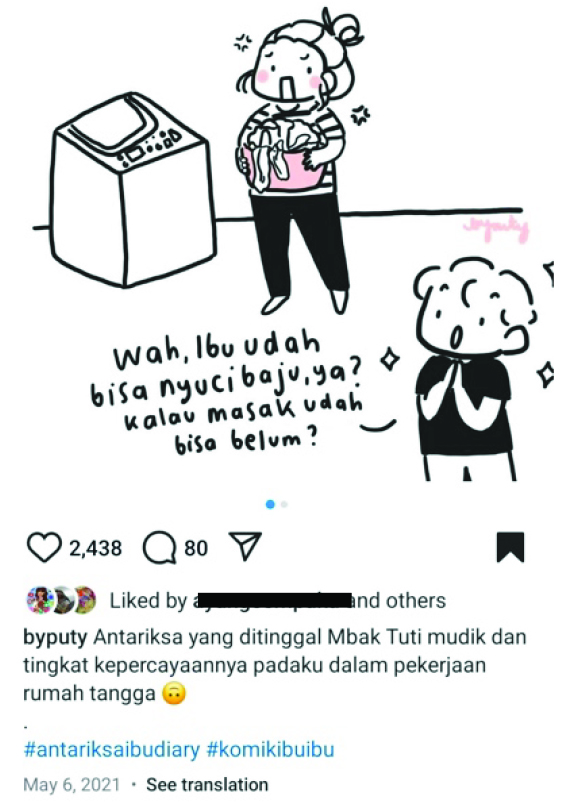
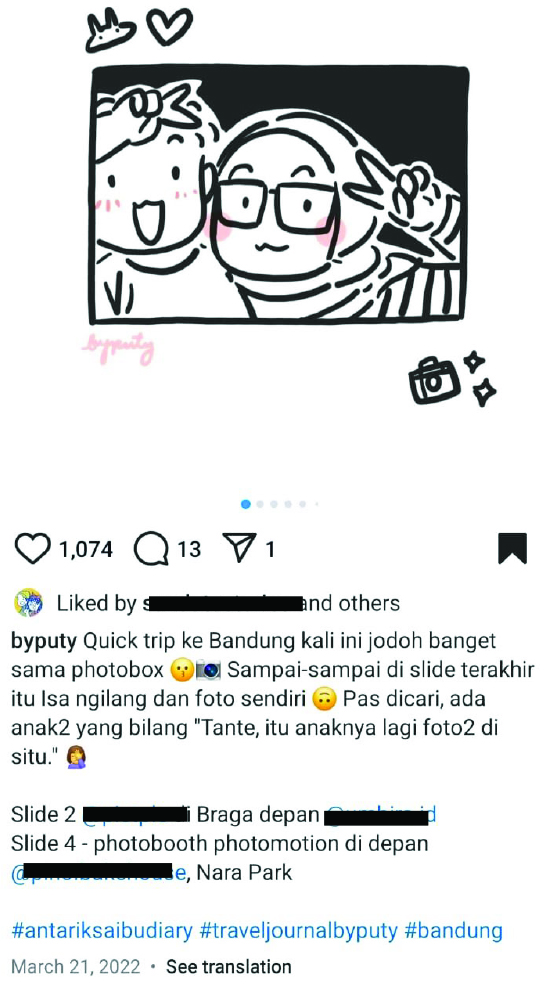
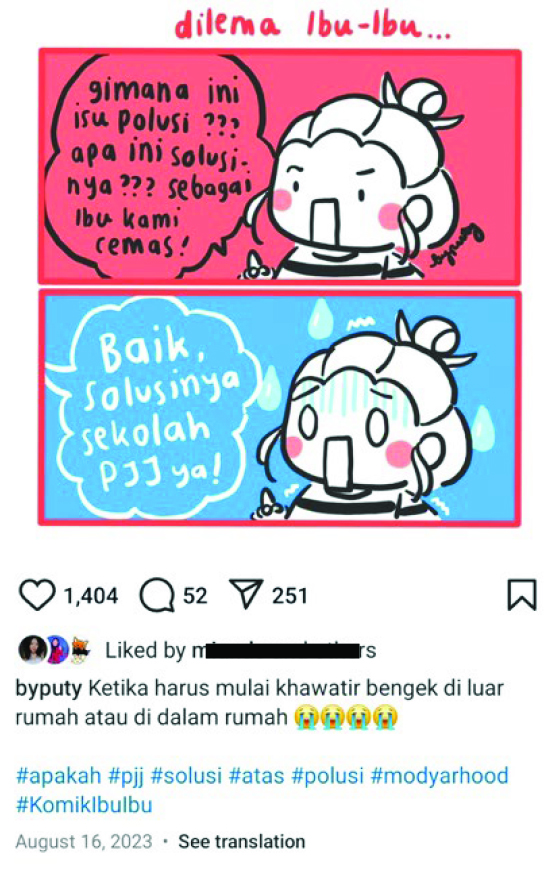
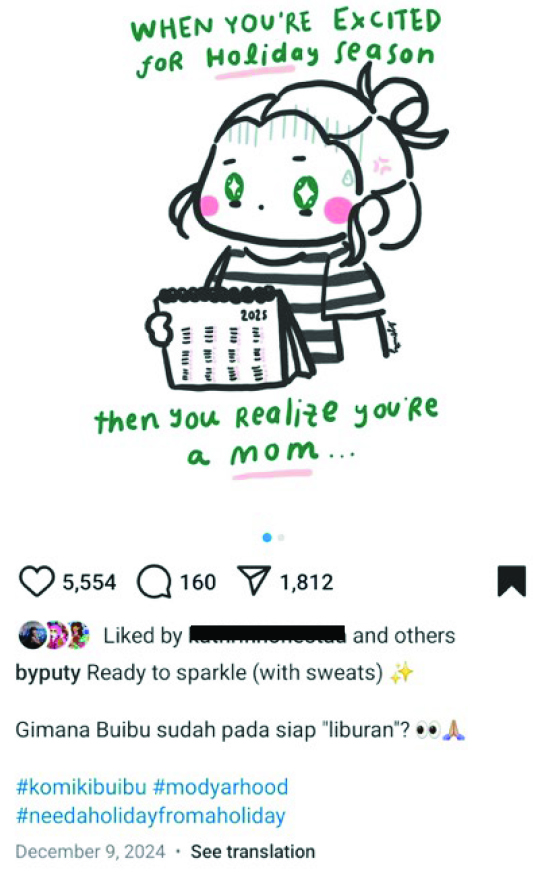
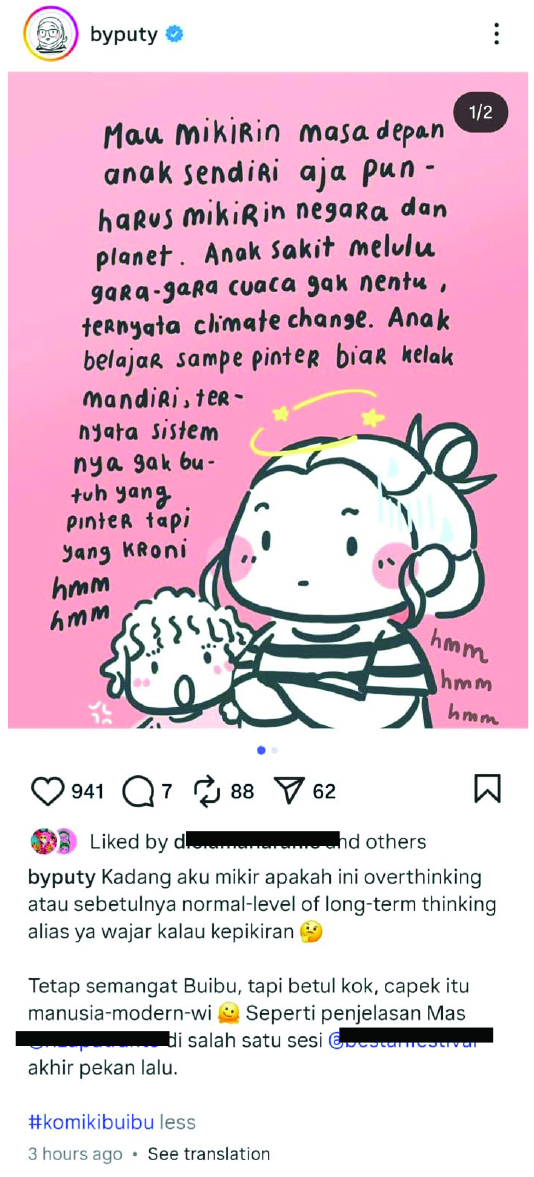
Of all the 503 illustrations, 40 are maternal-themed, accounting for 8% of the total. The distribution of major themes in Puty Puar’s illustration is shown in Figure 2.
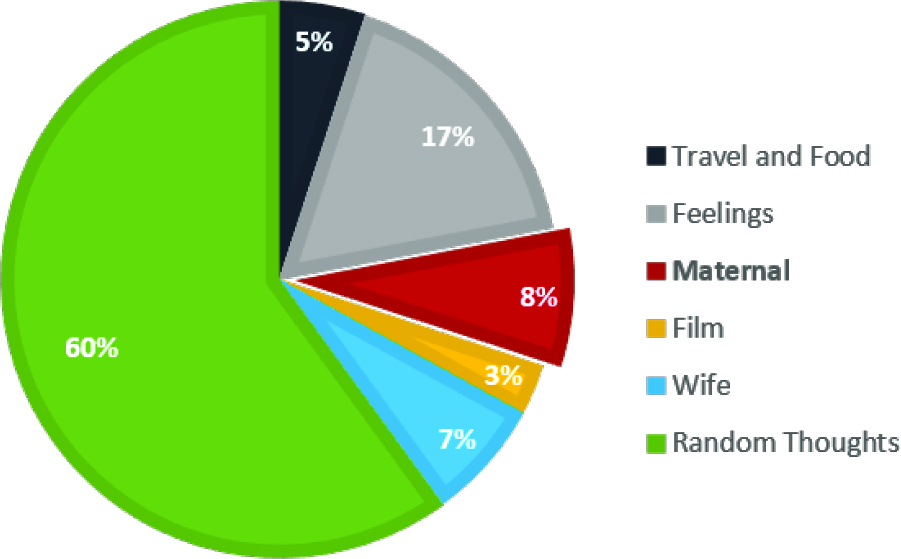
Figure 2. - Maternal issues in the 2020–2025 illustration.
Subsequently, this study classifies maternal-themed illustrations created over a five year period to examine the maternal issues reflected in the works. The findings of this classification are summarized into six main categories as follows:
Mother’s dual roles
Children’s education
Mother’s feelings toward their children
Mother’s personal emotions
Children’s health
Maternal empowerment and aspirations
These six categories indicate that motherhood involves challenges related to childcare, family dynamics, and the mother’s environment. The issues that emerge over time reflect responses to changing circumstances, including the pandemic, busy daily routines without domestic support, and significant family events such as children’s birthdays.
6.2. Types of Emotion
The study analyzes emotional types based on the Feeling Wheel framework, using visual cues such as body gestures, facial expressions, and accompanying text in the illustrations. Figure 3 presents the core emotions from the Feeling wheel identified in Puty Puar’s illustrations from 2020 to 2025.
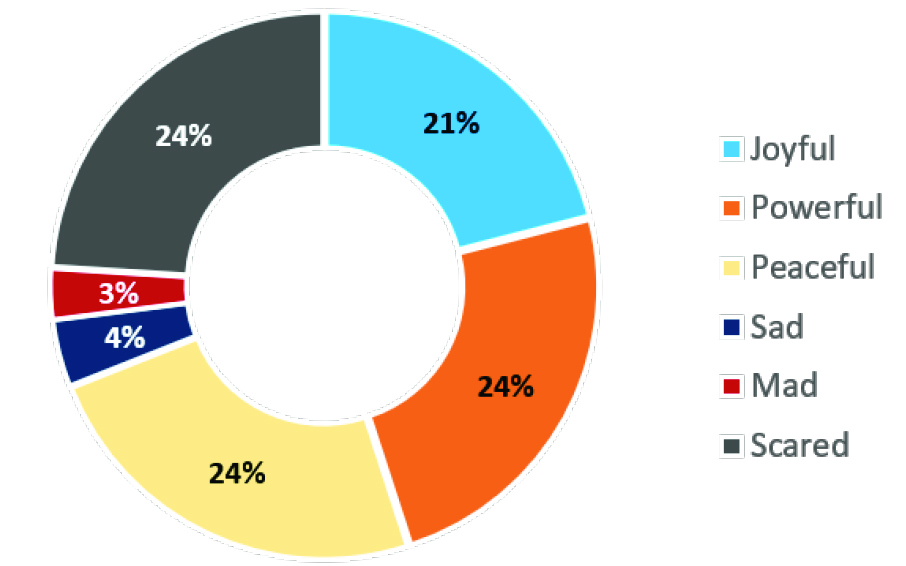
Figure 3. - Primary emotions in Puty Puar’s illustration of 2020–2025.
Based on the diagram in Figure 3, positive emotions account for 79% and negative emotions for 21%. Table 2 categorizes expanded emotions under each core emotion in Figure 3.
| Core Emotion | Positive | Negative | ||||
|---|---|---|---|---|---|---|
| Joyful | Powerful | Peaceful | Sad | Mad | Scared | |
| Expanded Emotion | excited hopeful amused optimistic energetic hopeful | appreciated confident aware proud important faithful | loving thoughtful pensive thank you intimate trusted | guilty | frustrated | bewildered confused inadequate insecure overwhelmed confused anxious skeptical |
The types of expanded emotions derived from the core positive emotions are relatively evenly distributed. In contrast, the distribution of negative core emotions is uneven. The expanded emotions for the “sad” and “mad” core emotions appear only once each, while “scared” dominates the negative emotion category. The experience of motherhood, as illustrated in the images, tends to emphasize positive aspects, although negative emotions are still present. These findings provide insight into tendencies in emotional representation and highlight the potential of illustration as a medium for emotional expression and catharsis.
6.3. Maternal Issues: Resolved and Unresolved
One of the benefits of art as therapy is its therapeutic function in helping individuals explore and express themselves, thereby facilitating relief and the identification of solutions to their problems. Of the 40 maternal-themed illustrations analysed between 2020–2025, 87% depict resolved problems, while the remaining 13% present unresolved or delayed resolutions. These details are presented in Table 3.
| Year | Solution | Delayed | Total illustrations |
|---|---|---|---|
| 2020 | 10 | 1 | 11 |
| 2021 | 6 | 2 | 8 |
| 2022 | 3 | – | 3 |
| 2023 | 6 | 1 | 8 |
| 2024 | 9 | 1 | 10 |
| 2025 | 2 | – | 2 |
| Total Illustration | 35 | 5 | 40 |
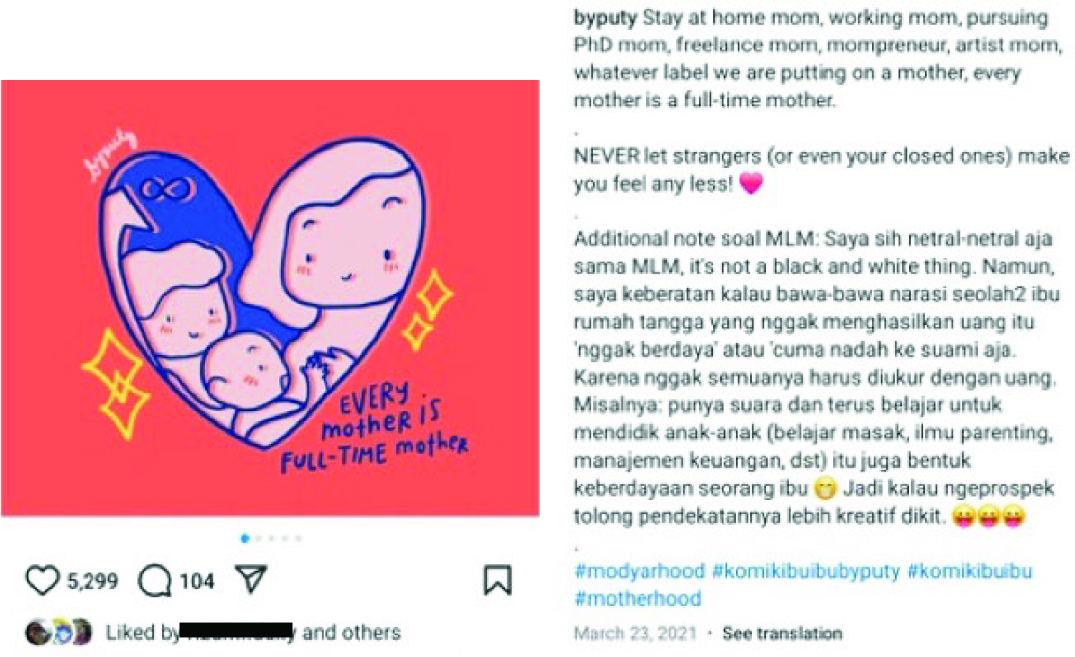
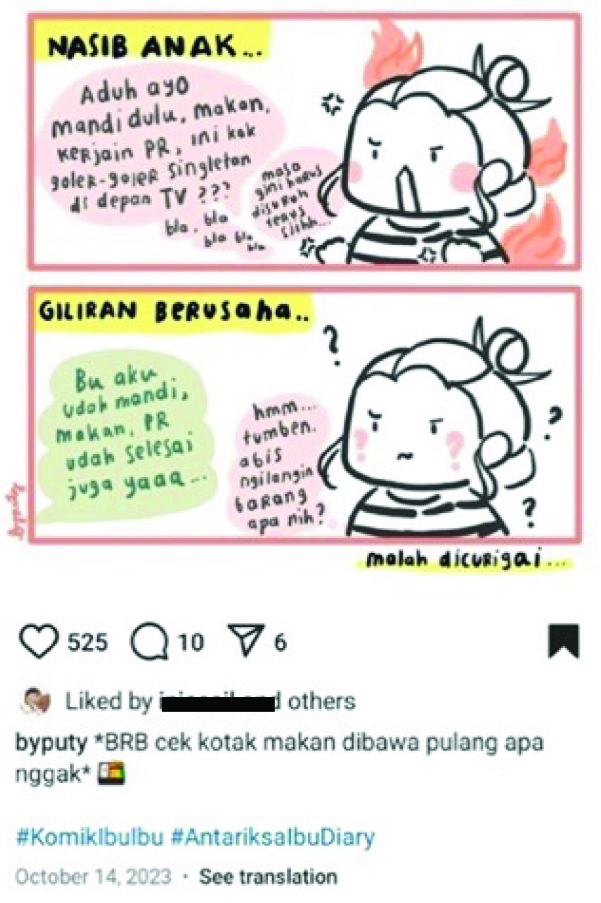
Figure 4 shows that most motherhood-related problems depicted in the illustrations are accompanied by solutions rather than remaining unresolved or delayed. These solutions are not always conveyed visually but are often communicated through accompanying captions or text. The data presented in Table 4 provide examples of illustrations with resolved problems as well as those with unresolved or delayed issues.
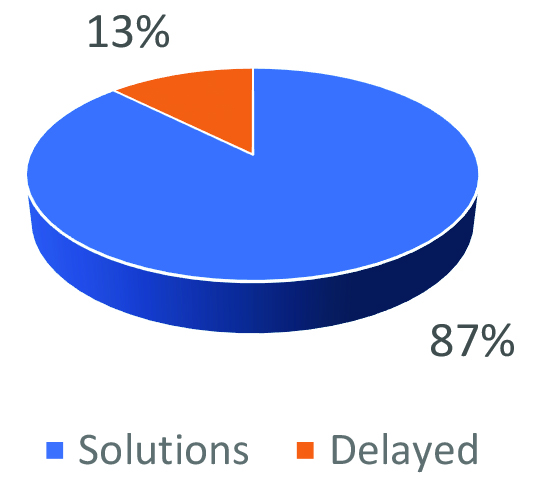
Figure 4. - Percentage of illustrations that have solutions and are delayed.
| Solution | Delayed |
|---|---|
|
|
|
| Illustration (Problem): The illustration critiques the common perception that stay-at-home mothers are not empowered. | Illustration (Problem): In the first panel, a mother appears frustrated because her child is hard to manage. In the second panel, when the child suddenly behaves nicely, the mother becomes suspicious he’s hiding something. |
| Caption (Solution): Although they may not earn income, stay-at-home mothers can still be empowered by continuing to learn and express their opinions at home. | Caption (Delayed): The mother suspects her child forgot to return a school lunch container. |
6.4. Visual Analysis of Maternal Illustrations and Audience Response
This study analyzes three selected illustrations from 2021, 2022, and 2025. The selected illustrations represent the three most prominent issues of motherhood identified among the six categories, namely mothers’ dual roles, feelings toward their children, and personal emotions. Puty Puar shares not only illustrations but also other visual content, such as photos, posters, or screenshots from social media platforms like Twitter (X) and online articles. To maintain analytical focus, this study includes only illustrative visual elements and excludes other non-illustrative materials.
Figure 5 presents three examples of Puty Puar’s illustrations from 2021, 2022, and 2025. These illustrations are further described and analyzed in Table 5. Together the figure and table demonstrate a range of maternal issues and types of emotions.
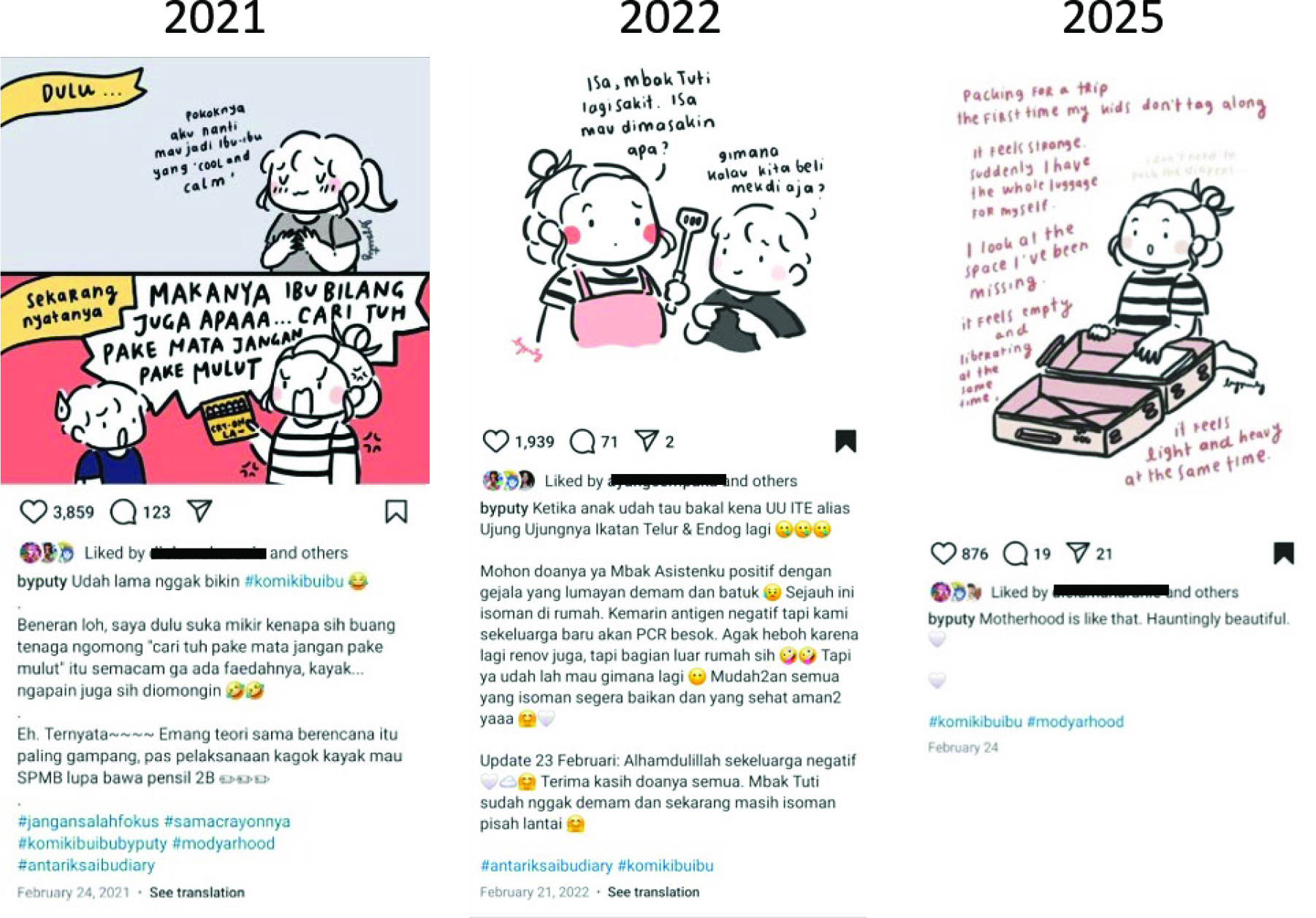
Figure 5. - Three examples of Puty Puar’s illustrations.
| Year | Description | Maternal issue | Type of emotion |
|---|---|---|---|
| 2021 | This two-panel illustration depicts the contrast between the past and the present reality of being a mother. | Feelings toward their children | Frustrated |
| 2022 | This illustration with simple black and pink outlines depicts a dialogue between a mother and her child. | Dual Role | Nurturing |
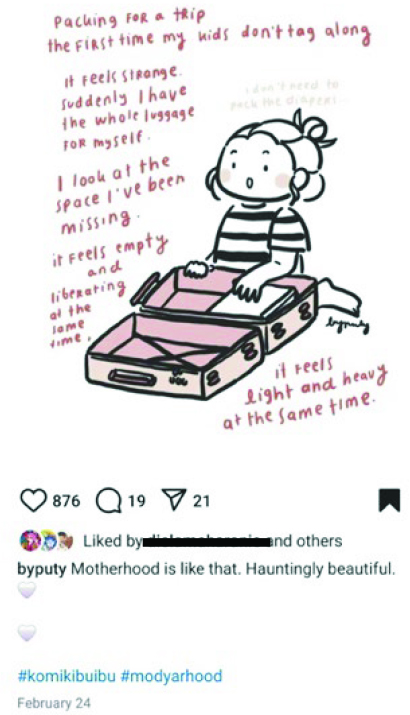
| 2025 | This illustration depicts a mother unpacking her suitcase with a black and pink outline. | Personal Feelings | Guilty |
In the 2021 illustration, the image is divided into two panels. The top panel depicts a woman aspiring to be a calm mother, as evidenced by her peaceful expression and a gray background. The bottom panel depicts the current reality: showing the mother’s frustration over her child’s inability to find an item, expressed through an angry face, sharp speech balloons, and a red background. This illustration reflects the maternal issue of feelings toward one’s child, as indicated by the child’s expression conveying shock and guilt. These unmet expectations are reinforced by the caption and hashtags accompanying the illustration. Puty Puar expresses annoyance, specifically frustration, because the child cannot find the item properly. The dominant emotion is “frustrated”, an expanded emotion of the negative core emotion “mad”.
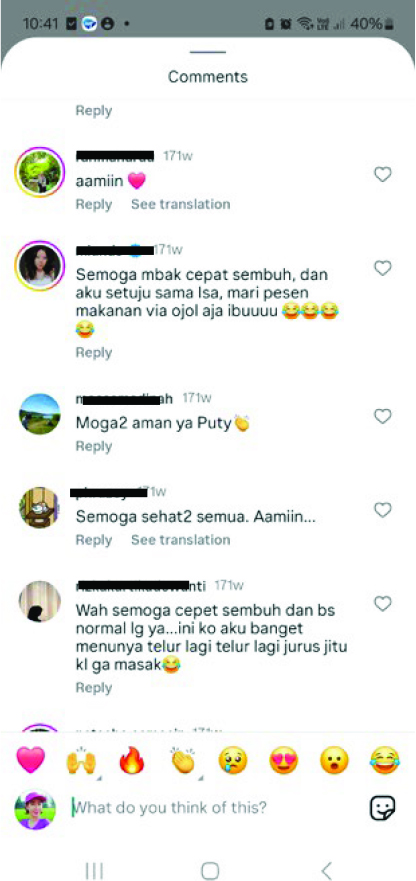
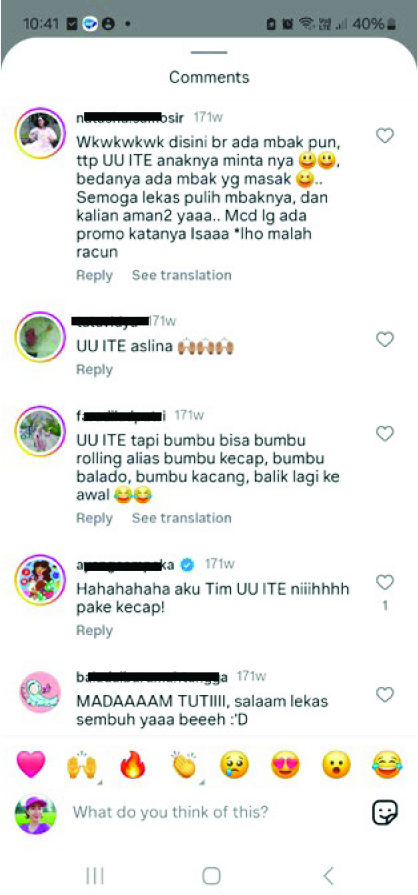
In the 2022 illustration, the mother appears anxious, while holding a spatula, as she has to cook alone due to the housemaid’s illness. The child responds casually and suggests buying food from outside. The caption explains that the housemaid is currently in self-isolation due to COVID-19. This illustration reflects the maternal issue of mother’s dual roles, as it shows how domestic responsibilities shift to the mother when the housemaid is sick, even though the mother also works. Despite her limited cooking skills, the mother demonstrates care and concern for her family. The dominant emotion is “nurturing”, an expanded emotion of the positive core emotion “peaceful”.
In the 2025 illustration, the mother is depicted preparing to travel for the first time without her child. The text within the illustration conveys inner conflict, reinforced by a blank facial expression and a brief caption. This illustration highlights the inner struggle of a mother who balances personal freedom and the sense of responsibility as a mother when she has to go without her child. The dominant emotion is “guilty”, an expanded emotion of the negative core emotion “sad”.
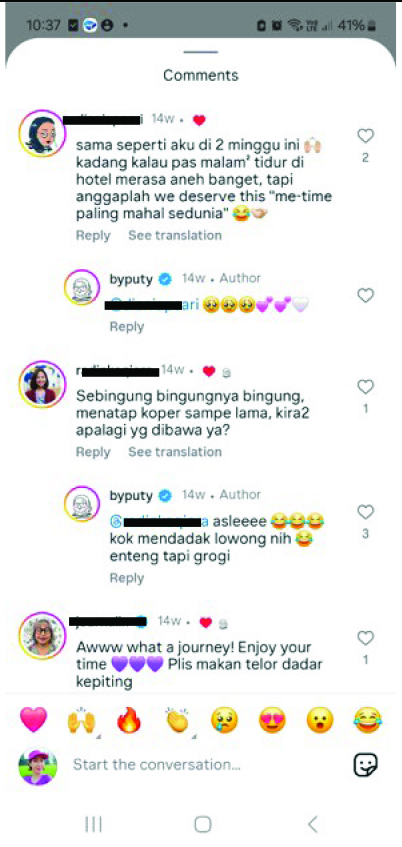
By representing emotions such as “frustration”, “nurturing”, and “guilt”, the illustration functions as a means of emotional catharsis. The creative process enables the understanding and regulation of emotions, while simultaneously reflecting maternal issues to the audience. Audience engagement plays a crucial role in Puty Puar’s validation and self-actualization. Table 6 presents audience responses to these illustrations.
| Illustration | Comments | ||||||
|---|---|---|---|---|---|---|---|
2021 |
|
|
| ||||
| Response: 3, 859 likes, 123 comments | |||||||
| Out of 123 comments, only two were from men; while the majority were from mothers. The audience response was overwhelmingly positive, supportive, and empathetic, with users expressing appreciation, sharing experiences, and fostering emotional connections. Many comments were accompanied by emojis such as laughing faces, hearts, and hugging symbols, indicating a strong sense of community and mutual validation of shared motherhood experiences. | (Continued) | ||||||
2022 |
|
|
| ||||
| Response: 1,939 likes, 71 comments, 2 shares | |||||||
| Of the 71 comments, most were from women, likely mothers, while only two were from unidentified users. Many expressed a sense of connection through shared experiences, offering encouragement, prayers, and mutual support. Heart, hugging, and laughing emojis dominated the responses, symbolizing appreciation and emotional solidarity among participants. | |||||||
2025 |
|
|
| ||||
| Response: 876 likes, 19 comments, 21 shares | |||||||
| The illustration elicited a positive response from the audience, especially from mothers. Comments were dominated by expressions of emotional connection, support, and appreciation for the honesty of the message. Many felt that the illustration accurately reflected the emotional complexity of mothers’ daily lives. This interaction fostered solidarity, emotional support, and a sense of community among mothers. | |||||||

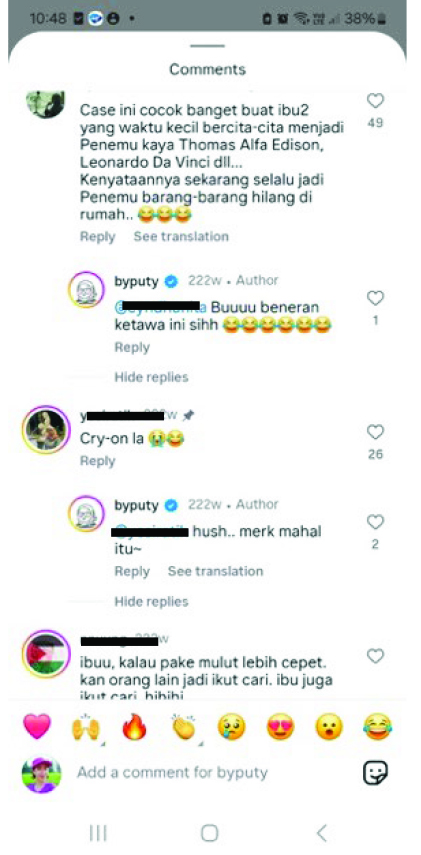
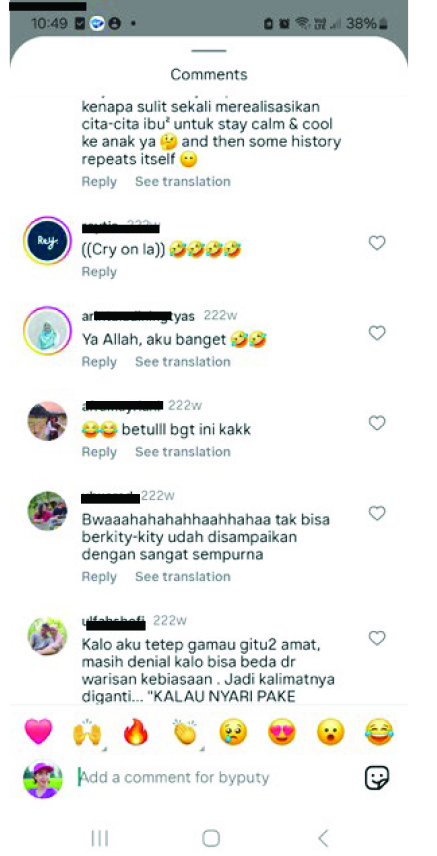
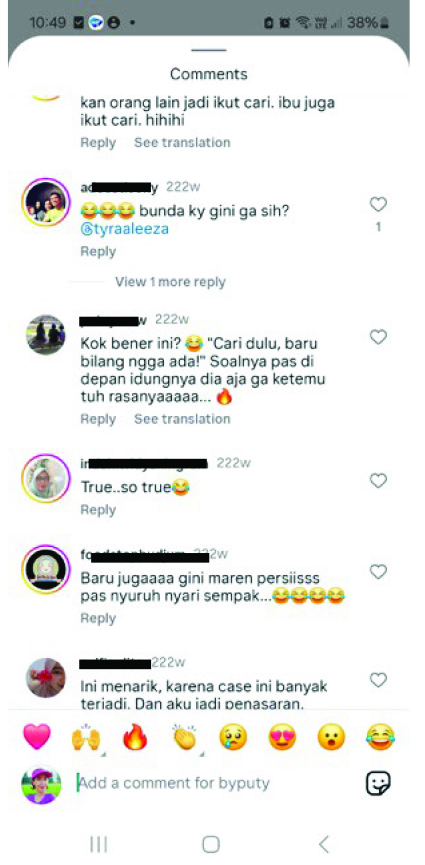

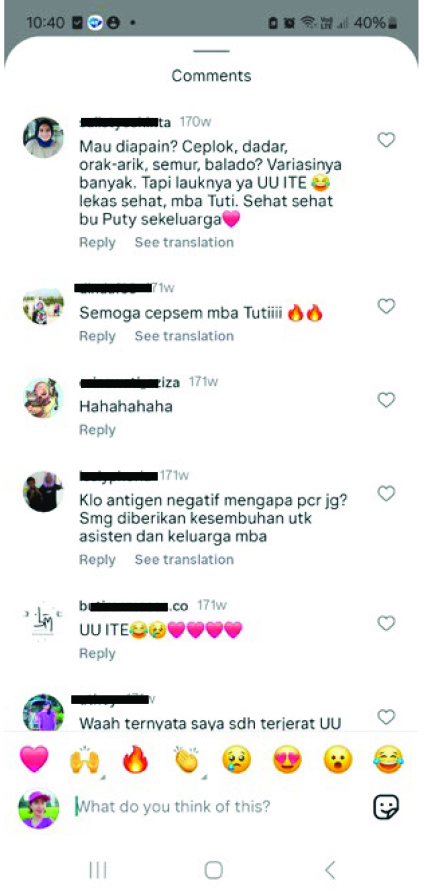
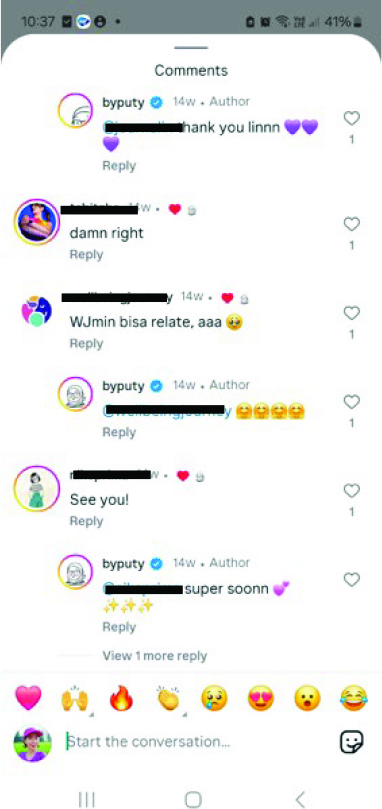
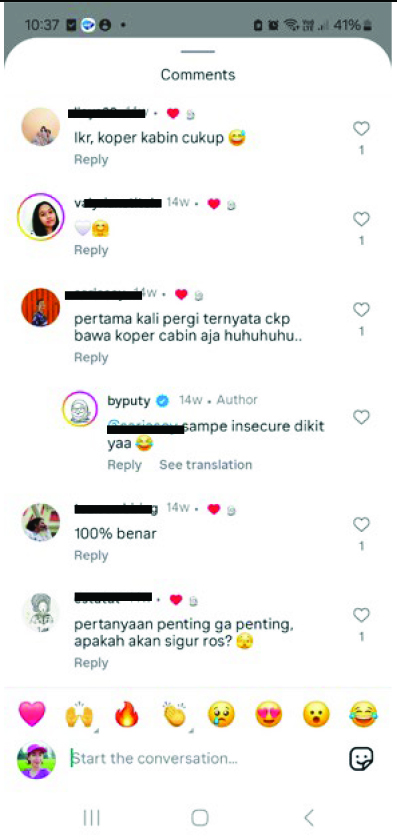
All maternal-themed illustrations by Puty Puar elicited meaningful responses from audiences, especially mothers, who feel a connection with the visuals and narratives displayed. The comments section explains how audiences relate the illustrations to their everyday experiences as mothers. These responses indicate that the illustrations receive social support in the form of appreciation. This appreciation, according to Kutvonen (2021), contributes to Puty Puar’s visibility and self-actualization as an illustrator.
7. DISCUSSION
In this section, the study provides insight into how Puty Puar visualizes maternal issues and the accompanying emotions through Instagram posts, as well as how the illustrations serve as art as therapy. Illustration analysis in Table 7 begins with two parts in the Instagram visual structure: the visual component and the textual component in the caption. The visual part is about problems, whereas the caption section is about solutions.
| A | B | C |
|---|---|---|
|
| ||
| Problem: Mother is frustrated because her child cannot find things properly. | Problem: Mother has to keep cooking because the housekeeper got COVID. | Problem: Mother feels guilty about traveling alone. |
| Solution: Mother accepts the fact that it is challenging for mothers to maintain their composure. | Solution: Mother hopes that the situation will improve and prays for continued good health. | Solution: Mother accepts the fact that her emotional state is complicated. |
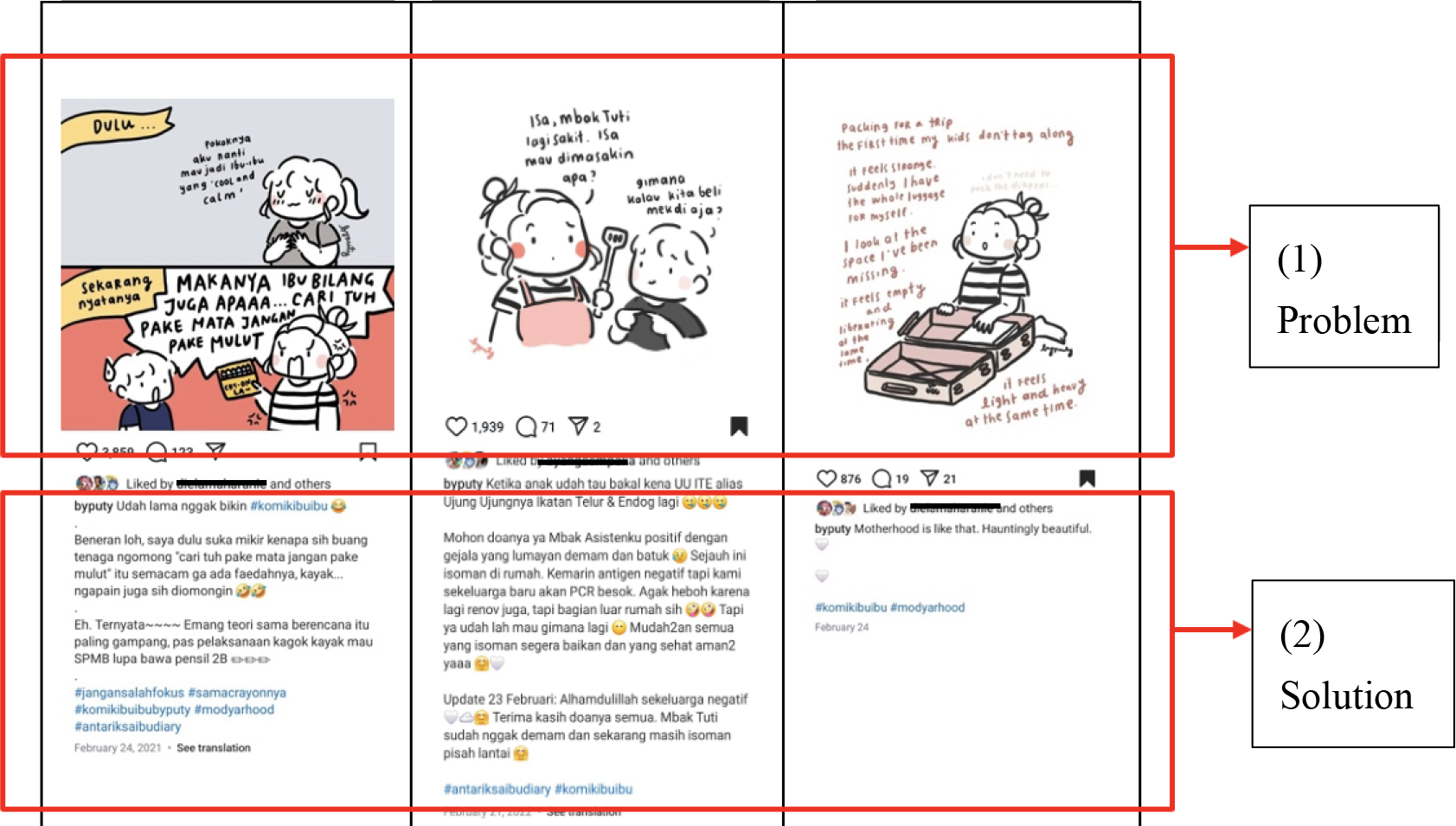
In art as therapy, drawn objects often stem from internal experiences, with depicted figures serving as self-projections of the creator. In Puty Puar’s illustrations, the female figure consistently represents herself, as evident in her facial features, hairstyle, and clothing. This self-identification reinforces the therapeutic function of the creative process through visual media (Malchiodi, 2007). In this context, art as therapy operates through illustration as both a medium of expression and a mechanism for emotional catharsis. Her depictions of motherhood convey emotional complexities that mothers experience while parenting, often oscillating between positive and negative feelings. This is supported by the majority of comments, particularly from mothers, who find her illustrations relatable and representative of their struggles.
The honest emotional expressions in Puty Puar’s illustrations are well-suited for Instagram, aligning with millennials’ tendency to be more open than previous generations. Illustration becomes a medium for negotiating identity and resisting stereotypes of the ideal mother. Puty highlights the imperfections and challenges of motherhood, offering meaning and understanding through visual storytelling. Her perspective is often reframed positively, through accompanying captions. As seen in Table 7, maternal problems (Section 1) are portrayed as ongoing, reflected through facial expressions, body gestures, and supportive text. Solutions are more commonly communicated through captions (Section 2), often in implicit or subtle ways.
Most maternal issues in her work conclude with some form of resolution presented in the captions, suggesting a process of self-healing and emotional relief. These illustrations are not merely expressions of burden but also function as tools for emotional regulation. The combination of visual and textual content acts as a unified therapeutic mechanism. By channeling her emotions creatively, Puty finds personal relief while also offering reflective insight to her audience. Her illustrations often present not just emotional expression but also implied solutions, as evidenced by the higher number of resolved cases compared to unresolved ones.
The illustrations uploaded by Puty Puar on Instagram serve not only as a therapeutic medium but also reinforce her professional identity as an illustrator, micro-influencer, and author targeting young mothers. Based on an interview with Puty Puar through digital correspondence, the process of drawing itself has given Puty Puar emotional relief even before the work is shared or gets a response from the audience on Instagram. Instagram thus functions as both a therapeutic space and a medium for reflection, regardless of whether or not an audience is present. The creative process is therefore more fundamental than public response.
These findings suggest that the experience of emotional regulation and self-meaning in Puty Puar’s digital illustration practice is primarily rooted in the creative process, particularly in transforming maternal experiences into visual narratives. Maternal-themed illustrations allow the illustrator to reflect on personal experiences without necessarily positioning them as universal therapeutic resources. In this context, audience interaction on Instagram serves as an additional layer of affirmation that strengthens connection and builds a sense of community. The emphasis on the creative process indicates that emotional relief does not depend solely on visibility or follower count but on subjective engagement in artistic practice, including caption writing.
When professional support is unavailable or inaccessible, personal strategies like art as therapy offer meaningful alternatives. In this context, Puty Puar’s creative practice functions therapeutically, helping to recognize, process, and express emotions in healthy ways. Instagram, as a platform for visual expression and social interaction, amplifies this therapeutic effect by facilitating two-way engagement between the illustrator and the audience. Thus, by positioning Puty Puar’s practice as a situated case, this study does not propose a universal generalization about art as therapy, but rather offers a contextual reading of how maternal themes, the creative process, and public validation interact within the digital media in Indonesia.
8. CONCLUSION
Puty Puar visualizes maternal issues through illustrations characterized by simple outlines, minimalist colors, and clear, accessible messages. Her works address themes such as the dual role dilemma, children’s education, maternal emotions, and the process of self-acceptance as a mother. Emotional expressions are conveyed through facial features, body gestures, and narratives in the captions. While the illustrations highlight the problems, the captions often offer solutions, forming a cohesive process of art as therapy for the emotional challenges faced by many mothers.
Amid persistent cultural and media-driven idealizations of the “perfect mother,” Puty Puar presents a more honest and relatable narrative, depicting vulnerability, exhaustion, and anxiety, thereby challenging harmful stereotypes. Her work invites audience interaction through likes, comments, and shares, creating a space for dialogue and validation among mothers who experience similar challenges. These illustrations foster shared validation, solidarity, and a supportive community, offering therapeutic effects not only for Puty Puar but also for her audience. Instagram, as a platform for expression and social interaction, enhances the therapeutic function of her work through communal support and recognition. Thus, maternal-themed illustrations on Instagram function not only as a personal expression but also as a form of mental health support in the digital age, particularly in response to the pressures of idealized motherhood in Indonesia.
ACKNOWLEDGEMENTS
The authors would like to thank Puty Puar for her participation in the interview and Paramadina University Jakarta for supporting this study.
AUTHOR BIOGRAPHIES
Gilang Cempaka is a Doctoral Candidate at the Faculty of Arts and Design, Bandung Institute of Technology (ITB), and a lecturer in the Visual Communication Design Program at Universitas Paramadina. Her research focuses on fine arts and illustration, particularly the creative practices of Indonesian women illustrators, with an emphasis on issues related to women, art, and gender.
Ira Adriati is a senior lecturer at the Department of Visual Art, Faculty of Art and Design, Institut Teknologi Bandung (ITB). She earned her Doctoral degree in Fine Arts (cum laude, 2010) with research interests in Indonesian classical art, women’s art, and issues of gender and feminism in visual culture.
Nuning Y. Damayanti is a senior lecturer at the Department of Visual Art, Faculty of Art and Design, Institut Teknologi Bandung (ITB). Her research focuses on Bahasa Rupa (visual language), traditional art, batik, and illustration in ancient manuscripts. She is affiliated with Aesthetics and Science of Art Research Group, Visual Art Program, Faculty of Art and Design, Institut Teknologi Bandung.
CONFLICTS OF INTEREST
The authors declare no conflict of interest.
REFERENCES
Ahonen, H.; Deek, P.; Kroeker, J. Low Frequency Sound Treatment Promoting Physical and Emotional Relaxation-Qualitative Study. International Journal of Psychosocial Rehabilitation 2013, 17 (1), 45–58. https://www.researchgate.net/publication/287458981_Low_frequency_sound_treatment_promoting_physical_and_emotional_relaxation-Qualitative_study
| |
Ambrosini, A.; Stanghellini, G. Myths of Motherhood. The Role of Culture in the Development of Postpartum Depression. Annali Dell’Istituto Superiore Di Sanita 2012, 48 (3), 277–286. https://doi.org/10.4415/ANN_12_03_08
| |
Arivia, G. Feminisme Sebuah Kata Hati; Penerbit Buku Kompas, 2006.
| |
Baraitser, L. Maternal Encounters: The Ethics of Interruption; Routledge, 2009. https://archive.org/details/maternalencounte0000bara
| |
Batterton, R. Louise Bourgeois, Ageing, and Maternal Bodies. Feminist Review 2009, 93 (1), 27–45. https://doi.org/10.1057/fr.2009.25
| |
Bellaiche, L.; Lihardo, K.; Williams, C.; Chaffee, J.; LaBar, K. S.; Seli, P. Selective Emotion Regulation in Creative Art Production: Psychophysiological Reactivity during Painting Reduces Anxiety. iScience 2025, 28 (6), 112543. https://doi.org/10.1016/j.isci.2025.112543
| |
Calica, M. P. Negotiating the Complexities of Mothering: An Autoethnography. International Journal of Qualitative Research 2023, 3 (2), 128–138. https://doi.org/10.47540/ijqr.v3i2.883
| |
Conde, R.; Casais, B. Micro, Macro and Mega-Influencers on Instagram: The Power of Persuasion via the Parasocial Relationship. Journal of Business Research 2023, 158. https://doi.org/10.1016/j.jbusres.2023.113708
| |
Constantinou, G.; Varela, S.; Buckby, B. Reviewing the Experiences of Maternal Guilt–the “Motherhood Myth” Influence. Health Care for Women International 2021, 42 (4–6), 852–876. https://doi.org/10.1080/07399332.2020.1835917
| |
Crane, T.; Buultjens, M.; Fenner, P. Art-Based Interventions during Pregnancy to Support Women’s Wellbeing: An Integrative Review. Women and Birth 2021, 34 (4), 325–334. https://doi.org/10.1016/j.wombi.2020.08.009
| |
de Jesús, M. L. Liminality and Mestiza Consciousness in Lynda Barry’s One Hundred Demons; Aldama, F. L., Ed.; University of Texas Press, 2010; pp 73–92. https://doi.org/10.7560/722811-006
| |
Fahmy, S. Using Applied Theatre for Collective Healing and Grief Processing in the Classroom. Spect-actor: A Journal of Pedagogy & Theatre of the Oppressed 2023, 7 (1), 11. https://scholarworks.uni.edu/ptoj/vol7/iss1/11
| |
Henderson, A.; Harmon, S.; Newman, H. The Price Mothers Pay, Even When They Are Not Buying It: Mental Health Consequences of Idealized Motherhood. Sex Roles 2016, 74, 512–526. https://doi.org/10.1007/s11199-015-0534-5
| |
Kutvonen, H. Other People’s Likes - How Has Instagram Affected Illustrators’ Careers, Mental Well-Being and Ways of Working?, Aalto University, 2021. https://aaltodoc.aalto.fi/items/b44b4ed1-3afe-483c-826c-0b723189b336
| |
Leaver, T.; Highfield, T.; Abidin, C. Instagram: Visual Social Media Cultures; Polity, 2020. https://www.wiley.com/en-mx/Instagram%3A+Visual+Social+Media+Cultures-p-9781509534395
| |
Liss, A. Feminist Art and the Maternal; University of Minnesota Press, 2009. https://nashvillefeministart.wordpress.com/wp-content/uploads/2014/06/2009_feminist-art-and-the-maternal.pdf
| |
MacDowall, L. Art after Instagram: Art Spaces, Audiences, Aesthetics; Routledge, 2022.
| |
Malchiodi, C. A. The Art Therapy Sourcebook; McGraw-Hill, 2007. https://archive.org/details/arttherapysource0000malc_h4e6
| |
Marchevska, E.; Walkerdine, V. The Maternal in Creative Work: Intergenerational Discussions on Motherhood and Art; Routledge, 2019. https://doi.org/10.4324/9781351209847
| |
Maslow, A. H. Motivation and Personality, 2nd ed.; Harper & Row, 1970. https://www.academia.edu/22439303/Motivation_and_Personality_Maslow
| |
McQuillan, J.; Greil, A. L.; Scheffler, K. M.; Tichenor, V. The Importance of Motherhood among Women in the Contemporary United States. Gender & Society 2008, 22 (4), 477–496. https://doi.org/10.1177/0891243208319359
| |
Miller, D.; Costa, E.; Haynes, N.; McDonald, T.; Nicolescu, R.; Sinanan, J.; Spyer, J.; Venkatraman, S.; Wang, X. How the World Changed Social Media; UCL Press, 2016. https://doi.org/10.14324/111.9781910634493
| |
Morisson, V. Countering Allegorical Motherhood in Irish and Northern Irish Contemporary Art: The Female Body as a Tool for Resistance; Portier Le-Cocq, F., Ed.; Taylor and Francis, 2019; pp 191–204. https://doi.org/10.4324/9780429198700-14
| |
Nel, R.; Naudé, L.; Piotrowski, K. Motherhood, Role Conflict and Identity: South African Mothers’ Experiences amid a Pandemic. Journal of Family Studies 2024, 30 (4), 656–680. https://doi.org/10.1080/13229400.2024.2308197
| |
Notosoedirdjo, M. Kesehatan Mental: Konsep Dan Penerapan; UPT Penerbitan Universitas Muhammadiyah Malang, 1999.
| |
Oakley, A. From Here to Maternity (Reissue): Becoming a Mother; Policy Press, 2018. https://doi.org/10.2307/j.ctv6zdcsx
| |
Olmos-Vega, F. M.; Stalmeijer, R. E.; Varpio, L.; Kahlke, R. A Practical Guide to Reflexivity in Qualitative Research: AMEE Guide No. 149. Medical Teacher 2023, 45 (3), 241–251. https://doi.org/10.1080/0142159X.2022.2057287
| |
Puar, P. Empowered ME (Mother Empowers): Ibu Berdaya Dimulai Dari Diri Sendiri; Gramedia Pustaka Utama, 2022. https://www.goodreads.com/book/show/60298371-empowered-me-mother-empowers
| |
Rachmayuningtyas, V. A. “Pygmalion Effect”: Modern Artists in the Age of Instagram. Journal of Contemporary Indonesian Art 2022, 8 (2), 75–83. https://doi.org/10.24821/jocia.v8i2.7064
| |
Rich, A. Of Woman Born: Motherhood as Experience and Institution; W. W. Norton, 1976. https://www.goodreads.com/book/show/305826.Of_Woman_Born
| |
Rubin, J. A. Introduction to Art Therapy: Sources & Resources; Routledge, 2009. https://doi.org/10.4324/9780203893968
| |
Setyastuti, Y.; Suminar, J. R.; Hadisiwi, P.; Zubair, F. Millennial Moms: Social Media as the Preferred Source of Information About Parenting in Indonesia. Library Philosophy and Practice (e-journal) 2019. https://scholarworks.sjsu.edu/libphilprac/2558/
| |
Sophia, M. Anatomi Perasaan Ibu; EA Books, 2023.
| |
Sruthikeerthy, R.; Chiluka, H.; Padmaja, G. Exploring the Wellness of Women: Impact of Art as an Intervention; Katevarapu, S., Singh, A. P., Tiwari, P., Varshney, A., Lanka, P., Pradhan, A., Panwar, N., Wangnue, K. S., Eds.; Taylor and Francis, 2025; pp 197–204. https://doi.org/10.4324/9781003596806-30
| |
Suárez-Carballo, F.; Martín-Sanromán, J. R.; Martins, N. An Analysis of Feminist Graphics Published on Instagram by Spanish Female Professionals on the Subject of International Women’s Day (2019–2020). Communication and Society 2021, 34 (2), 351–367. https://doi.org/10.15581/003.34.2.351-367
| |
Willard, S. L. N.; Tariq, U. Emirati Women Illustrators on Instagram: An Exploratory Study. Journal of Audience & Reception Studies 2021, 18 (2), 1–24. https://scholarworks.uaeu.ac.ae/cohss_facwork/12
| |
Willcox, G. The Feeling Wheel. A Tool for Expanding Awareness of Emotions and Increasing Spontaneity and Intimacy. Transactional Analysis Journal 1982, 12 (4), 274–276. https://doi.org/10.1177/036215378201200411
| |
World Health Organization. Guide for Integration of Perinatal Mental Health in Maternal and Child Health Services; 2022.
|