Integrating Experiential Learning, Clinical Practice, and Supervision: A First-Year Training Model in Art Therapy Education
Volume 12, Issue 1, Pages 69-81
ABSTRACT
This article documents and conceptually frames a long-standing clinical training model implemented in Israel during the first year of master’s-level art therapy education. The model, termed Individual Art Therapy Within a Group, integrated experiential learning, supervised clinical practice, and art-based supervision within a single structured therapeutic setting. In this format, first-year graduate students provide individual art therapy to assigned clients while working simultaneously in a shared group environment under the continuous presence and guidance of senior art therapists who serve as clinical supervisors. The structure’s intention is to combine principles of individual psychotherapy, group process, and art-based intervention, enabling students to develop clinical competencies while being supported within an intensive supervisory framework. Over three decades of cumulative supervisory experience, this reflective practitioner outlines the pedagogical rationale, structural components, ethical framework, and use of response art as a core supervisory practice. By formally articulating a model of historical transmission through professional practice rather than publication, this article contributes to expanding international literature on postgraduate art therapy education and experiential clinical training.
摘要
本文记录并从概念上界定了以色列在硕士阶段艺术治疗教育第一年实施的一项长期临床培训模式。该模式被称为“团体中的个体艺术治疗”,它体验式学习、受督导的临床实践以及艺术本位督导整合于单一的结构化治疗设置中。在这种形式中,一年级研究生在担任临床督导的资深艺术治疗师的持续在场与指导下,为指定的来访者提供个体艺术治疗,同时在共享的团体环境中开展工作。该结构的宗旨是结合个体心理治疗、团体过程和艺术本位干预的原理,使学生在密集督导框架的支持下发展临床能力。基于三十年积累的督导经验,这篇来自反思型从业者的报告概述了教学原理、结构要素、伦理框架,以及反思性艺术(Response Art)作为核心督导实践的应用。通过正式阐述这一经由专业实践而非出版物进行历史传承的模式,本文有助于拓展有关研究生艺术治疗教育和体验式临床培训的国际文献。
KEYWORDS
Clinical training model in art therapy, Group therapy in art therapy training, Art therapy education, Experiential clinical practice, Art-based supervision, Response art, Professional identity.
关键词
临床培训模式, 艺术治疗培训中的团体治疗, 艺术治疗教育, 体验式学习, 艺术本位督导, 反思性艺术, 专业认同.
History
Received July 2026
Accepted July 2026
Open Access
This is an open access article distributed under the CC BY 4.0 license (https://creativecommons.org/licenses/by/4.0/).
1. INTRODUCTION
Over the past three decades, postgraduate education in art therapy has undergone significant conceptual and structural developments. Increasing emphasis has been placed on experiential learning, signature pedagogies, competency-based training frameworks, and the formation of professional identity within supervised clinical environments (Lay, 2021; Leigh, 2021; Hogan & Coulter, 2014).
Within creative arts therapies education, experiential engagement is widely regarded as central to the formation of therapeutic competence. McNiff (2009) identified the education of the creative arts therapist as inseparable from personal artistic practice, emphasizing that artmaking is not an adjunct to training but a core pedagogical and epistemological foundation. Subsequent scholarship has elaborated on this position by highlighting experiential studio-based learning, response art, and reflective supervision as signature elements of art therapy training (Hogan & Coulter, 2014). Contemporary discussions further situate training within competency-based frameworks that integrate clinical skills, ethical reasoning, cultural responsiveness, and reflective capacity (Lay, 2021).
Despite this expanding literature, relatively few publications systematically document specific structural models implemented during the first year of master’s-level art therapy education. While supervision models, experiential learning processes, and identity formation have been extensively explored, less attention has been given to the design of integrated pedagogical frameworks that combine individual therapy practice, group process, and live supervision within a unified training structure. This gap is particularly evident in relation to early-stage clinical training, during which students transition from theoretical study to direct therapeutic responsibility.
The first year of postgraduate training represents a critical developmental juncture. Students often enter master’s programs from heterogeneous academic and professional backgrounds, such as art education, social sciences, or career transition, which can bring varied levels of clinical exposure and artistic confidence. Research indicates that early clinical encounters can evoke anxiety, uncertainty, and role confusion as students begin to internalize therapeutic identity (Lay, 2021; Orkibi, 2012). Structured containment, reflective supervision, and gradual experiential immersion are therefore central to effective early training. In art therapy specifically, this developmental phase involves learning to think and respond in the “language of art” while simultaneously engaging with psychodynamic and relational frameworks (Moon, 2002, 2010). This challenge lies not only in acquiring techniques but also in integrating artistic sensibility, clinical reasoning, and ethical awareness within lived therapeutic encounters.
In Israel, master’s-level art therapy programs operate within a distinct academic and institutional landscape. Clinical training begins in the first year and takes place in educational, medical, community, and welfare settings, and often within public-sector institutions. National professional oversight is provided by the Israeli Association for Creative Arts Therapies (YAHAT), which sets guidelines for supervision, placement, and ethical standards. Historically, the rapid expansion of art therapy in Israel during the late twentieth century created an urgent need for structured training models capable of preparing large cohorts of students for practice across diverse institutional contexts (Orkibi, 2012). Within this context, a pedagogical structure emerged that integrated close supervision, experiential immersion, and clinical responsibility from the outset of professional training.
The model presented in this article, termed “Individual Art Therapy Within a Group,” emerged from this historical and institutional context and has been implemented continuously for over three decades in first-year master’s training. It is not a newly proposed framework, but rather an established clinical-educational structure refined through cumulative supervisory practice. In this format, first-year graduate students provide individual art therapy to assigned clients within a shared group setting, under the continuous presence and guidance of a senior art therapist who serves simultaneously as therapist, supervisor, and educator. The structure intentionally combines principles of individual psychotherapy, group dynamics, art-based intervention, and live supervision, thereby creating a layered therapeutic-pedagogical container.
This article is written from a reflective practitioner’s point of view. These three authors are senior supervisors with extensive experience accredited by YAHAT, in postgraduate training and field supervision. The manuscript does not report empirical research; instead, it documents and conceptualizes a long-standing training model that has been transmitted historically through professional practice rather than scholarly publication. This model has been taught and implemented with thousands of students and clients across diverse academic and clinical settings. By articulating its structural logic, ethical framework, and pedagogical rationale, this article seeks to contribute to international discussions on signature pedagogies in creative arts therapies education and on the integration of supervision within early clinical training.
The model described here is contextually situated. Art therapy education is shaped by cultural, institutional, and regulatory conditions that vary across regions. As contemporary scholarship increasingly examines issues of localization, professional identity, and decolonizing practice within art therapy, documentation of context-specific pedagogical models becomes particularly relevant. Rather than proposing a universal template, this article offers a structured, sustained approach to integrate experiential learning, supervision, and therapeutic practice during the formative stage of professional development.
2. BACKGROUND ON THE DEVELOPMENT OF THE CLINICAL TRAINING MODEL IN ISRAEL
Lesley University’s Israel Extension Program began offering programs in Expressive arts therapy in Israel in 1979. It initially started as the Arts Institute Project in Israel (AIPI) in collaboration with the Dean of Lesley College. The program continued until May 2014. McNiff (1992, 1998) is a key figure in the development of art therapy, particularly in the training of therapists. He emphasized that the creative process is not merely the final product but is central to therapeutic work, encouraging trust in the process, mindfulness, and open-ended exploration. For McNiff, personal engagement in artmaking is essential for art therapists, as it nurtures both a deeper understanding of the client’s inner world and the therapist’s own self-development. He also highlights the importance of a process-oriented approach, which contrasts with traditional clinical interpretation by embracing uncertainty and resisting the urge to quickly diagnose or categorize. These ideas have become the foundation for many training programs and have significantly influenced the shaping of professional identity among art therapy students. In the Israeli context, McNiff’s pedagogical principles played a formative role during a period of significant growth in the field. According to McNiff (2009), 30 years ago, as art therapy gained popularity in Israel, there was an urgent move to train a growing number of students for clinical roles in public institutions. This demand led to modifications in training approaches and the development of a localized educational model adapted to Israeli needs, distinct from the training environments in the U.S. and Europe, which did not require such structural adjustments.
3. THE THERAPEUTIC MODEL
The clinical training model is based on the structure of the therapy group (Malchiodi, 2012), which consists of a group of students accompanied by a group of patients in a shared space, under the supervision of a senior, experienced art therapist. The number of students in the group equals the number of patients; each patient is paired with a student. These patient/student pairs are made with a senior supervisor (art therapist) present in the room, who can remain throughout the academic year. However, this model requires the supervisor to manage the complexity of a group within a group simultaneously, balancing the therapy and supervisory settings. Through multiple channels learning occurs, where the supervisor serves as a model for guidance in containment skills and intervention techniques originally developed by Bion. This can refer to the therapist’s capacity to receive and process the client’s emotional projections and return them in a tolerable form (Bion, 1962). The supervisor addresses both the artistic and verbal content that emerges in the patient and student groups. The therapy framework supports students’ personal development and learning through experience in the principles of individual therapy during the group session. This training model emphasizes the principles of using the language of art in therapy (Orbach, 2020; Leach & Madzini, 2018; Schur & Schur, 2021) and of short-term dynamic therapy (Yablon, 2024; Shefler, 2003), with the end of the sessions predetermined.
4. FROM THEORY TO PRACTICE: TRAINING IN ART THERAPY
The current model represents the students’ first year of clinical training for therapy work in the field. Since the students come from a non-homogeneous clinical background, the need for close supervision by an experienced senior art therapist emerged. The supervisor accompanies both the students and the patients while taking responsibility for the therapy, by attending to the patients’ needs, and overseeing the students’ learning and training, with therapeutic ethics receiving priority. A unique and complex model was developed, which we have chosen to designate ‘Individual therapy within a group,’ which will be explained in this article in detail later. Now, this model is implemented during the first year of study in all training programs in Israel.
The learning process involved in the model is guided and led by an experienced senior art therapist - the course supervisor. In this training model, students are experiencing: (1) providing individual support to patients while learning the principles of individual therapy; (2) providing support to all patients in a group setting while learning the principles of group therapy. In these two therapy settings, the use of art materials is employed to allow students to explore and deepen their understanding of the theory underlying the use of art materials, the emotional range patients can bring, the language of art in therapeutic work, and its qualities during the therapy session.
This training model was built on the understanding that students entering their master’s degree program in art therapy come from diverse backgrounds (education, art, social work, professional retraining, etc.), and some may face gaps in clinical experience, knowledge, and artistic skills. Addressing these gaps requires training that allows extensive experience in both clinical and creative aspects, as well as the artistic language. Students encountering the field for the first time may experience tension, anxiety, and insecurity during their field placement (Lay, 2021; Orkibi, 2012). Therefore, it is essential to provide adequate preparation, including gradual exposure and learning through observation with a senior supervisor, using the Winnicottian concept, which refers to the emotional and physical environment provided by the therapist to ensure the client’s safety (Winnicott, 1962). A structured framework and regular guided support are necessary at the beginning of their journey.
Currently, practical training in the first year of the master’s degree program in art therapy is mandatory. This training model is implemented across a variety of populations and in diverse therapy settings, including education and welfare institutions, mental health facilities, resilience centers, community-based therapy centers, and others.
5. ETHICS IN TEACHING AND SUPERVISION IN ART THERAPY
Art therapists engaged in teaching and supervision are responsible for the personal, clinical, and ethical development of their students and supervisees. As educators and supervisors, they function not only as instructors but also as professional role models; therefore, they are expected to demonstrate integrity, reflexivity, cultural sensitivity, and adherence to contemporary ethical standards. Ethical responsibilities in postgraduate art therapy education extend beyond clinical conduct to include pedagogical transparency, awareness of power dynamics within supervisory relationships, and careful navigation of the dual roles inherent in training contexts (ANZACATA, 2024).
This model operates within authorized academic and clinical institutions in Israel and aligns with the ethical code of the Israeli Association for Creative Arts Therapies (YAHAT, 2014). Its ethical framework is further informed by international professional standards, by including those articulated major art therapy associations (AATA, BAAT, ANZACATA), which can emphasize informed consent, confidentiality, professional competence, cultural responsiveness, and the safeguarding of vulnerable populations (ANZACATA, 2024). Art therapist publications on ethics in postgraduate training provide additional guidance for integration of ethical practice in teaching and supervision (BAAT, 2019).
In all training settings, informed consent is obtained from participating clients. For minors, written parental consent is required; Adult clients sign consent forms by acknowledging both the therapeutic framework and its educational context. Clients are explicitly informed that therapy is conducted by graduate trainees under direct supervision. Confidentiality and anonymization are strictly maintained in supervision, documentation, and academic discussion. Identifying details are removed, artworks are stored securely, and photographic documentation is conducted only with explicit consent and solely for supervisory or educational purposes (AATA, 2013).
Ethical practices also include the responsible use and storage of art materials, sensitivity to the symbolic content, and respect for the personal and creative boundaries of clients and students. Particular attention is given to the managing transference, countertransference, and relational dynamics within the “Individual Therapy Within a Group” format, which can recognize the layered ethical complexity of this structure.
Although this article does not report any empirical research, it did not require approval from a formal institutional review board; all described practices adhere to institutional ethical oversight procedures and national professional guidelines. This model aims to integrate ethical rigor with pedagogical depth by ensuring the client’s welfare, dignity, and agency remain central while fostering reflective and ethically grounded professional development among students.
6. DESIGN OF THE CLINICAL TRAINING MODEL
6.1. Building Foundations in the Field
At the beginning of the academic year, the clinical coordinators form groups within the various training institutions. The supervisors act as therapists within the training institution, serving as supervisors or field coordinators. Student groups typically consist of four to six students. Therefore, the supervisor must prepare to establish the group framework versus the training institution, whereas a space is adapted for working with art therapy. After placement, the supervisor makes initial contact with the registered students, who fill out a personal questionnaire designed by the supervisor to facilitate initial acquaintance with other members of their group. At the same time, the supervisor collaborates with the professional staff: therapists, medical, or educational staff within the institutions where the clinical training takes place, to identify clients whose profiles are suitable for participation in this unique model of art therapy. This process includes initial conversations and interviews with potential clients, during which they are invited to take part in Individual therapy within a group. While the purpose of the referral and the therapeutic framework is presented to the client at the outset, the therapeutic goals themselves are not predetermined. Somewhat, they are gradually shaped and formulated in collaboration with the client throughout the therapeutic process, in alignment with their personal and evolving needs.
Each training session lasts 4 academic hours and follows a fixed structure. The session begins with group supervision led by the group supervisor, who prepares the students for the weekly therapy sessions. The core of the therapy session is to alternate between group therapy and individual therapy and then conclude it with a return to group therapy. All these are guided by the group supervisor, who is present throughout the therapy session (to be described in detail below). The training session ends with a concluding group supervision hour for the students, including processing and feedback, documenting the session, addressing the patients’ artworks, writing a therapy report, and the students’ art response to the therapy session.
6.2. Preparations for the Therapy Sessions
Before the students meet with the patients, three or four orientation and guidance sessions are held to establish a shared learning group, so that they can familiarize themselves with the patient population, decide on relevant theoretical readings, leave a platform to learn about the setting, and prepare for the therapy sessions. These encounters include other things, such as an introduction to the multidisciplinary team at the training institution, norms, regulations, procedures, and the clinical aspects of the specific population with whom the students will work. In this initial phase, the supervisor provides the students with an experiential introduction to the language of art in therapy through creative work in the studio experience, with the possibility of intervention through various models, for example: The Joint Painting Model (Schur, 2015), The Eight Frame Colored Squiggle (Steinhardt, 2006), Joint Parent-Child Drawing (Gavron, 2015), The Original Copy - transitional images (Shapiro, 1993), The Third Hand (Kramer, 2001), and others. At this stage, the students engage in experiential learning integrated with art (Shamri-Zeevi & Gilad, 2023), both individually and in groups, focusing on content processing, reflection, and writing about the creative process.
6.3. Movement Between Group Therapy and Individual Therapy
In the current training model, therapy sessions take place under the guidance of an experienced art therapist, the supervisor. Sessions last approximately one hour. They can vary between a guided and structured meeting and an “open studio” format (Shapiro, 2014; Buberoglu et al., 2023), depending on the decision of the group supervisor and in accordance with the needs of the patient population and the training institution. The supervisor is responsible for dividing the time appropriately between group therapy and individual therapy, by ensuring transitions are smooth, and concluding as a group (Figure 1). This group model is unique because it allows for “individual therapy in a group,” where each patient is accompanied by a student/therapist. The supervisor closely monitors the therapy and the gradual therapeutic interventions, learning over time about the patients and the professional development stage of the students throughout the year. According to Moon (2002), students occupy a position between observers and participants, being guided and in the early stages of building their identity as a therapists. In this way, they become companions and partners in the process that the patient undergoes throughout the year. The supervisor focuses on each intervention performed by the students to ensure that it is done with sensitivity and guidance that allows for therapeutic interaction, where the patient’s needs receive top priority.
6.4. Managing the Therapy Session
At the beginning of each session, the chairs are arranged in a circle.
In the first 10 minutes, the therapy session takes place in a group format, with all participants (students, patients, and supervisor) sitting in a circle, guided by the course supervisor.
During the next 30 minutes, after the group opening session, the participants move to individual workstations or corners (in fixed patient-student pairings for the entire year).
During the last 10 minutes, all the participants return to the central circle to share artworks, reflections, and feedback.
If one of the patients is absent, the available student observes the group or one of the pairs in the room. The student receives a feedback sheet from the supervisor for observation and group feedback. The observation is done from a distant and respectful position to avoid disturbing the group and individual processes of the other members.
If one of the students is absent, the supervisor decides how to guide the patient within the group setup.
This model can be further developed throughout the year by allowing the students to actively experience facilitating the group.
6.5. Students Group
Each group comprises four to six students and four to six clients, fostering a balanced dynamic that encourages active participation and effective therapeutic interaction. This group size supports personalized attention while enabling diverse interpersonal processes to emerge within the therapeutic setting.
7. THE CLINICAL TRAINING MODEL
7.1. Training Space and Art Materials
The course takes place at various training institutions, and it is important that it should be held in a spacious room that can accommodate all participants and the creative processes. The organization of the space and its arrangement emphasize the invitation to create as an integral part of the therapy session; tables should be prepared, as well as art materials, cabinets, shelves, and preferably a sink (Figure 1). Offering a variety of art materials allows both patients and students to express their world through materials and imagery, by familiarizing them with the language of art as a primary means of emotional expression in the therapy room (Moon, 2002, 2010).
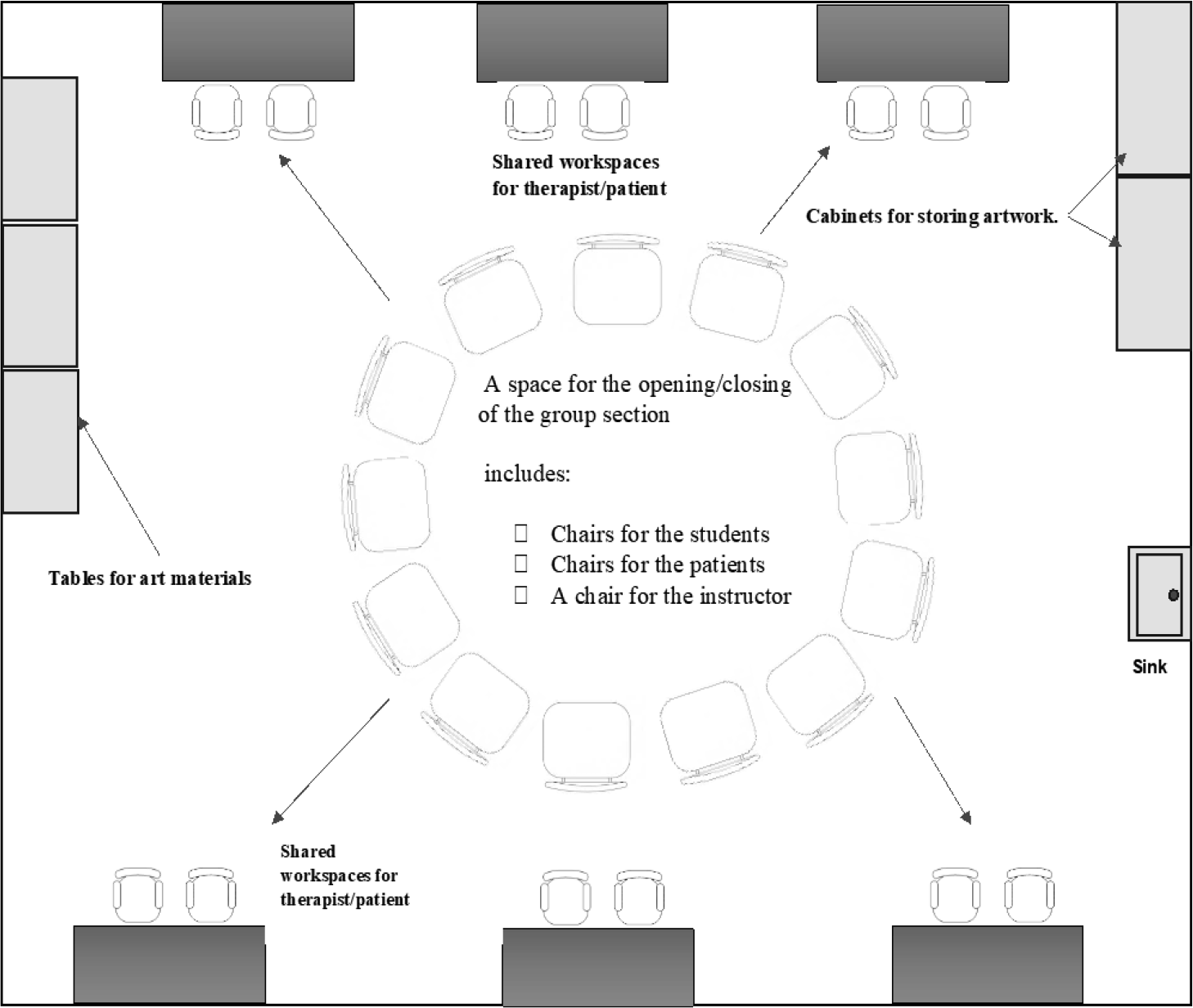
Figure 1. - Individual therapy within a group. Note: This figure was developed and illustrated by the authors to present the current model.
7.2. The Setting - Basic Conditions for Implementing the Model
It is essential that the training is conducted by a senior art therapist - a supervisor who works at the institution where the training takes place. However, sometimes the supervisor is not part of the institution’s staff and needs to become familiar with the patient population. In this case, it is important for the supervisor to integrate into the existing structure, respecting the institution’s guidelines, and establish contact with local therapy personnel to discuss the patients and share, if necessary, any content requiring thought or reporting
The number of patients referred to the group will be equal to the number of students participating.
The training space will be fixed and spacious enough to accommodate both group and individual therapy sessions.
The space, as a studio, will be pre-equipped with art materials for therapy work.
Organization of the creative space/studio - A central space in the therapy room should remain as an open area, in addition to workstations.
Organization of art materials – the art supplies should be spread out in an accessible way on a central table or shelves.
It is essential to allocate a space for storing the artworks between sessions in a protected and secure manner (e.g., cabinets, storage shelves, boxes, folders), while maintaining patient privacy.
The number of tables/workstations should match the number of patients/students, in addition to a space, table, or shelves for providing materials.
The number of chairs should correspond to the number of participants (students, patients, and supervisor).
It is beneficial to allow movement within the room, from the shared circle to individual/group creative spaces (patient-student).
7.3. Response Art and Analytical Writing
In art therapy supervision processes, as well as in therapeutic practice, understanding the language of art as a primary mode for processing experience plays a crucial role. Exploring visual countertransference adds an additional dimension to understanding the therapist’s internal responses within the therapeutic encounter (Schur, 2015). Response art is widely used in art therapy practice and refers to artwork created by the therapist or student therapist in response to the client’s artwork or the therapeutic encounter itself, serving as a reflective and integrative process (Fish, 2012; Nash, 2020). In the present context, response art is used as an umbrella term referring to therapist-generated artwork created in response to clinical encounters. The term reflect piece imagery (Nash, 2020) refers more specifically to artworks created immediately following therapy sessions as a form of post-session reflection.
Response art functions as a central tool in both clinical practice and training in art therapy, enabling therapists and students to explore and deepen their understanding of the client’s artwork and its emotional impact on the therapist. The student creates artwork in response to the patient’s artmaking and the symbolic material that emerges in the therapeutic process. Through this process, response art enables the therapist to contain, express, and examine impressions, sensations, and affective responses evoked during the session, often before these experiences are cognitively processed or understood within a transferential framework (Orkibi, 2014). As Nash (2020) notes, artworks created immediately following therapy sessions, referred to as “reflect piece imagery”, may function as visual expressions of the therapist’s internal responses to the complex verbal, non-verbal, and sensory communications experienced during the session. These images may hold something that has been seen, felt, sensed, or imagined in the therapeutic encounter and provide an additional reflective layer for understanding the therapist’s experience.
Gavron (2015) further emphasizes that all therapeutic relationships, and art therapy and supervision in particular, include both explicit and implicit forms of communication. Creating an artistic response within the supervision process serves as a container for both conscious and unconscious communication and promotes a deeper understanding of the patient, the therapeutic process, and the therapist’s internal experience within the therapeutic relationship (Fish, 2023). Within the learning and supervision processes of first-year clinical training, response art supports students in developing a deeper dynamic understanding of art therapy while helping them contain and process the emotional and symbolic material brought by the patient. Response art supports empathic involvement in the patient’s artmaking and may illuminate countertransference processes as well as personal internal observation for the student. Through this process, students learn to tolerate complex psychological and emotional material and to explore the meaning of the creative experience in service of the patient, while simultaneously supporting their own personal and professional development as therapists. Engaging in response art during clinical training may further contribute to the early formation of the art therapist’s professional identity by strengthening the integration of the artist–therapist role within clinical reflection (Nash et al., 2025). In supervision, response artworks may also serve as visual anchors for reflective dialogue. Sharing response images within supervision can deepen the understanding of the therapist’s embodied responses and bring implicit emotional material into a shared reflective space. In this way, the visual language of response art complements verbal supervisory reflection and contributes to the exploration of countertransference processes and relational dynamics within the therapeutic encounter (Nash, 2020). Experiential learning through the language of art is subsequently translated into therapeutic written language through the documentation of therapy sessions and the student’s reflective process. This integration of visual response, supervision dialogue, and reflective writing forms a central component of the clinical training model, through which experiential artistic processes are gradually translated into reflective, conceptual, and therapeutic understanding (Figure 2).
7.4. Documentation of the Therapy Session, Submission of Weekly Reports, Case Descriptions, and Evaluation
Within the clinical training model described in this article, the experiential processes of response art, supervision dialogue, and reflective learning are further supported through structured documentation and ongoing reflective writing throughout the training year. At the end of each therapy session, students are given time to write self-reflections and document the session, including response artwork related to the session or to the patient’s artwork. Students are also required to photograph the patient’s artwork (following ethical guidelines), document the creative process and materials used, and submit a therapy report to the supervisor. The report includes a description of the session, the developing therapeutic relationship, therapeutic interventions, transference and countertransference processes, creative processes, material choices, imagery, and the student’s response artwork. The report emphasizes a dynamic understanding of the therapeutic encounter and integrates reflective analytical writing (Ogden, 2003). Students are encouraged to address reflective questions inspired by Betensky’s (1995) phenomenological approach: What did I see? What did I feel? What did I think? These questions support the student’s capacity to observe the therapy process while integrating emotional, sensory, and conceptual aspects of the encounter. Weekly reports are submitted to the supervisor for review and feedback, supporting both the student’s learning process and reflective development. These reports also enable supervisors to identify emerging themes in the therapy process and connect them to therapeutic goals. Submitting weekly reports throughout the academic year enables the supervisor to monitor the student’s professional development, the internalization of therapeutic language, and the integration of theoretical concepts learned during the first year of training. These reports also serve as a personal tracking tool for the student and support the preparation of the final paper and the case study describing the client, accompanied throughout the year. The reports document the entire therapeutic trajectory, including the establishment of the therapeutic relationship, the ongoing therapeutic process, and the separation phase. This continuous documentation allows the supervisor to follow both the therapy process and the development of the student’s clinical thinking over time. Based on this longitudinal documentation, two structured evaluations are conducted: a mid-year evaluation and a final evaluation. The mid-year evaluation follows defined parameters and includes an assessment of the student’s clinical performance, academic engagement, therapeutic potential, and areas for further development (Figure 3).
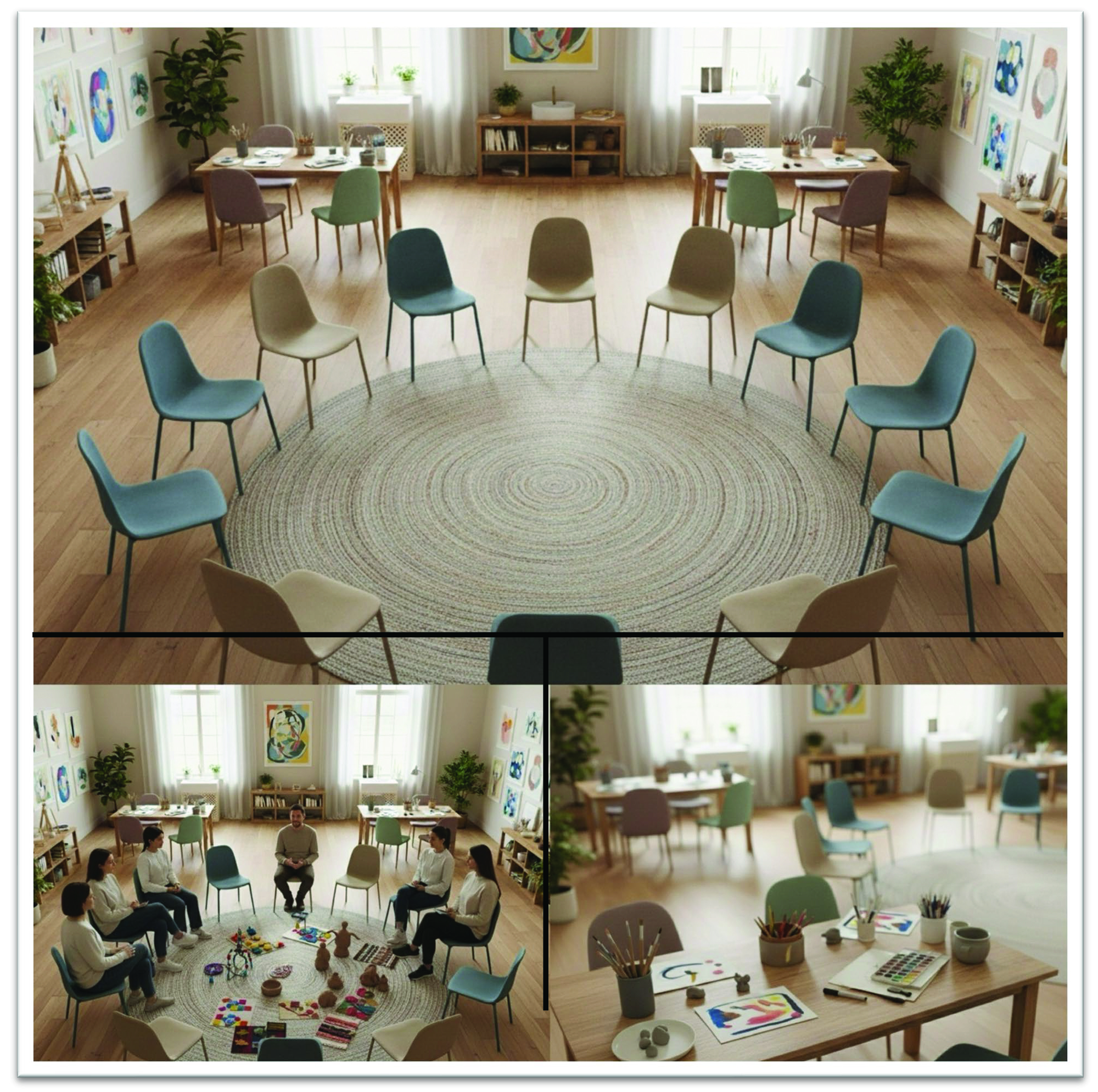
Figure 2. - Visual Illustration of the “Individual Therapy Within a Group” Model. Note: A visual representation of the therapy and learning environment for first-year art therapy students, reflecting the “Individual Therapy Within a Group” model through the presentation of the spatial arrangement, creative workstations, the circular seating configuration, and the supervision component based on art-response processes.
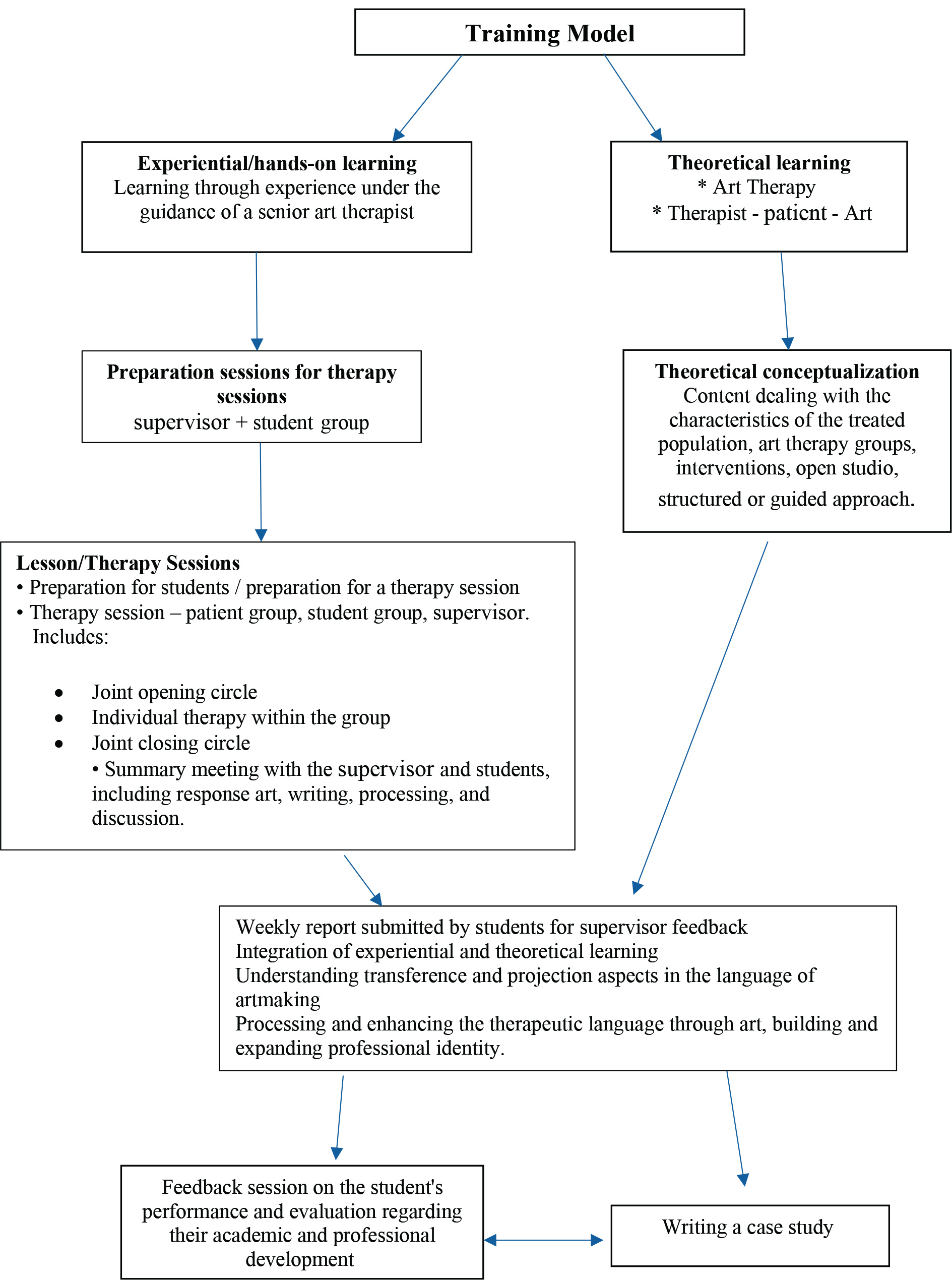
Figure 3. - The learning process. *The illustration was generated through an AI-supported visual design process to professionally and pedagogically highlight the environmental and organizational elements of the setting. No clinical artworks or identifiable materials were used.
8. DISCUSSION
Therapy training processes have been extensively researched over the years (Berger, 2017; Feen-Calligan, 1996; Orkibi, 2012; Speiser & Speiser, 2024). This article presents a unique training model that combines individual therapy within a group setting, forming the core of clinical training in the first year of art therapy programs. The model, developed at the Lesley University branch in Israel, has been successfully adapted to a variety of master’s degree art therapy training institutions in Israel, and continues to be implemented today.
Generally, art therapy master’s degree students have already earned a bachelor’s degree in therapy or have undergone a professional shift from other fields. The current entry point into the world of therapy offers students a “soft landing,” providing a gradual, thoughtful introduction to the field of art therapy. They are exposed to new languages, the language of psychodynamic therapy and the language of art and to their unique power within the therapeutic space. All of this takes place against the complexity of transitioning between the intimate, individual therapy setting and the dynamics of group and social interaction. In the model presented, training is provided through an off-campus course in the first year of studies, meaning students cannot choose their training site or the population they will treat. They begin accompanying patients from the first sessions under close supervision.
The supervisor’s role in the course demands constant attention to the complexities of transference relationships between all involved in the process (patients and students). The therapeutic educational space allows students a rich, hands-on experience that promotes the development of their professional identity as art therapists (Kuther, 2008). Great importance is placed on creating a supportive space for students that enables creative expression, the building of professional relationships, and the acquisition of essential tools. Such a space contributes to a positive learning experience and ensures successful professional development (Markos et al., 2008). In an art-based supervision process (Gavron, 2015), the supervisor closely monitors the students’ interventions and provides continuous support. Gavron & Orkibi (2021) found that art-based supervision significantly improves students’ ability to apply creative techniques in their therapy work. Eyal-Cohen et al. (2020) demonstrated that creative journals also support the process of forming the students’ professional identity. Artmaking serves as a powerful tool both during therapy and afterwards, in the processes of reflection and exploration.
Over the years, the clinical model has also evolved into a therapeutic model that combines individual therapy principles with group therapy principles, offering a rich and multidimensional experience for both patients and students. The group serves as a “development engine,” encouraging deep personal connections alongside mutual learning among its members. Personal artworks facilitate inner reflection and self-reflection, both on a personal and group level. The supervisor constantly shifts between different roles: as a therapist, supervisor, and lecturer. In the therapeutic and supportive role, the supervisor accompanies therapeutic processes and provides a safe space for transference and countertransference. In the role of supervisor and lecturer, they must navigate the complex dynamics. The physical space itself becomes a meaningful container for deep psychological processes using the language of art. In parallel with the therapeutic processes with the patients, the students undergo learning and professional development processes. In some training places, particularly in the educational system (Abramovski & Simhony, 2019; Snir et al., 2018). Students are also exposed to meetings with the patients’ parents, developing additional skills in the fields of supervision and family therapy (Abramovski, 2020; Fogel-Simhony & Abramovski, 2025).
In conclusion, the model has proven effective in promoting personal and group professional growth for both students and patients. Today, the training model is implemented in a wide range of settings, from kindergartens and schools to hospitals and assisted living facilities. The model has been successfully adapted to diverse populations, including children, adolescents, and adults with various and complex needs.
9. CONCLUSION
This article documents and conceptually frames an established clinical training model implemented for over three decades in first-year master’s-level art therapy education in Israel. The Individual Therapy Within a Group model integrates experiential learning, supervised clinical responsibility, and art-based reflection within a single therapeutic structure, enabling students to engage simultaneously in individual treatment, group process, and layered supervision. Rather than proposing a new framework, this article makes explicit a pedagogical model that has evolved through sustained practice and institutional adaptation. Its strength lies in integrating clinical immersion, response art, and close supervisory containment during the formative stage of professional development. In doing so, the model supports not only the acquisition of clinical competencies but also the gradual formation of professional identity, ethical awareness, and aesthetic sensitivity in emerging art therapists. By articulating this long-standing training structure, the article contributes to international discourse on postgraduate art therapy education and offers a contextually grounded example of how therapeutic practice, supervision, and experiential pedagogy may be meaningfully integrated in early-stage training.
9.1. Limitations of Clinical Model
No empirical studies or formal evaluations have yet been conducted to assess the model’s contribution or its impact on student learning quality. Currently, the model is primarily grounded in the instructors’ professional experience rather than in systematically collected data. Furthermore, it remains to be examined whether the model is transferable or applicable across different cultural contexts.
9.2. Recommendations for Future Research
Further empirical research is needed to examine the model’s long-term effectiveness and its various impacts. It is recommended to investigate the model’s influence on students’ professional identity and clinical skill levels, and its adaptation to diverse populations and cultural contexts. Additionally, the impact of combining individual and group therapy, as well as the contribution of the artistic space to learning and therapeutic processes, should be explored. Moreover, there is a need for an in-depth examination of the role of supervisors and their influence on the training process and students’ professional development.
AUTHOR’S CONTRIBUTION
All the authors contributed equally to the conception, development, and writing of this manuscript.
AUTHOR BIOGRAPHIES
Dr. Gal Abramovski is the Head of the M.A. Program in Art Therapy at Beit Berl Academic College. He is a senior lecturer, art therapist, senior supervisor at YAHAT (the Israeli Association for Creative and Expressive Therapies), and a researcher in the field of art therapy.
Aya Katz is an art therapist, Director of Clinical Training, and lecturer in Art Therapy at Sapir College. She previously served as a lecturer in the School of Society and the Arts at Ono Academic College. She is a senior supervisor at YAHAT (the Israeli Association for Creative and Expressive Therapies) and a researcher in the field of art therapy.
Maya Gronner Shamai is the Practicum Coordinator and a lecturer at Kibbutzim College of Education. She is a doctoral candidate in art therapy in the Department of Jewish Art at Bar-Ilan University. She previously served as a lecturer at the School of Society and the Arts at Ono Academic College. She is an art therapist, a senior supervisor in YAHAT, and a researcher in the field of art therapy.
CONFLICTS OF INTEREST
The authors declare that there are no conflicts of interest regarding the publication of this article.
References
AATA. Ethical Principles for Art Therapists; American Art Therapy Association, 2013.
| |
Abramovski, G. Mothers’ Perception of Their Involvement in Expressive and Creative Therapy Provided to Their Children at a Special Education School. Advances in Social Sciences Research Journal 2020, 7 (3), 162–176. https://doi.org/10.14738/assrj.73.7935
| |
Abramovski, G.; Simhony, M. F. Integrating Art Therapy in Schools: A Systematic Literature Review. Studia Universitatis Babes-Bolyai Psychologia-Paedagogia 2019, 64 (1), 45–58. https://doi.org/10.24193/subbpsyped.2019.1.03
| |
ANZACATA. Ethics and Standards; 2024.
| |
BAAT. Code of Ethics and Professional Practice; British Association of Art Therapists, 2019.
| |
Berger, R. Shifting Roles: A New Art Based Creative Supervision Model. The Arts in Psychotherapy 2017, 55, 158–163. https://doi.org/10.1016/j.aip.2017.04.010
| |
Betensky, M. G. What Do You See? Phenomenology of Therapeutic Art Expression; Jessica Kingsley Publishers, 1995.
| |
Bion, W. R. Learning from Experience; Routledge, 1962.
| |
Buberoglu, R.; Bat-Or, M.; Finkel, D. The Creative Space: The Experiences of Art Therapy Students Who Participated in an Open Studio during Their Training. Academic Journal of Creative Arts Therapies 2023, 13 (2), 520–532. https://www.calameo.com/read/0052011304f005beda64c
| |
Eyal-Cohen, D.; Regev, D.; Snir, S.; Bat-Or, M. Developing the Professional Identity of Art Therapy Students as Reflected in Art Therapy Simulation Sessions. The Arts in Psychotherapy 2020, 71 (3), 101706. https://doi.org/10.1016/j.aip.2020.101706
| |
Feen-Calligan, H. Art Therapy as a Profession: Implications for the Education and Training of Art Therapists. Art Therapy 1996, 13 (3), 166–173. https://doi.org/10.1080/07421656.1996.10759216
| |
Fish, B. J. Response Art: The Art of the Art Therapist. Art Therapy 2012, 29 (3), 138–143. https://doi.org/10.1080/07421656.2012.701594
| |
Fish, B. J. Response Art: A Resource for Practice and Supervision, in Person and Online. Journal of Applied Arts & Health 2023, 14 (1), 73–84.
| |
Fogel-Simhony, M.; Abramovski, G. The Relationship between Creative Arts Therapists and Parents of Student-Clients within a Special Education School Setting. Journal of Creative Arts Therapies (JoCAT) 2025, 20 (1). https://www.jocat-online.org/a-25-fogelsimhony
| |
Gavron, T. The Joint Painting – Assessing Parent-Child Relationships through Painting; Berger, R., Ed.; Ach Publication, 2015; pp 1–20.
| |
Gavron, T.; Orkibi, H. Arts-Based Supervision Training for Creative Arts Therapists: Perceptions and Implications. The Arts in Psychotherapy 2021, 75, 101838. https://doi.org/10.1016/j.aip.2021.101838
| |
Hogan, S.; Coulter, A. M. The Introductory Guide to Art Therapy: Experiential Teaching and Learning for Students and Practitioners; Routledge, 2014.
| |
Kramer, E. Art as Therapy: Collected Papers; Jessica Kingsley Publishers, 2001.
| |
Kuther, T. L. Surviving Graduate School in Psychology: A Pocket Mentor; American Psychological Association, 2008.
| |
Leach, I.; Madzini, S. Developmental Mushiness and Traumatic Mushiness: Two Perspectives on Working with Liquid and Mucous Materials in Art Therapy. Beyn Hamilim 2018, 15 (1). https://www.smkb.ac.il/us/college-publications/beyn-hamilim/volume15/gilyon15-ilana_shabi
| |
Lay, R. P. Portrait Masks, Appropriated Space, and an Overseas Art Experiential: Nature as Critical Catalyst in the Practice and Training of Art Therapy. Creative Arts in Education and Therapy (CAET) 2021, 7 (1), 59–70. https://doi.org/10.15212/CAET/2021/7/6
| |
Leigh, H. Signature Pedagogies for Art Therapy Education: A Delphi Study. Art Therapy 2021, 38 (1), 5–12.
| |
Malchiodi, C. A. Handbook of Art Therapy, 2nd ed.; Guilford Press, 2012.
| |
Markos, P. A.; Coker, J. K.; Jones, W. P. Play in Supervision: Exploring the Sandtray with Beginning Practicum Students. Journal of Creativity in Mental Health 2008, 2 (3), 3–15. https://doi.org/10.1300/j456v02n03_02
| |
Nash, G. Response Art in Art Therapy Practice and Research with a Focus on Reflect Piece Imagery. International Journal of Art Therapy 2020, 25 (1), 39–48. https://doi.org/10.1080/17454832.2019.1697307
| |
Nash, G.; Miller, A.; Fish, B. Response Art: Exploring Three Complementary Applications of Response Art in Practice, Supervision, Teaching and Research in Art Therapy. Journal of Applied Arts & Health 2025, 17 (1), 57–76. https://doi.org/10.1386/jaah_00220_1
| |
McNiff, S. Integrating the Arts in Therapy: History, Theory, and Practice; Charles C Thomas Publisher, 2009.
| |
McNiff, S. Art as Medicine: Creating a Therapy of the Imagination; Shambhala Publications, 1992.
| |
McNiff, S. Trust the Process: An Artist’s Guide to Letting Go; Shambhala Publications, 1998.
| |
Moon, C. H. Studio Art Therapy; Jessica Kingsley Publishers, 2002.
| |
Moon, C. H. Materials and Media in Art Therapy: Critical Understandings of Diverse Artistic Vocabularies; Routledge, 2010. https://doi.org/10.4324/9780203858073
| |
Ogden, T. H. On Not Being Able to Dream. The International Journal of Psychoanalysis 2003, 84 (1), 17–30. https://doi.org/10.1516/1D1W-025P-10VJ-TMRW
| |
Orbach, N. The Good Enough Studio: Art Therapy through the Prism of Space, Matter, and Action; Private author’s publishing, 2020.
| |
Orkibi, H. A Field Training Model for Creative Arts Therapies: Report from a 3-Year Program Evaluation. Art Therapy 2012, 29 (4), 174–179. https://doi.org/10.1080/07421656.2012.730930
| |
Orkibi, H. The Applicability of a Seminal Professional Development Theory to Creative Arts Therapies Students. Clinical Psychology & Psychotherapy 2014, 21 (6), 508–518. https://doi.org/10.1002/cpp.1851
| |
Schur, T. Joint Painting – Observing the Artwork – Seeing the Soul; Berger, R., Ed.; Ach Publication, 2015; pp 201–236.
| |
Schur, Y.; Schur, L. Mutual Visual Transference: A Group Supervision Model; Yaguri, T., Merari, D., Eds.; Cambridge Scholars Publishing, 2021; pp 145–166.
| |
Shamri-Zeevi, L.; Gilad, A. Art-Based Parental Training: The Training Process of Art Therapy Students and Application in the Clinical Field. Beyn Hamilim 2023, 21, 55–75.
| |
Shapiro, J. Copy as Original: Transitional Images. Art Therapy. Academic Journal of Creative Arts Therapies 1993, 1 (2), 43–48.
| |
Shapiro, J. Open Studio; Berger, R., Ed.; Ach, 2014; pp 135–158.
| |
Shefler, G. More on Time-Limited Psychotherapy; Hebrew University and Magnes, 2003.
| |
Snir, S.; Regev, D.; Keinan, V.; Abd El Kader-Shahada, H.; Salamey, A.; Mekel, D.; Melzak, D.; Daoud, H.; Orlovich, A. G.; Alkara, M. Art Therapy in the Israeli Education System – a Qualitative Meta-Analysis. International Journal of Art Therapy 2018, 23 (4), 169–179. https://doi.org/10.1080/17454832.2017.1409775
| |
Steinhardt, L. The Eight Frame Colored Squiggle Technique. Art Therapy 2006, 23 (3), 112–118. https://doi.org/10.1080/07421656.2006.10129626
| |
Speiser, V.; Speiser, P. Art Encircles Life: Journeying with, in, and through the Expressive Arts. Creative Arts in Education and Therapy (CAET) 2024, 10 (1), 156–174.
| |
Winnicott, D. W. The Theory of the Parent-Infant Relationship. The International Journal of Psycho-Analysis 1962, 43, 238–239.
| |
Yablon, Y. Dynamic focused short-term pediatric treatment. Hebrew Psychology. https://www.hebpsy.net/articles.asp?id=4737
| |
YAHAT. Higher council. YAHAT – Israeli Higher Council Association for Creative Arts Therapies. https://www.yahat.org/template/default.aspx?PageId=31
|