Dancing Across Cultures: Exploring Intercultural Pedagogy through Kecak Dance Experience for Malaysian Dance Teachers
Volume 12, Issue 1, Pages 28-39
ABSTRACT
This study explores how Kecak dance training contributes to embodied learning, intercultural pedagogy, and professional identity development among Malaysian dance teachers. Situated within Southeast Asian dance education, the study responds to the need for culturally responsive teachers’ professional development that moves beyond technical mastery toward intercultural awareness, empathy, and reflective pedagogy. A qualitative case study was conducted at Universiti Pendidikan Sultan Idris, Malaysia, involving ten dance teachers who participated in a Kecak training program. Data were collected through semi-structured interviews, participant observation, reflective responses, and documentation, then analyzed using reflexive thematic analysis. The findings reveal that Kecak training fostered embodied intercultural learning through collective rhythm, vocal interaction, circular formation, and synchronized movement. Participants developed deeper cultural sensitivity, collective awareness, and confidence in adapting intercultural dance pedagogy for multicultural classrooms. The study also shows that Kecak functioned as a symbolic and pedagogical bridge between Eastern embodied philosophies emphasizing harmony, spirituality, and collective embodiment and Western intercultural pedagogies emphasizing inclusion, critical reflection, and democratic learning. These findings contribute to scholarship on intercultural pedagogy, dance education, and professional identity by demonstrating how traditional performing arts can support transnational teacher learning, empathy, and Southeast Asian cultural dialogue.
摘要
本研究探讨了凯卡克舞(Kecak)培训如何促进马来西亚舞蹈教师的具身学习、跨文化教学法以及专业身份发展。研究立足于东南亚舞蹈教育背景,回应教师专业发展中对文化回应性教学的需求,即不仅关注技术能力的提升,更强调跨文化意识、同理心与反思性教学实践。研究采用质性个案研究方法,在马来西亚苏丹依德理斯教育大学(Universiti Pendidikan Sultan Idris)开展,共有十名舞蹈教师参与凯卡克舞培训。数据通过半结构式访谈、参与式观察、反思记录及相关文件收集,并运用反思性主题分析法进行处理。研究结果表明,凯卡克舞培训通过集体节奏、声音互动、圆形队列以及同步动作,促进了具身化的跨文化学习。参与者在文化敏感度、集体意识以及跨文化舞蹈教学能力方面均有所提升,并增强了在多元文化课堂中实施相关教学的信心。此外,本研究表明,凯卡克舞在强调和谐、灵性与集体具身的东方具身哲学,与强调包容、批判性反思及民主学习的西方跨文化教学法之间,发挥了象征与教学的桥梁作用。本研究丰富了跨文化教育、舞蹈教育与教师专业身份发展的相关研究,表明传统表演艺术能够有效促进跨国教师学习、文化同理心以及东南亚区域文化对话。
KEYWORDS
Kecak dance, Intercultural pedagogy, Teacher professional competence, Embodied learning, Malaysia, Southeast Asian dance education.
关键词
凯卡克舞, 跨文化教学法, 教师专业能力, 具身学习, 马来西亚, 东南亚舞蹈教育.
History
Received July 2026
Accepted July 2026
Open Access
This is an open access article distributed under the CC BY 4.0 license (https://creativecommons.org/licenses/by/4.0/).
1. INTRODUCTION
In an increasingly diverse global educational context, arts and culture teachers play a crucial role in fostering intercultural awareness and strengthening tolerance among students. Intercultural competence is now recognized as an essential component of arts teachers’ professionalism in creating inclusive and culturally responsive learning environments (Allen-Handy et al., 2021; Jegere & Jēgere, 2022; Pape-Pedersen & Strugstad, 2022). Dance, as a cultural expression rich in symbols, rhythm, and social values, offers significant potential as a medium for intercultural dialogue (Nadarajah et al., 2021). However, arts education in Southeast Asia continues to face challenges, including curriculum limitations, inadequate resources, and the limited integration of intercultural values into teaching practices (Papadopoulou et al., 2022). Learning often remains focused on technical and aesthetic achievement rather than the development of social and cultural awareness. In this context, intercultural pedagogy and embodied learning provide important frameworks for strengthening arts education through reflection, dialogue, and bodily experience (Beune et al., 2022; Siljamäki & Anttila, 2021).
A key issue addressed in this study is the lack of a systematic arts education model that integrates intercultural values into dance teacher training. In Indonesia, many teacher education programs continue to prioritize technical mastery over cultural understanding and pedagogical reflection. Consequently, teachers may have limited capacity to mediate cultural differences in classrooms and cross-national learning settings. Similar conditions are evident in Malaysia, where arts education remains fragmented and has not fully utilized opportunities for intercultural collaboration within Southeast Asia. Such approaches encourage engagement with diverse cultural traditions and participation in cross-cultural creative processes.
This study focuses on Balinese Kecak dance training for Malaysian arts teachers because of its distinctive artistic and pedagogical characteristics. Kecak is a collective performance tradition emphasizing repetitive rhythms, call-and-response patterns, group harmony, spirituality, and embodied synchronization. Participants must coordinate movement and vocalization while maintaining awareness of others, creating an experience of interdependence and collective consciousness.
Learning through Kecak therefore extends beyond technical mastery to include the development of social sensitivity, empathy, and interpersonal adaptability. Its accessible structure allows broad participation without requiring advanced dance skills, making it suitable for inclusive learning environments. The rhythmic and collaborative nature of Kecak encourages open communication, shared responsibility, and mutual listening. These qualities are particularly relevant to intercultural pedagogy because they create egalitarian spaces for interaction and strengthen collective learning experiences. The selection of Kecak was also informed by the historical and cultural proximity between Indonesia and Malaysia within the wider Nusantara region, where communal traditions and shared cultural values remain influential. In Malaysia’s multicultural society, Kecak offers a meaningful pedagogical model for promoting cultural dialogue and collaborative learning.
As a collective performing art emphasizing rhythm, harmony, and spirituality, Kecak can function as a medium for internalizing values of cooperation and intercultural solidarity (Hidajat et al., 2023). Through training, Malaysian dance teachers gain insight into Balinese cultural perspectives while reflecting on how these values may inform arts education in their own contexts. The study is based on the assumption that the embodied and collective structure of Kecak can facilitate empathy, strengthen collective awareness, and enhance intercultural understanding. Shared rhythmic patterns, attentive listening, and coordinated movement create learning experiences that cultivate sensitivity toward others and appreciation of social harmony. Participation in a communal performance setting also enables teachers to experience traditional arts as a form of cultural dialogue and social reflection. Thus, Kecak is positioned not merely as an object of study but as a pedagogical medium through which intercultural understanding is developed via collective bodily experience.
Previous studies indicate that traditional dance training contributes significantly to the formation of dance teachers’ professional identity. Through sustained participation, teachers often develop greater self-awareness, empathy, and reflective capacity (Bahari, 2022). They learn not only movement techniques but also the cultural values embedded within artistic traditions. Such experiences strengthen professional identities oriented toward intercultural understanding and pedagogical innovation (Cappello et al., 2025). Traditional arts training also supports the development of professional networks and cross-national collaboration, enriching teachers’ pedagogical perspectives (MacDonald, 2023). Consequently, traditional arts training and professional identity formation are closely interconnected.
Despite growing interest in traditional arts training and intercultural education, important gaps remain. Existing studies have largely focused on local or national contexts, with limited attention to how cross-national training experiences contribute to dance teachers’ professional competence in Southeast Asia. Research has also rarely examined the relationship between traditional dance training and the transformation of professional identity. Furthermore, scholarship on intercultural pedagogy has been dominated by Western perspectives emphasizing inclusivity, student-centered learning, and individual reflection (Daire, 2024). In contrast, Eastern and Southeast Asian perspectives often understand embodied experience as a collective process grounded in social harmony, spirituality, and communal connectivity (Liu et al., 2024; Sun, 2025). While both perspectives value dialogue, collaboration, and reflection, they differ in how they conceptualize the body and social relationships in dance education. This distinction highlights the need for stronger Southeast Asian contributions to global discussions of intercultural pedagogy.
This study aims to explore the application of intercultural pedagogy through Balinese Kecak dance training for dance teachers in Malaysia. It examines how embodied experiences within the training contribute to professional competence, pedagogical reflection, and intercultural awareness. The novelty of the study lies in its focus on a cross-national learning experience connecting two culturally related yet distinct contexts. It also contributes a Southeast Asian perspective to intercultural pedagogy by positioning traditional dance as a medium of embodied intercultural learning.
2. METHODOLOGY
2.1. Research Design
This study employed a qualitative approach using a case study design to explore the experiences of Malaysian dance teachers participating in Kecak dance as part of their intercultural competence development. This approach was selected because it enables an in-depth understanding of the contextual and reflective learning processes as well as the professional transformations experienced by the participants. The qualitative case study design facilitates the investigation of complex social phenomena within their real-life settings, allowing the researcher to capture the dynamic and situated nature of teacher learning and embodied experiences (Rumenapp et al., 2023).
2.2. Participants and Research Site
The study was conducted at Universiti Pendidikan Sultan Idris (UPSI), Malaysia, one of the leading teacher education institutions in Southeast Asia with a longstanding commitment to arts, culture, and teacher professional development. UPSI was selected as the research site because it serves as a major center for preparing arts educators and provides a strategic context for examining intercultural learning among practicing teachers. The participants consisted of ten dance teachers who were alumni of UPSI and had been actively working as teachers in Malaysian schools for several years (Table 1).
| Participant code | Gender | Age | Teaching experience (Years) | Prior exposure to Kecak |
|---|---|---|---|---|
| P 1 | Male | 40 | 16 | No formal experience; familiar through online performances |
| P 2 | Female | 38 | 15 | Limited exposure through cultural festivals |
| P 3 | Female | 35 | 12 | No prior exposure |
| P 4 | Male | 33 | 10 | Familiar through university coursework |
| P 5 | Female | 36 | 13 | Limited exposure through social media and performances |
| P 6 | Male | 31 | 8 | No prior exposure |
| P 7 | Female | 29 | 6 | Familiar through Indonesian cultural programs |
| P 8 | Male | 42 | 18 | Limited exposure through arts workshops |
| P 9 | Female | 45 | 20 | No prior exposure |
| P 10 | Female | 34 | 11 | Familiar through Southeast Asian dance festivals |
Participants were selected using a purposive maximum-variation sampling strategy (Bulmer, 1979; Khan, 2022). This approach was chosen because the study did not aim to generate statistical generalizations but rather to obtain rich and in-depth insights from individuals who possessed direct experience relevant to the research objectives. The inclusion criteria required participants to be actively engaged in teaching dance or performing arts, be UPSI graduates, attend the entire Kecak dance training program, and be willing to participate in interviews and observations. The purposive strategy also enabled the selection of participants with varying ages, teaching experiences, and prior exposure to intercultural arts practices, thereby allowing the study to capture a broader range of perspectives regarding intercultural competence, embodied learning, and professional identity development.
3. DATA SOURCES AND COLLECTION TECHNIQUES
Data were collected through three main techniques: semi-structured interviews, participant observation, and stimulated recall interviews. Semi-structured interviews were conducted before and after the training, each lasting approximately 60–90 minutes. The interviews explored participants’ pedagogical backgrounds, embodied experiences during Kecak sessions, interpretations of cultural values such as rhythm, choral coordination, dialogue, and their possible application in classroom settings. The interviews also examined institutional and cultural factors that supported or constrained the adaptation of Kecak values into multicultural education. Participant observation was conducted during key stages of the Kecak training, with the researcher documenting classroom interactions, collaborative dynamics, and embodied engagement through field notes and visual documentation. Stimulated recall interviews were then conducted using selected video excerpts from the training sessions, allowing participants to reflect on their bodily engagement, pedagogical decisions, and emotional responses.
4. RESEARCH PROCEDURE
The research was implemented in three phases: pre-training, during training, and post-training. In the pre-training phase, baseline interviews and demographic questionnaires were used to identify participants’ initial perceptions of intercultural pedagogy and cross-cultural arts education. During the training phase, the researcher observed learning processes, group interactions, and embodied experiences, while reflective journals were collected after each session. In the post-training phase, in-depth interviews were conducted one to two weeks after the final session to examine changes in pedagogical perspectives, intercultural awareness, and professional reflection. Participants also submitted short reflective reports describing their plans to integrate Kecak-based approaches into their teaching practices.
5. DATA ANALYSIS PROCESS AND THEME DEVELOPMENT
Data were analyzed using Reflexive Thematic Analysis (RTA) developed by Braun et al. (2023). This approach was selected because it allows researchers to examine participants’ experiences in depth while maintaining reflexivity regarding the researcher’s positionality and interpretation. The data were drawn from semi-structured interviews, observation notes, reflective journals, and written responses to obtain a comprehensive understanding of Malaysian dance teachers’ intercultural experiences.
The analysis followed six stages. First, the researcher became familiar with the data through transcription, repeated reading, and initial memo writing. Second, open coding was conducted both inductively and deductively, allowing codes to emerge from the data while also connecting them with key concepts such as embodied learning, intercultural pedagogy, and professional identity transformation. Third, similar codes were grouped into broader categories across data sources. Fourth, the themes were reviewed to ensure coherence and distinction. Fifth, the themes were defined and named based on the essence of participants’ experiences. Finally, case narratives and cross-case synthesis were developed to identify shared patterns and variations across participants.
Table 2 illustrates how the analytical process moved from empirical data toward the construction of more abstract themes through systematic stages of interpretation.
| Meaning unit / Data example | Initial code | Category | Final theme |
|---|---|---|---|
| “Art is easy; art is beautiful.” | Openness to arts learning | Embodied accessibility | Embodied intercultural learning |
| “Understanding the lineage of a culture as a whole through its music, vocals, dance, and costumes.” | Holistic cultural understanding | Cultural interpretation | Cultural values and symbolic communication |
| “Dance can also become an engaging form of learning and can be improvised.” | Creative pedagogical adaptation | Teaching innovation | Professional identity transformation |
| “I will implement intercultural learning with my students in Malaysian schools.” | Intention to implement | Pedagogical transfer | Multicultural dance pedagogy implementation |
6. ETHICAL CONSIDERATIONS
This study has received ethical approval from the University Ethics Committee under reference number No. 359/UN40.K/PT.01.01/2025. This study followed the ethical principles of research involving human participants. All participants provided informed consent prior to data collection. The study did not involve any intervention or clinical procedures, and all information was treated confidentially and anonymously in accordance with the Declaration of Helsinki (2013).
7. RESULTS
7.1. Embodied Intercultural Learning through Kecak Movement and Vocal Practice
The embodied experience of Kecak dance training among Malaysian dance teachers revealed a complex interplay between bodily awareness, cultural transmission, and pedagogical adaptation. Participants not only learned the philosophical meanings underlying the movements but also directly engaged with the fundamental techniques of Kecak, including hand movement patterns, circular sitting formations, bodily coordination, and the distinctive “cak, cak, cak” vocal technique that constitutes the core element of the performance (Figure 1). This active engagement facilitated profound physical and emotional experiences, in which the synchronization of breathing, rhythm, and vocal coordination fostered collective awareness and a sense of interconnectedness among participants (Markula & Frantsi, 2024; Siljamäki & Anttila, 2021).
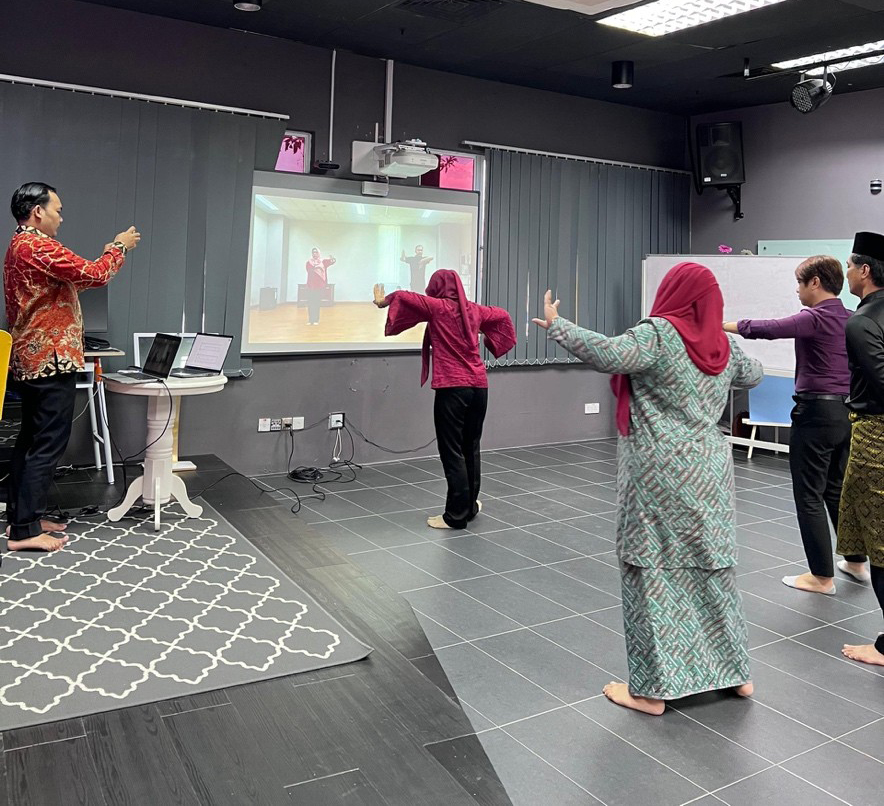
Figure 1. - Teachers learning Kecak dance techniques.
Interview data indicated that these embodied experiences helped teachers understand art as a practice inseparable from its cultural context. One participant stated, “Art is simple; art is beautiful” (P3), suggesting that Kecak training opened new perspectives on intercultural arts learning as an accessible, communicative, and inclusive process that does not necessarily require advanced technical expertise. Another participant explained that intercultural learning enabled them to “understand the entirety of a culture through its music, vocals, dance, and costumes” (P7). This statement represents an important meaning unit, indicating that the Kecak experience was understood not merely as a movement practice but as a holistic cultural experience integrating music, vocal expression, movement, costume, and social values.
As a traditional Balinese performing art, Kecak functioned both as a learning medium and a metaphor for intercultural education. Teachers reported increased sensitivity to cultural values through direct engagement with Kecak’s rhythmic structure, which requires collective coordination. Becoming part of the circle fostered a sense of equality and interconnectedness among participants, challenging the hierarchical structures commonly found in formal educational settings. Body-based learning promoted an inclusive, egalitarian pedagogical space oriented toward intercultural emotional awareness (Ørbæk, 2021).
Furthermore, participants revealed that the emotional dimensions of Kecak practice generated a new awareness of the importance of social and spiritual connections within artistic practice. They described initial uncertainty when attempting to coordinate movement and vocalization simultaneously; however, this uncertainty gradually transformed into a learning experience that strengthened courage, listening skills, and sensitivity to collective rhythm. This process brought to life Balinese cultural values such as discipline, togetherness, and respect for community. Affective engagement in dance practice has been shown to cultivate empathy and broaden intercultural understanding (Pape-Pedersen & Strugstad, 2022). Consequently, the embodied experience of Kecak training provided Malaysian dance teachers with a concrete model for understanding how body, voice, and rhythm can function as dynamic and reflective vehicles for intercultural learning.
7.2. Cultural Values and Symbolic Communication in Kecak as Intercultural Pedagogy
Kecak dance emphasizes not only technical proficiency but also a rich symbolic dimension embedded with cultural meaning. Teachers identified several important values, including cooperation (gotong royong), rhythmic discipline, spiritual awareness, and the balance between individual and collective identity. The structured “cak-cak-cak” vocalization represents both social and spiritual harmony, where each individual contributes to a larger collective whole. Participants interpreted these values as reflections of the Balinese philosophy of Tri Hita Karana, which emphasizes harmonious relationships among humans, nature, and the divine. Kecak thus became a representation of collective memory and social identity (Sankara, 2023). Its musical and movement structures functioned as living metaphors for social cohesion and cooperation (Figure 2). Through this embodied experience, teachers learned how cultural narratives can be articulated through rhythm and movement, thereby deepening their pedagogical sensitivity toward symbolic communication in dance (Ravn, 2022).
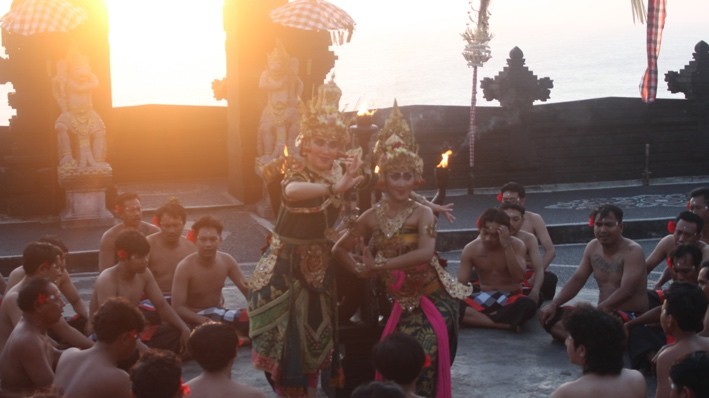
Figure 2. - Kecak dance performance at Uluwatu, Bali.
Interview findings reinforced this interpretation. One participant stated that the benefit of intercultural learning was that it “allows us to understand other cultures more deeply” (P2). Another participant explained that intercultural learning can “broaden one’s mindset and understanding of other cultures” (P5). These statements suggest that Kecak training was perceived as a space for expanding cultural perspectives rather than merely developing dance skills. In this context, the symbolic meanings embedded in Kecak functioned as a medium through which participants could understand other cultures more empathetically and comprehensively.
From a pedagogical perspective, the internalization of cultural values through Kecak encouraged teachers to adopt more reflective and collaborative teaching practices. Participants recognized parallels between group coordination in Kecak and multicultural classroom management strategies based on cooperation and empathy. The circular formation, interlocking rhythms, and mutually supportive vocal structures of Kecak can be interpreted as a model of classroom learning in which every student is regarded as an essential contributor to the collective learning process. Thus, Kecak serves not only as cultural heritage but also as a model of intercultural pedagogy that promotes collective awareness and appreciation of diversity (Ayana et al., 2024).
7.3. Pedagogical Adaptation and Teacher Confidence in Multicultural Dance Education
The findings indicate that Kecak training encouraged teachers to reconsider their dance teaching strategies within multicultural classroom contexts. Several participants had previously taught artistic materials originating from cultures other than their own; however, the training strengthened their understanding that intercultural learning should be systematically designed through appropriate teaching materials, pedagogical approaches, and experiential learning opportunities. When asked about the most important aspects of intercultural training, participants highlighted “intercultural teaching techniques” (P4) and “curriculum and teaching material development” (P8). These responses suggest that teachers require not only knowledge of other cultures but also pedagogical tools that enable them to translate such knowledge into meaningful classroom practice.
A major challenge identified by participants was students’ limited understanding of cultures different from their own. Teachers observed that students often lack sufficient prior knowledge to fully comprehend the symbolic meanings embedded in intercultural artistic practices. Consequently, educators must design learning experiences that not only present artistic forms but also explain their cultural backgrounds, values, and social contexts. One participant stated that intercultural learning helps students “understand the cultural background behind artistic practices” (P6). This statement highlights the importance of contextual approaches in intercultural dance education.
Kecak training also enhanced teachers’ confidence in teaching intercultural arts content. Prior to the training, several participants described themselves as only “moderately confident” in teaching intercultural arts. Following the training, however, they expressed greater confidence in implementing intercultural learning practices in their schools. One participant stated that they intended to “carry out intercultural learning activities with students in Malaysian schools” (P1), while another planned to implement such activities “during arts club sessions” (P9). These findings suggest that the training not only strengthened conceptual understanding but also generated practical pedagogical plans applicable within school settings.
7.4. Professional Identity Transformation through Intercultural Engagement
Kecak training also triggered profound transformations in teachers’ professional identities. Participants began to view themselves not merely as instructors of dance techniques but as cultural mediators and facilitators of intercultural dialogue. This transformation was characterized by increased confidence, empathy, and pedagogical reflexivity. Consistent with the concept of intercultural teacher identity (Bahari, 2022; Bendraou & Sakale, 2023; Jegere & Jēgere, 2022), participants developed more open, reflective, and diversity-responsive professional identities.
Intercultural training enabled teachers to critically examine their personal biases and broaden their perspectives on diversity (Papadopoulou et al., 2022). This reflective process strengthened their awareness of social justice and educational equity (Chapman‐Hilliard & Parker, 2022). Furthermore, intercultural engagement through Kecak encouraged participants to undertake a decolonial reflection on dance curricula that often remain Eurocentric in orientation. They began exploring how Southeast Asian movement traditions and philosophies could serve as alternative epistemological foundations within dance education (Thapaliya & Luitel, 2024).
Participant data further demonstrated that the training strengthened teachers’ awareness of their role as cultural bridge-builders. One participant remarked that “dance can become an engaging learning experience and can be creatively improvised” (P10). This meaning unit reflects a shift in teachers’ perceptions of dance from a skill-based subject to a creative space that can be adapted, reinterpreted, and utilized to foster intercultural understanding. This reflective process also strengthened professional networks among teachers through the exchange of intercultural ideas and experiences (Randez, 2025).
Through intercultural engagement, teachers developed a renewed understanding of their role as agents of social change. They increasingly viewed dance as a medium for cultivating empathy and solidarity. This transformation demonstrates how intercultural experiences not only enrich pedagogical competence but also shape professional identities that are globally oriented, reflective, and deeply humanistic.
8. DISCUSSION
8.1. Embodied Intercultural Learning as a Foundation for Cross-Cultural Understanding
The findings of this study demonstrate that embodied learning experienced through Kecak dance training serves as a significant foundation for the development of intercultural awareness among dance teachers. The body functions not merely as an instrument of expression but also as a medium of knowledge that enables teachers to understand and internalize cultural values through direct experience (Markula & Frantsi, 2024). Within the context of Kecak training, the synchronization of movement and collective rhythm creates affective and kinesthetic experiences that facilitate non-verbal forms of intercultural understanding.
These findings extend previous research suggesting that body-based learning promotes egalitarian social relationships within dance education contexts (Siljamäki & Anttila, 2021). The Malaysian teachers involved in this study not only acquired technical knowledge of Kecak but also embodied the values of togetherness and harmony embedded within the practice. This finding indicates that traditional dance training can function as a pedagogical bridge between aesthetic experience and pedagogical transformation. Embodied experience enables individuals to negotiate their cultural and pedagogical identities through reflective interactions between self and community (Ørbæk, 2021).
Furthermore, these embodied experiences reveal spiritual and emotional dimensions that enrich teachers’ pedagogical perspectives. The collective process inherent in Kecak cultivates empathy and affective awareness that cannot be achieved solely through theoretical instruction. Dance activities may serve as spaces for social and emotional healing for educators, particularly when navigating professional and social pressures within multicultural environments (He, 2024). In this context, Kecak demonstrates the potential of dance education as a transformative space for strengthening professional identity. Although this study focuses on dance education, the affective, relational, and embodied dimensions emerging from the training also open opportunities for dialogue with the field of creative arts therapy, particularly in understanding how collective artistic practices may foster empathy, social connection, and self-awareness.
8.2. Cultural Symbolism, Collective Rhythm, and Pedagogical Meaning
This discussion highlights how the cultural values internalized through Kecak function as a medium through which dance teachers develop deeper intercultural understanding. Kecak represents a social practice that articulates spiritual values, togetherness, and collective discipline. Through participation in the training, Malaysian dance teachers were able to reinterpret the symbolic meanings embedded within Kecak and connect them to their own teaching contexts (Haryati et al., 2024; Lee, 2021).
Active engagement in the call-and-response process illustrates how symbolic communication in dance can function as an interactive pedagogical model that fosters equality and mutual respect among students from diverse cultural backgrounds. Within the Malaysian context, where ethnic diversity is an inherent characteristic of the educational system, the interpretation of these symbolic values assists teachers in creating learning environments that embrace plurality (Jamaludin et al., 2024). The symbolic meanings identified in Kecak, including the circle as a metaphor for equality, the “cak-cak-cak” vocalization as a representation of social harmony, and synchronized movement as an expression of collective action, support the notion that traditional dance functions as a form of cultural literacy. Understanding such symbolism enhances teachers’ ability to integrate cultural values into the curriculum, not as doctrinal content but as a dialogical process between tradition and contemporary contexts. Consequently, awareness of symbolic meanings in dance enables teachers to facilitate intercultural interactions grounded in mutual respect and cultural appreciation (Prabowo et al., 2022).
8.3. Intercultural Dialogue Between Eastern and Western Perspectives
The findings should also be interpreted within the broader framework of dialogue between Eastern and Western perspectives on intercultural dance education. From a Western perspective, embodied learning is frequently associated with critical reflection, individual agency, democratic classroom practices, and the development of intercultural competence. Somatic approaches within Western dance education emphasize bodily experience as a means of cultivating self-awareness, critical reflection, and more democratic pedagogical relationships (Soye, 2024). Within higher dance education, Western approaches further emphasize inclusivity, intercultural dialogue, and the integration of diverse cultural experiences as foundational principles of intercultural learning. Additionally, teachers’ intercultural sensitivity has been identified as a crucial factor in bridging the gap between inclusive intentions and actual teaching practices in dance studios and educational settings (Wang, 2021).
In contrast, Eastern perspectives tend to conceptualize embodied experience through notions of mind–body unity, collective harmony, spiritual embodiment, and the transmission of cultural values through movement practices. Within this framework, the body is understood not only as a medium of individual expression but also as a vehicle for maintaining relationships among the self, community, nature, and spiritual values. Research on somatic practices and Eastern philosophies of embodiment suggests that Asian dance traditions position the body as a site where physical experience, inner consciousness, and cultural identity converge (Sun, 2025; Wilson et al., 2021). More broadly, indigenous and intercultural dance education worldwide emphasizes the transmission of cultural heritage, social cohesion, and the sustainability of cultural values through dance education (Liu et al., 2024; Zhu, 2024).
Within this framework, Kecak training can be understood as a meeting point between Eastern embodied philosophies and Western intercultural pedagogies. From an Eastern perspective, Kecak embodies collective harmony, spirituality, and communal bodily practices through interconnected rhythms, vocalizations, and movements. From a Western perspective, these experiences may be interpreted as reflective learning processes that strengthen inclusivity, empathy, and intercultural competence. Thus, Kecak training acts as a meeting point between Eastern embodied philosophies and Western intercultural pedagogies.
This positioning offers an important contribution to Southeast Asian dance education by demonstrating that local traditions can be preserved not only as cultural heritage but also as innovative models of intercultural pedagogy within global educational discourse. The findings suggest that Southeast Asian traditional performing arts possess substantial potential to contribute to international conversations on embodied learning, intercultural education, and culturally responsive pedagogy. By integrating collective embodiment, cultural transmission, and reflective learning, Kecak provides a culturally grounded framework for fostering intercultural understanding in increasingly diverse educational contexts.
Beyond its educational implications, the findings also resonate with broader discussions in Creative Arts Therapy and Dance Movement Therapy (DMT). Although this study was not conducted within a therapeutic setting, the embodied, relational, and collective dimensions observed during Kecak training reveal how traditional performing arts can foster empathy, social connection, emotional awareness, and a sense of belonging. From a Western DMT perspective, movement is often understood as a pathway for self-reflection, emotional expression, and interpersonal attunement. In many Eastern traditions, however, embodied practices are closely associated with collective harmony, spirituality, and communal well-being. The Kecak experience appears to bridge these perspectives by integrating reflective bodily awareness with collective participation and cultural meaning-making. This intersection contributes to ongoing East West dialogues in arts, education, and health by demonstrating how traditional dance practices can support not only intercultural learning but also the integration of body, mind, and spirit. Consequently, the present study offers a Southeast Asian perspective that enriches contemporary discussions on embodied pedagogy and suggests potential directions for future collaborations between dance education and creative arts therapy research.
9. CONCLUSION
This study shows that Kecak dance training serves as a meaningful intercultural learning experience beyond technical skill development. Participation enabled Malaysian dance teachers to engage with cultural knowledge through embodied practice, where movement, rhythm, vocal coordination, symbolic communication, and collective participation became interconnected learning processes. Through group performance and synchronized movement, participants developed greater cooperation, attentiveness, cultural sensitivity, and shared responsibility, leading to a deeper understanding of cultural values and interpersonal connection.
The findings also indicate that engagement with Kecak contributed to pedagogical and professional growth. Participants became better able to create culturally responsive learning environments, connect artistic content with cultural contexts, and encourage intercultural dialogue. Dance was increasingly viewed not only as performance but also as a medium for fostering empathy, reflection, and intercultural communication. This development strengthened teachers’ roles as cultural mediators and facilitators of understanding in multicultural educational settings.
Theoretically, this study contributes to intercultural pedagogy, embodied learning, professional identity development, and dance education from a Southeast Asian perspective. The findings suggest that Kecak offers a pedagogical framework that connects Eastern values of collective harmony, spirituality, and embodied cultural transmission with Western educational principles of inclusion, reflection, participation, and intercultural competence. This highlights the potential of traditional performing arts as dynamic resources for cross-cultural arts education.
Beyond dance education, the study also has implications for creative arts education and therapy. The collective and embodied nature of Kecak training demonstrates how traditional artistic practices can support empathy, social connectedness, self-awareness, and holistic integration of body, mind, and culture. Future research may explore the application of Kecak-based intercultural pedagogy in different educational and community settings, compare Eastern and Western embodied learning approaches, or examine its relevance for creative arts therapy, community arts programs, and Dance Movement Therapy.
DECLARATION OF THE USE OF AI
In the preparation of this manuscript, the authors used an artificial intelligence tool, namely ChatGPT, in a limited capacity to assist with improving readability, refining grammar, and enhancing the overall clarity of the language. The use of AI was strictly as a supportive tool and did not influence the originality, scientific content, or interpretation of the research findings. It did not replace the authors’ intellectual contributions at any stage of the research or writing process. All ideas, analyses, data interpretations, and conclusions presented in this article are entirely the responsibility of the authors.
ACKNOWLEDGEMENT
The writing of this article is an output of a research project funded by the Directorate of Research, Technology, and Community Service, Directorate General of Higher Education, Research and Technology, Ministry of Education, Culture, Research, and Technology of the Republic of Indonesia, through the 2024 Fundamental Research Grant Scheme.
AUTHOR BIOGRAPHIES
Rivaldi Indra Hapidzin is a doctoral candidate in Art Education at the School of Postgraduate Studies, Universitas Pendidikan Indonesia. His research interests include ethnocoreology, digital dance archives, and intercultural pedagogy.
Tati Narawati is a senior lecturer in Dance Education at Universitas Pendidikan Indonesia and a leading scholar in Indonesian ethnocoreology. Her extensive research and publications explore the interconnections between dance, culture, and education.
Trianti Nugraheni, is a lecturer in the Dance Education Study Program at Universitas Pendidikan Indonesia. Her academic expertise lies in Nusantara (Indonesian archipelagic) dance studies and arts education, focusing on strengthening the role of art in character formation and intercultural learning.
Uus Karwati, is a lecturer in the Department of Music Education at Universitas Pendidikan Indonesia. Her specialization includes traditional music, particularly gamelan and vocal performance, and she actively promotes the preservation of regional music through education and research.
CONFLICTS OF INTEREST
The authors declare no conflict of interest.
REFERENCES
Allen-Handy, A.; Ifill, V.; Schaar, R.; Rogers, M.; Woodard, M. The Emerging Critical Pedagogies of Dance Educators in an Urban STEAM After-School Program for Black Girls. Journal of Urban Learning, Teaching and Research 2021, 16 (1), 58–88. https://doi.org/10.51830/jultr.15.
| |
Ayana, I. W. D.; Arshiniwati, N. M.; Mawan, I. G.; Karja, I. W. Kecak Dance Learning and Cultivation of Character Education Values in Pasraman Widya Santhi, Sebatu Village, Bali. In Proceeding Bali-Bhuwana Waskita: Global Art Creativity Conference; 2024; Vol. 4, pp 99–106. https://doi.org/10.31091/bbwp.v4i1.574.
| |
Bahari, A. Teacher Identity in Technology-Assisted Language Learning: Challenges and Affordances. E-Learning and Digital Media 2022, 19 (4), 396–420. https://doi.org/10.1177/20427530221092855.
| |
Bendraou, R.; Sakale, S. Critical Pedagogy and High-Order Thinking Skills in a Classroom Discourse. International Journal of Linguistics Studies 2023, 3 (2), 99–114. https://doi.org/10.32996/ijls.2023.3.2.8.
| |
Beune, E.; Muilwijk, M.; Jelsma, J. G. M.; van Valkengoed, I. G. M.; Teitsma-Jansen, A. M.; Kumar, B.; Díaz, E.; Gill, J. M. R.; Jenum, A. K.; Palaniappan, L.; van der Ploeg, H. P.; Sheikh, A. M.; Davidson, E.; Stronks, K. The Acceptability and Effect of a Culturally-Tailored Dance Intervention to Promote Physical Activity in Women of South Asian Origin at Risk of Diabetes in the Netherlands—a Mixed-Methods Feasibility Study. PLoS ONE 2022, 17 (2), e0264191. https://doi.org/10.1371/journal.pone.0264191.
| |
Braun, V.; Clarke, V.; Hayfield, N.; Davey, L.; Jenkinson, E. Doing Reflexive Thematic Analysis; Bager-Charleson, S., McBeath, A., Eds.; Palgrave Macmillan: Cham, 2023. https://doi.org/10.1007/978-3-031-13942-0_2.
| |
Bulmer, M. Concepts in the Analysis of Qualitative Data. The Sociological Review 1979, 27 (4), 651–677. https://doi.org/10.1111/j.1467-954X.1979.tb00354.x.
| |
Cappello, N.; Rodríguez, D.; Esther, H.; Cañabate, D. Writing in Movement: Movement-Based Performing Arts for Developing Physical Education Teachers’ Identity. Retos 2025, 63, 829–845. https://doi.org/10.47197/retos.v63.111684.
| |
Chapman‐Hilliard, C.; Parker, B. Embodied Social Justice Learning: Considerations for Curriculum Development and Training in Counseling Programs. Journal for Social Action in Counseling & Psychology 2022, 14 (1), 77–93. https://doi.org/10.33043/jsacp.14.1.77-93.
| |
Daire, J. Challenging Dominant Perspectives of Digital Literacy in Western Higher Education. In Ascilite Publications; 2024; pp 8–9. https://doi.org/10.14742/apubs.2024.1099.
| |
Haryati, T.; Suciptaningsih, O. A.; Sucipta, N. A. Cultural Education of Children of Indonesian Workers in Sabah, Malaysia. KnE Social Sciences 2024, 9 (6), 608–623. https://doi.org/10.18502/kss.v9i6.15315.
| |
He, Q. Integrating Chinese Classical Dance into Multicultural Education: An Administrative Framework for Inclusivity. International Journal of Education and Humanities 2024, 15 (3), 308–315. https://doi.org/10.54097/42yyfs84.
| |
Hidajat, R.; Widiati, U.; Suprihatin, E. W.; Hasyimy, M. A.; Jamnongsarn, S. Sacred and Profane Dialectics: A Study of Kecak Ramayana Performing Arts at Uluwatu Temple, Bali, Indonesia. Journal of Urban Culture Research 2023, 27, 265–278. https://doi.org/10.14456/jucr.2023.35.
| |
Jamaludin, J.; Subkiman, A.; Widia, E. The Meaning of Symbolic Aesthetics of Basic Shapes in Sundanese Culture. Mudra Jurnal Seni Budaya 2024, 39 (1), 69–75. https://doi.org/10.31091/mudra.v39i1.2505.
| |
Jegere, P.; Jēgere, S. Interaction of a Dance Teacher’s Professional Identity Components. Universal Journal of Educational Research 2022, 10 (11), 579–585. https://doi.org/10.13189/ujer.2022.101102.
| |
Khan, N. I. Case Study as a Method of Qualitative Research; Management Association, I. R., Ed.; IGI Global Scientific Publishing, 2022; pp 452–472. https://doi.org/10.4018/978-1-6684-3881-7.ch023.
| |
Lee, A. Teacher Embodiment of Culturally Responsive Pedagogies in a Fifth Grade Classroom. Profesorado Revista De Currículum Y Formación Del Profesorado 2021, 25 (3), 91–110. https://doi.org/10.30827/profesorado.v25i3.21461.
| |
Liu, W.; Xue, H.; Wang, Z. Y. A Systematic Comparison of Intercultural and Indigenous Cultural Dance Education from a Global Perspective (2010–2024). Frontiers in Psychology 2024, 15, 1493457. https://doi.org/10.3389/fpsyg.2024.1493457.
| |
MacDonald, N. I. Why Inuit Culture and Language Matter: Decolonizing English Second Language Learning. AlterNative: An International Journal of Indigenous Peoples 2023, 19 (4), 794–803. https://doi.org/10.1177/11771801231197841.
| |
Markula, P.; Frantsi, J. Embodied Collaborative Writing in Graduate Dance Education. Frontiers in Sports and Active Living 2024, 6, 1330422. https://doi.org/10.3389/fspor.2024.1330422.
| |
Nadarajah, Y.; Mejía, G.; Pattanayak, S.; Gomango, S.; Rao, D. N.; Ashok, M. Toward Decolonizing Development Education: Study Tours as Embodied, Reflexive, and Mud-Up. Journal of Developing Societies 2021, 38 (1), 81–102. https://doi.org/10.1177/0169796x211065345.
| |
Ørbæk, T. Bodily Learning through Creating Dance: Student Teachers’ Experiences from Norwegian Physical Education Teacher Education. Frontiers in Sports and Active Living 2021, 3, 758944. https://doi.org/10.3389/fspor.2021.758944.
| |
Papadopoulou, K.; Palaiologou, Ν.; Karanikola, Ζ. Insights into Teachers’ Intercultural and Global Competence within Multicultural Educational Settings. Education Sciences 2022, 12 (8), 502. https://doi.org/10.3390/educsci12080502.
| |
Pape-Pedersen, I.; Strugstad, L. Entangled Bodily Planning. Developing Bodily Workshop Design for Kindergarten Teachers’ Bodily Professional Knowledge through Somatic Dance. Journal for Research in Arts and Sports Education 2022, 6 (4), 71–91. https://doi.org/10.23865/jased.v6.3209.
| |
Prabowo, H.; Patria, R.; Subianto, C. Unveiling Symbolic Meanings: The Panggih Ceremony in Traditional Java-Nese Weddings. Jurnal Ilmu Pendidikan Dan Humaniora 2022, 11 (2), 102–117. https://doi.org/10.35335/jiph.v11i2.18.
| |
Randez, R. A. The Policy of Teacher Standards: A Systems Mapping Framework for the Implementation Process of Teacher Preparation. TESOL Quarterly 2025, 59 (3), 1410–1445. https://doi.org/10.1002/tesq.3362.
| |
Ravn, S. Embodied Learning in Physical Activity: Developing Skills and Attunement to Interaction. Frontiers in Sports and Active Living 2022, 4, 795733. https://doi.org/10.3389/fspor.2022.795733.
| |
Rumenapp, J. C.; Troiano, B.; Adams, M.; Moya, J.; Lawrence, E. K.; Razfar, A. Developing Health Literacy Events: A Case Study of Teachers Designing Health Curricula. Health Education Journal 2023, 82 (6), 651–663. https://doi.org/10.1177/00178969231180371.
| |
Sankara, A. Deconstructing Symbols and Meanings in the Kecak Dance. Bali Tourism Journal 2023, 7 (3), 55–59. https://doi.org/10.36675/btj.v7i3.98.
| |
Siljamäki, M. E.; Anttila, E. H. Developing Future Physical Education Teachers’ Intercultural Competence: The Potential of Intertwinement of Transformative, Embodied, and Critical Approaches. Frontiers in Sports and Active Living 2021, 3, 765513. https://doi.org/10.3389/fspor.2021.765513.
| |
Soye, E. I and Thou? Challenges to Dialogical Pedagogy in a Diverse London Secondary School. British Educational Research Journal 2024, 50 (1), 183–199. https://doi.org/10.1002/berj.3919.
| |
Sun, Y. The Cultural Flow of Monism in Dance: Somatic Practice and the Reshaping of Eastern Philosophical Embodiment in Chinese Dance. Research in Dance Education 2025, 1–18. https://doi.org/10.1080/14647893.2025.2570915.
| |
Thapaliya, P.; Luitel, B. C. Reflection-on-/in-/For-Actions: Deconstructing Hegemonic Pedagogical Culture in Science Education. Cultures of Science 2024, 7 (1), 64–76. https://doi.org/10.1177/20966083241241351.
| |
Wang, L. Tertiary Dance Education in Inclusive Settings: Teachers’ Intercultural Sensitivity for Teaching International Students. Research in Dance Education 2021, 22 (3), 287–305. https://doi.org/10.1080/14647893.2020.1766008.
| |
Wilson, L.; Vedel, K. A.; Samuel, G. M.; Nielsen, C. S. Example of Best Practice: Getting to the Core of Red Apples-Green Apples: A Dance and Visual Arts Learning Project between South Africa and Denmark. Intercultural Education 2021, 32 (6), 682–690. https://doi.org/10.1080/14675986.2021.1987689.
| |
Zhu, Y. Harmonizing Spirit and Performance: A Dialectical Approach to the Philosophy of Contemporary Music Education. European Journal for Philosophy of Religion 2024, 16 (1), 140–155.
|