Contemplating the 3P Theory to Set Grounds for Criteria for the Understanding of Arts-based Research
Volume 9, Issue 1, Pages 33-44
Abstract
In this article, “3P” stands for possibility, plausibility, and probability, which indicate the progressive effects of prediction in research results. Advocating this 3P distinction, the author tries to showcase research as a spectrum of academic endeavor with varied objectives of prediction in research finding, on which arts-based research (ABR) bases its credibility on the possibilities it opens, apart from its aesthetic features. To open up possibilities through artistic endeavor, this author’s definition of ABR is a radical approach of diminishing knowledge processes that challenges the stereotypical norm that credible research is an accumulative and systematic knowledge-increasing process, as in the case of qualitative and quantitative research that takes plausibility or probability as its purpose. Through a critical review of the science history and by performing ABR, the author argues that ABR should be taken as a credible research method as long as it creates unprecedented possibility that is significant to human welfare and the progression of knowledge. It is also argued that, despite meeting the established criteria for credible research, a set of functional criteria for ABR as a methodology in its own right should be generated out of this awareness of 3P, in respect with the research purpose and matched methods.
摘要
3P之“p”,是三种可能性的英文首字母,它们分别是未然之可能(possibility)、或然之可能(plausibility)、必然之可能(probability),依次指向,在学术研究成果中,预测某种事件发生的可能性的三个进阶。通过区分3P,作者将“学术研究”解构为一个谱系,依据研究的目标,选择与之相匹配的研究方法,并采用不同的学术标准。其中,“艺术本位研究”作为有效的研究方法,不仅仅是因为它具有美学特征,更是因为它以“未然之可能”为研究目标,并且其可信度取决于此。以“未然之可能”为目标,以艺术创造为方法,艺术本位研究作为一种激进的研究手段,是一种“为道日损”的知识生产过程,它挑战了对“学术研究”的刻板印象——即学术研究应该是一个累积性和系统性的“为学日益”的知识生产过程,诸如在以“或然之可能”“必然之可能”为目标的定性和定量研究。通过对科学史的批判性回顾和艺术本位研究,作者提出:只要能够创造出对人类福祉和知识进步具有重要意义的前所未有的“未然之可能”,艺术本位研究就应该被视为有效的研究方法。作者还提出:“艺术本位研究”作为独立的研究方法,不必照搬现成的学术标准,而是应该基于对3P之间的相互独立性和相关性,设计一套自已适用的学术标准。
Keywords
possibility, plausibility, probability, arts-based research, credibility.
关键词
未然, 或然, 必然, 可能性, 艺术本位研究, 标准.
History
Received 01 April 2023
Accepted 01 June 2023
Open Access
This is an open access article.
Leavy (2019), in the Handbook of Arts-based Research, offers a range of different approaches that involve the use of any art form, at any point in the research process, to generate, interpret, or communicate new knowledge. However, it has been difficult to provide an overt and explicit account for arts-based research (ABR) because art as a way of knowing is intuitive, embodied, and tolerant of ambivalences and ambiguities, which contradicts what we have known as research, which has an explicit research purpose and identified choices of research method, with a clear alignment between them that is subject to peer critique. Without that clarification, it is the author’s opinion that it is hard to distinguish what is credible ABR from art-making.
As opponents of ABR doubt the credibility of ABR as research in its own right, on the basis of lacking sound criteria in ways that have been established in qualitative and quantitative research, some arts-based researchers defend their practices by demonstrating ABR as an alternative research method and refuse to have the credibility of ABR judged by established criteria (Siegesmund, 2014).
I take the side of the latter; however, I take a perspective that sees more of the interactive binary rather that the absolute dichotomy between ABR and established research methods, which is the basis of my proposing the 3P theory. This thinking comes out of my East Asian cultural background, including Taoist philosophy, which takes the void (虚) or nonexistent (无) as vital subject of study.
In the concise essay of Tao Te Ching, meaning “the nature of Tao,” in the fifth or fourth century BC, two different approaches of research are described. Some one seeks for knowledge accumulation, the other seeks for potential creativity.
He who devotes himself to learning (seeks) from day to day to increase (his knowledge); he who devotes himself to the Dao (seeks) from day to day to diminish (his doing). He diminishes it and again diminishes it, till he arrives at doing nothing (on purpose). Having arrived at this point of non-action, there is nothing which he does not do (Laozi, 1891, chap. 48).
In contrast to the commonsense approach of seeing knowledge development as an “increasing” process, Taoism takes “diminishing” as a more important process, because the potentialities of creativity—“there is nothing which he does not do”—lies where the “diminishing” arrives “at this point of non-action.” This statement is significant to research methodology because it reveals two alternative approaches for doing research. One is a knowledge accumulation process based on previous knowledge. The other is a knowledge-“diminishing” process allowing for new knowledge to emerge at the point where previous knowledge does not exist. For the former, since it is based on previous knowledge, systematic findings consistent with existing knowledge is a natural result, and since it studies the facts of existing reality, qualitative and quantitative studies are applicable. For the latter, since previous knowledge of it does not exist, consistency with previous knowledge is not applicable, and since the object of study does not exist before the study is conducted, qualitative or quantitative study based on facts has no ground. Taoism takes the latter as more important than the former, because in the author’s opinion, the latter is often overlooked by people, yet vital to initiate radical creativity.
Since ABR features artistic creativity, this Taoist revelation of the latter is critical to my understanding of ABR as a radical research methodology that takes credit in creating unprecedented possibilities—“there is nothing which he does not do.” Although Taoism focuses on the latter, it does not take a dichotomous stand but sees the binary relatedness between two alternative research methodologies. There is a metaphor in Tao Te Ching that vividly describes the interrelatedness between the former and the latter. Clay is fashioned into vessels; but it is on their empty hollowness, that their use depends….Therefore, what has an existence serves for adaptation, and what has not that for usefulness (Laozi, 1891, chap. 11).
In the metaphor of a potter making vessels, what is maneuverable is the clay, but what makes it functional is the empty hollowness. They are innately related in vessels. What I advocate with this 3P theory is to emphasize the unprecedented possibilities that ABR opens up, the “empty hollowness” in a vessel, and to address its difference and relatedness to plausibility and probability that qualitative and quantitative research further investigate, “what has an existence serves for adaptation.”
Postulating 3P: Spectrum of Research
This model of 3P is intended to distinguish among possibility, plausibility, and probability in my proposal for arts-based researchers to locate themselves in a spectrum of academic activities under the umbrella of research. It is my argument that arts-based researchers are more concerned with possibility as the legitimate end of their research, whereas qualitative and quantitative researchers are more concerned with plausibility and probability, respectively.
In this discussion, by definition, the 3P theory is the conceptualization of the three levels of prediction of the research result based upon the likelihood of the occurrence of an issue as researched. Probability is the statistical likelihood of a happening, such as the percentage that a successful outcome occurs under certain conditions; plausibility is the belief-worthy likelihood of that occurrence, without statistical statement in prediction; possibility is the potential likelihood of that occurrence, despite experiences of its previous occurrence and beyond common-sense belief. Due to the necessity and feasibility factors in research, it is my opinion that probability, plausibility, and possibility are supposed to be the respective ends of quantitative, qualitative, and ABR.
For example, when a doctor prescribes a medicine, the dose and frequency of taking the medication are critical information for the patient to follow for the desired curing effect, and the deficiency or overdose of which may cause ineffectiveness or damage to health. This necessity and expectation in the field of medicine make probability, the statistical likelihood of success, an indispensable objective of sound research in medical science. Thus, the ideal match of research method in medicine is quantitative research, and to guarantee the credibility of the probability, double-blind experimentation under strictly restricted conditions is necessary.
However, when politicians prescribe a policy for solving social problems, despite their pledged promises, they are making a reasonable guess or simply promoting a belief, that its likelihood of success can hardly be guaranteed and is far from such statistical precision as is used in medical science. Apart from that, due to the nature of human society, it is normally against ethical considerations to conduct double-blind experimentation on humans, and due to heterogeneous genetic and cultural differences among humans, there are too many variables to set up a controlled condition for experimentation as pure as that found in a medical laboratory. Thus, plausibility rather than probability is the practical and feasible objective for political science, and qualitative research legitimately matches its overall need.
To make a distinction between probability and plausibility is critical to determine the use of sound criteria in research. Otherwise, it would hinder scientific progress by a narrow definition of credible research. For example, some critics of traditional Chinese medicine (TCM) argue for abandoning TCM, for it is untested by double-blind experimentation and therefore does not meet the criteria of modern medical science. However, the argument is based the fundamental mistake of regarding TCM as a quantitative research form depending on probability, which is not the case. TCM is philosophical for the most part, thus taking plausibility as its research objective and the qualitative demonstration of that as legitimate research methodology. Having mistaken plausibility for probability as the objective of research findings, one is overdemanding on TCM as a credible research form, and therefore, one’s taking criteria for probability research as a reason to denounce TCM could be a misjudgment that would cause great loss to scientific progress, because TCM depending on a qualitative research form provides plausibility as ground for medical science to further study on probability in quantitative research form. For example, Tu Youyou, who won the 2015 Nobel Prize and China’s top science award in 2017 for the discovery of artemisinin, a drug that is now the top treatment for malaria, said,
Ancient Chinese medicine has valuable treasure. We should work hard to tap into the rich resources in it. Artimisinin was discovered from it. Through research, I find that Chinese medicine and western medicine each has its own advantages and can be complementary to each other. Proper combination of the two will generate bigger potentials in medical development ( China Plus, 2019).
The researcher made the discovery based on her trust in classic TCM books and hundreds of TCM prescriptions for treating malaria, of which Artemisia apiacea is believed to be the effective ingredient of TCM decoction. Tu’s discovery in modern medical science, taking probability as its research objective and the quantitative as research method, is a consequential progress based on TCM practices. Since 2000, the World Health Organization (WHO) has promoted artemisinin as the first-choice anti-malarial drug worldwide. In 2010, approximately 180 million people received artemisinin-based combination therapy, with a cure rate of 97% worldwide. The WHO’s World Malaria Report showed that between the years 2000 and 2015, malaria mortality rates of at-risk groups in all age groups decreased by 60%, and that of children younger than 5 years decreased by 65% ( China Today, 2019). Denying the value of TCM in research would have seriously hindered this Nobel Prize-winning progress in science and costed millions of lives.
If mistaking plausibility for probability causes unfair accusation on TCM practices, mistaking possibility for plausibility or probability likewise causes similar misjudgment.
It is the belief of the writer that the stereotyped conceptualization of research as an entity with uncompromising criteria is not a true conceptualization, for there exists a spectrum of research with varying criteria, depending on how the end and means meet in the research. What one expects of qualitative and quantitative research is the likelihood of the repetition of an concurrence that is verifiable or testable to a certain degree, namely, plausibility or probability. However, what one expects of artistic creativity is awe and surprise, rather than repetitiveness. This difference in the end of ABR must be acknowledged to determine the sound criteria used in the research approach, because the applicable criteria for qualitative and quantitative research are inapplicable to ABR.
Deterritorialize Research by a Review of Science History
Radical critics of ABR doubt the necessity of ABR in general and compares it to forcing the round peg into the square hole called “research,” because it is believed that there exists a most dramatic difference between the artist who solves a problem and the researcher who contributes to the cumulative process of knowledge development in that art does not rely on empirical demonstrations, while the validity of research resides in empirically demonstrable, logically constructed proofs (Pariser, 2009).
I would argue that this difference between an artist and a researcher is not that distinctive if we review the history of science unbiased. When I was doing my second PhD in Art Education at Concordia University, Canada, I took an Arts-based Research Method course. To counterbalance an arts-based researchers’ points of view, Dr. David Pariser, one of the most radical critics of ABR, was invited to give a presentation in class on October 20, 2015, during which he raised Galileo Galilei’s refutation of geocentrism by heliocentrism as an example of credible research that is rational and provable in a systematic way and is accumulative based on previous knowledge. With that heroic story of how the rational scientist fights the suppression of irrational religion, he belittled ABR as jeopardizing research standard, for it is “under-theorized, naïve and narcissistic” and that “arts-based researchers do not make enough connections with the pure disciplines” and “do not adequately communicate their research results” (Pariser, 2009, p. 9).
Pariser’s narrative appeared to have defended the credible standards of research as he claimed; however, after I did a careful study on this narrative, I found that Galilei’s story does not support Pariser’s narrative, but rather the opposite, because the historical facts of Galilei’s refutation of geocentrism by heliocentrism do not meet Pariser’s definition of credible standards of research but exhibits the features of the ABR as he criticized. In other words, Galilei’s refutation of geocentrism by heliocentrism does not negate but, to a certain degree, supports the necessity of ABR as sound research.
As science historian Paul Feyerabend’s Against Method (1973/2010) has interpreted as historical facts, Galilei’s theory was neither rational nor provable in a systematic way and nor was it accumulative based on previous knowledge at his time. According to the record of the inquisition by the Catholic Church against Galilei, when Galilei was asked for proof on how the Earth could rotate and move at exceedingly high speed without throwing people all over into the sky, Galilei, without the knowledge of gravity, could not respond to this question rationally with credible proof. That question had not been answerable until Isaac Newton, who was born at the year of Galilei’s death, made another ground-breaking scientific discovery about gravity. In addition, since Galilei did not realize that the trajectory of celestial bodies is elliptical, his calculation on celestial motion based on circular orbits was less accurate than the then-dominant Ptolemaic system based on geocentric model. Without the knowledge on gravity and with statistical inaccuracy, Galilei’s theory is neither rational nor provable nor could he (1632) “adequately communicate” the results of his research with his published work The Dialogue Concerning the Two Chief World Systems. That book had been originally titled Dialogue on the Ebb and Flow of the Sea in the manuscript when it went to the Inquisition for approval, because Galilei tried to give a mechanical proof of the motion of the Earth by the tide, but now we know it is a misleading theory, for the tide is not caused by the motion of Earth but by the gravity of the moon.
Contrary to Pariser’s narrative about the heroic story of a rational scientist fighting the irrational Catholic Church, it was the Catholic Church rather than Galilei that seemed to be more rational and demanded provability and consistency with previous knowledge. Confusing what we learned, a century after Galilei’s discovery, with gravity theory as if it were a historical fact in Galilei’s era, which it was not, Pariser’s narrative of Galilei’s theory of heliocentrism as an example of credible research that is rational and provable in a systematic way and is accumulative based on previous knowledge was not true.
By this discussion, I try to deterritorialize research as Pariser defines it. In fact, if those criteria of research that Pariser claims are uncompromisable, Galilei’s refutation of geocentrism by heliocentrism should not be taken as sound research, and the Inquisition should be supported.
As Galilei has been honored as the father of modern science, history of knowledge development has proved the necessity of accepting a research approach that is “under-theorized, naïve and narcissistic” and that its researchers “do not make enough connections with the pure disciplines” and “do not adequately communicate their research results,” which are the features of the ABR as Pariser generalized, for the sake of scientific progress.
Reterritorialize Arts-based Research through Arts-based Research
If rationality and provability were uncompromisable criteria of sound research, as Pariser suggested, then, should one travel through time to Galilei’s era, one must stay on the side of the Catholic Church who had placed Galilei’s work on the Index of Forbidden Books, jeopardizing and impeding the development of science. Otherwise, other compatible criteria for a sound approach to research should be reasonable and must be re-searched for.
Despite the criteria of rationality and provability, Galilei’s refutation of geocentrism by heliocentrism is taken as sound research, because it provided new possibilities for further research, either qualitative or quantitative. Qualitatively, Galilei’s theory provided with a new world view that paved the way for Enlightenment to challenge the despotism of the Catholic Church; quantitatively, it served as basis to Newton’s formulation of the law of universal gravitation, which revolutionized physics. Analogically, as long as an ABR approach opens up possibilities for productive qualitative and quantitative research, it should be fair to be taken as sound research, despite meeting the criteria of rationality, provability, and consistency with previous knowledge, as Galilei’s case suggested.
To support my point of view, I would like to conduct an ABR analysis about the performance Artful Expression: Nothing Is Irrational unless/if Reasoned. On November 24, 2015, I did the performance as refutation of Pariser’s critique of ABR about a month after his presentation and in front of the same audience. As Pariser commented later: “It is ironic that you criticize me with what I criticized.”
I dressed up in traditional Taoist costume to pay tribute to the ancient Taoist philosophers from whom I had drawn my inspiration. In the performance, I set out to challenge the dichotomy between art and science by using two props: a pot cover from my kitchen and an isosceles right triangle ruler from my garage. Holding the pot cover in my right hand, I paid homage to arts that could resort to banal everyday experience for deeper or allegorical meanings to emerge. Holding the triangle ruler, I paid homage to science that resort to logic, which has its ultimate form in mathematics (Figure 1).
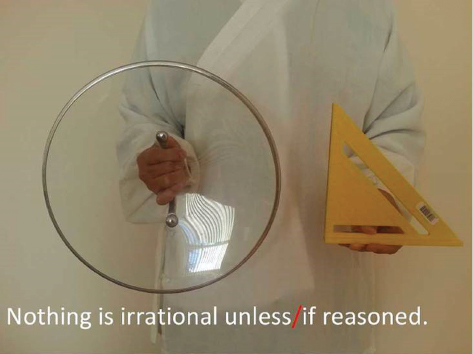
Figure 1 - Artful expression 1: Nothing is irrational unless/if reasoned.
With “/” in between “unless/if” in the tittle of the performance, I argued that the axioms of “Nothing is irrational unless reasoned” and “Nothing is irrational if reasoned” are actually two sides of the same coin. By which argument, I meant to reterritorialize ABR in the third space of / in-between art and science, like a door shaft that pivots the same door to both sides. This argument is philosophically fundamental, as I believe, to how we invent, conduct, and assess ABR as a becoming methodology of research.
In the outset of the performance, I asked a simple question: “Can length be measured by a ruler?” I referred to the perimeter of the pot cover and the length of the three sides of an isosceles right triangle ruler. Obviously, it is not difficult to measure the circle with a tape measure, and the triangular ruler has marks of measurement unit on itself (Figure 2). Thus, nothing is irrational here, as long as we use our common sense and experience to address the question.
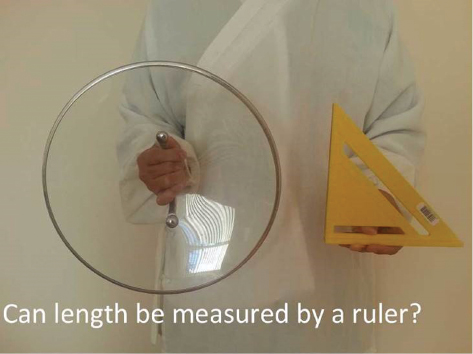
Figure 2 - Artful expression 2: Can length be measured by a ruler?
Yet, nothing is irrational only because we do not reason. Once we reason, something irrational might come forth. If we resort to math, the supreme tool of reasoning, to calculate the length of the circumference of the cover exactly, we will get “2πγ,” which is an “irrational number” that has no place on a ruler, because π is irrational. If we calculate the length of the hypotenuse of the isosceles right triangle ruler, we have to resort to the Pythagorean theorem, resulting in such irrational numbers as “ ,” which also has no place on a ruler. Thus, the two lengths do not have a location on the ruler, and thus cannot be measured by a ruler, which is absurd, for it contradicts our common-sense experience (Figures 3 and 4).
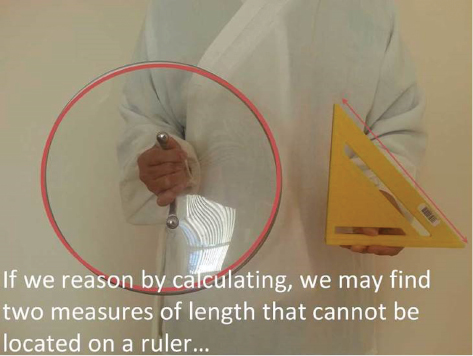
Figure 3 - Artful expression 3: Nothing is irrational unless reasoned.
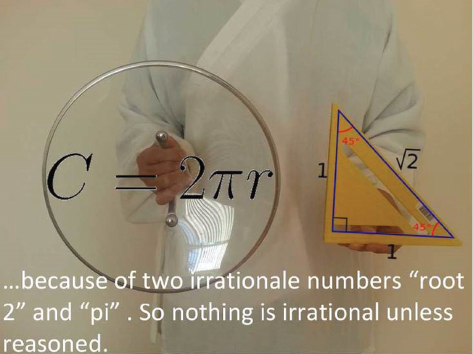
Figure 4 - Artful expression 4: Nothing is irrational unless reasoned.
Here, the irrational becomes concomitant with reasoning. In the performance, I argued: “Nothing is irrational unless reasoned.”
However, mathematicians have made π and new tools of reasoning, by inventing new measurement signs, based on those two irrational numbers, and have come up with tons of new knowledge, without which contemporary science and technology would be unimaginable. It is in this way that the irrational becomes indispensable parts of rational thinking (Figure 5).
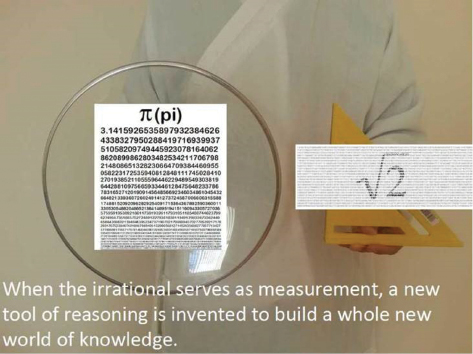
Figure 5 - Artful expression 5: Nothing is irrational if reasoned.
Thus, by the same performance, I also argued: “Nothing is irrational if reasoned” (Figure 5).
We now arrive at the conclusions: “Nothing is irrational unless reasoned,” because the irrational is concomitant with reasoning, and, “Nothing is irrational if reasoned,” because the irrational is the ground for reasoning. They are symbiotic and mutually complementary, in the way of / (Figure 6).
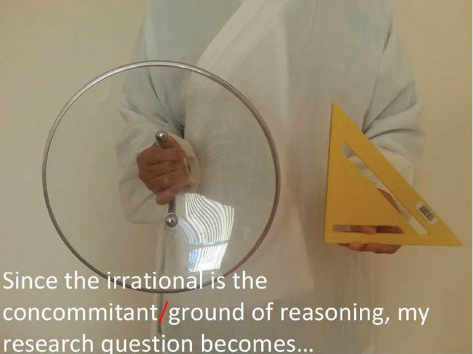
Figure 6 - Artful expression 6: The irrational is the concomitant and ground of reasoning.
Then, it is reasonable to raise the question: What irrational can I reason? How can I make the irrational a tool for further research as mathematicians make π and the irrational numbers, into new tools of calculation (Figure 7)?
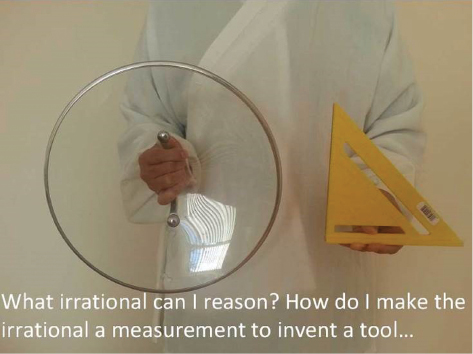
Figure 7 - Artful expression 7: What irrational can I reason and use as a new tool?
By this performance, I imply analogically that an arts-based researcher could make artistic creativity a new ground for further research, in the same way that mathematicians develop irrational numbers into units of calculation. If we keep open-minded to such possibilities, and take it as the objective of ABR, then new criteria for ABR might be postulated.
Conclusions
As Tao Te Ching has revealed to us, there are two ways of knowledge development, to increase and to diminish. The former is not the exclusive way of knowledge development, whereas the latter is easily ignored. Arts-based research takes the alternative way of research—“to diminish” existent knowledge, in the same way as Galileo Galilei’s refutation of heliocentrism, which opened up the “empty hollowness” for geocentrism to emerge, which further paved way for Isaac Newton’s discovery of gravity. Taking action on purpose at “this point of non-action, there is nothing which he does not do,” ABR should choose the creation of possibility as its goal of research.
If ABR is not undertaken “to increase” knowledge that is built upon the existing facts or the existent knowledge, but is intended “to diminish” stereotyped beliefs instead, it ought not to be bound by the criteria of consistency with previous systems of knowledge. When unprecedented knowledge emerges out of ABR, an aesthetic sensation of awe and surprise naturally takes place. With awe and surprise as innate expectations of ABR, repeatability is not a compatible criterion; thus, the chance of repetition, either plausibility or probability, is not its compatible objective in ABR.
To generalize, ABR is an alternative but necessary form of research in a methodological sense, even though it contradicts normative research in terms of sound criteria for good research. However, with all those alternatives in methodology and criteria, ABR is not segregated from normative research, but is interrelated with it.
First, with awe and surprise as aesthetic sensations, ABR is not that much different from what we have been familiar with as research, such as demonstrated by Galilei’ theory of refutation of geocentrism by heliocentrism.
Second, making irrational rational and vice versa, ABR is in interaction with other research forms by challenging stereotyped beliefs and giving new freedom for knowledge development as demonstrated by an analysis of the Artful Expression: Nothing is irrational unless/if reasoned.
Last but not least, to avoid being considered as “just art,” sound criteria for ABR should be based on its interrelatedness with other forms of research, either qualitative or quantitative, by challenging stereotyped mindsets and by opening new possibilities for solutions to problems.
Conflicts of Interest
The authors declare no conflict of interest.
About the Author
Dr. Jun Hu is the dean of the A/r/tography Research Center of Hangzhou Normal University, chair of the Asian Regional Council of International Society for Education through Art (InSEA), and member of the Autism Professional Committee of Zhejiang Neuroscience Society. He considers himself an a/r/tographer that resides in the liminal spaces in-between the artist, the researcher, and the teacher, drawing inspiration and knowledge out of their mutual impact. His research interest includes comparative study between Eastern and Western philosophy of art education and pedagogical application of a/r/tography in the field of art teachers’ education and social service-oriented art education. As founder of A/r/t Link Charity Project, his art therapy projects have won national and international recognition for functionality and ingenuity, including the “In/visible,” which enables blind kids to engage in art, rehabilitation of children with autism through interactive art, and the “Light through Wall,” which helps juvenile inmates recreate identity through light-painting.
References
China Plus. (2019). Tu Youyou: Discoverer of artemisinin. Available online: http://chinaplus.cri.cn/news/china/9/20190920/355591.html (30-07-2023). | |
Feyerabend, P. (1974/2010). Against method. London & New York: Verso. | |
Galilei, G. (1632/2006). Dialogue concerning the two chief world systems—Ptolemaic and Copernican. In R. C. Kuhmann (Compiler/Ed.). Public domain. Available online: http://www.kuhmann.com/starstuff/DialogueConcerningtheTwoChiefWorldSystems.pdf (accessed on 30-07-2023). | |
Laozi. (1891). Tao Te Ching. J. Legge, Trans. Chinese Text Project. Available online: https://ctext.org/dao-de-jing/zhs?en=on (accessed on 30-07-2023). | |
Leavy, P., Ed. (2019). Handbook of arts-based research. New York & London: Guilford Press. | |
Pariser, D. (2009). Arts-based research: Trojan horses and Shibboleths approach. What hath Eisner wrought. Canadian Review of Art Education: Research & Issues, 36, 1–18. | |
Siegesmund, R. (2014). On the need for arts-based research: a response to Pariser. In: Conference Proceedings, 2nd Conference on Arts-based and Artistic Research, Spain (pp. 103–118). |