Dance Creation and Analysis under the Perspective of LBMS: Using Glowing Ocean as an Example
Volume 9, Issue 1, Pages 22-32
Abstract
This article analyzes the creative process of a ballroom dance duet piece titled Glowing Ocean using the perspective of the Laban/Bartenieff Movement System (LBMS). The article examines the creative background of Glowing Ocean and clarifies the creative intention of the work. Furthermore, it attempts to express the musical and emotional atmosphere of the piece and attempts to translate this into an aesthetic image. While describing what cannot be expressed with words in dance, this article analyzes how dance conveys meaning through metaphors. This article tries to name the qualities of that which are hard to describe, and this contributes to the meaning and value of this paper.
摘要
文章从拉班/芭特妮芙动作体系(Laban/Bartenieff Movement System,以下简称LBMS) 视角出发,对双人摩登舞作品《闪闪发光的海洋》创作过程展开分析。通过对作品创作背景,作品创作阐述以及作品创作总结三个部分,全面且综合的澄清作品的创作意图,理性地表达音乐的情感氛围是如何转化为审美形象的,在阐述“舞蹈创作”这个无法用语言来描述的过程的同时,分析其舞蹈是如何通过隐喻来传递意义的。并对其“不可描述”的性质和意图进行命名,这对本文的写作意义和价值具有重要贡献。
Keywords
Laban/Bartenieff Movement System, ballroom dance, dance analysis, Glowing Ocean, space harmony.
关键词
拉班/芭特妮芙动作体系, 摩登舞, 作品分析, 闪闪发光的海洋, 空间和谐.
History
Received 01 February 2023
Accepted 01 April 2023
Open Access
This is an open access article.
LBMS is a diverse and integrative system for scientifically, openly, and effectively identifying and recording human movement patterns from macroscopic and microscopic perspectives. The uniqueness of this system lies in its ability to identify and analyze movements both qualitatively and quantitatively. This means that both the functionality and expressiveness of movement contents are incorporated into the range of its observation. LBMS is used to distinguish habitual movement patterns of the entire humanity, patterns of organization (including cultural patterns), and the uniquely characterized individual patterns. Macroscopically, this system includes three parts: thematic dualities, movement phrasing, and developmental progression; microscopically, this system includes four parts. (1) Body, namely, the “what” that is moving, and how different parts of the moving body are organized together. (2) Effort, the “how” of the execution of movement—the qualitative aspects of movement such as feeling, intonation, and color. (3) Space, the “where” of movement, including inner and outer aspects of where movement happens. Space is divided into general space, kinesphere, and innersphere. The concept of space intends to distinguish the location, direction, level, pathway, tension and anti-tension of movement. (4) Shape, which expresses the relationship between body and environment, also known as how the mover changes his/her body in relation to the environment that he/she is in (Studd, 2021). Each part can be identified individually, but usually does not appear alone in real-life situations. Therefore, understanding the relationships among these parts is essential to applying LBMS to understanding patterns of movement in dance (Zhou & Bradley, 2017). Because meaning is transmitted through metaphors in dance, dance creation sometimes becomes a process that cannot be described with words. Therefore, the author’s attempts to unpack the process of conception and creation of the dance Glowing Ocean and to name the “indescribable” nature and intent of the dance piece have contributed to the meaning and value of this writing.
Introduction to the Background of Dance Creation
Motivation of the Dance Creation
Under the auspices of the school, I had created the dance piece Glowing Ocean for the Shanghai Theater Academy to represent the school in the competition of the 12th national Tao Li Cup. Because of the restrictions of the competition, the length of the piece had to be within 5 minutes. In addition, the dancers had to use ballroom dance movement as the main movement component of the dance. The dance vocabulary could be modified according to different situations in order to carry out the thematic and artistic qualities of the dance.
When I received the task, I immediately remembered a piece of music that I had once heard: Kung Fu Piano: Cello Ascends. When I first heard this music, I was moved by its melody. The piece was performed by a piano and cello band named “The Piano Guys.” In this piece, the piano notes are light and fast, as if fingers are dabbing on the keyboard; the cello sound is somber but elegant, calm and sad, yet possessing beauty and hope. It struck my heart. Therefore, I hoped to translate the feelings and images that this music aroused in me into a dance. This piece of music has a complete structure of beginning, ascending, descending, and ending. The transitions in between the parts are clear. Therefore, the structure of the dance follows the overall structural composition and design of the music. Macroscopically, the overall phrasing of the music is a swing phrasing that descends gradually from a place of strength. This phrasing gives the piece a lot of space for dynamic action and dramatic play. The music possesses both Western timbre and Eastern melody. The tempo of the music is full of variations, which is valuable for different types of ballroom dance expressions. Using this music helps the dance to achieve its creative goals while not departing from the competition rules.
Creative Conception
Through the melody of this music, I saw the image of a glowing ocean in front of my eyes. I was propelled to give the following content to the dance: I was attracted by a momentary happiness of the past which I am still attached to and cannot forget. This memory is the best in my heart. It represents my hopes and dreams, as well as my firm belief to overcome the difficulties in life. I believe that during the journey of life, even if we are faced with insurmountable wild weathers we still advance bravely because we believe that there is a “glowing ocean” in front of us. This is the main theme of my work.
The whole is greater than the sum of the parts. When the main theme was decided upon, I started to think about ways that the music, content, format, and emotional expressions of the dancers could come together perfectly into a unified whole. This reveals the part/whole thematic duality, which contributes to forming space harmony. Space harmony, as patterns, expresses the concinnity of the universe. These patterns explicate part/whole relationships that support growth, life, continuity, development, and life’s progression (Studd, 2021). But in the relationship to the whole, any part that changes will change the whole. Therefore, my question was, how to design the structure of the work and coordinate each part to build the synergy of the whole as the key to the success of this dance (Figure 1).
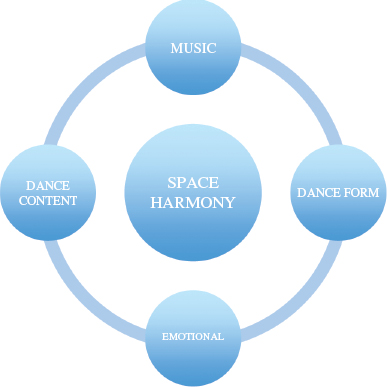
Figure 1 - Space harmony of the dance work under macroscopic perspective.
Elaboration of the Creative Process
As the author, I use LBMS to conduct an observation and analysis on the dance from macroscopic and microscopic perspectives. The goal of this analysis is to rationally express how the emotional atmosphere of the music is transformed in to aesthetic images. I try to find out the most essential movement characters through connecting movement to content. Using pictures, tables, Horizontal Motifs,1 and Motif Constellation,2 I provide a conclusion, summary, and explanations for my analysis.
Through understanding and analyzing the structure of the music Kung Fu Piano: Cello Ascends, I have concluded that the structure of the dance is divided into three parts (Table 1). These three parts are: Seeing, Pursuing, and Yearning. For each part, I have chosen ballroom dance movements with different characteristics according to the imagery in that part of the music and the dance piece. By taking apart and reassembling the piece, these movements become the “dance vocabulary” that the author desires for conveying meaning.
| Musical structure | Musical emotion | Dance structure | Phrasing | Dance types |
|---|---|---|---|---|
| 00:00–1:10 | Sorrowful or soothing | Part 1: seeing | Increasing | Waltz Slow foxtrot |
| 01:11–3:11 | Passionate, fast, high | Part 2: pursuing | Impactive | Tango Quick step |
| 03:12–4:04 | Long, melodious | Part 3: yearning | Even | Waltz Slow foxtrot |
Seeing. The main theme of the first part of the dance is seeing. When the music begins, two dancers—one male and one female—enter from the back stage. For this entrance, the choreographer has asked the male dancer to repeatedly invite the female dancer by reaching out his hand. He uses Connection in Basic Body Actions as well as Spoke-like Directional Movement in Modes of Shape Change.3 The intention here is to bridge a connection to another body. The male dancer uses the Efforts Direct and Sudden—components of the Awake State. However, when the female dancer accepts the invitation with her hand, she uses Sustained and Bound Efforts, which compose the Mobile State. In addition, she uses Direct and Sudden Efforts while retreating. This contrast in Efforts in the hands and feet of the female dancer expresses anxiety and melancholy in her heart. In this part of the dance the Phrasing Becoming is used three times, each time building onto the previous time and expressing the male dancer’s desire to be accepted and the female dancer’s hesitance. Different Efforts and Phrasing are used with the same movement, clearly constructing the beginning of the dance as well as the relationship between the two dancers.
When the music starts, the choreographer has again asked the male dancer to use Spoke-like Directional Movement in Modes of Shape Change as well as Core Support and Spatial Intent in Bartenieff Fundamentals. Using these elements, the male dancer takes the female dancer into his embrace and leads her to move and swing together. The female dancer tries to escape and resist, turning her body and moving from middle to low level in her kinesphere. Then, she uses Change of Support and Locomotion in Basic Body Actions to enter into a different space. Using Drives consisted of the Indulging Efforts—Indirect, Sustained, and Light, the female dancer expresses her wish to escape from the male dancer. Although the male and female dancers use the same Effort Drive, they have used Efforts that are not affinities. This clearly shows the differences in the emotions of the two characters and the creative intention of the choreographer.
This Horizontal Motif shows the first climax in the part of Seeing. The Phrasing is one of Becoming. The Motifs in this sequence describe the essential characteristics of the main movements in this part. The Motifs are: Locomotion, Rotation, Jump, and Shaping, respectively (Figure 2). The choreographer decides that the female dancer will be lifted and held still in the air after fast moving and turning together with the male dancer. This choice essentially expresses the theme of Seeing. The body of the female dancer forms a Pin Still Shape Form. Her body opens out from the Core center into the arms and then retrieves into the Core. The Spatial Intent is to return to Inner from Outer. The Shaping expresses that one has bridged to the outside through interaction. The male dancer has provided the female dancer vertical support in space, which helps the female dancer gain confidence and empowerment from the “glowing ocean” in front of her.
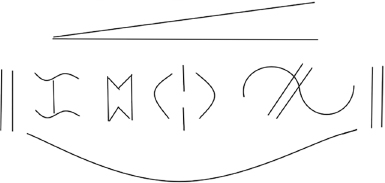
Figure 2 - Horizontal motif of the theme of seeing.
After receiving encouragement from the male dancer, the female dancer establishes her belief and finds the motivation and direction to move forward. The dancers are filled with hope. They sometimes engage in Connection in Basic Body Actions. In the flowing Foxtrot steps, both dancers are unified and consistent. The movements show affinities and are symmetrical and harmonious. It is apparent that the inner feelings of both dancers are congruent. The dance movement radiates out from the Core into the Limbs, utilizing Radial Symmetry and Cross-Laterality in Patterns of Organization. The limbs extend infinitely into the General Space. Supported by Breath Support and Spatial Intent, the imagery of the dance expresses is the two dancers holding hands and seeing the wonderful original dream which is symbolized by the “glowing ocean.”
Macroscopically, the female dancer begins the dance with a rejecting attitude. She keeps escaping until she sees the “glowing ocean” which represents her original heart. This causes her to change her mind. With the companionship of her partner, she gains confidence. Together, they move forward as a union. Each movement is related to the whole and reveals the Developmental Progression of this part of the dance. Here, the Phrasing is Increasing as the relationship moves from nothing to something and the dance movement keeps increasing and expanding. The intention of the Phrasing of this part is to show that the pair does not give up or give in.
Pursuing. The theme of the second part of the piece is Pursuing. Macroscopically, the Phrasing of this part of dance is Impactive, emphasizing the end. The emotional imagery of the dance is extracted from the music by the choreographer. The Dynamosphere4 of the Music has progressed to be strong then fast in its rhythm, until the grand climax. Ballroom Dance movement has an enclosed form between two partners which is a metaphor for “embracing love” (Liu, 2021). The choreographer mainly selects movements from Ballroom Dance with the Effort qualities of Quick, Strong, and Direct for their expressiveness in this part of the dance. On the level of Body: Locomotion, Rotation, and Jumping movements; On the level of Space: the dancers continually challenges the High Level in Space; on the level of Shape: I mostly choose the elements of Posture, Gesture, Expanding, Directional Movement, etc. Besides the basic Ballroom Dance steps, modifications are incorporated to express different kinds of emotions. Affinities and Simultaneous and Sequential Phrasing are emphasized, which express the devotion of the two dancers to defeat all challenges with their courage and strength. According to the structure of the music on the Microscopic level, this part is divided into three smaller parts, each part with different style of dances and emotions.
From the music in the second part, I have heard the calling of the original heart. Hope is ignited and everything is waiting to be activated. To follow the emotions of the music, the author has asked the two dancers to Change their Support and move from Middle to Low Level of Personal Space, and then move through Central Pathways from Low to High Levels. Both of the dancers use Gesture5 in the Basic Body Action category Their fingers flick open with Quick and Direct Efforts in the Awake State. At the same time, the bodies of the dancers engage in Rising and Spreading of Shape Qualities and Directional Movement in Modes of Shape Change, which express that the dancers are making connection with the outside world while searching and pursuing their goal. Amid all the actions, it is stressed that the dancers will apply Breath Support, Axis of Length, Space Intent, and Effort Intent of Bartenieff Fundamentals to support the performance and to better express that the belief in their heart is firm and rising. The essence of the dance movement has expressed the thematic duality of Function/Expression (Figure 3).
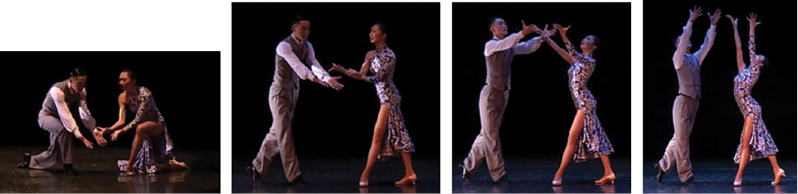
Figure 3 - Ignition in the second part of the dance.
The video of the Glowing Ocean can be accessed through https://youtu.be/d_P39PuyFRM (Liu, 2022).
In the second part of Pursuing, the music begins to push forward forcefully and rhythmically. In the process of creation, I tried to have the dance stay close to each part of the music, so that the emotions of the movement and music correspond with each other. Therefore, for this part of the dance I have chosen the tango step going into quickstep. The use of fast and strong moments that the locomotion and jumps of these dance steps demonstrates that the dancers trust each other and are happy together. Together they are firm and fearless in front of challenges and dangerous situations. They help each other and move forward together.
From the Motif Constellation, we can see that the basic body actions of Locomotion, Jumping, Expanding, and Connection are performed with Drives that are composed of Strong, Direct, and Quick Efforts. Together, these efforts have formed the main qualities of the observed movement. Through the essence of these movement, we can discover the intention of the choreographer, the accuracy of the performing, and the container and content of the dance. On the one hand, these symbols show the body attitude of ballroom dance itself. On the other hand, the symbols correspond to the main theme and emotions of this part of the dance.
The third part of Pursuing is the emphasis of the Phrasing of this part. In the progress of the music, although the rhythmic melody slows down, the Phrasing is becoming increasingly intense. The choreographer has chosen the ballroom dance form of foxtrot to express emotional tension through its flowing, expanding, and rotating movement to push the dance toward its climax. “Space is a hidden feature of movement and movement is a visible aspect of Space” (Studd & Cox, 2013). The intent of the movement determines how the space will be arranged. At the same time, in order to finish the task of the dance, the structure of the body also influences the arrangement of pathways in space (Xin, 2021). For example, from the Motif Constellation, it can be seen that Rotation in the basic body actions connects the essential changes of all movement, space, and shapes. Through lifting, the female dancer has changed Leveling in space. During the climax, the female dancer is turned and lifted by the male dancer above shoulder level to the super high zone. This movement expression has perfectly supported the content expressed in the dance. The metaphor here is that after the dancers have reached the top of the mountain, they look down upon the “glowing ocean,” which calls at the deepest part of their souls.
Yearning. The theme of the third part of the dance is Yearning. Macroscopically, the Phrasing of this part is Even. The melody is winding and melodious. The dance expresses that no matter how hard is the path toward their dream, the pair forge forward and break down all challenges because they remember their original heart, and their heart is filled with yearning and longing. They gradually return from the outer general space to the personal space until they are in their inner space. This is the power of the belief in the “glowing ocean” that the choreographer wants to express through the dance (Figure 4).
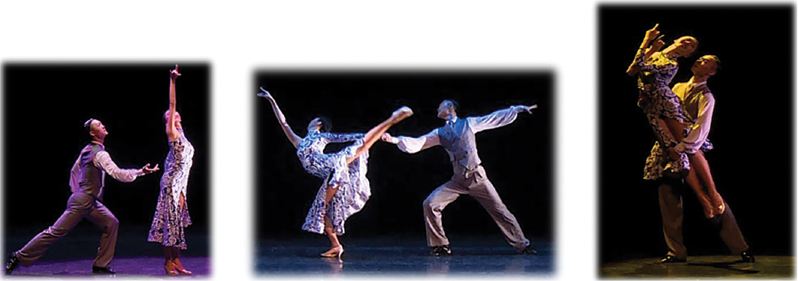
Figure 4 - Third part of the dance—Yearning.
The video of the Glowing Ocean can be accessed through https://youtu.be/d_P39PuyFRM (Liu, 2022).
The Horizontal Motif shows that the movement phrasing of the third part of the dance shows the essential characteristics of an Even Phrasing. Spoke-like Mode of Shape Change has permeated through the Basic Body Actions and Shapes sequence of “Gesture-Pin Still Shape-Connection-Rotation-Posture-Gesture-Connection-Expansion.” In the choreography of this part, the choreographer has asked the dancers to emphasize that the upper body engages in movement from Core to Limbs and the Arm Circle in the Basic Six. The bodies of the dancers move between Connection and dis-Connection. The Connection made with Gesture expresses the delicate heart-to-heart connection between the dancers. Finally, the female dancers stops at the end of the moment when they see the “glowing ocean” in the High-Level Space. This expresses that the dancers yearn for the future together at the present moment. Macroscopically, the transformation from the Impactive Phrasing of the last part to the Even Phrasing of this part shows how the structure of the dance develops, and how the dance moves, the music and the main idea of the dance come together. As a result, there is affinity in the overall spatial dynamics.
Summary and Analysis
Thematic Dualities of the Dance under LBMS Perspectives
From the macroscopic perspective of LBMS, the choreographic process from the beginning to the end has shown the thematic duality of Inner/Outer. Inner is the way that we are defined. Our inner world contains perception, personal thoughts, and emotions. It belongs to both the fields of biology and psychology. The outer world is all about the “other,” or the not-self. Inner/Outer is also another way of saying the duality of Self/Other (Studd & Cox, 2013). In the creation of this dance, music has aroused emotional resonance in the choreographer, which has led to a strong internal creative impulse. All inspiration comes from the inner experience of the choreographer, which forms an image that contains imagination and designs. Then, the choreographer transforms the emotional impulse into rational conception, and finally gives shape to a complete external expression. From the Inner preparation to the final Outer movement expression, the developmental process of this dance is a result of an exchange between Inner experiences of the choreographer and Outer movement experimentations.
The process from music to dance embodies the thematic duality of Invisible/Visible. Music and dance exist differently. Music is an art of time and dance is an art of space-time. In other words, dance not only has the linear and invisible temporality of music, but also the visually perceptible spatial presentation. This means that dance is comprehensive. In this dance work Glowing Ocean, the music Kung Fu Piano: Cello Ascends has provided the source of inspiration. The choreographer has used his inner experiences for understanding and interpretation to collaborate with the dancers. Finally, the transformation from music to dance is possible.
Movement is essentially complicated. The performance of the dancers is, on the one hand, limited by the context, roles, and emotions set by the choreographer, and on the other hand, depended on the dancers’ own professional skills. Only in this way, movement is given meaning and roles are shaped. The emotional expression promotes the development of the dance story, letting the movement become real “dance vocabulary” for the piece. In this way, the thematic duality of Function/Expression is revealed.
As the choreographer, during the creation of this dance, I switch between the content/container, rationality/sensibility, and macroscopic/microscopic. On the premise of not violating the competition rules, I let the various parts of the work become organically integrated to form a new state that is “familiar yet unfamiliar.” As a result, the dance radiates a new spiritual power, which is also the embodiment of the Thematic Duality of Part/Whole.
Phrasing of the Dance
Phrasing refers to a sequence of movement formed by repeatable or independently connected actions. Each Phrasing is endowed with a certain meaning. Like a sentence, Phrasing has its own characteristics of construction and a beginning and an end. Microscopically, the Phrasing of the three parts of the dance are Increasing-Impactive-Even. However, from a macroscopic perspective, the Phrasing of the entire dance appears to be a combination of Increasing-Decreasing or a Swing Phrasing. From the initial “seeing” hope, to continually “pursuing” hope, to the ending “yearning” for hope, the Phrasing of the dance is harmonic with the music. This Phrasing also reveals the pattern of construction of the dance and corresponds to the meaning that the dance wants to share (Figure 5).
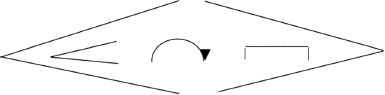
Figure 5 - Phrasing of the dance.
Developmental Progression in the Creation of the Dance
In the developmental progression of the creation of this dance, from receiving inspiration-conception-improvising dance-choreographing-to guiding the students to perform the dance, the development of each step supports the initiation of the next step, which reveals the Developmental Pattern Support in Bartenieff Fundamentals. Through this circular progression, the development of each part becomes closely related to the whole (Bartenieff & Lewis, 1980). In the creation of this dance, LBMS has always provided a perspective and a method, although the actual role and degree of involvement are different in each stage, and the overall expression is from macroscopic to microscopic. The more specific the problems that LBMS is dealing with in the developmental process of the dance, the more obvious and prominent the role it plays. Finally, the unique developmental pattern that LBMS has formed in the creation of this dance can be seen.
Ballroom Dance’s Pattern of Movement from the Perspective of LBMS
Because of the regulations on the dance choreography, most of the movement vocabulary in this dance comes from ballroom dance steps or is based on changes and development of ballroom dance movements. Through observing ballroom dance movement under the perspective of LBMS, I acquired the following Motif Constellation. The essence of movement in this dance form is: Connection, Change of Support, Locomotion, and Rotation; at the same time, the upper body is usually Stable while the lower body is Mobile (Figure 6). This has proved that ballroom dance sport has the movement essence that the dancers’ bodies are connected and their feet are relatively stable, while they engage in changing of support and rotational movement together (Liu, 2019). It should be noted that the pattern of movement of this dance is closely related to the ecological environment that produces the culture of this dance. Meanwhile, if ballroom dancers want to pursue high-quality weight transferring, balance control is an important factor (Liu, 2016). This means that to handle the duality of Stability/Mobility well is an eternal pursuit of good ballroom dancers.
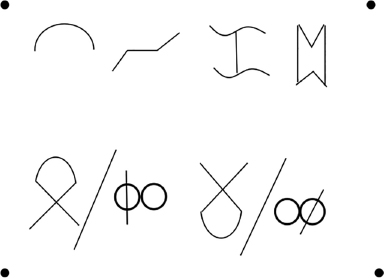
Figure 6 - Motif constellation of the movement pattern of ballroom dance.
Summary
This article uses the perspective of LBMS for expounding and analyzing the creation of the ballroom dance duet piece Glowing Ocean from macroscopic and microscopic perspectives. Using LBMS as an effective tool, I have revealed the meaning and intent of movement in this dance. LBMS is at the same time container and content. It has given us a unique perspective in creating and thinking about dance and helps us understand the essence of creation in a more rational way. LBMS also helps us to accurately talk about our dance work and to sense and connect our inner and outer worlds.
About the Author
Liu Shaobo (born on 1987.06.24), MA, is an associate professor at Shanghai Theater Academy School of Dance. a masters supervisor, and certified movement analyst. His main research fields include international standard dance theory and practice and the Laban/Bartenieff Movement System. E-Mail: liushaobo0412@163.com
References
Bartenieff, I., & Lewis, D. (1980). Body movement—coping with the environment. Routledge. | |
Liu, S. (2016). The appearance and application of ‘control’ in standard dance. Journal of Beijing Dance Academy, (1), 60. | |
Liu, S. (2019). On the guidance and cooperation between ballroom dance partners. Contemporary Dance Art Research, (4), 124. | |
Liu, S. (2021). From “embracing love” to “stage performance”—an analysis of the functional changes of international standard dance. Contemporary Dance Art Research, 2021(2), 100. | |
Liu, S. (2022, August 14). “Glowing Ocean” choreographed by Liu Shaobo [video]. Youtube. https://youtu.be/d_P39PuyFRM. | |
Studd, K. (2021). Space harmony. https://wholemovement.org. | |
Studd, K., & Cox, L. (2013). Everybody is a body. Dog Ear Publishing. | |
Xin, M. (2021). On Laban’s movement theory. China’s Social Publishing House. | |
Zhou, Y., & Bradley, K. (2017). An overview on Laban/Bartenieff Movement System. Journal of Beijing Dance Academy, 3, 21–28. |
Horizontal Motif represents the sequence of a pattern but does not include relative duration and generally does not include modifiers, Horizontal Motifs are read from left to right.
2Constellations contain the essential parts that make up the whole of the movement event. In Constellations the movement content is held within 4 dots : : Constellations do not show sequence, duration or relationships between and among the parts. Constellations are a Macro approach to the overall patterns of a movement event that create the meaning and expression of the event.
3Spoke-like: It refers to building a bridge with the surrounding environment using movement actions in a linear Shape.
4Dynamosphere: a more macroscopic concept than Kinesphere, which links Effort and Space.
5Gestures: are one of the basic body actions in LBMS, specifically referring to the postures generated by the movements of body parts.