Limits, Transgressions, and Vulnerabilities of Dance Teaching
Volume 11, Issue 2, Pages 218-234
Abstract
This article presents the results of the final stage of our research on inclusive dance applied to a diverse group of children in Bogotá, Colombia. The objective of this research was to design, apply, and improve our dance teaching approach through the Action Research (AR) methodology, conducted with dance laboratories. Data collected during observation sessions and interviews were analyzed qualitatively. The results reveal that it is crucial for teachers to possess suitable and didactic knowledge in key areas of dance: epistemological, physical-corporeal, communicative-mediational, intellectual-affective, and socio-cultural. The conclusions highlight that our proposal challenges conventional education expectations, allowing teachers to explore chaos, intuition, and improvisation as tools for helping children engage with and recognize their own diversity, as well as their context and environment.
摘要
本文介绍了我们对哥伦比亚波哥大多元儿童群体进行包容性舞蹈研究的最后阶段成果。本研究的目的是通过舞蹈实验室开展的行动研究(AR)方法论来设计、应用和改进我们的 舞蹈教学方法。对观察课程和访谈期间收集的数据进行了质性分析。结果表明,教师在 舞蹈的关键领域拥有适当的教学知识至关重要:认识论、身体-具身、沟通-中介、智力-情感和社会文化。结论强调,我们的方案挑战了传统教育期望,允许教师探索混沌、直觉 和即兴创作,作为帮助儿童参与并认识其自身多样性以及其情境和环境的工具。
Keywords
inclusive dance, diverse childhood, dance teaching.
关键词
包容性舞蹈, 多元童年, 舞蹈教学.
History
Received 01 June 2025
Accepted 01 August 2025
Open Access
This is an open access article.
Introduction
Conceptual Framework
It is important to recognize that dance is an essential tool in the arts for building knowledge and plays a fundamental role in the comprehensive education of children. Dance serves as a backbone of learning, enabling children to have sensitive and spiritual aesthetic experiences (Alcaldía Mayor de Bogotá & Secretaría Distrital de Integración Social, 2013). The definition of dance can be found in various sources and evolves according to its multiple characteristics and purposes (Iranzo-Domingo & Cañabate Ortiz, 2024). Our goal was not to establish a singular typology of dance but to acknowledge it as a practice that allows individuals to connect with themselves and others through their bodies and movement while also fostering an appreciation for diversity, regardless of technique or purpose.
Second, it was crucial for us to ensure that inclusive dance is no longer viewed as a fragmentary technique or a subfield within the broader realm of dance. For example, Marín Castro (2017) defines it as a dance modality centered on “movement sequences, improvisation guidelines, activities so that people with or without functional diversity can participate, creating homogeneous, heterogeneous or mixed groups” (p. 83). However, understanding it solely as a specific technique could be more exclusive, particularly in contexts like Colombia. We believe that dance is integral to people’s daily lives, materializing into their everyday performative aesthetics and their cultural diversity.
Our proposal for inclusive dance incorporates the contributions of dance therapy (Buck & Snook, 2024), bio dance (Altamirano Quevedo et al., 2021), dance for well-being and mental health, and danceability. All of these approaches view inclusive dance as a methodology for free expression through movement and improvisation, with purposes that are not necessarily artistic. Therefore, we believe it is essential to include and expand the principles of freedom, recognition, encounter, synergy, listening, respect, time, and care—developed within these frameworks—to all dance techniques and purposes, particularly to those techniques focused on children’s education.
Brugarolas Alarcón (2022), the Spanish artist and pedagogue, asserts that bodies of functional diversity, rich in history and meaning, open up dance. For her, the goal is not to “invent dances for different bodies” but to reinvent the space of dance itself (p. 151), so that everyone can experience it, regardless of physical or cognitive characteristics, origins, or beliefs. Ultimately, we are all different and diverse and we need the presence of others. Brugarolas Alarcón’s work provides us with a critical perspective and a community centered vision of inclusive dance.
Based on the perspectives outlined above, our proposal for inclusive dance titled Didáctica de la danza para todos y con todos [Dance Didactics for Everyone and with Everyone], introduces a new paradigm: understanding dance as a meeting space that is not confined to a single modality or technique. Instead, it is seen as a way of arranging bodies and space to create and participate together. The theoretical framework supporting our proposal draws from the work of Ibero-American researchers, such as Avellaneda Ramírez (2024), Blanco-Vega et al. (2022), Feldman and Altieri (2021), and Cedeño Andrade et al. (2024), who have explored dance education. It also incorporates research by North American scholars such as Artpradid (2023), Apelmo (2024), Needham-Beck and Aujla (2020), and Zitomer (2016), all of whom view dance as a medium for students to explore movement, style, and their unique abilities. In Asia, we find a very important contribution to understanding dance and inclusion: “The body itself exists within that space where we relate to others” (Zhou et al., 2019, p. 41); for this reason, dance is an act of resistance and social and personal transformation, as stated in the research of Chakraborty and Sen (2019).
Third, we recognize that inclusive dance requires both pedagogical and didactic reflection. Pedagogy, as we understand it, functions as a philosophy that demands a critical stance, challenging normativity, power dynamics, and established conventions. Inclusive dance emphasized student development through innovative approaches introduced by educators.
Dance is a physical experience that engages the whole person and materializes in movement. For those who participate in dance, it holds meaning and creates opportunities for generating new understandings.
Didactics, as teaching in general, involve careful planning, learning, and teaching strategies, objectives, content, methods, organizational structures, resources, assessment, and elements that are specific to each field of knowledge (Casasola Rivera, 2020). The case of dance teaching or didactics additionally requires analyzing the interplay between knowledge and the dancing practice, as well as the dynamic relationships between students and teachers. Understanding the theoretical-practical nature of dance is crucial, as it serves as the framework for these interactions within the teaching and learning process. In this context, the teacher’s pedagogical process becomes essential, embodying epistemological knowledge, which is activated in the process of designing, applying, and evaluating instruction.
Suitability in Dance Teaching
To define the concept of teaching suitability, which is central to this research, we considered the following questions: What is taught? Who is taught? How is it taught? When is it taught? What, how and when is it assessed? And what are the achievements and difficulties in the teaching-learning process? Teaching suitability, or didactic knowledge, is an active form of knowledge grounded in autonomy and professional experience (de Camilloni et al, 2007). This knowledge allows teachers to interpret the educational context in which they operate, as it directly addresses the foundational questions. Teaching suitability is also understood as didactic content knowledge (Shulman, 1984), which articulates the relationships within the pedagogical process from a theoretical perspective. By reflecting and theorizing about their practice, teachers transform the teaching and learning of dance, fostering a deeper connection between theory and practice.
This text explores alternative approaches to transmitting movements and teaching dance. Its goal is “to promote learning and the educational values of communication, expression, and relationships among equals” (Prada & Fernández, 2021, p. 59). Consequently, specialized dance education is essential to address current trends and challenges in aesthetic expression and experience—whether every day and common or poetic and performative. This type of education demands a diversified perspective that moves beyond being merely “institutionalized” or confined to a rigid curriculum. “It must avoid being overloaded with knowledge devoid of autonomy, disconnected from social practices, and lacking critical reflection” (Ordñez Matute, 2022, p. 253).
The concept of teaching suitability was introduced by mathematicians Godino et al. (2016) in their theory on didactic configurations and mathematics education. According to Godino (2011), “Given certain circumstances (subjects, resources, restrictions…), an ‘expert’ in a specific pedagogy can reason (based on empirically contrasted theoretical results) that certain tasks and modes of interaction in the classroom are preferable to other” (p. 3). We have adapted this concept to the field of dance to examine how its fundamental principles align with the inclusion and acceptance of diversity.
Building on the theoretical review conducted in our research, we have developed the concept of teaching suitability for inclusive dance for everyone and with everyone. This concept refers to the key requirements that define effective teaching in terms of designing and planning dance education. It also establishes the framework for measuring and assessing the pedagogical practice of teachers, while encouraging continuous reflection. Reflection and assessment are grounded in relevance, specifically in the question “what is necessary and essential for teaching dance in this specific context?” Figure 1 shows the relationship between each principle or the teaching suitability for dance education:
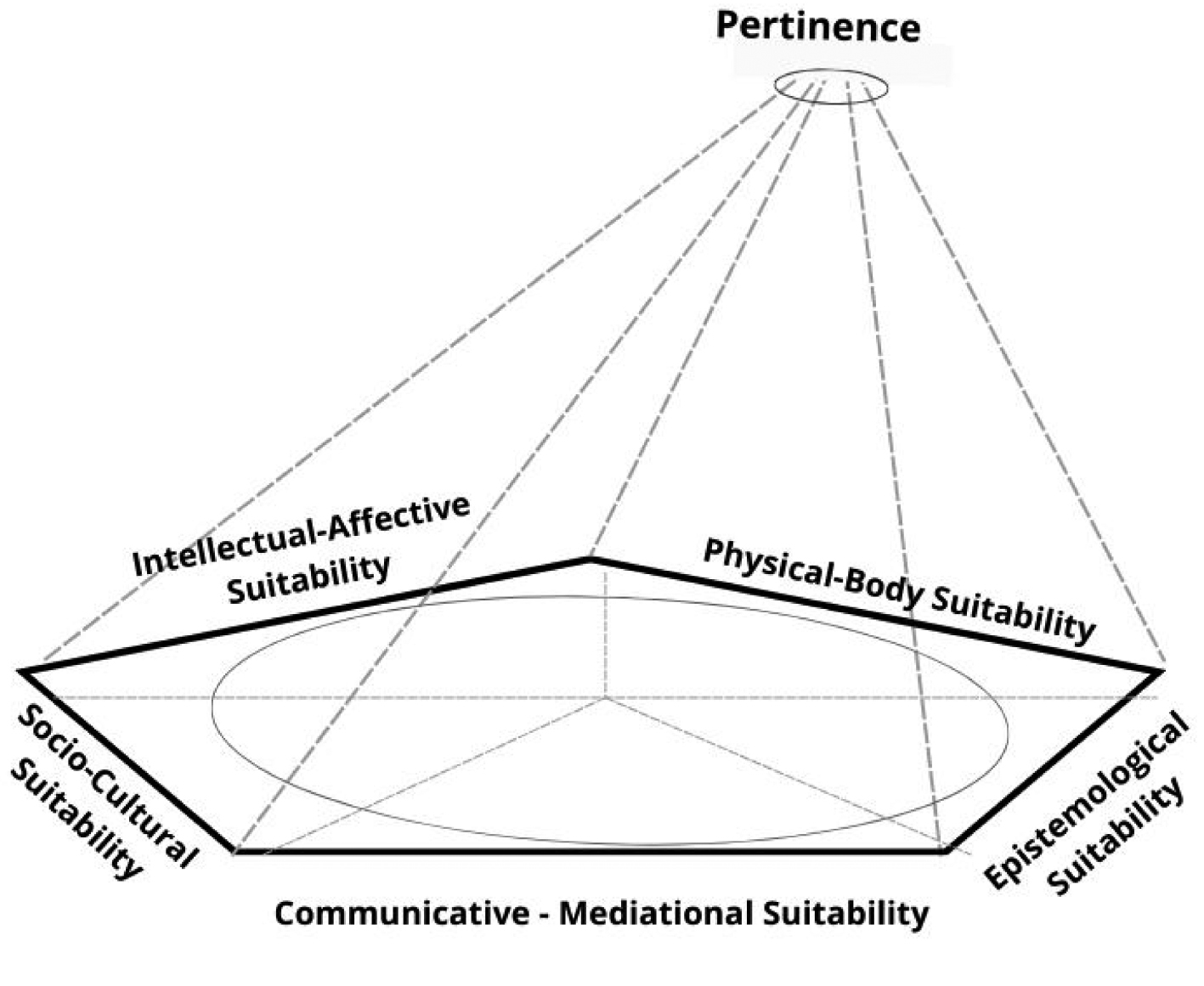
Figure 1 - Teaching suitability (principles) for dance. The figure shows relevance as the core of didactic suitability.
One of the stages of our research, validation, enabled us to confirm the relevance and suitability of dance teaching as a fundamental framework for didactic configuration (León Suárez, 2022). Table 1 outlines each principle of suitability (see Figure 1) and Tables 2 to 6 present the guiding questions for teachers. The table serves as a tool for teachers to design their dance laboratories and, after implementing them, it functions as an evaluation matrix.
| Aspect | What it means |
|---|---|
| Epistemological Suitability | Knowledge of movement, diverse bodies, and dance as a structured language. |
| Physical Body Suitability | Recognizing and including all body types in dance. |
| Communicative & Mediational Suitability | Encouraging expression and interaction through different media. |
| Intellectual-Affective Suitability | Understanding students’ thinking, emotions, and learning processes. |
| Sociocultural Suitability | Integrating students’ backgrounds and values into dance teaching. |
| Definition | Key actions | Guiding questions |
|---|---|---|
| Understanding movement, diverse bodies, and dance as a language. |
| What is the learning goal?
|
| Definition | Key actions | Guiding questions |
|---|---|---|
| Recognizing diverse bodies and movement abilities in dance. |
|
|
| Definition | Key actions | Guiding questions |
|---|---|---|
| Communicative and discursive interaction that takes into account the diversity of students. |
|
|
| Definition | Key actions | Guiding questions |
|---|---|---|
| Knowledge and understanding dance and the body through students’ skills and capabilities. |
|
|
| Definition | Key actions | Guiding questions |
|---|---|---|
| The dance experience has contextual and value-based features and acts as a form of creative language. |
|
|
The tables present the suitability of each action based on its definition, key actions, and guiding questions that teachers should consider for implementation.
Within the framework of didactic suitability, it is essential to consider the relationships and actions in the practice of dance, namely: (i) epistemological, knowing the basic qualities of an experience with diverse corporalities from the social and cultural point of view of the human being as didactic knowledge; (ii) physical corporal, considering the diverse bodies and their expressions according to temporalities, spatialities, and links; (iii) mediational communicative, arranging the accessibility mediations that promote dialogical corporal relationships from the diversity of perceptive, expressive, and communicative characteristics, through improvisation; (iv) affective intellectual, promoting metacognition considering the different ways of learning, understanding, and expressing elements related to the affections as an essential component of the teaching-learning of dance that result in free and spontaneous expression and in the construction of symbols and interpretations that configure designs or staging resulting from individual or collective experiences; (v) sociocultural, which is essential to identify social, cultural, ethical, political, and cultural particularities. Students’ ecological contexts and contexts to consider linguistic mediations, support professionals, time, space, student-teacher, student-student, and student-performer interactions, as well as the norms and routines of the dance specialty, space, rules, and meeting and greeting circles.
Methodology
The methodology employed in our research was qualitative and followed a cyclical action research approach. Oranga and Gisore (2023) emphasize that this design aims to generate social change in school communities through the active participation of their members in the research process. Furthermore, it enables educators to address challenges within schools, while producing substantial data and evidence. As outlined by Teppa (2006), this study followed five distinct research phases, as presented in Figure 2.
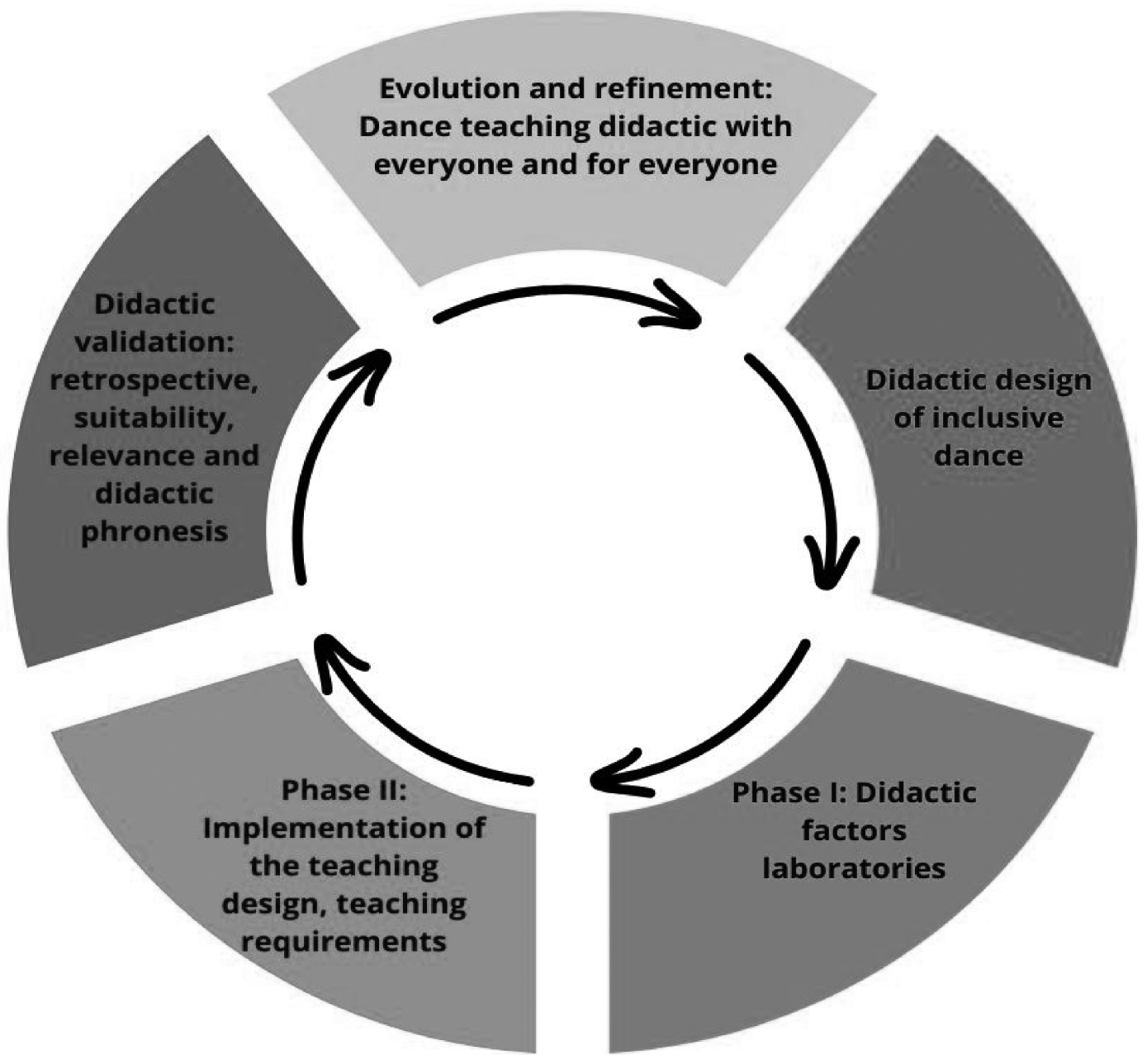
Figure 2 - Cycle of the evolution (improvement) of dance teaching. The figure presents the cycle in dance education from the perspective of the research methodology.
The stages of the research cycle were developed as follows:
Contextualization of dance: The pedagogical design of dance laboratories considering the teaching suitabilities or principles.
Implementation of the pedagogical design.
Results and validation of the design or “didactic configuration”: retrospective analysis and reflection on the findings of the implementation.
Evolution, refinement, or improvement: Further development and enhancement of dance within a natural setting, which included a girl with autism, children with attention deficit/hyperactivity disorder, and children with diverse abilities.
The research sample population was composed of 2 dance workshop facilitators, 10 second- and third-grade students from a public primary school in Bogotá, Colombia, and 3 researchers involved in the process.
To analyze the evolution stage (design and implementation) of the dance proposal, a series of data collection instruments were employed: (1) documentation of the design and the implementation of dance classes, workshops, or laboratories, and (2) collection of videos and photographs capturing classes and workshops.
Levels and Instruments of Data Analysis
The analysis of the results considered the participation of all stakeholders involved in the research: students, teachers, parents, and researchers. As a result, the different levels of data analysis were defined and are presented in Figure 3.
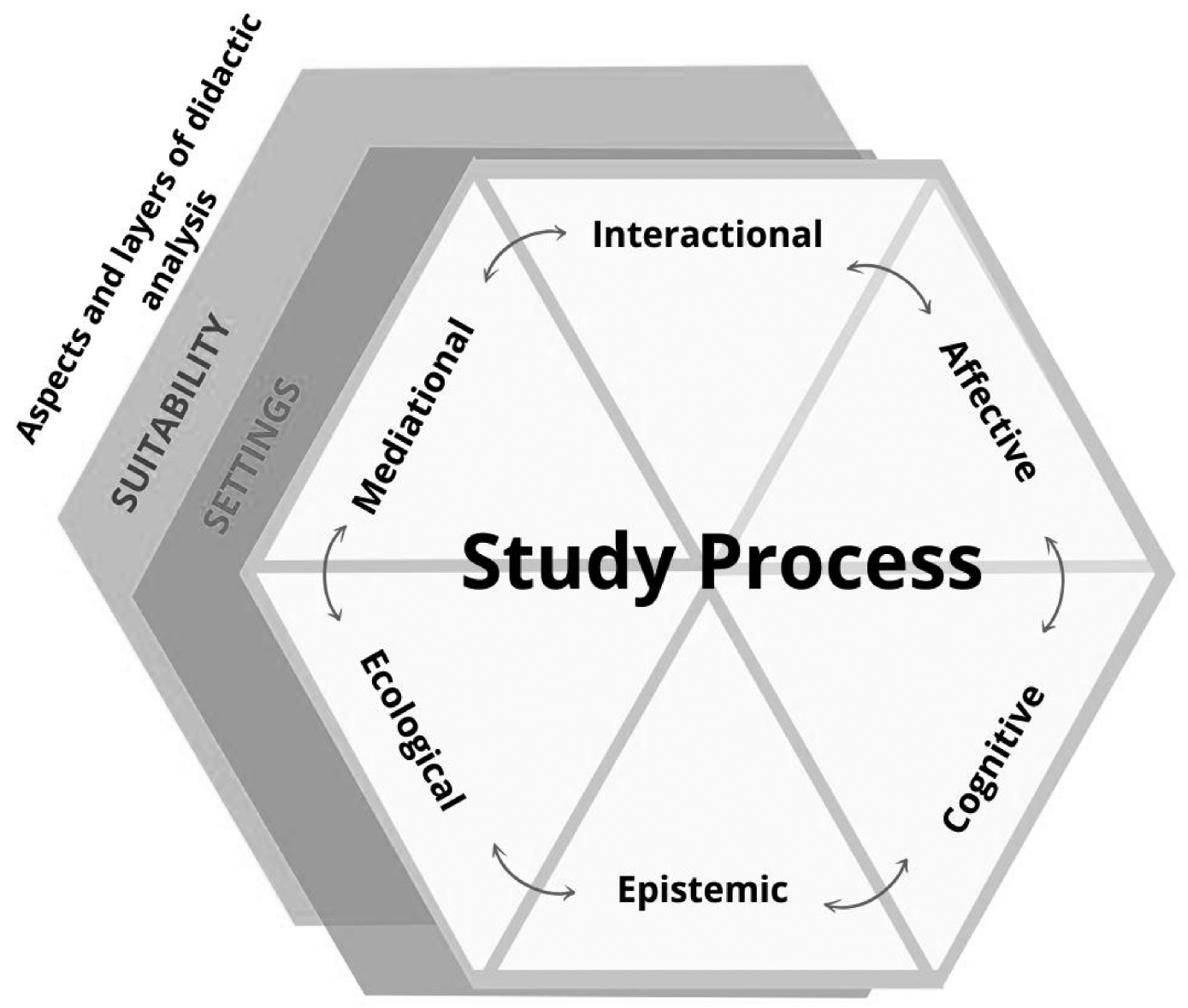
Figure 3 - Levels of data analysis.
The first level focused on the didactic configuration as part of the planning and design of the dance laboratories, in alignment with the previously defined teaching suitability principles (Table 1 and Figure 2). At this level, the planned activities were compared with their actual implementation in the school, examining the interactions between students and teachers, as well as the impacts of the learning outcomes. This analysis was conducted by the teachers who planned and executed the activities. Instruments, such as field diaries and videos, were used to record the process.
At the second level, the suitability, planning, and execution within the natural setting were monitored, along with the subsequent reflection. This monitoring was conducted retrospectively to facilitate the improvement of the teaching proposal and to assess its relevance. This process functioned as a meta-analysis, involving the participation of the researchers, external observers, teachers, and students. Table 7 presents the analysis instrument used.
| Selection of relevant events during observed sessions or laboratories by the workshop facilitators |
| Significant or relevant events during the observed sessions or laboratories that highlight fundamental aspects of dance didactics. Events that reflect or materialize the principles of suitability present in the implemented actions. |
| Selected event |
| Event 1: The rope little game. Laboratory 1: Exploring the ability to follow directions through movement to mobilize the body and interact with others. Example: Students explore movements from an imaginary string placed on a part of their body. |
| Event 2: Imagining situations. Laboratory 2: Getting to know each other through movement, listening, and observation. Example: Students perform movements with their body parts from the control of an imaginary balloon. The experience is individual and collective. |
| Event 3: Ability to imagine and build situations. Laboratory 3: Getting to know ourselves, in being, with the other and the space. Example: Students use their previous knowledge to create positions from movement and stillness in order to explore space and relate to others. |
| Event 4: Rhythmic chaos. Laboratory 5: Generating encounters through rhythm. Example: The student works on time, space, and slow and fast speed associated with the music they listen to and the music they produce themselves with different objects. |
| Event 5: Recognizing vulnerability. Laboratory 7: Unconventional movements. Example: The student explores zoomorphic movements that generate freedom that in turn requires self-control in space, time and with the other. |
The most significant events selected by the workshop facilitators, based on the perspective of teaching suitability and didactic configuration.
Results and Discussion
After analyzing each of the events, we confirmed that the activity The Rope Little Game aimed to explore the students’ ability to follow instructions through movement, to mobilize their bodies, and to interact with others. This game engaged both the physical body and the intellectual-affective suitability, as it highlighted the diverse children’s corporeality and connected the students’ motivation and interest with the experience of dance, as demonstrated by the following field observation:
Imagination is engaged through the use of an imaginary rope. The workshop facilitator invites a girl with autism to participate; she joins the group but soon disperses again, following her own pace and interests. (Participant observation record, 2024).
This event prompted us to ask the following questions: Why does the teacher insist that the girl with autism participate in the same way as the other children? How does each child’s attention fluctuate, and what keeps them engaged? In this event, the child’s participation was validated, and she received occasional support, such as having her hand held, being shown how to participate in the game, and being included in the modeling process. This event also demonstrated that the strategy of designating one student as the leader is crucial, as it alters the dynamics of the activity by involving all the children through movement proposals.
In the event, the physical body, the communicative and mediational, and the intellectual-affective suitabilities played a crucial role in fostering inclusive learning environments that incorporated elements of accessibility and participation. Communication—both oral and in action—was key to the process. At the end of the session, we observed additional elements integrated into the activity. A colored flag allowed the workshop facilitator to quickly organize and structure participation, as the instructions were based on an object and a color. The facilitator also relied on imagination and verbal instructions throughout the event, with the facilitator almost always giving instructions aloud. Furthermore, the facilitator appealed to the sociocultural suitability by proposing challenges that addressed the sociocultural diversity of the students, considering their axiological characteristics through the experience of the body and movement. This event created a sensitive experience that developed dance as a creative language.
In sessions 2 and 3 (Table 7), various bodily experiences were conducted within the framework of imagination, incorporating elements of imitation, movement, and stillness. The facilitator asked the children to assume multiple positions and trajectories, following the teachers’ handbook. The activity also revealed physical body suitability, as the children exhibited motor interest and appeared highly motivated by the exercises. The experience of working among peers, engaging in imitation, and imagining animals was particularly emphasized. The children performed zoomorphic movements, drawing on their previous knowledge. As in other events, play was a fundamental element. In play, imagination serves as a valuable tool that requires modeling, guidance, facilitator support, music, and interaction with other participants to create an environment conducive to the development of communicative and mediational suitability.
At first, we observed a certain level of aggression among the students, as they tended to pull each other, to disperse, and to avoid the activity. As a result, teacher regulation became necessary. Following this intervention, the children re-engaged with the process. Furthermore, we observed that the children displayed affection toward the workshop facilitators through physical contact, such as spontaneous hugs and handholding. These types of emotional bonds are not established in a single session: they require history of meaningful actions and communications between the workshop facilitator and the participating children. This dynamic exemplifies the intellectual-affective suitability. However, the lack of student’s adherence to instruction seemed to frustrate the facilitator, particularly during outdoor activities, where students required greater support in terms of self-regulation.
Overall, the group of students was highly active, which made it challenging to maintain their focus at times. However, they were very participative and expressed themselves freely. The sociocultural and the epistemological suitabilities emerged as a transversal element both at the beginning and at the end of the sessions. These activities allowed for the recognition of the children, their initial and concluding conditions during the experiences, and the teachers’ knowledge about dance.
Finally, in sessions 4 and 5, titled of Rhythmic Chaos and the Message from the Egg and Unconventional Movements, respectively, we observed that the children enjoyed holding hands and pulling each other. The teacher adopted a perspective we might describe as “embracing disorder,” using it as a strategy to motivate the group. The children connected with the music and the accompanying song that guided their movement, with the music acting as a grounding element. However, once the activity was completed, the children dispersed. The activity prompted several questions: Is it necessary for all children to participate consistently and at all times? Can participation be understood as a coming and going process? Could the mere presence of students who are in the classroom—even if they are not visibly connected to the activities—be considered as participation? How does the school interpret these dynamics? Is maintaining order essential or could allowing moments of chaos foster new forms of engagement?
Contrasting Expected Forms of Dance Practices: Tensions between “Doing the Right Thing and Being Right” and the Dynamics of Power, Transgression, Boundary-Pushing, and Rupture
Lack, error, difficulty, uncertainty, and frustration are integral to the configuration of the teacher-student relationship, contributing to its inherent complexity. To navigate these dynamic effectively, teachers need the following tools: adaptability and intuition. These tools enable workshop facilitators to make decisions, adapt to unexpected or evolving situations, improvise, and even deconstruct traditional didactic designs in order to move beyond rigid or predetermined. However, the effective use of these tools depends on genuine listening and convergence.
Human condition is inherently chaotic and frustrating, yet these same traits make human relationships didactic, loving and pedagogical, grounded both on the possible and the impossible (Neira, 2020). Didactic configurations are constructed in the space between what is planned and what emerges a posteriori. They exist at the intersection of the known and the hypothetical, the foreseen and the uncertain, the stable and the unexpected, the impossible and the problematic, as well as the unwanted (León Suárez, 2022). The following account from one of the workshop facilitators captures an unstoppable moment that illustrates the complexity of conducting suitability. It also highlights the concept of suitability not as a pursuit of perfection, but as a process of perfectibility:
In session 7, I felt a profound disconnection that affected my ability to engage and respond to the group. I was so sad and overwhelmed that the only way to protect my vital energy to care for others was to remove Damián from the class. There is always a first time for such moments, and I believe that these situations emerge from multiple factors. We cannot simplistically reduce the other to a simple explanation or a label, we must question and investigate the broader context. In general, it was a very hard session, full of shocks and blows that revealed my own vulnerability. It became a moment of realization: we demand a lot from children, and yet they might be dealing with complex situations, such as of lack of love, abandonment, racism, or bullying. These vulnerabilities can generate chaotic situations in shared spaces, where they may explode. What can we do when we have to be present, but feel incapable of being there ourselves? (Field diary, workshop facilitator 1, 2024)
Another significant aspect of this analysis is the exploration of boundaries and limits. In one of the sessions, the workshop facilitator played music that invited the students to dance, encouraging the students to follow the rhythm with their feet. Gradually, the children—who had previously been scattered—began to get in position and started tapping their feet. Before continuing with the instructions, the facilitator noticed that one of the children was excelling. She praised him and encouraged the rest of the students to follow his lead. Eventually, most of the children were dancing on the tables, enjoying the freedom of engaging in “unconventional movement.” To manage the children’s desire to transgress and ensure their safety, the teacher told them that no more than two children were allowed to stand on a single table due to the limited space.
The teacher invited the children to express rhythm using different parts of their bodies. The activity was met with great enthusiasm, especially from one boy who incorporated jumps and somersaults into his movements. At one point, another boy threw a piece of paper, prompting a reprimand from the facilitator. Despite this, we observed that the workshop facilitator was patient and willing to listen to the children’s often transgressive and experimental impulses during the activity. We perceived a certain level of controlled tension while navigating the boundaries—literal and metaphorical—between two spaces: the floor and the stacked desks, which had been transformed into a kind of stage. There, epistemological suitability, communicative suitability, and intellectual-affective suitability were all at play. During the activity, the facilitator allowed students to explore actions typically forbidden, balancing freedom with care and attention to safety.
The circulation of power became evident in this interaction: the adult provided certain possibilities to the students, who, in turn, accepted them and embraced the opportunity to play and make them their own, all while remaining on the edge. The boundary created a tension between the contained aggressiveness of the boys, who tested how far they could push the limits, and the assertiveness of the teacher, who explained the reasons behind what was allowed or forbidden, without authoritarianism or without rigid adherence to what was originally planned or designed (Figure 4).
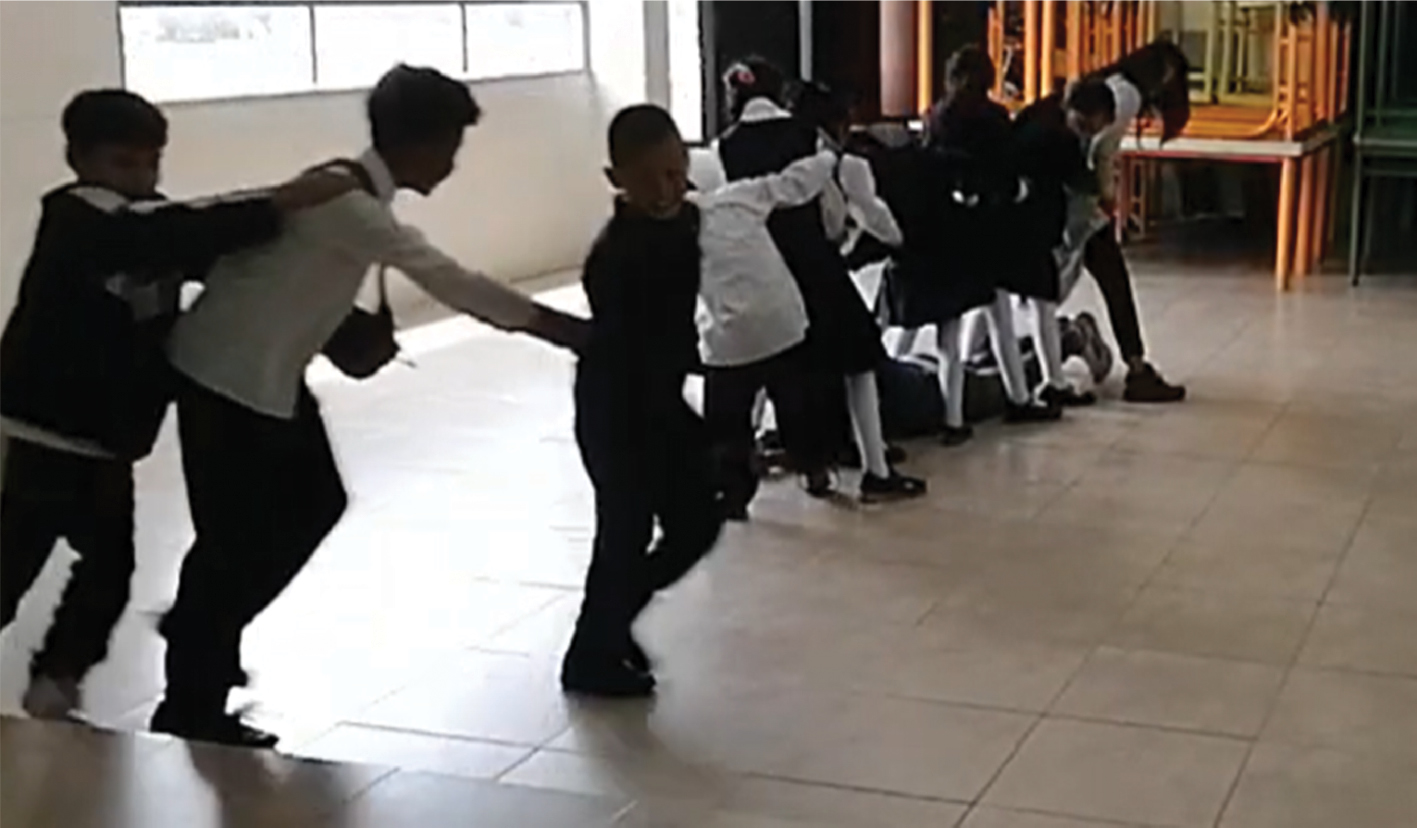
Figure 4 - Children in connection. The figure presents an example of a dance laboratory.
Difficulties in Fostering a Bond in Dance Didactics: Without Time, There is No Continuity; Without Continuity, There is No Listening; Without Listening, There is No Encounter
Dance didactics is a process that encompasses much more than simply transmitting or replicating movements. It constantly encourages teachers to understand their students within their unique contexts and to highlight the multiple facets of their ways of living and being. This includes recognizing their interests, motivations, ways of communicating, and relating to each other. As one of the students supporting the workshops mentioned in her field diary:
What about the environment? Well, before generating movement, dance experiences foster a connection with expression, freedom, learning, and self-identification. These elements are connected to those characteristics that define what children are, know, and do in a given context, space, or environment (Field diary, student, 2024).
These elements are crucial during the first encounter in the dance workshops, but they must be reinforced with each session to consolidate a strong bond between teachers and students, one that allows all possibilities and interactions to flourish. However, the development of these workshops revealed that these elements can fluctuate and be influenced by external factors. For instance, when there is no time, disposition, continuity, or listening, it impacts the bond and the encounter. This impact is not only observed in the students’ inability to perform the movements perfectly or the teacher’s inability to fully execute the plan, but it also manifests in a range of other developments that can be perceived in the students. As one of the workshop facilitators reflected:
Another important aspect I consider is listening. We aim for a listening that is attentive, active, and present at the beginning, during, and at the end of each workshop. This listening goes beyond what is said, it includes everything we can read from the group—their actions, stillness, reactions, words, and even their silences. This listening not only guides our evaluation, but encourages us to express how we feel when we arrive at each session and how we feel after finishing it, in a space in which we can, of course, be heard (Field diary, workshop facilitator 2, 2024).
As the workshop facilitator rightly points out, listening is the fundamental pillar that enables building an authentic relationship with the children. This goes beyond mere instructional follow-up; it is essential for didactic development and mediation. This relationship must be grounded on the recognition of the other and foster an inclusive environment, where the ability to inhabit the body plays a preeminent role. Listening, then, involves being attentive to words, actions, movements, silences, and sensations—not just as validation of what is correct, but as recognition of opportunities for free expression. The lack of inclusive listening can sometimes create barriers for children, as they are often immersed in the formal structure of education, where they cannot freely express themselves and be heard. Many times, children feel unable to build, participate effectively, imagine, or express themselves outside the normative framework. They also struggle to relate to others or break stereotypes about bodies and movement. At this point, the different types of suitability intertwine to generate a structure or an arrangement that supports dance actions, which are not governed by a hierarchical order. Instead, they exist within an experiential space constructed by students and teachers as a space for physical, corporeal, and spiritual encounters through movement.
Conclusions
This title of this article has three keywords: limits, transgressions, and vulnerabilities. What do these terms refer to? During the discussions of this research and the formulation of this text, the researchers and facilitators talked about the elements that uphold normative structures in didactic interaction. We aimed to take a second look at those actions that diminished the multiple possibilities for students to be and to transform the vertical power dynamics that have been long established in education, which limit the corporality of children. In addition, we emphasize that in the workshops observed, the children experienced a newfound freedom—one they had not encountered before.
The analyses of suitability reveal their presence in the action of teachers and are valid in relation to the established purposes. They are flexible and integral, functioning both as a rupture and as a means of establishing relevance and balance. Ultimately, they respond to the embodied experience of dance.
Transgressing means going beyond, reviewing, reflecting, revisiting what has been danced, to then to evaluate and evolve. This process is, above all, a fundamental aspect of what teachers do. In this study, we have revisited dance practices and their teaching in a primary school with the aim of evolving them. In this context. Evolution presents a critical evaluation process used to validate a dance didactic approach for everyone and with everyone.
Highlighting vulnerabilities means to emphasize the importance of didactic configurations as the central axis that enhances the teacher’s action. These configurations are directly linked to the suitability, serving as guiding frameworks for what the teacher must articulate in their work. However, they do not stem from a normative perspective; rather, they focus on the possibility and opportunity to enrich a practice that benefits both teachers and students through the recognition and acceptance of diversity. Without these principles, dance practice would not be sufficiently welcoming and inclusive of the vulnerabilities we possess as human beings. In this perspective, intuition becomes a central element.
Finally, we recognize that there are ideal elements within the didactic structure. These elements must be integrated with the teacher’s intuition, especially during those moments when flexibility is required and possible. Those key factors include listening, the resources that facilitate the task, the words, and the children’s bodies. These elements are crucial, as they allow the teacher to become ideal by knowing how to navigate chaos and calm. In this way, the limitations of dance practice are discoveries: Apparent error and frustration in didactic relationships are, primarily, the starting point of an investigation. Therefore, providing a fresh look at these limits in light of the principles or appropriateness we have already defined invites us not only to anticipate what may be beyond our control but also to understand that each community of children is unique and that longer periods of time are necessary for their immersion in a dance context for all and with all, which will require years of constant work.
About the Authors
María de Jesús Blanco Vega has a master’s degree in education and is a research professor of the Education Research Group and Pedagogical Construction Scenarios GIEEP, Research, Innovation and Creation Leader.
Author to whom correspondence should be addressed; E-Mail: maria.blanco@docente.ibero.edu.co; Tel.: +57-313-310-7147; ORCID ID: https://orcid.org/0000-0001-8773-1188
Juliana León-Suárez has a doctorate in education and is a research teacher in language and education. Her fields of interest are language, culture, and society. E-Mail: jpleons@udistrital.edu.co; ORCID ID: https://orcid.org/0000-0002-3592-5228
Leidy Carolina Riveros Rosas is a candidate for a doctorate in virtual education and has master’s degrees in innovation and technologies for education and in inclusive and intercultural education. E-Mail: leidy.riveros@docente.ibero.edu.co; ORCID ID: https://orcid.org/0000-0002-0886-7974
Paulina Avellaneda Ramírez has a master’s degree in inclusive and intercultural education and is the director and co-founder of the Corporation Inclusive Movimiento. E-Mail: palispaz@gmail.com; ORCID ID: https://orcid.org/0000-0001-7759-9347
†These authors contributed equally to this work.
Acknowledgment
Thanks to the Corporación Universitaria Iberoamericana and Grupo Vértice SAS, the co-financing entity of the project.
Conflicts of Interest
The authors declare no conflict of interest.
References
Alcaldía Mayor de Bogotá, & Secretaría Distrital de Integración Social. (2013). Lineamiento Pedagógico y Curricular para la Educación Inicial en el Distrito. https://repositoriosed.educacionbogota.edu.co/bitstreams/99fed65d-4fe7-4dc6-83e5-2d1bfcf12498/download. | |
Altamirano Quevedo, C., Castillo Viera, E., & Rodríguez Pascual, I. (2021). Biodanza: Revisión sistemática sobre los beneficios de una práctica emergente en la promoción de la salud y el bienestar. Retos, 39, 844–848. DOI: 10.47197/retos.v0i39.73348. | |
Apelmo, E. (2024). “They really looked, looked and looked:” Contemporary dance, disability and the circulation of emotions. Alter. European Journal of Disability Research, 18(1), 5–21. DOI: 10.4000/vyi7. | |
Artpradid, V. (2023). Kinesthetic empathic witnessing in relation to embodied and extended cognition in inclusive dance audiences. Cogent Arts & Humanities, 10(1), 2181486. DOI: 10.1080/23311983.2023.2181486. | |
Avellaneda Ramírez, P. (2024). La improvisación y la vida una experiencia docente desde el movimiento. [Masters thesis, Universidad del Bosque]. https://repositorio.unbosque.edu.co/items/7e65fa1f-73a1-422a-a43b-0bbe519e042d. | |
Blanco-Vega, M. d. J., León-Suárez, J. P., & Calderón, D. I. (2022). Danza inclusiva con personas sordas: Un estado de la cuestión. Revista Colombiana de Educación, 85, 143–166. DOI: 10.17227/rce.num85-11366. | |
Brugarolas Alarcón, M. L. (2022). Danza que vibra en una comunidad inclusiva. Arteterapia. Papeles de arteterapia y educación artística para la inclusión social, 17, 143–153. 10.5209/arte.76318. | |
Buck, R., & Snook, B. (2024). Embracing change in Tezpur, India: ‘Dancing the talk’ through a community dance pedagogy. International Journal of Education & the Arts, 25(18), 1–20. DOI: 10.26209/ijea25n18. | |
Casasola Rivera, W. (2020). El papel de la didáctica en los procesos de enseñanza y aprendizaje universitarios. Revista Comunicación, 29(41), 38–51. DOI: 10.18845/rc.v29i1-2020.5258. | |
Cedeño Andrade, L. J., Segura Osorio, P. d. R., Romero Ibarra, O. P., & Maqueira Caraballo, G. d. l. C. (2024). Danza contemporánea y expresión corporal en la Educación Física inclusiva: Una estrategia para estudiantes con múltiples discapacidades. Podium. Revista de Ciencia y Tecnología en la Cultura Física, 19(2), e1625. http://scielo.sld.cu/scielo.php?pid=S1996-24522024000200012&script=sci_abstract&tlng=en. | |
Chakraborty, S., & Sen, M. (2019). Choreographing changes: Narratives of resistance and healing. Creative Arts in Education and Therapy (CAET), 5(1), 51–61. DOI: 10.15212/CAET/2019/5/7. | |
de Camilloni, A. R. W., Cols, E., Basabe, L., & Feeney, S. (2007). El saber didáctico. Buenos Aires: Editorial Paidós [Colección: Cuestiones de educación]. | |
Feldman, S., & Altieri, D. (2021). Diversidad, arte y comunicación: Una perspectiva desde la clase de danza inclusiva en contextos de segregación. Trayectoria, 9, 84–97. https://ridaa.unicen.edu.ar/items/9b445c28-b63b-43da-bb7a-9473f6fa3dfb/full. | |
Godino, J. D. (2011). Indicadores de idoneidad didáctica de procesos de enseñanza y aprendizaje de las matemáticas. In XIII Conferência Interamericana de Educação Matemática (CIAEM-IACME), Recife, Brasil. https://www.ugr.es/~jgodino/eos/jdgodino_indicadores_idoneidad.pdf. | |
Godino, J. D., Batanero, C., Font, V., & Giacomone, B. (2016). Articulando conocimientos y competencias del profesor de matemáticas: El modelo CCDMVII. In J. A. Macías, A. Jiménez, J. L. González, M. T. Sánchez, P. Hernández, C. Fernández, F. J. Ruiz, T. Fernández, & A. Berciano (Eds), Investigación en Educación Matemática (pp. 285–294). Málaga: SEIEM. https://enfoqueontosemiotico.ugr.es/documentos/Godino_2016_Modelo_CCDM_SEIEM_Málaga.pdf. | |
Iranzo-Domingo, M., & Cañabate Ortiz, D. (2024). Study of a social dance project within a theatrical context for third and fourth age persons. International Journal of Education & the Arts, 25(8), 1–36. DOI: 10.26209/ijea25n8. | |
León Suárez, J. (2022). Didáctica de la escucha: Disposición y proporcionalidad. Enunciación, 27(1), 81–96. DOI: 10.14483/22486798.19042. | |
Marín Castro, C. (2017). Análisis de la atención a la diversidad en relación con el currículum y las actitudes de los profesionales en los centros de enseñanza de danza [Disertación Doctoral, Universidad de Granada]. https://dialnet.unirioja.es/servlet/tesis?codigo=136148 | |
Needham-Beck, S. C., & Aujla, I. J. (2020). Desarrollo de una herramienta de evaluación del desempeño para realizar un seguimiento del progreso en un programa de danza inclusivo. Investigación en educación en danza, 22(2), 150–158. DOI: DOI: 10.1080/14647893.2020.1746256. | |
Neira Uneme, A. (2020). Amor, deseo y educación: una tension necesaria. In: M.C. Gravito & G. Bula (Ed.), Byung-Chul Han: Psicopolítica y educación (pp.139–158). Universidad de la Salle. Bogotá, Colombia. https://ciencia.lasalle.edu.co/server/api/core/bitstreams/0649c0eb-76ef-4c4d-ae5e-e63f81f89206/content. | |
Oranga, J., & Gisore, B. (2023). Action research in education. Open Access Library Journal, 10(7), 1–10. DOI: 10.4236/oalib.1110306. | |
Ordóñez Matute, A. R. (2022). Dispositivo didáctico relacional. Reivindicación del valor del aprendizaje de la danza para una educación integral. Revista Panamericana De Pedagogía, 35, 251–274. DOI: 10.21555/rpp.vi35.2734. | |
Prada, R. P., & Fernández, Á. M. (2021). Didáctica de la danza tradicional para la escuela: Revisión bibliográfica. Retos, 41, 57–67. DOI: 10.47197/retos.v0i41.82280. | |
Shulman, L. (1984). Paradigmas y programas de investigación en el estudio de la enseñanza: Una perspectiva contemporánea. In: M. C. Wittrock (Ed.), La investigación de la enseñanza I. Enfoques, teorías y métodos. Barcelona: Paidós. | |
Teppa, S. (2006). Investigación-acción participativa en la praxis pedagógica diaria. Barquisimeto: Subdirección de Investigación y Posgrado, UPEL-IPB. | |
Zhou, T. Y., Kim, N., Machida, S., Sakiyama, Y., Tsai, P.-S., Lee, T., & Bui, M. (2019). Danza movimiento terapia en Asia: Una visión general de la profesión y su práctica. Artes Creativas en Educación y Terapia (CAET), 5(1), 40–50. https://caet.inspirees.com/caetojsjournals/index.php/caet/article/view/172. | |
Zitomer, M. R. (2016). Always being on your toes: Elementary school dance teachers’ perceptions of inclusion and their roles in creating inclusive dance education environments. International Journal of Inclusive Education, 21(4), 428–440. DOI: 10.1080/13603116.2016.1197327. |