Laban-Based Movement Literacy Game for Enhancing Students’ Thinking Skills
Volume 12, Issue 1, Pages 4-15
ABSTRACT
This study developed and tested a Labanotation-based movement literacy game designed to foster analytical, creative, and reflective thinking skills among junior high school students. The research employed a Research and Development (R&D) approach guided by the Analysis, Design, Development, Implementation, and Evaluation (ADDIE) framework, involving expert validation, a small-scale pilot with university students, and a larger implementation with 79 junior high school students in Jakarta and Banten, but 45 students were able to complete the exercises up to practice chart level 6. Data were collected through gameplay scores, motion detection records, classroom observations, and interviews and analyzed using descriptive statistics, regression methods, and thematic coding. Findings indicated that students were actively engaged in interpreting symbols and performing embodied tasks, though technical limitations and cultural considerations influenced their experiences. Symbolic knowledge alone did not automatically translate into embodied reflection, highlighting the importance of motivation, context, and bodily involvement. This study contributes to the discourse on embodied cognition and game-based pedagogy by presenting a culturally adapted model of movement literacy. Future research should refine motion detection algorithms, expand trials across schools, and further explore how body, symbol, and culture interact to shape higher-order thinking.
摘要
本研究开发并测试了一款基于拉班舞谱(Labanotation)的动作素养游戏,旨在培养初中生的分析、创造和反思性思维能力。研究采用研发(Research and Development, R&D)方法,并在 ADDIE(分析、设计、开发、实施与评估)框架指导下展开,涵盖了专家验证、大学生小规模试点,以及在雅加达和万丹地区 79 名初中生中的更大规模实施。其中,45 名学生顺利完成了第 6 级练习图表的全部练习。本研究通过游戏得分、动作检测记录、课堂观察和访谈收集数据,并采用描述性统计、回归分析和主题编码进行处理。研究结果表明,学生能够积极投入于符号解读与具身任务的执行中,但技术限制和文化因素影响了他们的学习体验。单纯的符号知识并不能自动转化为具身反思,这凸显了学习动机、所处情境和身体参与的重要性。本研究通过提出一种具有文化适应性的动作素养模型,为具身认知和游戏化教学的相关讨论作出贡献。未来研究可进一步优化动作检测算法,扩大跨校试点,并深入探讨身体、符号与文化在形成高阶思维中的交互作用。
KEYWORDS
Movement literacy, Labanotation, Educational game, Thinking skills, Embodied cognition.
关键词
动作素养, 拉班舞谱, 教育游戏, 思维能力, 具身认知.
History
Received July 2026
Accepted July 2026
Open Access
This is an open access article distributed under the CC BY 4.0 license (https://creativecommons.org/licenses/by/4.0/).
1. INTRODUCTION
In the contemporary era of globalization and rapid digital transformation, education faces increasing demands to cultivate students who can think critically, creatively, and reflectively. Thinking skills, defined as the ability to reason, solve problems, and generate new ideas, are now recognized as fundamental competencies for personal and professional success (Slavin & Madden, 2000). In 21st-century education, critical and creative thinking are positioned as key outcomes that prepare learners to adapt to complex and evolving challenges in both local and global contexts (Chadwick, 2011).
Extensive research has explored strategies to enhance students’ thinking skills through various pedagogical innovations. Among these, game-based learning has emerged as a particularly effective approach for fostering active engagement and higher-order thinking (McGonigal, 2011). Educational games encourage learners to explore, hypothesize, test, and reflect—activities that activate cognitive processes beyond rote memorization. Studies across disciplines demonstrate that games, when designed with clear learning objectives, can enhance not only motivation but also analytical and reflective abilities (Plass et al., 2015).
Recent developments in educational technology have expanded game-based learning toward motion and embodiment. Mentis et al. (2014) demonstrate that motion-sensing and gesture-based interfaces promote cognitive engagement and self-awareness through physical interaction. Similarly, Mueller & Isbister (2014) propose design principles for movement-based games that merge physical expressivity with problem-solving dynamics. Bianchi-Berthouze (2013) further emphasizes that bodily interaction in gameplay deepens emotional immersion and strengthens motor-cognitive coordination. These findings underscore the pedagogical potential of movement-oriented games to bridge action, reflection, and symbolic reasoning, core components of movement literacy.
In the field of arts and movement education, Labanotation, a symbolic system of recording human movement developed by Rudolf von Laban, offers a unique pedagogical framework. It uses geometric and spatial symbols to represent body parts, direction, and movement dynamics, functioning similarly to musical notation (Farnell, 2005). Labanotation can be understood simply as a “movement language,” written on a vertical staff with columns for each body part. Geometric symbols indicate direction, level, and quality of movement, read from bottom to top. In this way, even readers without dance training can visualize movement as a symbolic structure rather than mere imitation thereby supporting analysis and reflection (Frazier, 2021).
Through Labanotation, learners can visualize, analyze, and reconstruct movement structures, transforming dance into a cognitive activity that involves interpretation, reasoning, and meaning-making. This aligns with the concept of movement literacy, defined as the ability to comprehend, interpret, and communicate ideas through bodily movement (Graff, 2011). The process of decoding and executing symbolic representations of movement inherently engages higher-order cognitive processes (Warburton, 2000).
Integrating Labanotation into a game-based learning model presents a promising opportunity to connect cognitive and psychomotor domains. Game-based movement learning combines active participation with conceptual analysis, allowing learners to construct knowledge through embodied experience. As previous studies indicate, motor learning progresses through cognitive, associative, and autonomous phases (Tenison et al., 2016). When symbolic systems such as Labanotation are embedded in gameplay, they can facilitate transitions between these phases by providing visual cues, feedback, and problem-solving challenges that stimulate thinking skills.
Recent developments continue to reaffirm the educational potential of Labanotation and physical literacy. For example, Frazier (2021) argues that Labanotation functions not merely as a descriptive tool but as a creative system that promotes analytical awareness and innovation in movement. Similarly, Triana et al. (2024) demonstrate that a Laban-based educational game can effectively assess kinesthetic intelligence and stimulate cognitive engagement in secondary school students. Contemporary research also emphasizes physical literacy as a multidimensional construct linking physical movement, motivation, and cognition (Valle-Muñoz et al., 2025). The integration of cognitive, affective, and motor domains through embodied learning experiences has been shown to support holistic development and thinking skills.
Moreover, the cultural adaptability of symbolic systems such as Labanotation remains an important consideration. Studies on the integration of the Laban/Bartenieff Movement System (LBMS) in traditional dance education reveal both its pedagogical potential and contextual challenges (Guo & Thiagarajan, 2025). Universal symbolic frameworks risk oversimplifying the diverse meanings of movement across cultures. As Davis et al. (2023) suggest, applying Laban analysis uncritically can obscure cultural specificity in body expression. Therefore, educational applications of Labanotation should be contextualized, flexible, and responsive to learners’ socio-cultural environments.
Despite its promise, dance and movement learning often face challenges in developing students’ psychomotor and interpretive capacities. Students may struggle to translate movement symbols into action due to limited motor control or abstract reasoning ability. Harrow’s psychomotor taxonomy (Cooper & Harrow, 1973) underscores that skillful movement execution requires not only neuromuscular coordination but also cognitive regulation. Historically, Gratiolet (1865) argued that imagination, thought, and emotion manifest symbolically through the body, a view later echoed by Darwin (1890) and contemporary theorists of embodiment (Dupouy, 2011; Sheets-Johnstone, 2011). This perspective reinforces the idea that body movement serves as an expressive medium that bridges affective and cognitive processes, underscoring that movement literacy is inherently both intellectual and emotional in nature.
Taken together, these perspectives highlight a pressing need for innovative learning models that merge cognitive, physical, and symbolic engagement. A movement literacy game based on Laban dance notation offers such a synthesis, in which students interpret visual-symbolic information, make movement-based decisions, and reflect on their actions in real time. This combination of symbolic reasoning and embodied practice aligns with contemporary theories of embodied cognition, which propose that learning is grounded in sensory and motor experiences (Wilson, 2002).
This study focuses on junior high school students in Indonesia, ensuring that the development and evaluation of the Laban-based movement literacy game are grounded in the local educational and cultural context. Therefore, this study aims to develop and evaluate a Laban-based movement literacy game to enhance junior high school students’ thinking skills. By situating movement notation within a playful, problem-solving environment, the research bridges artistic expression and cognitive development. It contributes to the growing discourse on how embodied, symbolic, and game-based pedagogies can foster critical and creative thinking, offering an interdisciplinary model for arts education in the 21st century.
2. METHODS
2.1. Research Design
This study adopted a Research and Development (R&D) approach, as outlined by (Borg & Gall, 1989), guided by the ADDIE model, which consists of five sequential stages: Analysis, Design, Development, Implementation, and Evaluation (Branch, 2010). This framework was chosen to ensure a systematic and iterative process of game design, validation, and evaluation, aligning with contemporary standards for instructional innovation research. The process is visually summarized in Figure 1, which outlines the sequential stages and their application in the development of the movement literacy game.
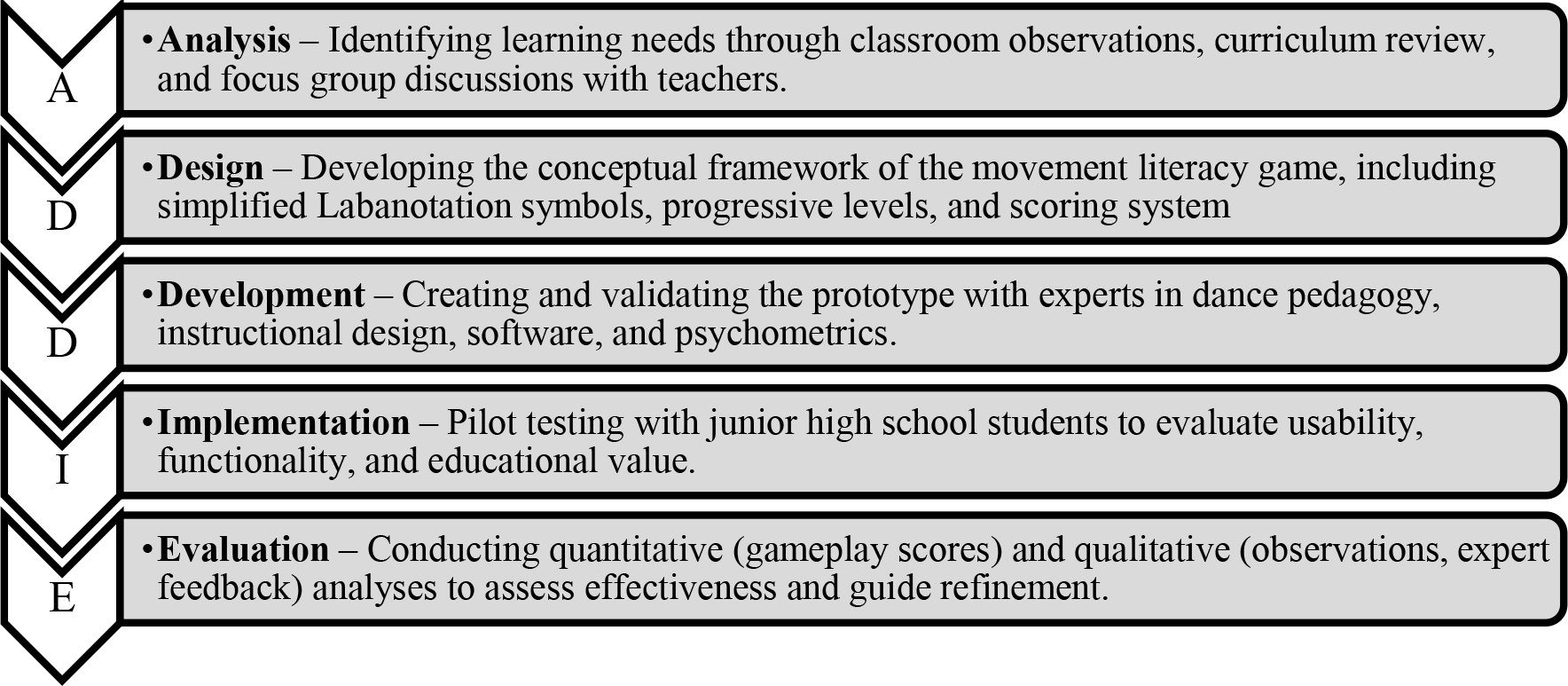
Figure 1. - The ADDIE framework applied in game-based movement literacy design.
In the analysis stage, learning needs were identified through classroom observations, curriculum analysis, and a Focus Group Discussion (FGD) involving ten junior high school arts teachers from the MGMP Seni Budaya network in Jakarta. The FGD aimed to establish a shared understanding of the importance of thinking skills, emphasizing the integration of cognitive and psychomotor domains in adolescent learners.
The design stage focused on developing the conceptual framework of the movement literacy game. Labanotation, a symbolic system for recording human movement, was adapted into simplified geometric symbols suitable for junior high school learners. The game was structured into progressive levels of complexity, and a scoring system was embedded to capture indicators of analytical, creative, and reflective thinking.
During the development stage, the prototype was created through collaboration among experts in dance pedagogy, instructional design, software development, and psychometrics. Expert validation was conducted through FGDs, where feedback on pedagogical structure, symbolic clarity, and usability informed subsequent revisions and ensured cultural relevance within Indonesian arts education.
The implementation stage involved pilot testing with junior high school students to evaluate the usability, functionality, and educational value of the game. In each session, students selected a simplified Laban symbol, attempted the corresponding movement, received immediate feedback through motion detection, and reflected on their performance. Their performance data, behavioral responses, and reflective feedback were recorded.
Finally, in the evaluation stage, both quantitative and qualitative analyses were employed to assess the effectiveness of the game in fostering movement literacy and higher-order thinking. Quantitative data were derived from gameplay scores, while qualitative data were obtained from classroom observations and expert feedback. The triangulation of these findings provided a comprehensive understanding of the game’s pedagogical impact and guided further refinement.
2.2. Participants
The participants in this study consisted of two main groups. First, a small-scale test was conducted with six undergraduate students from Universiti Teknologi MARA (UiTM). Their role was to provide qualitative feedback through interviews and questionnaires regarding the usability of the game, the readability of the movement symbols, and the appropriateness of the procedures. This stage was essential for refining the model prior to large-scale implementation.
Second, the large-scale test involved 79 junior high school students (16 boys and 63 girls) aged 12 to 15 years, drawn from several schools in Jakarta and Serang-Banten. Participants were selected using purposive sampling, focusing on students enrolled in Seni Budaya (arts education) classes. Most students had limited prior dance experience, participating mainly through formal arts education classes rather than extracurricular or professional training. The game sessions were conducted in two meetings, each lasting approximately 60 minutes, allowing sufficient time for orientation, practice, and reflection. Prior to gameplay, all students received a brief orientation session introducing the concept of movement literacy and the simplified Laban notation symbols used in the game.
In addition to student participants, ten arts teachers from the MGMP Seni Budaya network in Jakarta were involved during the needs analysis stage. Each region was represented by two teachers, resulting in a diverse group with teaching experience ranging from 5 to 10 years. These teachers, drawn from schools in Jakarta and Banten, contributed perspectives grounded in local arts education practices. They served as collaborators in the FGD, helping to establish a shared understanding of the importance of thinking skills and providing insights into the integration of cognitive and psychomotor domains in junior high school education. This combination of student participants, pilot testers, and teacher collaborators ensured that the study reflected both learner perspectives and pedagogical expertise, thereby strengthening the validity of the research design.
2.3. Ethical Approval
This study was approved by the Ethics Committee of the Institute for Research and Community Services, State University of Jakarta, with approval number 30/UN39.14/PT.01.05/1/2026, dated January 13, 2026. All research procedures were conducted in accordance with the principles of the Helsinki Declaration and applicable research ethics guidelines. All participants were informed about the purpose and procedures of the study and voluntarily agreed to participate. Participant confidentiality was maintained throughout the research process.
2.4. Game Design
The movement literacy game was developed to foster higher-order thinking skills through three main features: Learning Movement Symbols, Movement Practice, and Movement Evaluation. These features are presented in Figure 2 (left), illustrating the game’s interface and highlights the structured design of the learning process.
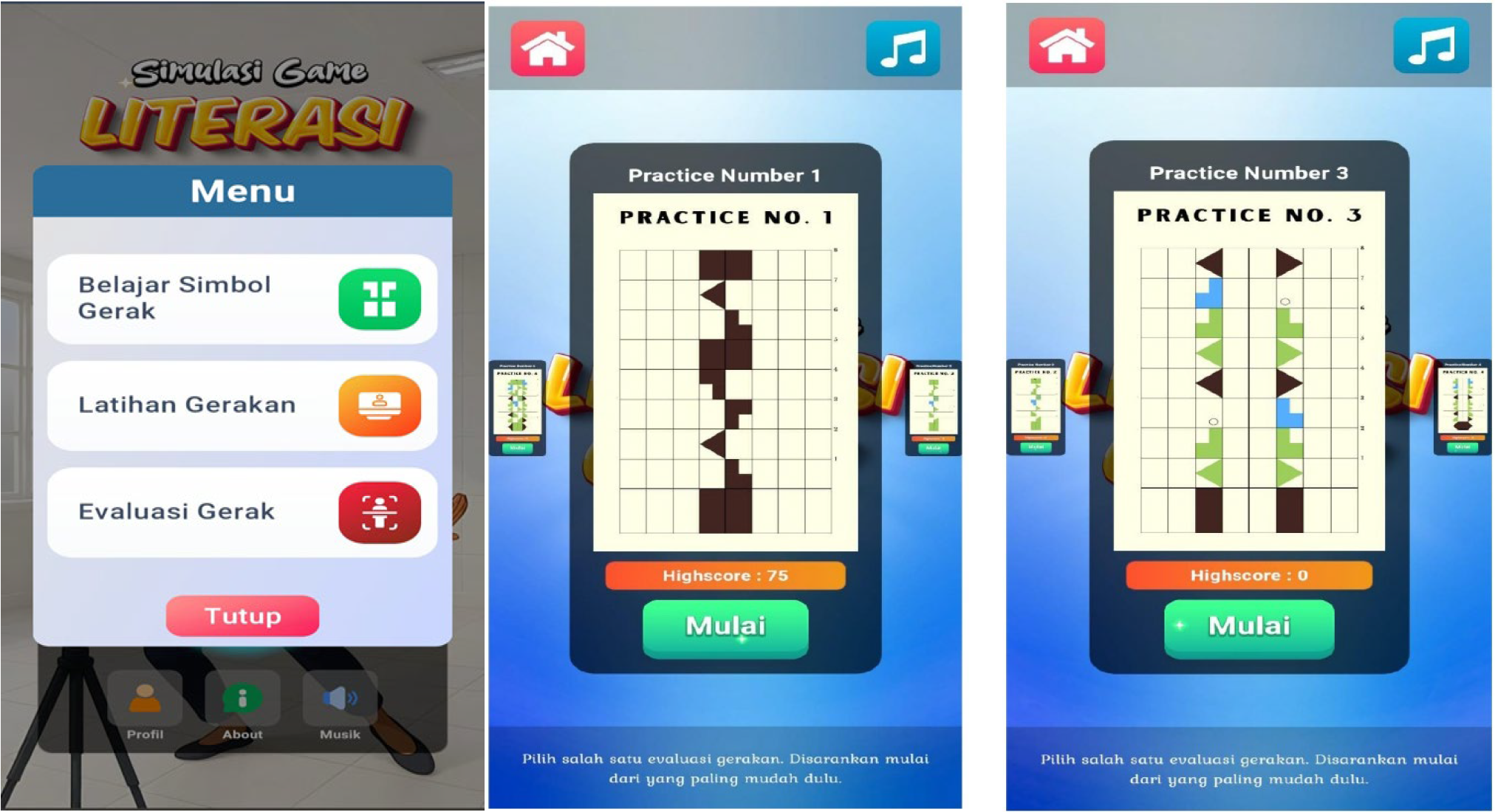
Figure 2. - Movement literacy game interface.
In the learning phase, students were introduced to simplified Laban notation. The symbols were organized into three levels of complexity, each distinguished by color coding. Brown symbols represent basic movements such as stepping forward, backward, sideways, or remaining stationary, as shown in Figure 2 (center). Green symbols indicate medium-level movements that require simultaneous coordination of hand and foot gestures. Blue symbols represent advanced movements, incorporating tiptoe footwork and upward or diagonal arm gestures that demand greater balance and expressive control. Tutorials are provided to help students understand the meaning of each symbol before attempting independent execution.
The symbols were further arranged into a Practice Chart, displayed in Figure 2 (right). This chart is read sequentially from bottom (1) to top (8), functioning as a “movement score” that guides students through ordered phrases across different body parts. Some practice tasks also take the form of visual pattern exercises with symmetrical arrangements, challenging students to recognize spatial structures and perform them step by step. These exercises integrate spatial reasoning with embodied performance, reinforcing both cognitive and motor engagement.
Each game session lasts approximately 60 minutes and follows a structured sequence. Students began with a short orientation, continued with symbol learning and practice, and concluded with evaluation. During the evaluation phase, the system employs motion detection technology (Mediapipe/OpenCV) to assess the alignment between students’ movements and the symbols. Scores are generated automatically for both individual movements and overall performance. Afterward, students are asked to reflect on their strategies and reasoning, articulating how they interpreted and adjusted their movements to match the symbolic cues.
The scoring mechanism in this game consists of two types. First, a knowledge score in the symbol learning phase, ranging from 20 to 100 based on the accuracy of students’ understanding of the symbols. Second, a performance score in the movement evaluation phase, which is automatically generated based on the alignment of body position, direction, and timing with the displayed symbols. Performance scores are assigned for each movement and then averaged into an overall score. The practice phase serves as training without direct assessment but acts as an important bridge between symbol comprehension and movement performance.
The game design fosters three dimensions of higher-order thinking. Analytical thinking is stimulated through accurate interpretation of symbols. Creative thinking emerges through variation and improvisation during practice. Reflective thinking is developed through students’ ability to explain their reasoning and strategies. These dimensions align with the revised taxonomy of cognitive processes (Anderson & Krathwohl, 2001), ensuring that the game not only assesses knowledge and performance but also advances movement literacy as a holistic integration of cognitive and psychomotor domains.
2.5. Data Collection
Data collection was carried out using both qualitative and quantitative approaches. Qualitative data were obtained from expert validation involving a cultural arts teacher, an information technology specialist, and an expert in instruments and measurement. The experts provided feedback on conceptual and operational alignment, clarity of the practice materials, and the accuracy of the scoring system. Expert validation and teacher collaboration were conducted not only to refine the scoring system and procedures but also to ensure that the simplified Laban symbols were culturally appropriate and pedagogically relevant for Indonesian students. Additional qualitative data were gathered through a small-scale test with six UiTM students, who contributed feedback via interviews and questionnaires regarding their experience with the game, the readability of the symbols, and the appropriateness of the procedures. Teacher observations during implementation further enriched the qualitative data, documenting student engagement, movement accuracy, and reflective ability in explaining the reasoning behind their actions.
Quantitative data were obtained through a large-scale test with 79 students (see Participants subsection), 45 students were able to complete the exercises up to practice chart level 6. Knowledge scores from the Learning Movement Symbols feature (range 20–100) and performance scores from the Movement Evaluation feature, generated automatically through motion detection technology (Mediapipe/OpenCV), were collected. These data were analyzed using regression methods to examine the relationship between students’ understanding of symbols and their movement performance.
2.6. Data Analysis
Quantitative data were analyzed using regression methods to examine the relationship between students’ knowledge scores and their movement performance scores. Descriptive statistics were also employed to summarize the distribution of scores and to provide an overview of student achievement across the sample.
Qualitative data were analyzed thematically. Expert feedback, student interviews, questionnaires, and teacher observations were reviewed to identify recurring patterns related to usability, clarity of movement symbols, and student engagement. Thematic coding allowed the researchers to highlight strengths and weaknesses of the game design and its implementation.
3. RESULT
3.1. Qualitative Findings
3.1.1. Needs Analysis
An FGD with ten teachers from the MGMP (Subject Teacher Forum) of Arts and Culture for junior high schools in Jakarta produced several important findings regarding student conditions and learning needs. The teachers described junior high school students (aged 12–15) as early adolescents with dynamic physical, social, and emotional development. They emphasized that students are beginning to shift from concrete to abstract thinking and are able to understand symbols and logical concepts, but they remain easily distracted when learning materials are not engaging.
Teachers also highlighted that students’ emotions are not yet stable, peer interactions are more dominant, and learning motivation is stronger when activities are active, contextual, and based on direct experience. In terms of thinking skills, students tend to develop critical, creative, reflective, and problem-solving abilities, although they still require guidance to organize their thinking processes systematically.
These findings indicate that arts and culture learning in junior high schools requires instruments that integrate cognitive and psychomotor aspects in a balanced way. Teachers noted that the use of movement symbols as a basis for practice can help students connect knowledge with kinesthetic skills. Therefore, the results of this needs analysis serve as the foundation for designing a Movement Literacy Game Based on Laban Dance Notation with a scoring system, aimed at assessing students’ kinesthetic intelligence in a more measurable way.
3.1.2. Game Development
The development stage produced the Movement Literacy Game Based on Laban Dance Notation, designed as a diagnostic instrument for assessing junior high school students’ kinesthetic intelligence. The application was built with Unity for Android devices, utilizing Mediapipe and OpenCV as the body pose detection systems. The structure of the application consists of three main components, (1) learning movement literacy symbols, (2) practicing dance movements based on symbol visualization, and (3) evaluating movements through an automatic scoring system. Evaluation is carried out in three stages: preparation, scanning, and assessment. In the preparation stage, students are introduced to the symbols they are required to practice. The scanning stage is conducted using the device’s camera, while the assessment stage generates automatic scores that are displayed immediately and can be downloaded as a report.
The application provides six practice charts with gradually increasing levels of difficulty. The first chart contains simple basic movements, while the subsequent charts require more complex coordination between hands and feet. The fifth and sixth charts present the greatest challenge, as they integrate simultaneous movements requiring high levels of concentration and coordination. The scoring rubric is designed to assess movement accuracy based on conformity with Laban notation symbols. Assessment indicators include body position accuracy, movement consistency, and sequence completeness. This system enables students to receive immediate feedback while also providing objective data for teachers to evaluate kinesthetic skills in a more measurable way. Initial development showed that the application could run according to its design, but several technical issues emerged. Limitations of student devices, particularly RAM capacity and internet quality, affected the smoothness of use. In addition, detection of complex movements such as jumps was not yet fully accurate. These findings indicate the need for technical adjustments to improve compatibility with real classroom conditions.
3.1.3. Expert Validation
The validation stage involved arts and culture teachers, information technology experts, and measurement instrument specialists. The experts assessed that the application is relevant to the learning context of junior high school students and has the potential to integrate cognitive and psychomotor aspects within a single instrument. The feedback provided was mainly related to technical and pedagogical aspects. Teachers highlighted that the symbol size was too small, making it difficult for students to recognize movements, the counting tempo was too fast to follow, and the scoring system did not fully reflect classroom assessment practices. Information technology experts emphasized the need to improve movement detection for greater precision, while measurement specialists pointed out the importance of clarity in scoring indicators so that evaluation results could be understood by both teachers and students. The results of this validation were used to make improvements, including enlarging the symbol display, adjusting the counting tempo, and adding the option to use laptop devices for greater flexibility. Thus, the validation stage not only ensured the alignment of the application with the research objectives but also produced concrete recommendations to enhance the technical and pedagogical quality of the application before further tests.
3.1.4. Pilot Test
3.1.4.1. Small-Scale Test
The initial test involved six UiTM students as respondents. They were asked to evaluate the pedagogical, material, and technical aspects of the Movement Literacy Game. Overall, the results indicated positive acceptance, with the application considered feasible as a medium for dance learning as well as a tool to measure thinking skills. Respondents assessed that the scoring system displayed was relevant to movement achievement, although further technical refinement was still needed.
In terms of content, the Laban notation symbols used in the game were considered easy to understand and could be developed into new exercises. The movement literacy content was regarded as practical and aligned with user characteristics, thereby facilitating the learning process. The game interface was also considered fairly attractive; however, feedback was given regarding the symbol size, which was too small, and the need for clearer visual representation.
Additional qualitative feedback highlighted several technical limitations, such as scores that appeared too small, suboptimal detection of upper-hand movements, and difficulties in synchronizing music, scanner, and body movements. On the other hand, respondents emphasized the strengths of the application, including ease of access via mobile phones, the ability to train thinking speed, and the novelty of understanding symbols and dance movements. Overall, the small-scale test demonstrated a high level of acceptance while providing important input for improving visuals and movement detection quality before proceeding to the large-scale test.
3.1.4.2. Large-Scale Test
The large-scale test involved 79 junior high school students from various schools in Jakarta. In general, students showed high enthusiasm when learning symbols and practicing movements presented in the Movement Literacy Game. At the initial practice chart levels, basic movements could be performed fairly well and consistently, indicating that the application helped introduce movement literacy based on Laban notation.
Difficulties began to appear at levels 5 and 6, which required simultaneous coordination between hands and feet. Out of the total 79 students, 45 were able to complete the exercises up to practice chart level 6, while the rest stopped at earlier levels. This finding revealed clear variations in kinesthetic ability: some students were able to complete the entire sequence of movements, while others encountered obstacles at the stage of complex coordination. Teachers noted that although students’ reflections on the learning experience were still simple, their engagement was quite high and they showed interest in retrying the more difficult movements.
Qualitatively, these results indicate that the tiered structure of the practice charts functions effectively as a diagnostic indicator. Basic movements can serve as benchmarks for initial skills, while complex movements help identify limitations in coordination and concentration. Overall, the large-scale test confirmed the potential of the application as both a learning medium and a tool for mapping students’ kinesthetic abilities. However, technical refinements are still required to improve movement detection accuracy at higher levels involving complex coordination.
3.2. Quantitative Results
Quantitative analysis was conducted on 45 students who successfully completed the exercises up to practice chart level 6 in the movement evaluation feature. The study employed two main variables: the Laban notation knowledge test (V2) and the thinking skills test through movement literacy (V3). V2 scores were obtained from the movement literacy symbol learning feature, which includes a knowledge assessment test, while V3 scores were generated from the movement evaluation feature with an automatic scoring system based on accuracy, consistency, and completeness of movements according to the displayed symbols.
Table 1 presents the descriptive statistics of the two research variables. In general, the average score of Laban notation knowledge (V2) was 69.11 with a standard deviation of 14.27, indicating that students’ cognitive ability was relatively moderate and fairly evenly distributed. In contrast, thinking skills through movement literacy (V3) had an average score of 35.71 with a standard deviation of 23.33, suggesting a higher level of variation in practical movement ability among students.
| Variables | N | Minimum | Maximum | Mean | SD |
|---|---|---|---|---|---|
| Laban notation knowledge (V2) | 45 | 30 | 90 | 69.11 | 14.27 |
| Thinking skills through movement literacy (V3) | 45 | 2 | 93 | 35.71 | 23.33 |
To examine the relationship between Laban notation knowledge and thinking skills through movement literacy, a Pearson correlation test was conducted (Table 2). The analysis yielded a correlation coefficient of r = –0.096 with a significance level of p = 0.264. This value indicates that the relationship between the two variables is very weak and not statistically significant.
| Variable | r | Sig. (p) |
|---|---|---|
| V2 – V3 | –0.096 | 0.264 |
A simple linear regression analysis was conducted to test the contribution of Laban notation knowledge to thinking skills through movement literacy. The results showed an R² value of 0.009, meaning that Laban notation knowledge explained only 0.9% of the variation in thinking skills through movement. The model significance test yielded p = 0.529, indicating that the regression model was not significant (Table 3).
| Model | R2 | F | Sig. |
|---|---|---|---|
| V2 – V3 | 0.009 | 0.403 | 0.529 |
These results reinforce that symbolic knowledge cannot be positioned as a sole predictor in developing thinking skills through movement literacy, particularly in the context of digital game-based learning.
4. DISCUSSION
4.1. Students’ Experiences in Movement Literacy
During the trial phase, many students stopped at levels 5–6 when simultaneous coordination of hands and feet was required. This situation reveals that even simple symbols can become challenging when the body negotiates between visual abstraction and motor limitations. Such moments are not merely technical obstacles but lived experiences that show how body and mind interact in learning. As Tenison et al. (2016) note, the transition from the cognitive to the associative phase in motor learning is often marked by interruptions that open space for reflection.
4.2. Symbols as Bridges of Meaning
Teachers highlighted the fast tempo and small size of the symbols. For students, symbols are not just visual signs but gateways into meaningful movement experiences. When symbols are difficult to recognize, the meaning of movement becomes blurred, and bodily reflection is hindered. Castro-Alonso et al. (2024) emphasize that embodied learning requires the integration of visual representation, bodily experience, and environmental context. In this practice, the movement literacy game functions as a bridge: students learn to read their own bodies through symbols, and from this emerges new awareness of movement.
4.3. Technology as Part of the Learning Experience
Limitations in RAM, internet connectivity, and jump detection meant that some movements were not properly recorded. When the system failed to recognize gestures, students experienced disruptions in their learning flow. Luo et al. (2023) show that integrating skeleton data with Labanotation requires precision to ensure continuity of movement experience. In this context, technology is not merely a tool but part of the learning experience itself, shaping how students interpret and reflect on their movements.
4.4. Cultural Horizons
Labanotation originated in Western traditions, and its application in Indonesia raises questions about how universal symbols interact with local nuances. Davis et al. (2023) caution that universal frameworks risk erasing cultural meanings. Yet, the experiences of junior high school students in Jakarta suggest that symbols can serve as bridges for understanding movement, even as cultural meanings must be preserved. Ma & Chen (2025) argue that Labanotation-based curricula must always be contextualized to remain culturally relevant. Similarly, higher education in China has integrated scaffolding theory and symbolic interaction theory to examine their impact on cognitive growth and social interaction (Liang et al., 2025). Thus, the game is best understood as a flexible diagnostic medium rather than a complete representation of cultural expression.
4.5. Limitations and Future Directions
The weak correlation between symbolic knowledge and movement-based thinking skills indicates that understanding symbols does not automatically transform into embodied reflection. Faella et al. (2025) affirm that embodied learning requires the integration of motivation, context, and bodily experience. He (2024) also shows that game designs based on embodied cognition are most effective when they emphasize exploration and engagement rather than scores alone. Future research should expand trials across schools, develop more precise motion detection algorithms, and position the game as a space where body, symbol, and culture interact to shape thinking skills.
5. CONCLUSION
This study developed and tested a Labanotation-based movement literacy game as an effort to integrate symbols, bodily action, and reflection into learning. The trial results show that students’ experiences were not only about achieving scores but also about engaging in embodied learning that required coordination, symbol interpretation, and reflective awareness. The game opened opportunities for students to think through movement, highlighting that analytical, creative, and reflective skills cannot be separated from bodily experience.
The main contribution of this research lies in presenting a learning model that combines symbolic literacy with kinesthetic exploration, enriching the discourse on embodied cognition and game-based pedagogy. Yet, technical limitations such as device capacity, motion detection accuracy, and game tempo, as well as cultural considerations rooted in the Western origins of Labanotation, indicate that local adaptation and further technological development are necessary.
Future studies may expand trials across schools, refine motion detection algorithms, and position the game as a pedagogical space where body, symbol, and culture interact to shape thinking skills. In this way, the Labanotation-based movement literacy game serves not only as an evaluative instrument but also as a reflective medium that supports creative and contextual learning for students.
ACKNOWLEDGEMENTS
We would like to express our sincere gratitude to the Head of the Institute for Research and Community Service at Universitas Negeri Jakarta for the financial support provided for this research. We also extend our appreciation to the Director of the Graduate School, the Coordinators of the Master’s and Doctoral Programs in Educational Research and Evaluation, the Coordinator of the Undergraduate Dance Education Program, and the Coordinator of the Master’s Program in Arts Education. Our heartfelt thanks also go to the Head of the Cultural Arts MGMP of DKI Jakarta, and to the dance teachers who supported the trial implementation of the game with junior high school students in several schools.
AUTHOR BIOGRAPHIES
Dr. Dinny Devi Triana is a Professor of Dance Education at the State University of Jakarta, Indonesia. She holds a Bachelor’s degree in Dance from ISI Yogyakarta and Master’s and Doctoral degrees in Research and Educational Evaluation. Her research focuses on dance pedagogy, assessment in arts education, kinesthetic intelligence, and movement literacy. She has published widely on dance learning evaluation, non-cognitive assessment, and digital applications of Labanotation. Her recent work explores web- and game-based learning to enhance students’ cognitive and kinesthetic skills. She also serves as a reviewer and assessor for national education and research programs.
Dr. Riyan Arthur is an Associate Professor of Educational Measurement and Evaluation at the State University of Jakarta, Indonesia. His expertise includes assessment and evaluation in vocational education, with a focus on both cognitive and non-cognitive learning outcomes. He has authored numerous scholarly works on educational measurement and innovation in assessment practices. His recent research emphasizes the development of instruments to improve students’ thinking skills. In addition to teaching and research, he contributes as an editor, reviewer, and assessor for national academic programs, promoting effective and evidence-based evaluation methods in education.
Dr. Yuliawan Kasmahidayat (Awang) is a senior lecturer in Dance Education at Universitas Pendidikan Indonesia with over 30 years of experience in teaching, research, and community engagement in arts and culture. He has held leadership roles in public relations and research development and currently serves as Chair of the Indonesian Cultural Studies Association. His work spans cultural studies, arts education, and creative economy development. He has authored books, teaching materials, and scholarly contributions, and has produced recognized artistic works in dance, music, and choreography, reflecting his commitment to cultural preservation and innovation.
Dr. Khairul Anuar Bin Zainudin is a lecturer in Theatre and Dance at Universiti Teknologi MARA (UiTM), Malaysia. His research focuses on traditional Malay performing arts, including Mek Mulung theatre and Bugis dance traditions, as well as choreography and performance studies. He has published widely on cultural identity, movement analysis, and contemporary adaptations of traditional theatre. His recent work integrates dance, theatre, and music to sustain and innovate heritage practices. Beyond academia, he is active as a choreographer, curriculum developer, and presenter at international conferences, contributing to the preservation and evolution of performing arts.
Fikri Nurcahya is a graduate student in Educational Research and Evaluation at Universitas Negeri Jakarta and a Policy Analyst at the Agency for Pancasila Ideology Development, Indonesia. His work focuses on the development of educational programs and assessment instruments. In this study, he contributed to data analysis and validation processes to ensure the reliability and quality of the research instrument.
CONFLICTS OF INTEREST
This study was reviewed by the institutional ethics committee of Jakarta State University and prospectively granted an ethical exemption under number: 30/UN39.14/PT.01.05/I/2026, as it did not involve medical procedures, biological sample collection, or potentially harmful interventions. The study only required participants to perform movements based on adapted dance notation symbols and provide voluntary responses, without collecting any sensitive or identifiable personal data. The procedure for obtaining verbal consent was reviewed and approved by the ethics committee. Prior to participation, all individuals were informed about the purpose and procedures of the study, their voluntary involvement, and their right to withdraw at any time. Only participants who verbally consented were included in the study.
REFERENCES
Anderson, L. W.; Krathwohl, D. R.; Airasian, P. W.; Cruikshank, K. A.; Mayer, R. E.; Pintrich, P. R.; Raths, J. D.; Wittrock, M. C. A Taxonomy for Learning, Teaching, and Assessing: A Revision of Bloom’s Taxonomy of Educational Objectives; Longman, 2001. https://www.researchgate.net/publication/235465787_A_Taxonomy_for_Learning_Teaching_and_Assessing_A_Revision_of_Bloom’s_Taxonomy_of_Educational_Objectives
| |
Bianchi-Berthouze, N. Understanding the Role of Body Movement in Player Engagement. Human-Computer Interaction 2013, 28 (1), 40–75. https://doi.org/10.1080/07370024.2012.688468
| |
Borg, W. R.; Gall, M. D. Educational Research. A Guide for Preparing a Thesis or Dissertation Proposal in Education, Fifth Edition.; Longman, 1989.
| |
Branch, R. M. Instructional Design: The ADDIE Approach.; 2010; pp 1–203.
| |
Castro-Alonso, J. C.; Ayres, P.; Zhang, S.; de Koning, B. B.; Paas, F. Research Avenues Supporting Embodied Cognition in Learning and Instruction. Educational Psychology Review 2024, 36 (1), 10. https://doi.org/10.1007/s10648-024-09847-4
| |
Chadwick, C. A Conceptual Model for Teaching Critical Thinking in a Knowledge Economy. Educational Technology 2011, 51 (3), 37–42. https://www.jstor.org/stable/44430006
| |
Cooper, W. F. Book Reviews: Harrow, Anita J. A Taxonomy of the Psychomotor Domain: A Guide for Developing Behavioral Objectives. New York: David McKay Co., 1972. 190 + X Pp. $2.95. American Educational Research Journal 1973, 10 (4), 325–327. https://doi.org/10.3102/00028312010004325
| |
Darwin, C. L’expression Des Émotions Chez L’homme et Les Animaux, 2nd ed.; ; Pozzi, S., Benoit, R., Translators; C. Reinwald, 1890.
| |
Davis, C. U.; Carter, S.; Koff, S. R. Troubling the Frame: Laban Movement Analysis as Critical Dialogue. Journal of Dance Education 2023, 23 (4), 320–328. https://doi.org/10.1080/15290824.2021.1971673
| |
Dupouy, S. The Naturalist and the Nuances: Sentimentalism, Moral Values, and Emotional Expression in Darwin and the Anatomists. Journal of the History of the Behavioral Sciences 2011, 47 (4), 335–358. https://doi.org/10.1002/JHBS.20515
| |
Faella, P.; Digennaro, S.; Iannaccone, A. Educational Practices in Motion: A Scoping Review of Embodied Learning Approaches in School. Frontiers in Education 2025, 10, 1568744. https://doi.org/10.3389/feduc.2025.1568744
| |
Farnell, B. Movement Notation Systems. Journal for the Anthropological Study of Human Movement 2005, 13 (3), 145–170, 188.
| |
Frazier, M. P. Labanotation Is Creative: How a Systems Perspective Reveals Generativity in Dance Notation and Its Archives. Journal of Movement Arts Literacy 2021, 7 (1), 105–131. https://janeway.uncpress.org/jmal/article/id/955/
| |
Graff, H. J. Literacy Myths, Legacies, and Lessons: New Studies on Literacy; Transaction Publishers, 2011.
| |
Gratiolet, P. De La Physionomie et Des Mouvements d’Expression; Hetzel, 1865. https://doi.org/10.5962/bhl.title.50568
| |
Guo, Y.; Thiagarajan, P. Exploring the Impact and Challenges of Integrating the Laban/Bartenieff Movement System in ChaoXian Dance Education at C University, China. Research in Dance Education 2025, 1–21. https://doi.org/10.1080/14647893.2025.2486237
| |
He, X. Research on Children’s Game Activity Design Strategies Based on Embodied Cognition Theory. Journal of Contemporary Educational Research 2024, 8 (4), 54–58. https://doi.org/10.26689/jcer.v8i4.6634
| |
Liang, W.; Li, J.; Wei, J.; Min, Y.; Lam, A. T. Z. Interdisciplinary Situational Teaching for Postgraduate Connotative Development: An Integrated Perspective of Scaffolding Theory and Symbolic Interactionism. Journal of International Students 2025, 15 (10), 153–176. https://doi.org/10.32674/SYGW8G70
| |
Luo, S.; Yu, B.; Wang, Z. DASKEL: An Interactive Choreographic System with Labanotation-Skeleton Translation; Chaine, R., Deng, Z., Kim, M. H., Eds.; 2023; pp 39–46. https://doi.org/10.2312/pg.20231269
| |
Ma, L.; Chen, P. F. Building Laban Dance Creation Curriculum to Develop Body Language Comprehension and Dance Creativity of College Students in China. Journal of Curriculum and Teaching 2025, 14 (2), 142–150. https://doi.org/10.5430/JCT.V14N2P142
| |
McGonigal, J. Reality Is Broken: Why Games Make Us Better and How They Can Change the World; Jonathan Cape, 2011.
| |
Mentis, M. H.; Höök, K.; Mueller, F.; Isbister, K.; Khut, G. P.; Robertson, T. Designing for the Experiential Body; 2014; pp 1069–1074. https://doi.org/10.1145/2559206.2579402
| |
Mueller, F.; Isbister, K. Movement-Based Game Guidelines; 2014; pp 2191–2200. https://doi.org/10.1145/2556288.2557163
| |
Plass, J. L.; Homer, B. D.; Kinzer, C. K. Foundations of Game-Based Learning. Educational Psychologist 2015, 50 (4), 258–283. https://doi.org/10.1080/00461520.2015.1122533
| |
Sheets-Johnstone, M. The Primacy of Movement, 2nd ed.; John Benjamins Publishing Company, 2011. https://doi.org/10.1075/aicr.82
| |
Slavin, R. E.; Madden, N. A. Research on Achievement Outcomes of Success for All: A Summary and Response to Critics. Phi Delta Kappan 2000, 82 (1), 38–66. https://doi.org/10.1177/003172170008200112
| |
Tenison, C.; Fincham, J. M.; Anderson, J. R. Phases of Learning: How Skill Acquisition Impacts Cognitive Processing. Cognitive Psychology 2016, 87, 1–28. https://doi.org/10.1016/j.cogpsych.2016.03.001
| |
Triana, D. D.; Yudha, R. P.; Adhi, B. P. Movement Literation Educational Game Based on Dance Notation to Diagnostic Kinesthetic Intelligence of Junior High School Students. Journal of Scientific Research, Education, and Technology (JSRET) 2024, 3 (1), 94–107.
| |
Valle-Muñoz, V. M.; Mendoza-Muñoz, M.; Villa-González, E. Physical Literacy as a Pedagogical Model in Physical Education. Children 2025, 12 (8), 1008. https://doi.org/10.3390/children12081008
| |
Warburton, E. C. The Dance on Paper: The Effect of Notation-Use on Learning and Development in Dance. Research in Dance Education 2000, 1 (2), 193–213. https://doi.org/10.1080/713694267
| |
Wilson, M. Six Views of Embodied Cognition. Psychonomic Bulletin & Review 2002, 9 (4), 625–636. https://doi.org/10.3758/BF03196322
|