Na-Dhi: An Arts-based Inquiry and Response to Urban Alienation
Volume 11, Issue 2, Pages 301-319
Abstract
Growing up in the South Asian city of Bengaluru and experiencing its rapid development left us feeling isolated, uprooted from community, and ourselves. We develop an outdoor peer-art practice: the na-dhi method to reflect on changing ideas of home. In the course of the study, we use the practice to reflect on larger conversations on alienation and the question of access to public spaces in an urban Indian context.
摘要
在南亚城市班加罗尔成长并经历其快速发展,使我们感到孤立,与社区和自我脱节。我们发展了一种户外同伴艺术实践:na-dhi方法,以反思关于家的不断变化的观念。在本研究过程中,我们运用该实践反思关于异化的更广泛对话,以及在印度城市语境中获取公共空间的问题。
Keywords
peer-art practice, alienation, art-based methods, nature and wellbeing, politics of space, urban India, urban studies.
关键词
同伴艺术实践, 异化, 艺术本位方法, 自然与福祉, 空间政治, 印度城市, 城市研究.
History
Received 01 June 2025
Accepted 01 August 2025
Open Access
This is an open access article.
Introduction
The na-dhi method (a portmanteau of the names of the facilitators, Nanditha and Nidhi; na-dhi also means river—free-flowing, a source of life and nourishment—in several Indian languages) was developed in an attempt to understand, and clarify for ourselves, what home means to us and the people around us. We wanted to find a way to nudge people to pay close attention to their neighborhood, and we found that reflective prompts relating to home and neighborhood in a structured workshop would allow them to do so.
We designed an abstract drawing with numbered sections, which participants could fill in with colors or patterns in response to corresponding prompts. Although participants filled in these sections, they were encouraged to share what they were thinking of and what prompted them to use the colors that they did to facilitate conversation.
This paper documents how we created and used the na-dhi method and what it revealed to us about the idea of home. Through the course of this study, we were able to place our experiences and methods within larger conversations of urban alienation, the politics of space, the need for inclusive public spaces, and resistance in leisure.
Bengaluru, the capital of Karnataka, a state in South India, was once known as the garden city of India. The city has been home to several premiere research institutes such as the Indian Institute of Science, Indian Space Research Organization, and Public Sector Undertakings such as Bharat Electronics Limited, Hindustan Aeronautics Limited, among others. Post liberalization, owing to the Y2K crisis and Karnataka’s conducive policies, which incentivized the setting up of IT parks that housed multinational corporations such as Texas Instruments, Wipro, Infosys, and others, the city transformed into what is now the IT capital of India. Bengaluru has the highest projected growth rate in the world until 2035, at 8.5%, while the global average stands at 2.8%. The city has seen unprecedented growth in population and built area, but this growth has not been without consequences: unplanned development, increasing traffic congestion, and a loss of green cover has followed.
Rapid urbanization in Bengaluru left its people grappling for space and pushed the people to follow a prescribed lifestyle with the way the city developed. Prioritization of vehicular mobility left pedestrians fending for themselves. Roads meant to facilitate quick movement through the city changed how its people experienced time and space. There were less opportunities for chance meetings and day-to-day encounters. People were increasingly isolated from other people and their environment.
Marx, as interpreted by Healy, argues that nature lives in man’s body, and man must remain in continuous interchange with it. The natural world is our “direct material means of existence and upon which all human development depends” (Healey, 2020, p. 15). Under capitalism, the relation between capital and labor renders man alienated from nature, society, his work, and himself (Overend, 1975, p. 309). The experience of alienation “is carried out in shops, offices and factories, it bursts beyond the confines of the workplace, becomes an embedded condition that touches upon all spheres of activity” (Healey, 2020, p. 15). Alienation can thus seep into our homes and neighborhood spaces, making people feel “homeless” within their own homes and significant populations of the Indian city face social isolation and alienation (Ali & George, 2022, p. 341).
According to Adams and Beauchamp’s (2019) discussion of Buber’s work, meaning in life is found through dialogic encounters with other living things. However, this can only be experienced if the encounter “involves a man’s life in direct relation with the life of another” (Adams & Beauchamp, 2019, p. 271). In other words, the encounter must be free from hierarchy or an ulterior motive. Collective art practices, especially those practiced in the absence of hierarchies (our emphasis; peer group setting in our case), can facilitate sharing and reflection. Quoting Hughes, Susan B. Wright (2012) argues in Arts Education as a Collective Experience:
The arts are a field in which we place our own dreams, thoughts, and desires alongside those of others, so that solitudes can meet to their joy sometimes, or to their surprise, and sometimes to their disgust. When you boil it all down, that is the social purpose of art: the creation of mutuality, the passage from feeling into shared meaning.
Background
We are Nidhi and Nanditha. We have been friends since we were children, and we grew up in Yelahanka Satellite Town—a suburb of Bengaluru city, planned by the Karnataka Housing Board—from 2003. This suburb consisted of a series of three-storied apartment blocks with a simple, functional design meant to provide affordable housing. These blocks were labeled HIG, MIG or LIG, which, we later realized were acronyms for high-income group, mid-income group, and low-income group. Both our families lived in a HIG apartment.
Nidhi: I remember one of the first questions people asked as part of introductions in this neighborhood was what building we lived in. When I would reply with N-HIG A 5th block they would nod knowingly. Which now of course I realize was them making silent mental notes, slotting us into class categories.
Nanditha: My parents, and other people in my apartment building, would ask us not to go near the LIG blocks. We’d go around secretly with our cycles and wonder why we were told not to go there.
The town consisted of walkable neighborhoods with each block having access to a park, grocery store, bus stop, and schools. We could cycle around our neighborhood, play on the roads, and greet people along the way—safety was not a concern, a small tight-knit community of people looked out for each other and their children. We now realize that this community was in fact, very homogeneous in terms of caste and class backgrounds.
In the early 2000s, the HAL airport in Bengaluru, located in the center of the city, was unable to expand, and could not keep up with the incoming air traffic. A new airport was set to be constructed in Devanahalli, accessible to the city via Yelahanka. Construction began in 2005, and the new international airport was unveiled in 2008. Several major road projects began, and the city extended itself, from its bustling center to the quiet outskirts. Rapid development began along national and state highways in the area, accompanied by a boom in real estate prices, and on-road traffic. The housing blocks were abandoned in favor of luxurious high rise gated communities, buses in favor of private vehicles, and neighborhood grocery stores for supermarket complexes and malls.
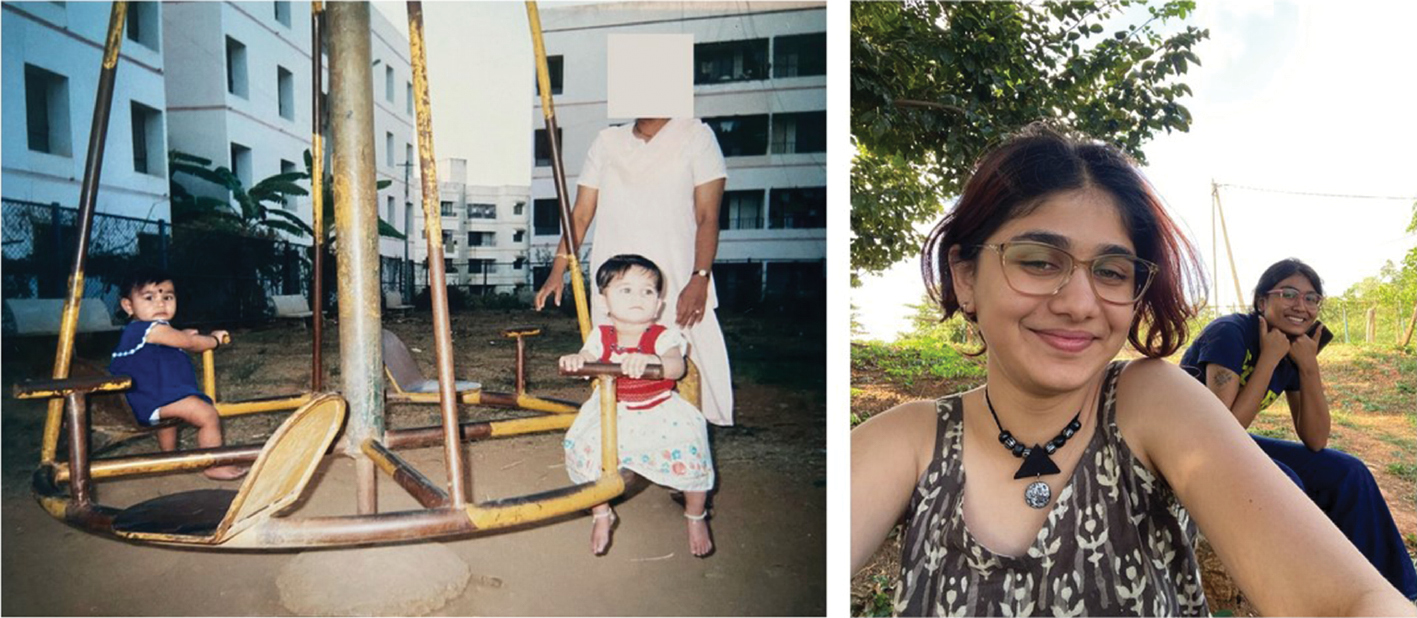
Figure 1 - The researchers in 2005 and 2025.
We noticed how this change impacted our relationships with each other, our neighborhood, and our idea of home. Our homes, which used to extend beyond their four walls, now shrunk. We went out less often and only if it was necessary. It was at this point that we began seeing ourselves as individuals, rather than part of a collective for several reasons. During our teenage years, we moved out of the neighborhood and our movements, actions, and clothing started being policed as we were groomed to be “respectable, young women.” Our search for meaning and identity as individuals took place in our rooms, influenced by mostly American coming-of-age narratives.
After the COVID-19 pandemic, our reasons to step out did not exist anymore. Groceries and food were delivered to our doorsteps. We constantly knew what was happening in each other’s lives, even if we did not meet in person to share these stories. We had to use our personal motor vehicles to access other parts of the town and the city.
After the COVID-19 lockdown was lifted in 2021, we began going to college, which was 20 km away from home, and for the first time, we forayed into the city. We took a city bus to get to college and learned how to navigate the public transport system in the city. Attending college and navigating the city on our own allowed us to interact with people with diverse experiences and social positions. We began questioning our own place in the city, and how this position shaped how we navigated through it. We questioned what was told to us, including our idea of home.
Nidhi: The idyllic place I imagined to be home, was an actively hostile place for others, and I had just been so ignorant of it all. Was it even possible to create a “home” that is accessible to all? What did that look like? How could we go about it? Could we use the arts to imagine, and to try and figure it out?
Nanditha: What I thought of home suddenly became this space that was intensely homogenous, and excluded so many more. I don’t think I’d want a “home” to be that.
Positionalities
Nidhi
When I think about my positionality in terms of how I navigate the city, I think about how as a child I felt so naturally interwoven with the people, everyday life, and the space I existed in. The first time I remember that feeling shifting was when as 11 or 12 years old, I suddenly began being told I could not “go out wearing that,” “not at this time of the day.” I also noticed that these restrictions and comments were never aimed at the boys my age. It is the way I first became aware of the “public” and “private” space and of the “public” and “private” selves that were supposed to exist in those spaces. I think that feeling of being watched, policed has never quite left, and it follows me along as I navigate the city even now, seeing myself through the eyes of others.
Language is another thing that has strongly shaped how I navigated the city. Growing up multilingual felt completely normal—Konkani with family, Kannada with neighbors, and English in school. Kannada is still one of the main ways I feel connected to Bangalore; speaking it softens people, makes them open up, and it also immediately changes interactions. I love watching Kannada films, listening to Kannada music, and it is a big part of how I feel like I connect to the city. At the same time, I am now aware of how hundreds of languages and dialects of Konkani, Tulu, and more have been suppressed, and to an extent erased, to create this identity of Karnataka as a Kannada-speaking state. My grandfather wrote in Kannada because he studied in Kannada; I write in English because I studied in English. It feels like each of us moved one degree further away from home through the languages we thought and wrote in.
A lot of my courage to move through the city came from friendships—especially being in a women’s college, where being surrounded by other young women made exploring the city less daunting. Going out in groups made it feel safer to break the rules that were otherwise placed on us. Over time, those small acts with friends helped me build the confidence to go out alone: to take buses and metros by myself, watch films alone, etc. Public transport, especially, became its own kind of comfort—women in the bus or metro being unexpectedly kind, giving advice, sharing flowers, small conversations, and the confidence that I could rely on myself to take me places because I could navigate the public transport system.
In a way, this whole practice is me trying to find my way back to that early sense of being part of a place—interwoven, what I would consider home—along with the slightly better understanding of the forces that shape that feeling. And who better to do it with than a person who has been part of that experience since the very beginning?
Nanditha
When people ask me where I am from, I usually say, “Bangalore, but my parents come from other districts in Karnataka.” I think I say that because I know my parents do not think of this city as home. For them, it is a place they have settled in for better opportunities, whereas for me, it is the place I grew up in. It is my home.
But I only truly moved around the city, and its various neighborhoods, once I began going to college. College was far from home, which meant that I, as a woman, was expected to return early every day. The city center became a place I would frequent but did not have much time in. I could not stay out late and always worried about going back home. But the distance from home also meant that the city gave me the freedom to do things on my own. Some of them my parents would not approve of, and also would not find out about. Yelahanka has always been a quiet corner, and traveling to the heart of the city every day shook up how I saw my home. I met new people with experiences so starkly different from mine. I met them on the bus, in college, while walking, or just simply sitting around in public. I realized I had lived a closed-off and sheltered life. One that had not exposed me to how people from different social positions experience life in the city.
I understood how the city can treat its people differently while I began hunting for a house to move into. Finding a house was very easy for a Kannada-speaking, vegetarian, upper-caste woman because I checked all the boxes on the landlord’s list. What about the people who do not? How do they find their homes when the experience of looking for one can be so hostile? Why are there so many neighborhoods here that are so homogenous in its demographic that they absolutely refuse to accommodate anybody else? Do I only get to like this city because of my social position and privilege?
A Brief History of Cubbon Park (The Location of Our Workshops)
Although we asked these questions, we made new friends and went out to restaurants, cafes, bookstores, and malls. We could not hang out in the absence of legitimate purpose, but “legitimacy” and access to space were granted through material consumption or through a demonstration of capacity to buy. Our interactions became increasingly transactional. Cubbon Park—walking distance from college—became a space we would frequent free from demands to consume. We would spend time here with our new classmates and speak for hours, forging friendships which may not have formed otherwise; we met older friends, who now lived in different cities or countries and even had our first dates here. We soon came to recognize and greet people who frequent the park. Here, we felt the sense of connection we once did in Satellite Town—Cubbon Park had become home within the city.
Though Cubbon Park is a space where people across social groups gather, meet each other, and partake in activities which generate no economic value—reading circles, art and craft clubs, free cycling and skating classes, protests, dates, etc. It is not a space free from restrictions—it comes with a history of segregation and policing, remnants of which still exist and increasingly so.
Cubbon Park was established in 1864 on a 1.5-km wide strip of forest that separated the British Cantonment from the Pete area of Bengaluru (Moorchung & Moorchung, 2017)—to further segregate the natives from colonizers. The park that once covered an area of over 300 acres has shrunk to 197 acres over many years (Guha & Menon, 2016).
Although section 4, clause 2, of the Karnataka Government Parks (Preservation) Act 1975 states that “No land or building within the parks to which this Act is applicable shall be alienated by way of sale, lease, gift, exchange, mortgage or otherwise or no license for the use of any such land or building shall be granted and any alienation made or license granted in contravention of this section shall be null and void” (Saldanha, 1998), Cubbon Park’s boundaries are contested and always under threat of encroachment by development projects such as the Namma Metro. The Karnataka government, over the years, has amended the act and successfully alienated land from the park’s boundaries to make roads, parking spaces, and construct and expand government buildings (Menasinakayi, 2019).
Decisions on the use of park space have historically favored the privileged with the presence of exclusive clubs like Karnataka State Lawn Tennis Association Club and Stadium, Century Club, Secretariat Club and Press Club, which have all been carved out of Cubbon Park, providing exclusive access to its members, in the center of the city (Menasinakayi, 2019).
What remains of the park today is open from 6 am to 6 pm and is heavily policed through restrictions on eating, playing, bringing pets, filming, sitting too close to each other, etc. Permitted activities in the park are dictated by middle class notions of aesthetics and morality, with people being shamed for the kind of clothes they wear and threatened and extorted for public displays of affection by guards and the police. The Cubbon Park Walkers Association is a group that has had major influence over the use of space in the park. Although they have lobbied against issues like the construction of a 10-storey high court annex in the park and thoroughfare in the park on Sundays, they have also been invested in ridding the park of “disruptive” activities (Guha & Menon, 2016).
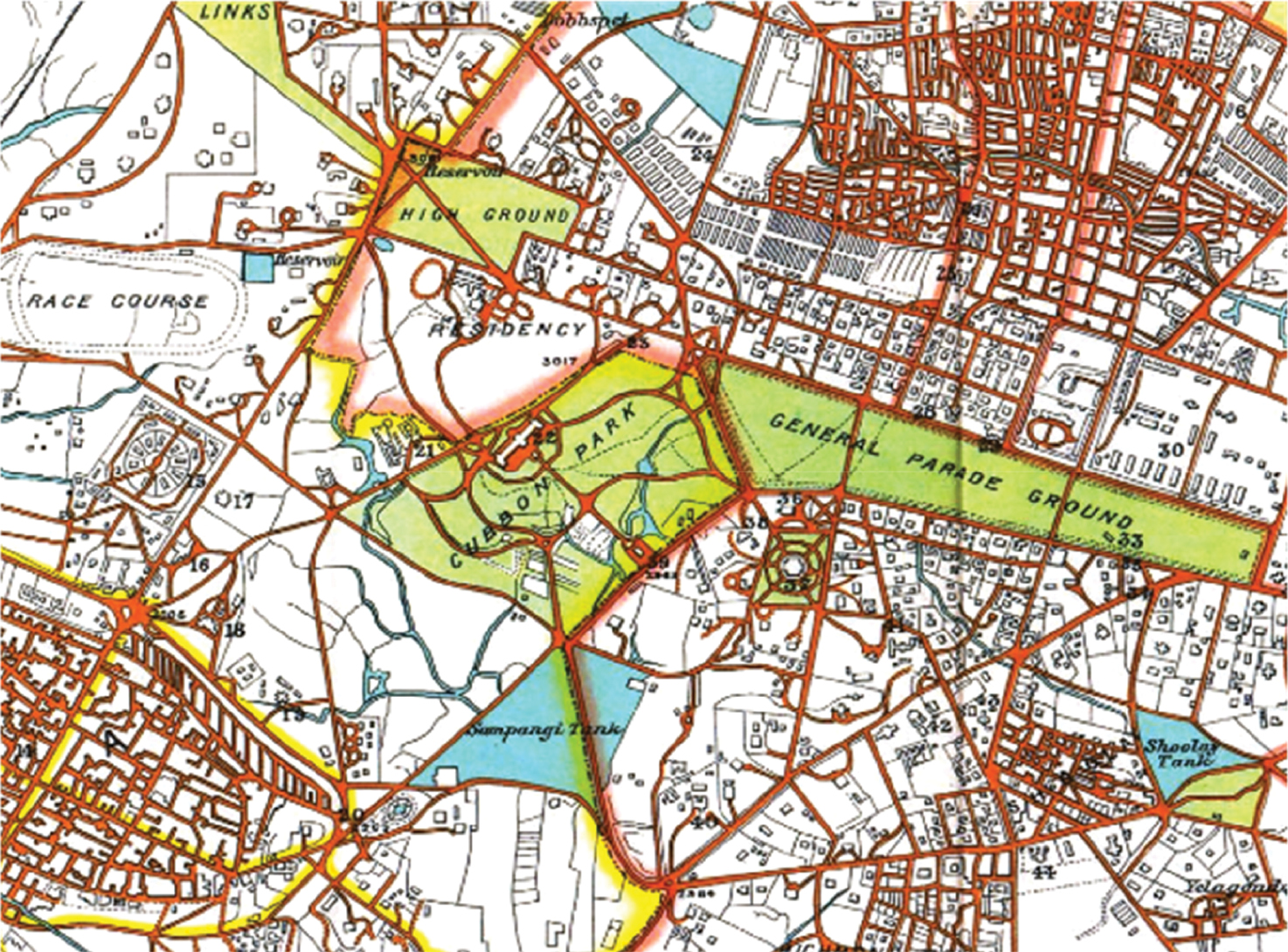
Figure 2 - Bangalore map, 1935. John Bartholomew, public domain, via Wikimedia Commons.
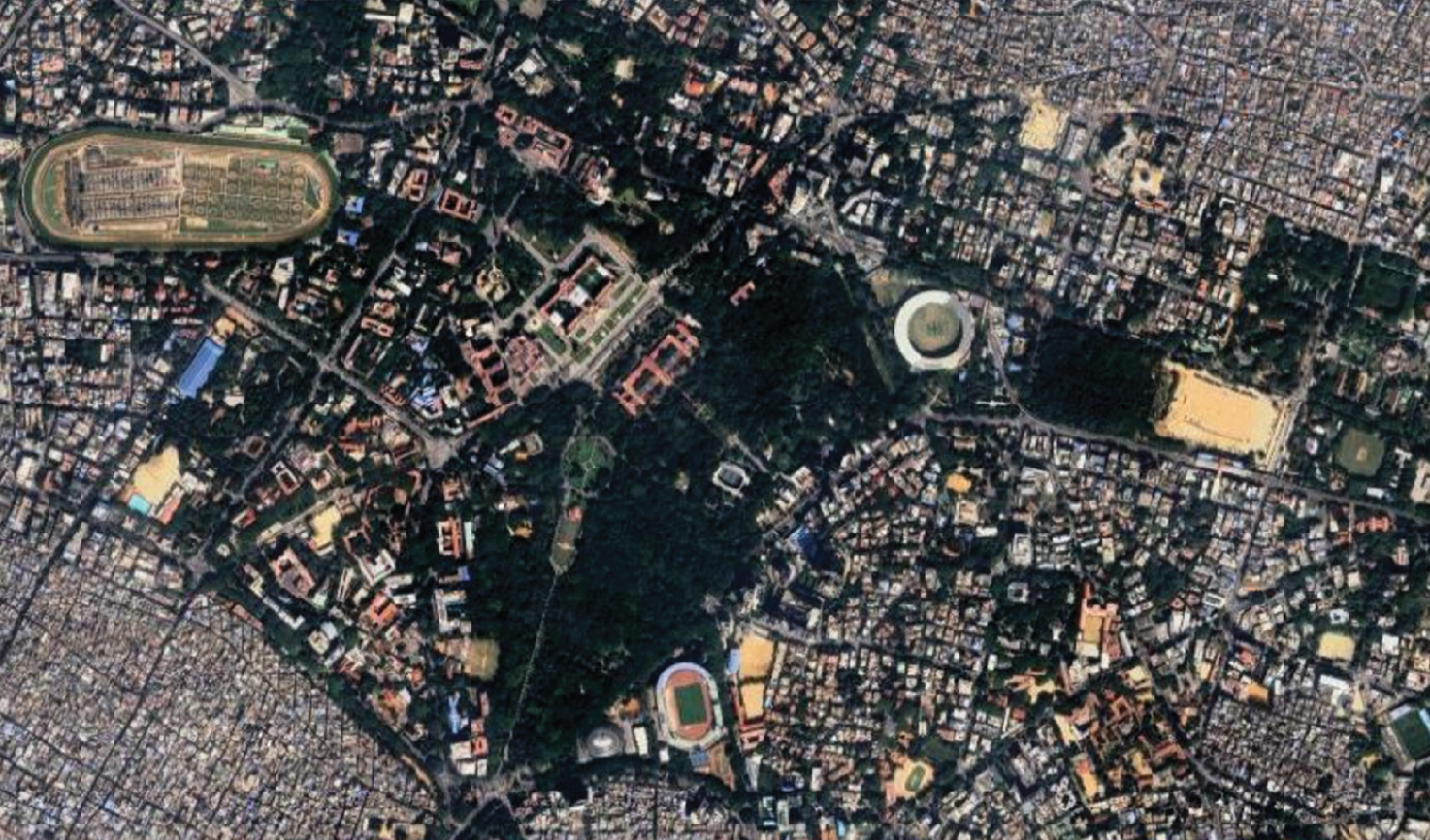
Figure 3 - Satellite image of Cubbon Park and the stadiums and clubs within it, 2025. Imagery ©2025 Airbus, CNES/Airbus, Maxar Technologies, map data ©2025.
Signs discouraging “unseemly behavior,” birthday parties, and any other gatherings without permission, litter the park.
“Permitted” activities carried out in the park are constantly under threat. For example, a Secret Santa book exchange conducted by Cubbon Reads in December 2024 was disrupted by park authorities stating that the organizers did not have permission to conduct the event (Sheth, 2025). Despite these restrictions and policing, people have found workarounds and continue to partake in leisurely activities. Leisure becomes an act of resistance—both against arbitrary rules that are enforced differently depending on who you are and a capitalist system that values productivity above all else. Although Cubbon Park was the best location for the workshops, we had to negotiate with the restrictions that came with it.
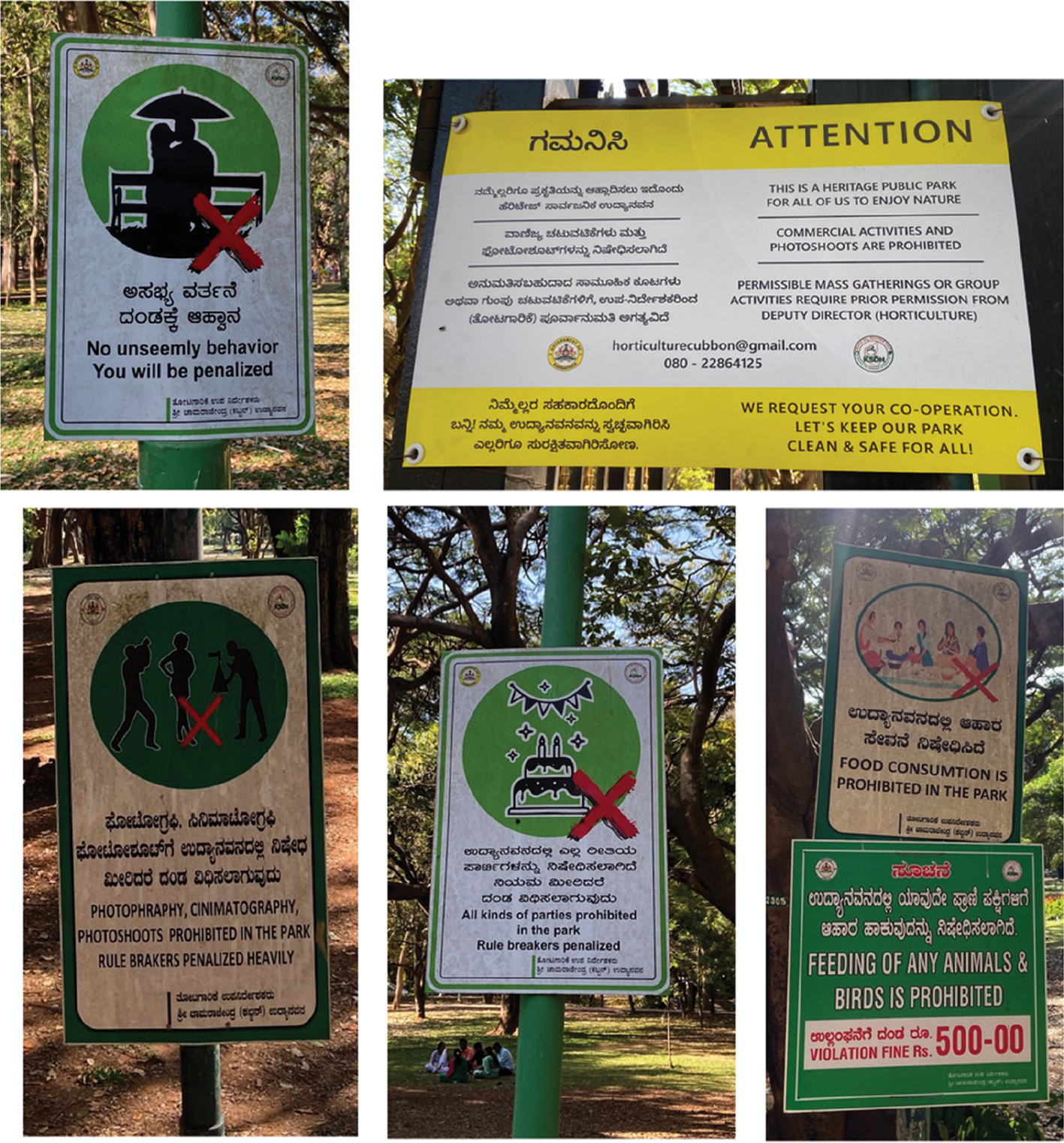
Figure 4 - Signboards in Cubbon Park prohibiting certain activities.
Methodology
After reflecting on these shifting relationships, we decided to explore what home meant to us and the people around us, and so, we created a workshop which grew into a larger study. Here are the instructions to use na-dhi to conduct workshops in your neighborhood:
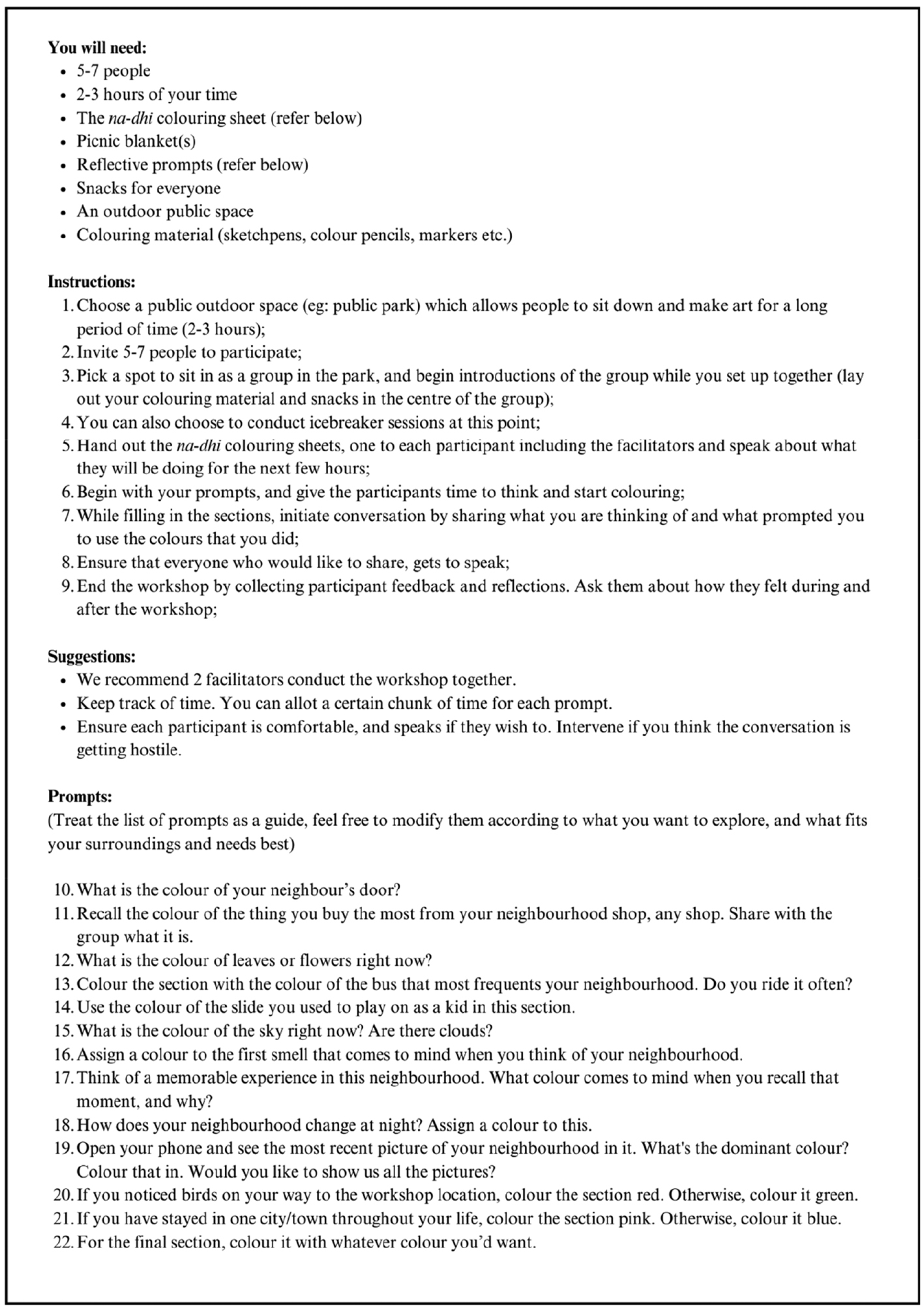
Figure 5 - Instructions for other practitioners to replicate the na-dhi method.
Na-dhi Coloring Sheet
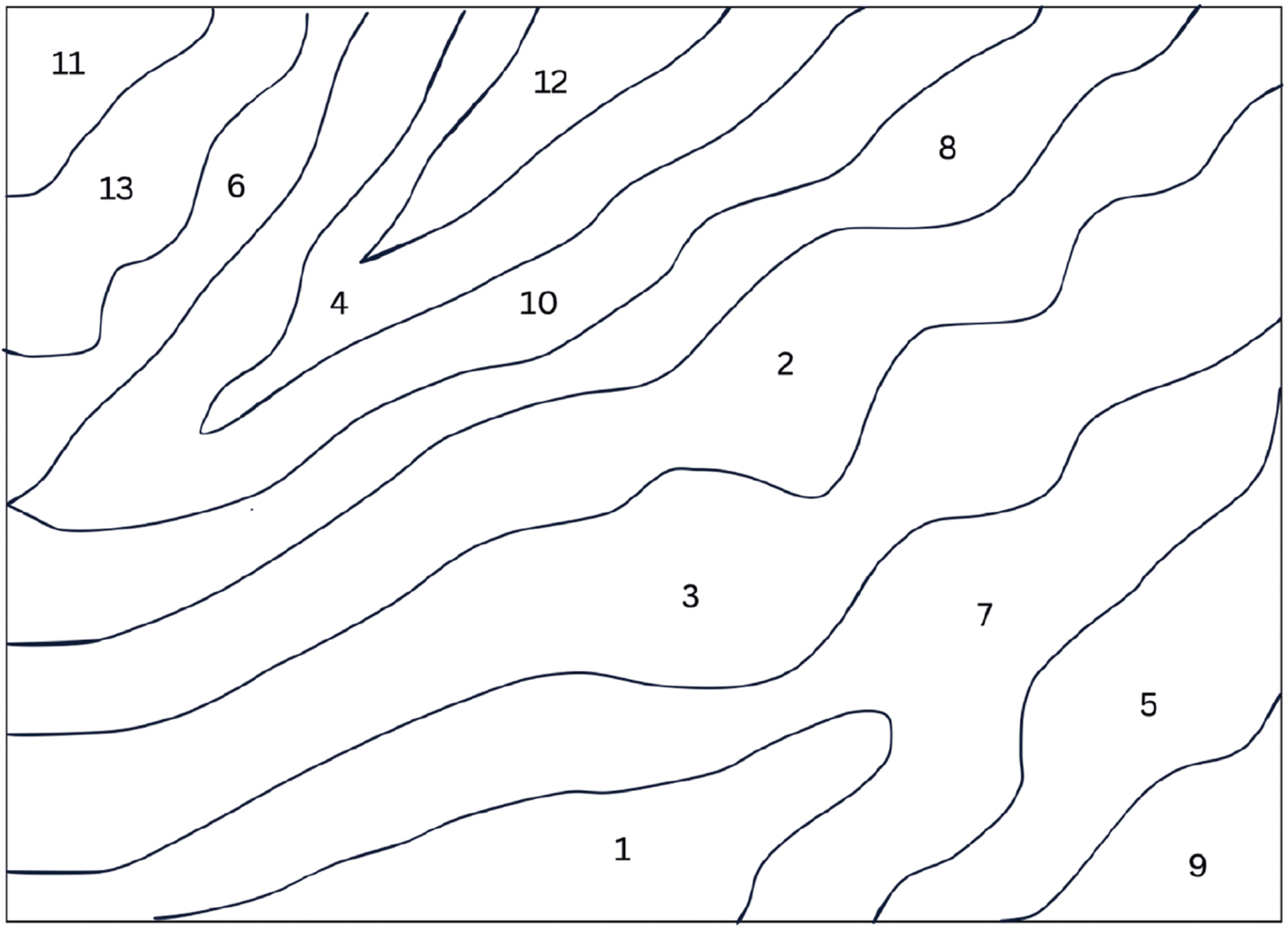
Figure 6 - Na-dhi coloring sheet: an abstract line drawing with 13 numbered sections for participants to color.
How did we develop this?
We were introduced to Practice as Research (PaR), the “third paradigm of research” (Haseman, 2007, p. 150), via a class in Applied Theatre and chose this mode of doing research to inform the practice we created. Scholars advocating for PaR propose that the dynamic intra-relation between know-how and know-that generates informed critical reflection and makes the tacit more explicit (Nelson, 2022, p. 44).
We began with trying to find a way to get people to walk around their neighborhoods and pay close attention to it. We thought that incentivizing people to collect data for a collective art piece would nudge them to do it.
We arrived at the following after much deliberation:
A workshop where we collect data from people about specifics of their neighborhood (color, smells, etc.) via a Google form, and generate an image out of this data which participants of the workshop can use to color in.
We realized that this would become a data collection exercise and would not serve to create space for reflection. We considered the following to create na-dhi:
We decided that we would have to include reflective prompts to create inward and outward conversations on what home meant to people;
We knew that we wanted to include art, specifically the use of colors, because we realized that not all feelings we had would be communicable in words;
We wanted this to be a peer activity and to participate in it ourselves.
We finally decided to have an abstract drawing with 13 sections, which the participants could fill in with colors or patterns in response to the corresponding 13 prompts. Although they filled in their sections, we (the facilitators) shared what we were thinking of and what prompted us to use the colors that which did, which would encourage the participants to do the same. These prompts were created to make the participants reflect on stories from their neighborhood and progressed from being literal to more abstract. This allowed for the progression of conversation from being lighthearted to more vulnerable. We also audio-recorded participant feedback and transcribed them. Through a coding exercise, we analyzed the recordings for broad themes that emerged during the conversations. The cards were for participants to keep, and we did not analyze color choices or patterns made. The cards were only a means through which participants began reflecting and sharing stories.
Our pilot studies further shaped the way in which our workshops were developed and conducted. These pilot studies, and the workshop themselves evolved through repetition “in variable and indeterminable directions; a series of unexpected and often accidental explosions that in turn lead to further explosions” (Fleishman, 2012, p. 34).
Through the pilot studies, we were able to decide the following:
Number of participants in each workshop: In our pilot studies, we invited 7 to 10 participants to join our workshops but realized that not everyone was able to speak and interact with the group. Hence, we decided to limit the number of participants to 5 in each iteration (excluding us, the facilitators).
Length of each workshop: We found that 150 minutes was the ideal time for the workshop, as it allowed for ample conversation, tangents, breaks, and buffer time.
Number of prompts: We began with 15 prompts, but soon reduced the prompts to 13, and made sure that intensely reflective prompts were sandwiched between less intense ones. During the workshops, we switched some questions around depending on the nature of responses we were receiving and the mood of the group.
Location of the workshop: We decided to conduct the workshops at Cubbon Park in Bengaluru, as it is located in the heart of the city, easily accessible to people from all parts of the city, and is a green, open public space, albeit with its own set of restrictions.
Number of workshops conducted: Drawing from Fleishman in “The difference of performance as research”:
But however much repetition might slow things down it never exhausts the capacity for difference. Difference continues to be produced on a molecular level as long as the performance repeats and even after it has finished repeating, in the repetition of its traces…the mobile flies forever before the pursuit of science. It is us who struggle to keep up, to keep trying to bring things to consciousness, to keep failing to translate for others. It is us who become exhausted and who draw a line underneath the project and say “enough” (Fleishman, 2012, p. 35).
we decided to stop with five workshops, each to be held on a Saturday from 2 to 5 pm at Cubbon Park, Bengaluru.
To find our participants, registration forms were circulated a month before the commencement of the workshops. This form was filled by people interested in partaking in the workshops. The participants could indicate what date would be most suitable for them. We then followed up with the participants during the week to ensure we would have enough people for each iteration of the workshop.
Our final workshops were conducted outdoors for a duration of 150 minutes and began with an introduction of the scholars and participants. The group collectively chose a spot to sit in at the selected public outdoor space (Cubbon Park) and set up snacks and materials. We handed out the na-dhi sheets we designed. We asked 13 questions corresponding to one’s neighborhood, and all participants, including us, filled in the corresponding section of the image with the color of their choice. As they colored sections of the image, participants were encouraged to reflect on their answer and share their stories. The workshop ended with a feedback session where the participants were prompted to talk about their experience during and takeaways from the workshop.
We maintained reflective journals to record our “inner commentary in the processes of being-thinking-doing” (Nelson, 2022, p. 44). “If performance as research is anything, it is the desire to make conscious, to become aware from within the midst of the endless process of becoming and then to attempt to translate this for others through a variety of modalities” (Fleishman, 2012, p. 35). These journals were used to record everything that we noticed during the workshop, and upon looking back at it, we pick out key moments of insight and breakthroughs:
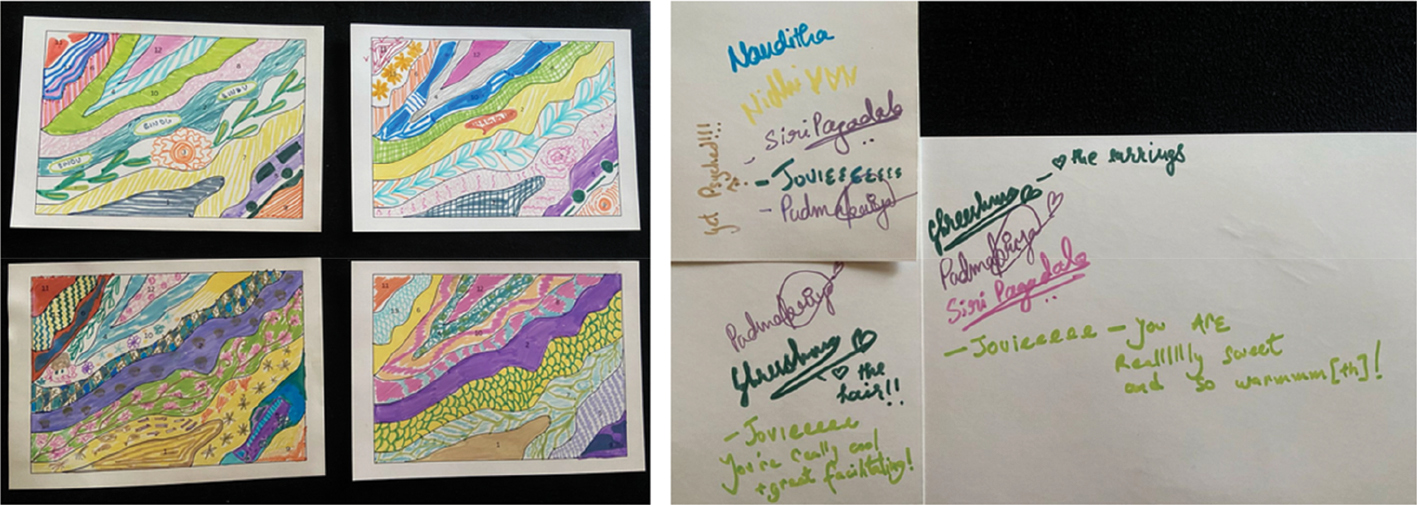
Figure 7 - Front and back of completed coloring sheets.
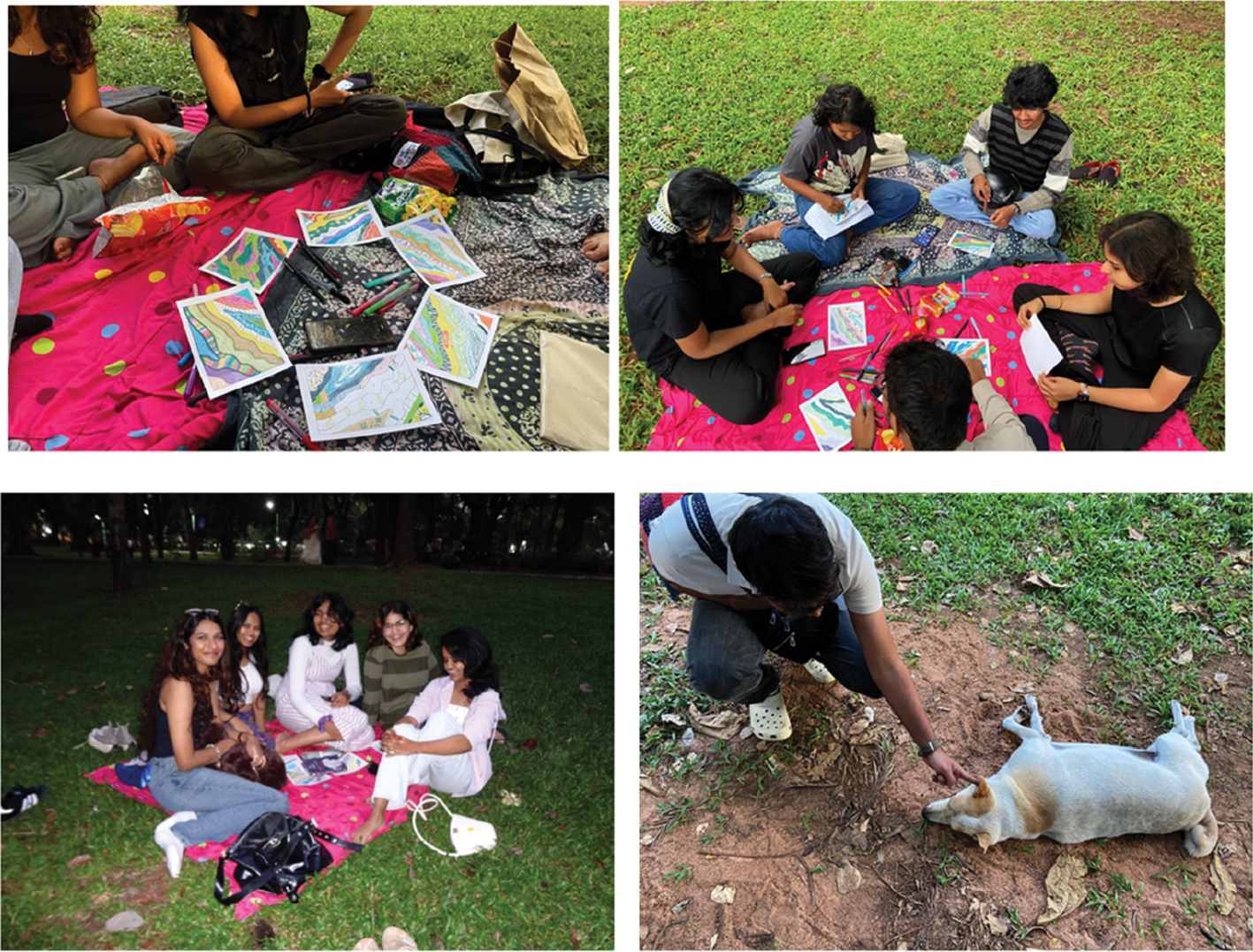
Figure 8 - People and animals from the workshops.
We noticed that our responses to the prompts changed in each iteration of the workshop. This could be due to the varied conversations we would have each time.
While we had to skip the icebreaker we had planned during the first workshop, we noticed that just the act of picking a spot to sit and setting up acted as a great icebreaker, so we decided to skip the icebreaker in all workshops that followed;
As facilitators, we had to pay attention to whether each person got to speak enough, as we would sometimes have participants who would cut someone off due to their excitement (or because they suddenly thought of something), so we had to actively pay attention to and ask others if they had something to say, once the other participant was done. Attempts at including everyone sometimes failed when the participant was not willing to speak. So, we let it be and did not push too much.
By the end of the workshop series, we were able to sense when the other was tired or wanted to talk. Having a co-facilitator who was attuned to how the other felt at a given moment made the process of the workshop much easier. It reinforced our decision to have two facilitators.
We designed the workshop believing that the group being occupied in artmaking would reduce inhibitions among participants to share as they could move in and out of conversations easily, falling back on coloring or drawing when they felt the conversations got overwhelming. This belief was reinforced when a participant said:
I liked that I had something to do because, you’re sitting in a group and talking you know, if you just speak you might get lost in things, but now I can also listen and you know, color while someone else is speaking, I can pay attention whenever I want, which is more engaging that way, otherwise it would be so awkward. Otherwise, it would be like a panel discussion.
We had to reassure participants who were comparing sheets and worried that their sheets were not aesthetically pleasing that this workshop was not about how beautiful the end product was but about the experience of making it.
Ethics
Our participants were between 18 and 25 years of age. In accordance with the Declaration of Helsinki and standard ethical research guidelines, all participants were provided with detailed information sheets and consent forms prior to the workshop. Written informed consent was obtained through signed physical copies collected on the workshop days. This study was reviewed and approved by the Honours Research Committee at Mount Carmel College, Autonomous, Bengaluru, which served as the institutional ethics/IRB body for this project. All procedures adhered to the committee’s ethical standards.
Reflection and Analysis
By analyzing participant feedback (in gray), our own journals (facilitator 1 in blue and facilitator 2 in pink) and the literature we reviewed, we found common themes emerge. We found that home is not a singular, static place, but different locations, people, places, and even feelings. The group moved back and forth between different “homes” as they responded to different prompts.
“I mostly relate college as home, which is very weird. I never thought that would happen. I’ve only been there for four years compared to the 18 odd years in Bangalore. And I just really feel like most of my answers here relate to college rather than Bangalore.”
“This also feels more like home right now because I’m here more but I also miss people back home. It’s the people, honestly. All different kinds of home too.”
“There was a sort of back and forth between where we are currently and Bombay for me.”
We found that home for us too was not restricted to one physical space, but was our neighborhood, with its living and non-living residents. These observations coincided with Vaclav Havel’s definition of home being a “multilevel structure” consisting of “emotional, geographical, and cultural home” when responding to prompts such as
What is the color of the first smell that comes to mind when you think of your neighborhood?
Think of a memorable experience in this neighborhood. What color comes to mind when you recall that moment, and why?
We found that the participants might not have been able to respond verbally but could use colors and patterns to describe feelings, scents and sounds, and while describing their choices, they were able to sometimes verbalize and clarify these answers for themselves and others. In this process, they also remembered instances that they had not thought of otherwise and were able to connect their own seemingly disparate experiences.
“I didn’t even know I still remembered specific details like my swing being Red. I’d never thought about it too carefully before, but the image of it is clear in my head and it only got there because of the prompts we were given.”
“It kept bringing me back to those kinds of spaces that I was used to as a kid and what we used to do in those spaces. So I might not remember the terrace but I do remember the tarp sheet we played hide and seek in.”
Thus, the arts can give shape to formless ideas and enable us to reveal our hidden and subjective lives, multimodally: one mode of meaning slips over to describe meaning processed in another mode. The arts become a vehicle through which we can express our growing awareness of ourselves and the worlds in which we live and enable us to express and exchange meanings that are otherwise unavailable (Wright, 2012).
When participants had similar stories or found connection points, these individual stories meshed together to create new ones—a collective narrative was created by the group.
“I feel like it’s also about finding similarities between different people. Like a person from Orissa has heard about Chitwan, and by the look on his face I could tell he can remember the smell because it’s so intense. But we don’t have anything else in common, just that one smell is there. You have such different stories but somehow in some instances you have those overlaps that you know about until you talk.”
These shared stories became a means to connect with each other, even after the workshop ended. We observed that several participants went out to have food, tea, and coffee after the workshop had ended. The participants wrote notes to each other on the back of their na-dhi cards, shared their contacts, and our WhatsApp group with them continues to be active. Participants sent us pictures of their completed na-dhi cards up on their walls and continue to follow up on the status of our study.
“I always feel better in smaller groups. I feel like we all got to talk a little bit about our own experiences and our own ideas. A little bit. Not just a little bit. Quite a bit….I definitely want to hang out with you guys again.”
“It brought me a lot of joy when one of them [participant] took out her card in the restaurant we went to later and asked us to tell her the last few questions so she could finish filling in her card [this workshop had to be cut short because of rain]”
“Some of the workshop participants asked us, the facilitators, questions as well. About the kind of people that came to the workshop, and about how we organized this. There seemed to be genuine curiosity about the project, and answering these questions clarified for me why we began doing this as well. Just externalizing the thought process made me more confident about the practice.”
We ran into one of the participants 2 months after the workshop, where she recognized us in a public space and came to say hello, ask us how we had been, and catch up with us. Although we did not set out to assess the long-term effects of the study on participants, incidents like these indicate that the experience of the workshop has stayed with them, even 2 to 3 months after.
Many participants described spontaneous emotional effects, which was aided by the outdoor setting of Cubbon Park.
“It was really calming. I really liked coloring. And it’s like really comforting questions.”
“You guys should do it more often, I haven’t colored or drawn anything in so long, I’d forgotten how fun it is”
“I also loved the location because it’s a very, you know, social place, where people come to network and connect and everything. It feels so nice to come and sit here, and not in the office.”
“I felt like everybody around us could talk openly and share their stories…The fact that this is happening in Cubbon, made me feel nicer.”
“I keep coming here, so I associate Cubbon with just hanging out, and feeling energized and happy after.”
We found that the freedom of space outdoors can “maximize opportunities for creativity and imagination, while also freeing up the institutional normative behaviors.” One is not “encouraged to dwell in nature and experience a sense of place and a bodily connection with the outdoors” (Adams & Beauchamp, 2019, p. 261) in everyday life, as the abstract is prioritized over the particular, the cerebral over the tactile, and third-person over first-person understandings of the body and bodily experience. Outdoor practice hence leads to “a sense of interconnectivity and harmony with nature” (Moula et al., 2022, p. 12).
“I also loved the location because it’s a very, you know, social place, where people come to network and connect and everything. It feels so nice to come and sit here, and not in the office.”
It was interesting to receive this response from a participant where they drew the distinction between the park and the “social” spaces in their everyday life which expect them to be productive. The intentional act of creating “an open, contemplative space against the pressures of habit, familiarity, and distraction that constantly threaten to close it,” an “attention-holding architecture” (Odell, 2019, p. 6), allowed the participants to redirect their attention and helped them shift their perspectives.
“I would never think about any of the answers. The questions you asked, right? I had to really sit and think. Like, usually it’s just, okay, one task done, what’s the next one? What’s the next one? What’s the next one? And you just never get a breather to, you know, look back on what has been or think about these tiny little details of life.”
“It’s impressive how you guys were able to hold people’s attention, for almost 3 hours, without anyone opening their phones to scroll. I don’t remember the last time I went this long without looking at my phone.”
“I knew that even if I tried to continue this [weekly workshops], without the compulsion of the paper, other things which were more urgent and “important” would take over.”
By connecting our experience in the workshop with those of our participants, we noticed that home can be many people and places and that the feeling of homelessness is not necessarily a lack of a fixed, four-walled residence, but goes much deeper. It is a state of lack of self-fulfillment, control of one’s physical environment, lack of emotional comfort, absence of intellectual stimuli, state of utter social loneliness (Tucker, 1994, p. 184).
The workshop acted as a means to bring people out of their homes, and make connections with their own memories, other people (and their stories), and the outdoors. The participants express the importance of a space—one that does not expect them to be productive—created intentionally for the purpose of reflection, which is not allowed to exist otherwise in an urban setting.
Discussion
Our own experiences and feedback from participants highlight the need for conversation and spaces that allow for it—spaces that are open and truly accessible to all. What began as an exploration of our relationship with our homes, led us to be cognizant of our social position within this city, and how it shapes how we exist within and navigate the space around us. This is where the limitations of our study lie: Our participants (including ourselves) were privileged—upper class, mostly upper caste, English-speaking people who dressed in ways that indicated social capital and power. This allowed us to occupy space in a manner which people without privilege would not have been able to. Although the effort was to make the workshops as inclusive as possible (location: public space in the center of the city, multilingual), it fell short.
We were limited in circulating registration forms to a limited demographic due to temporal and logistical constraints. In attempting to understand what home means to us, we noticed also that access and concerns of safety were starkly different for people in different social positions. Based on findings discussed, we hope urban planners prioritize the creation of truly accessible public spaces where people can gather and connect, and interventions such as ours can take place.
We began thinking about this study by reflecting on our alienation from our neighborhood, and through the study, were able to reflect on the political consequences of the “purpose and process of researching alienation,” place our research within a “wider critical frame,” and contribute to participants “becoming aware of their alienation” (Healey, 2020, p. 20).
This method can be replicated by practitioners with similar concerns across locations. Further, reflecting on insights gained during the course of our practice, we make a case for the need to create, protect, and fight for inclusive community-oriented public spaces.
Conclusion
Through this study, we noticed that home can be many people and places and not necessarily a fixed four-walled residence. We arrived at the understanding that interacting with and paying attention to a city and its people is vital to feel a sense of belonging—something that is now increasingly difficult, as people exist in silos and engage in transactional interactions and relationships, leaving them isolated and feeling alienated. What began as an exploratory arts-based inquiry turned into a community arts process—the na-dhi method—which can be used to facilitate connection and foster a sense of belonging within a space and between people. The process of developing this method affirmed our intuition of peer-arts practice as having the potential to foster connection.
About the Authors
Nidhi Kiran Bhandari (https://orcid.org/0009-0006-4317-5187) and Nanditha Gogate (E-Mail: nidbhandari@gmail.com; https://orcid.org/0009-0003-3248-7095) are child-hood friends, who are now undergraduate students of communication studies at Mount Carmel College, Autonomous, Bengaluru. They are passionate about community engagement, ecology, and art. They were introduced to Practice as Research in college by Dr. Manola Gayatri Kumarswamy, through a course titled Applied Theatre: Facilitating and Facilitation Skills. They decided to collaborate and continue their research in the field under Dr. Kumarswamy’s guidance.
Author to whom correspondence should be addressed; E-Mail: gogatenanditha@gmail.com.
Conflicts of Interest
The authors declare no conflict of interest.
References
Adams, D., & Beauchamp, G. (2019). Spiritual moments making music in nature. A study exploring the experiences of children making music outdoors, surrounded by nature. International Journal of Children’s Spirituality, 24(3), 260–275. DOI: 10.1080/1364436X.2019.1646220. | |
Ali, S., & George, A. (2022). Redressing urban isolation: A multi-city case study in India. Journal of Urban Management, 11, 338–352. DOI: 10.1016/j.jum.2022.04.006. | |
Fleishman, M. (2012). The difference of performance as research. Theatre Research International, 37(1), 28–37. DOI: 10.1017/S0307883311000745. | |
Guha, A., & Menon, S. (2016, December 27). Cubbon Park Symbolises the Contestation Over Bengaluru’s Public Spaces. The Wire. https://thewire.in/89682/cubbon-park-bengaluru. | |
Haseman, B. (2007). Rupture and recognition: Identifying the performative research paradigm. In E. Barrett & B. Bolt (Eds.), Practice as research: Approaches to creative arts enquiry (pp. 147–157). Bloomsbury Academic. | |
Healey, M. (2020). Theories of Alienation—Seeman and Marx. In Marx and digital machines: Alienation, technology, capitalism (pp. 7–26). University of Westminster Press. DOI: https://doi.org/10.16997/book47. | |
Menasinakayi, S. (2019, November 3). Cubbon Park turns 150 in 2020, but has nothing to cheer Read more at: https://www.deccanherald.com/india/karnataka/bengaluru/cubbon-park-turns-150-in-2020-but-has-nothing-to-cheer-772738.html. Deccan Herald. https://www.deccanherald.com/india/karnataka/bengaluru/cubbon-park-turns-150-in-2020-but-has-nothing-to-cheer-772738.html. | |
Moorchung, S., & Moorchung, N. (2017, December 30). Bengaluru’s Cubbon Park: The thicket of separation. Bangalore Mirror. https://bangaloremirror.indiatimes.com/bangalore/others/goodbye-2017-you-were-pretty-blah-hello-exciting-sexy-2018/articleshow/62301140.cms. | |
Moula, Z., Palmer, K., & Walshe, N. (2022). A systematic review of arts-based interventions delivered to children and young people in nature or outdoor spaces: Impact on nature connectedness, health and wellbeing. Frontiers in Psychology, 13(858781), 1–18. DOI: 10.3389/fpsyg.2022.858781. | |
Nelson, R. (2022). Practice as research in the arts (and beyond): Principles, processes, contexts, achievements (2nd ed.). Springer International Publishing. DOI: 10.1007/978-3-030-90542-2. | |
Odell, J. (2019). How to do nothing: Resisting the attention economy. Melville House. | |
Overend, T. (1975). Alienation: A conceptual analysis. Philosophy and Phenomenological Research, 35(3), 301–322. DOI: 10.2307/2106338. | |
Saldanha, L. (1998, November 2). Note On The Ongoing Cubbon Park Denotification And Construction Of LH Annexe Controversy. Environment Support Group. http://esgindia.org/new/campaigns/note-on-the-ongoing-cubbon-park-denotification-and-construction-of-lh-annexe-controversy/. | |
Sheth, A. (2025, January 21). Cubbon Park: Bengaluru’s green space or the government’s playground? The News Minute. https://www.thenewsminute.com/karnataka/cubbon-park-bengalurus-green-space-or-the-governments-playground#:~:text=Cubbon%20Park%20was%20once%20a,can%20only%20admire%20from%20afar. | |
Tucker, A. (1994). In search of home. Journal of Applied Philosophy, 11(2), 181–187. https://www.jstor.org/stable/24353979. | |
Wright, S. (2012). Ways of knowing in the arts. In S. Wright (Ed.), Children, meaning-making and the arts (pp. 1–29). Pearson Australia. https://www.researchgate.net/publication/289129165_Children_Meaning-Making_and_the_Arts. |